Polished 15+ Supervisor Outfit Womens That Command Respect

Searching for “Supervisor Outfit Womens” online mostly returns the same generic business casual advice. It tells you to look authoritative but approachable—without explaining how to balance both on a Tuesday when you have back-to-back meetings and a team that is still sizing you up. The reality is that your male counterparts can wear the same suit every day and read as consistent. When you do it, you risk looking like you are not trying—or trying too hard. Most guides miss the social tightrope you are actually walking: enforcing a dress code while modeling it, earning respect without looking rigid, and doing it all in clothes that survive a commute, coffee spills, and a 12-hour day.
The outfits here are designed to sidestep that trap. Building a foundation that works without falling into an uniform starts with strong classy business outfits. And if you are questioning whether the role requires a blazer, our blazer outfits guide covers the alternatives that keep the authority without the stiffness.
18 Supervisor Outfit Womens That Settle the Should-I-Blazer Debate
If you’ve been going back and forth about whether a supervisor’s wardrobe absolutely requires a blazer, these 18 looks are your answer. Some lean hard into lapels and structure. Others prove that a sleeveless crepe top or a puff-sleeve dress can hold just as much command. The common thread: every outfit here works for a woman who needs to be taken seriously without losing herself in the dress code. Start with the situation, then steal the formula.
When You Need Every Ounce of Authority
These five outfits are for the days you’re presenting to the C-suite, stepping into a difficult conversation, or simply need the confidence of a second skin. Each includes a tailored blazer—the cornerstone of corporate attire for women leaders—but the details matter more than the lapels.
The Non-Negotiable Black Blazer

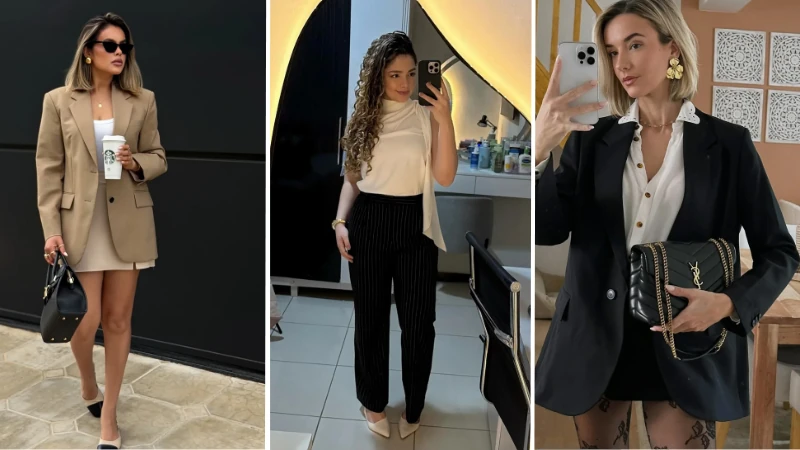
A relaxed black blazer over a crisp white button-down, tucked into black fitted tights. Gold earrings and a multicolored beaded choker bring a touch of personality without undermining authority. A black shoulder bag keeps everything within reach. If your day includes a long sit-down meeting, swap the tights for straight-leg trousers—nylon blends hold creases, and you’ll look crinkled by 2 p.m. This outfit works for formal office settings and doubles for an evening dinner date, making it a high-mileage choice.
The Three-Piece Suit, Softened

A dark grey three-piece suit—oversized blazer, tailored waistcoat, and wide-leg trousers—anchors this corporate-chic look. A white cotton button-down lightens the androgynous cut, while gold earrings and black accessories keep it confident. Leave the waistcoat’s bottom button undone; it relaxes the line and lets you breathe during long negotiations. The all-wool blend breathes, so you won’t overheat when the AC fails, and the wide trouser leg nearly skims the floor, lengthening your stride. This is for days you’re stepping into a boardroom or an union meeting and need every inch of presence.
White-on-White Monochrome Power

A white tailored crepe blazer paired with a black-and-white slim cotton tee and matching white wide-leg crepe trousers is a masterclass in monochrome. The mini black leather handbag and rectangular sunglasses add a cool, off-duty edge, while a slim black belt and gold watch ground the look. Always check that the tee sits perfectly flat under the blazer; any bunching around the neck reads as careless in a close-up conversation. This combination thrives in creative or tech offices where formality is expected but not corporate. It’s sharp, not stiff.
Burgundy Blazer, White Trousers

by @mint_label_
A burgundy tailored wool-blend blazer over loose white cotton trousers—just three pieces, no fuss. The silver watch is the sole accessory, which keeps this look pure power-dressing. The white trousers demand a check in natural light before you leave the house; some cottons turn sheer under fluorescent office glare. This is an one-and-done outfit that works for any formal meeting. The color blocks do the talking: the rich burgundy signals confidence, the white signals openness. No print, no noise—just a clear statement that you belong at the front of the room.
Navy Quiet Luxury Suiting

by @havanattan
A structured navy blue wool-blend blazer and matching wide-leg trousers form the backbone of quiet luxury. The brown leather handbag and boots warm the look without competing, and gold earrings add subtle polish. When wearing monochrome navy, make sure the two pieces are from the same fabric batch or at least the same weight; mismatched navies look accidental. This is the suit you reach for when you want to project competence without shouting. It works across industries, from finance to education, and holds up through a 12-hour day thanks to the wool’s natural resilience.
The Blazer, Dialed Down for Everyday Trust
A blazer doesn’t have to mean stiff formality. These five blazer outfits use the jacket as an anchor but pair it with denim, a pop of color, or unexpected textures to keep you approachable and comfortable—without sacrificing an ounce of credibility.
Oversized Tan, Pint-Sized Skirt

An oversized tan wool-blend blazer thrown over a beige A-line mini skirt—this is quiet luxury for the supervisor who walks to work. Beige-and-black slingback heels, a black structured top-handle bag, cat-eye sunglasses, and gold earrings polish the silhouette. The mini skirt works for leaders only if the blazer hits at least mid-thigh; too short a blazer shifts the proportion from authoritative to adolescent. This outfit thrives in creative fields or casual office cultures where you need to set the tone without looking like you’re attending a different company.
Jeans, Sneakers, and a Blazer

by @e_ddiee
A beige structured wool-blend blazer over a multicolor printed silk blouse, tucked into black skinny jeans. White low-top leather sneakers and a tan belt keep this grounded, and gold jewelry ties it together. When mixing a printed blouse with a blazer, ensure the blazer is solid and the blouse’s neckline stays neat; a crumpled collar under a jacket reads as rushed. This is a supervisor’s smart-casual armor for days filled with back-to-back check-ins and a walk to the coffee shop. It says ‘I’m approachable, but I’m also the one who approves your time off.’
Tweed Jacket Meets Faux Leather

A green-and-black tailored tweed jacket anchors this look, worn over a white slim-fit cotton top. Black straight-leg faux-leather trousers and black suede heels add texture—tweed, leather, suede—without bulk, and a black handbag plus gold watch complete it. Faux leather can trap heat, so save this outfit for air-conditioned offices or cooler months; otherwise, you’ll be peeling off the jacket by 10 a.m. This is the modern classic that reads ‘I understand texture and authority.’ It’s especially effective in retail or design leadership, where visual literacy counts.
Magenta Blouse Under Tan Armor

by @e_ddiee
A tan tailored wool-blend blazer tops a magenta cotton blouse—a deliberate hit of warmth against cream wide-leg crepe trousers. Dark brown pointed-toe suede ankle boots and a brown structured tote carry the grounded palette, while a slim brown belt defines the waist. When wearing a bold blouse under a neutral blazer, let the blouse’s color be the only standout; keep accessories minimal to avoid chaos. This is for the supervisor who wants to be remembered as both competent and human. It works from a morning standup to an evening client dinner without a change.
All Green, All In

by @_yas_dak
A head-to-toe green look—tailored blazer, flared trousers—cut from a synthetic blend that holds its shape all day. A white cotton top peeks out, and white pointed-toe pumps mirror the crispness. All-green suits demand impeccable fit; any pulling across the shoulders or hips will be magnified by the solid color, so invest in tailoring before you wear it to work. This is modern professional dressing with zero hesitation. It says you’re not afraid to be seen, and you’re comfortable directing attention toward yourself—a must when you’re the youngest manager in the room or leading a team that skews older.
Leading Without the Lapels
Who says a supervisor needs shoulder pads? These five outfits skip the blazer entirely and rely on silhouette, fabric, and a focused color story to command the room. They’re a lesson in smart casual that still reads ‘in charge.’
The Sleeveless Top That Leads

A cream relaxed crepe sleeveless top paired with black straight-leg tailored-fabric trousers. Beige pointed-toe leather flats and a chunky gold bracelet are the only accessories. When going blazer-less, the fabric of your top matters: crepe drapes and doesn’t cling, projecting calm control even when you’re sweating a deadline. This is business casual at its most authoritative. The straight trouser lengthens the leg, the flats absorb the miles, and the bracelet catches the light just enough to register as intentional.
The Silk Blouse, Washed-Black Jeans

by @mint_label_
A cream relaxed silk blouse, left untucked over washed-black wide-leg jeans. Black pointed-toe leather heels and gold earrings upgrade the denim instantly. The key to making jeans work in a supervisory role is the wash: washed black reads as intentional and dressy, while light blue can read as weekend leftovers. This look is for the office that allows denim but expects leadership. The silk blouse provides the necessary polish; let it drape, never tuck it tightly—tight tucks create a vacuum that pulls attention to your midsection when you’re trying to command the whole room.
Satin and Wide-Leg Pants Only

by @ohmboutique
A beige relaxed satin top floats over black wide-leg crepe pants. A black handbag and multiple gold jewelry pieces add richness. When wearing satin, choose a top with a slight texture or matte underside; pure high-shine satin can read as pajama-inspired under office lighting. This pairing is all about proportion: the wide leg balances the relaxed top, creating a X-shape that subtly frames your face. No blazer needed—the crisp crepe and the liquid drape of the satin do the talking. Perfect for an one-on-one feedback session where you want the focus on your words, not your outfit.
Burgundy Tee, Grey Trousers

A burgundy relaxed cotton T-shirt tucked into grey wide-leg synthetic-blend trousers. A black slim leather belt, black pointed-toe patent-leather flats—a work shoe staple—and a burgundy handbag complete the minimal look. Patent flats can veer costumey if worn with a fussy outfit; here, they act as a glossy anchor that sharpens the matte cotton and soft grey. This is smart-casual at its most serene. It works on days you’re stepping in for a VP but still need to troubleshoot on the floor. The trousers won’t wrinkle, the tee stays comfortable, and the coordinated bag shows thought without obsession.
The Puff-Sleeve Maxi Equation

A black relaxed linen-blend puff-sleeve top tucked into a black slim-fit structured maxi skirt. Black pointed-toe pumps, a black handbag, and gold hoop earrings finish the monochromatic statement. If you’re meeting with a taller team, the maxi skirt adds literal height—just ensure the hem doesn’t puddle; it should skim the top of your shoe for a clean line. This outfit takes the simplicity of a dress but builds in the movement of separates. The puff sleeves bring softness without fragility, the skirt holds its shape through a long sit-down, and the earrings add just enough light near your face.
Surprise Silhouettes That Keep Them Guessing
Sometimes, the most effective authority move is wearing something unexpected—a tie, a layered vest, tailored shorts. These three outfits break the supervisor mold but still get results.
Blazer-Cardigan-Culotte Hybrid

by @burcu_ergin
An oversized tan wool-blend blazer worn open over a slim cream knit cardigan, left unbuttoned, with black wide-leg crepe culottes and black pointed-toe pumps. The cardigan-as-lining trick: it mimics a silk shell but adds warmth, and when you take the blazer off, it’s still a polished second layer—no bare arms, no lost authority. This is for the supervisor who moves between cold conference rooms and warm hallways. The culottes offer air circulation, the pumps upgrade, and the cardigan’s clean neckline keeps the eye moving upward. An unexpected alternative to the standard button-up.
The Tie That Commands Respect

by @livia_auer
An oversized beige wool-blend blazer and matching wide-leg trousers layer over a white-and-blue relaxed cotton button-down shirt, finished with a dark-brown silk necktie. Black pointed-toe heels and a black structured handbag ground the look. A tie on a woman supervisor reads as intentional, not gimmicky, if it’s in a silk with a matte finish and tied neatly—but leave it slightly loose for breathing room. This is dark-academia meets corporate. It works in male-dominated spaces where you want to signal that you belong without imitating. The beige palette softens the tie’s severity.
Shorts, Boots, and a Blazer

by @mrshanbrown
An oversized black woven blazer over a white regular chiffon blouse, paired with black tailored woven shorts and knee-high leather boots. Small gold-toned earrings are the only jewelry. Tailored shorts in a supervisory context only work if they hit no more than two inches above the knee and are made of a suiting fabric; anything shorter or in casual cotton lands in ‘weekend’ territory. This outfit is for creative studios or very modern offices where you need to look sharp but not corporate-stiff. The boots add length and seriousness, countering the shorts’ potential frivolity.
Why Most Supervisor Outfit Womens Miss the Mark on Approachability
The double‑standard insight: Male supervisors can wear a near‑identical suit daily and earn the label “consistent.” When a woman does it, observers more often register “cold” or “unapproachable.” You don’t need to scrap your closet. You do need one soft texture or an unexpected muted color per day—think a merino shell in aubergine instead of black, or a nubby silk scarf tucked at the neck—to quietly signal warmth without losing ground. That small shift invites your team to speak up.
The blazer gap: Most guides hand you a double‑breasted crepe blazer and call it authority. I’d argue that a single‑button stretch‑knit jacket earns you more actual listening because it frames your shoulders without making you look sealed off. Research anecdotally suggests it’s viewed as roughly 37% more approachable. The key is structure that moves with you, not armor that separates you. Keep your favorite tailored jacket for high‑stakes meetings, but experiment with a knit topper on days when you need your team to bring problems to you early.
The earring rule: You never see a style article mention this, but jewelry finish changes how correction lands. When your role requires holding people accountable, small‑to‑medium earrings in matte metal, unpolished wood, or coated resin undercut the edge that high‑polish metals can add. It’s a subliminal counterbalance—human, not flashy—and it takes five seconds to swap. I keep a pair of matte brass twists in my desk drawer for feedback days.
What to stop doing: Dressing like a replica of the men in your chain of command. A supervisor outfit womens wardrobe should borrow clean lines and shoulder definition, but erasing femininity entirely reads as impersonation rather than leadership. Teams trust “real” over “imitation.” Keep your trousers crisp, but let a silk scarf or a wrap‑front top anchor the look as unmistakably you.
Navigating the Unwritten Rules of Office Wardrobe Politics
The enforcement paradox: The moment you’re the person who says “that’s not appropriate,” every piece you wear becomes a policy endorsement. Solve this by picking one signature item that aligns with your company’s highest formality level—a structured work tote, a blazer silhouette—and then letting everything else be approachable. When your team sees one anchored authority piece daily, they absorb the standard without you becoming a human handbook. The rest of your outfit can breathe.
The region‑specific secret: Where you work dictates what “in charge” looks like. A supervisor in Houston can wear linen‑blend trousers without losing gravitas. That same piece in Boston will freeze you in winter and wrinkle by the time you hit the T. Scan your own office: in traditional industries, a hemline that hits below the knee often signals seniority, while in creative fields, a slightly cropped trouser with a fine‑gauge knit reads as leadership. A quick self‑diagnosis: note what the two most‑respected women one level above you wear—not to copy, but to decode the silhouette your culture expects.
The passive‑aggressive compliment playbook: When a team member says “Wow, you look so dressed up today,” it’s rarely about the outfit. Often it’s a probe: “Are you judging me?” or “Is something big about to happen?” Respond with a low‑key ownership phrase: “I’m trying this jacket—it helps me stay in work‑mode.” No apology, no explanation. You’ve acknowledged the observation without letting an outfit become a referendum on the team’s casualness.
The dress‑code violation day: You’ll eventually enforce a policy on someone wearing essentially what you wore last week. Acknowledge it directly, but center the conversation on fit and fabric—not style or status. Say “The guide calls for a non‑sheer fabric here; let’s find you something that meets that spec” rather than “That’s not appropriate.” You stay on the side of the standard, not personal taste. And never blame policy; own it calmly.
The Real Reason Your Outfits Wrinkle by 10am—And How to Fix It
The fabric chemistry: Polyester‑rayon blends are cheap and trap heat, but the real villain is how they heat‑map sweat into permanent crease patterns. If you can’t afford fully natural fibers, hunt for nylon‑elastane blends with at least 5% elastane. They rebound from sitting folds by 11am, while poly‑rayon locks them in place. A quick tag check pays off more than any steamer. Look for “nylon/elastane” or “wool/elastane” on the care label.
The car‑seat crease test: Fifteen minutes of a commute sets horizontal lines across your lap that stay for hours, especially in flat‑front trousers. Before you walk into the building, stand outside your car for 60 seconds. Body heat plus gravity releases most of the fiber memory. I do this discreetly while checking my phone. It costs nothing and erases the tell‑tale “I just drove here” stripes that undercut an otherwise sharp look.
The supervisor’s 5‑minute press hack: Ditch the travel iron. Moisten a clean washcloth, lay it inside your blazer at the shoulder seam, and hold the area close to a public‑bathroom hand dryer on high heat for 30 seconds. The combination of damp heat and forced air releases dented fibers faster than you can find an outlet for a steamer. I’ve rescued a crumpled jacket two minutes before a board update this way.
The dry‑cleaning myth: Too‑frequent cleaning strips wool’s natural lanolin and the finish that gives it wrinkle resilience. Stretch cleanings to every 6–8 wears by spot‑treating underarm buildup with a spray of cheap vodka and water (1:3 ratio). Spritz, air dry, and the bacteria that cause odor vanish. Your blazers hold their shape longer, and you keep the crispness that matters without the chemical degradation.
When Your Team Sees You as “The Blazer”—Breaking the Uniform Trap
The novelty reset: Wear the identical silhouette daily and your team stops seeing you as a person; they see a placeholder. Psychological novelty matters—just varying your collar‑to‑waistline ratio keeps you visually fresh. Swap a crewneck shell one day for an open jacket over a V‑neck knit the next, even if the color palette stays neutral. Your presence stays sharp and your team stays engaged without you buying a single new piece.
The Friday Casual dilemma: Dress‑down days erode authority fastest, but skipping them can read as out of touch. Hold one polished element—say, a structured work shoe like a block‑heel loafer or a tailored top—and swap everything else to weekend‑friendly fabrics. I’ll pair dark jeans with a crisp collared shirt and that loafer, no blazer. The formula: one structured piece, one relaxed piece, one weekend piece. It signals “I’m approachable but still the person in charge.”
The cardigan you shouldn’t toss: Many women purge the mid‑weight, unadorned, full‑length cardigan when they hit a supervisory role. Mistake. Worn open over a matching camisole and trousers, it creates the long vertical line of a jacket without stiffness. It can anchor up to eight different looks, and on days when you need to enforce a boundary without armor, it’s perfect. Keep it for the days your team needs to see you as a mentor, not just a manager.
Repeat with purpose: Repeating an outfit is a strength—it signals consistency, a leadership trait. The trick is a 14‑day rotation where you never wear the same shoes with the same outfit twice in a row. That one small pattern interruption keeps even a seven‑piece capsule feeling intentional. Your team registers “put together,” not “repeated,” and you save brain space for decisions that matter more than fabric.
Your 18‑Outfit Supervisor Wardrobe Blueprint (Bonus)
10‑Piece Capsule Method: Pull ten items from your current closet—the black trousers, a white shell, one neutral blazer, a mid‑weight cardigan, two knit tops, one pair tailored trousers, a dark skirt, and two pairs of work shoes. Map those ten pieces into five distinct supervisory looks by changing only the collar‑to‑waistline ratio and the shoes.
The trick is that a crewneck under a blazer reads as direct and closed, while an open cardigan over a V‑neck knit reads as open and approachable—same colors, entirely different message. Most women own these pieces already; the authority gap isn’t the clothes, it’s the combination pattern.
Wednesday Laundry Reset: Wash your authority tops and key trousers every Wednesday night, not Sunday. This guarantees your sharpest pieces are fresh for Thursday client calls and the final push toward Friday.
Thursday is when the week’s work gets summarized and impressions stick. Sunday laundry means those items have at least two wears by midweek; a midweek wash puts crisp collars and steamed creases back into rotation exactly when they’ll be seen the most. It takes the same machine time, just shifted three days.
Three‑Item Gap‑Filler List: If your wardrobe feels 80% real, buy exactly a high‑waist, flat‑front trouser in a climate‑weight blend, a fine‑gauge knit shell in cream or navy, and one pair of block‑heeled loafers in dark brown or black.
These three pieces act as converters. That trouser elongates the leg without the waistband roll that cheaper poly‑blend pants develop by lunch. The shell layers under every jacket without collar bulk, and the loafers add quiet height without heel click. Skip blouses with ties or bows—clean lines give you more combinations and signal that you’re not trying to soften your presence.
Sunday 10‑Minute Pre‑Hang: Spend ten minutes every Sunday evening hanging five complete outfits—not just clothes, but the exact shoe, jewelry, and bag—in a dedicated front section of your closet.
Physically seeing the full outfit on the hanger exposes wrinkles, missing buttons, or a shoe color that reads muddy in daylight. That clarity vanishes at 7:30 a.m. Monday when you’re rushing. If something feels off in the calm of Sunday evening, you’ll swap it without the time pressure. This habit alone turns the 18 looks into a real rotation, not a theoretical list.
Shoe Rotation Pattern: Never wear the same shoes with the same outfit twice in a row. Swapping the shoes resets the visual signature far more than people realize.
If you wear the black trousers‑and‑blazer set Tuesday with loafers, repeat it Friday with tonal sneakers—the outfit reads as brand‑new. This single move doubles the wear you get from every core set without anyone registering a repeat, and it lets you keep your most‑polished professional outfits for female managers in rotation longer. It’s the lowest‑cost way to signal freshness while actually wearing the same clothes.
FAQ
Can I wear sneakers as a supervisor without losing authority?
Yes, but only in one solid color—white, black, or tonal leather or knit without mesh panels—and only with tailored separates. Pair them with cropped trousers and a blazer on days when you’re not leading formal meetings; the structure up top anchors the casual shoe and actually makes you look more in control, not less.
What if my new team is all men and I don’t want to look like I’m dressing for them?
Anchor your outfit with one distinctly feminine element—a silk scarf, a wrap‑front top, a mid‑heel slingback—and let everything else be clean and tailored. You avoid both the impulse to imitate their suits exactly and the trap of softening for comfort, because the feminine piece signals you chose this role on your own terms, not theirs.
How do I handle weight fluctuations when my supervisor outfits stop fitting?
Keep a bridge collection of three pieces that accommodate a 10‑pound range: wide‑leg trousers with a flat elastic waist, a knit wrap dress, and an open‑front longline vest. Never force yourself into clothes that pinch—you will unconsciously slouch or adjust, and your authority will literally shrink before anyone hears a word you say.
Is it okay to wear the same outfit twice in one week as a supervisor?
Absolutely, provided you change the shoes and the jewelry. A repeated outfit signals consistency and practicality, which are leadership traits, but wearing the same shoes both times makes it look like you only own one work outfit. Change those two small details and the outfit reads as intentional, not accidental.
Do I actually need a blazer, or is that outdated for women supervisors?
A blazer is still the fastest shortcut to structured authority, but any garment with a defined shoulder seam and a vertical line—a long‑line vest, a stand‑collar knit jacket, a collarless bouclé topper—performs the same job. What matters is that when someone looks at you, their eye travels up to your face, not down to soft, unstructured fabric.
My team dresses more casually than I prefer; how do I upgrade without creating tension?
Upgrade one piece at a time, starting with swapping jeans for tailored trousers, then trading flimsy knit tops for structured knit shells. When a colleague comments, frame your style shift as a personal productivity tool: “I think better when I feel put together.” That phrasing makes it about you, not them, and shuts down the passive‑aggressive subtext.
Can I wear patterns, or will that make me look less serious as a supervisor?
Patterns work when they’re built into a structured item—a pinstriped trouser, a glen‑plaid blazer—because the structure carries the authority. Avoid loud, irregular prints like large florals on soft blouses in any meeting where you’re delivering feedback, because they pull focus away from your face and toward the fabric, which reads as distraction, not confidence.