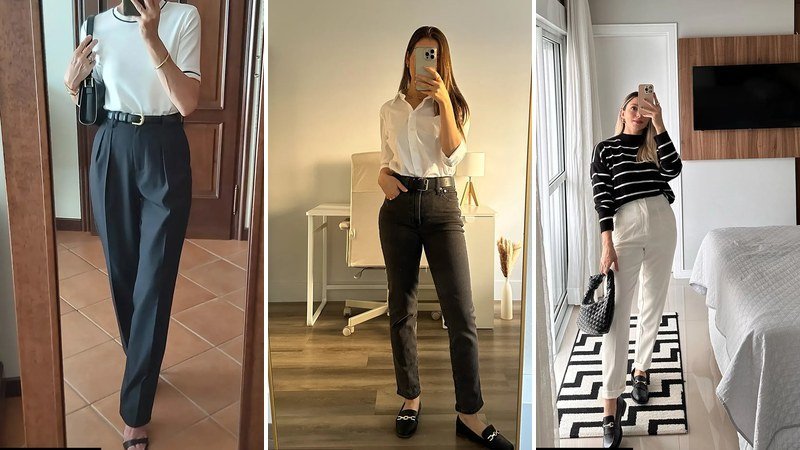
Chic 20+ European Work Outfits Women Will Absolutely Love

When you search for European Work Outfits Women, you get the same mood board every time: a Parisian in a trench coat, holding a baguette, in front of a Haussmann facade. None of it tells you what to wear in a Milan meeting room or a Berlin client workshop. The real thing is less styled and more specific. European business casual comes with rules nobody writes down: shoes that don’t click on cobblestones, a work wardrobe capsule that skips logo bags. That’s the difference between dressing for the photo and dressing for the room.
The gray area between tailored and relaxed is where most office dress codes fail, so start with the business casual basics before you pack. And if you’re building a work wardrobe capsule for Europe, this honest COS trouser review tells you which staple actually earns its suitcase space.
24 European Work Outfits Women Actually Wear
The following 24 outfits aren’t pulled from runway shots—they’re the real combinations European women put on before commuting on cobblestones, leading cross‑functional meetings, and walking to lunch. No berets. No Breton stripes. Just concrete, wearable formulas grouped by the role they play in an actual working week. What they share is a distinct brand of business casual that values fabric over flash and cut over brand name.
The Knit + Trouser Uniform
A sweater and trousers might sound too basic to matter, but in Europe, this combination is the daily default—not because it’s easy, but because it’s impossible to get wrong once you nail the cut. The following six formulas show how a knit can look boardroom‑ready, date‑night sharp, or commute‑durable, all depending on weight, layer, and shoe.
The Button-Down-and-Knit Layer

by @verena.lr
A white cotton button-down anchors this look, layered under an oversized charcoal knit that hits at the hip. The grey wide-leg trousers are cut from a wool blend that holds a crease without looking pressed. A slim black belt defines the waist, and the pointed-toe grey suede ankle boots add a sharp line that never announces itself with heel clack. The sweater should be a touch oversized—if it fits perfectly, the nonchalance evaporates. A black leather handbag completes the quiet-luxury circuit, making this the go-to for a day when you need to move between meetings without changing a single piece.
The Fine-Knit Power Play

Here, a white fine-knit top with a subtle sheen is tucked into black relaxed crepe trousers that pool just enough over black open-toe sandals. The slim black belt disappears into the waistband, while a chain-strap shoulder bag and layered gold jewelry—short pearl necklace, chunky gold ring—push this into formal territory. When wearing open-toe shoes in a corporate setting, the rest of the outfit must read deliberate, not beachy; these structured sandals do exactly that. This is an after-dark work event solved, no clutch swap required.
The Tone-on-Tone Ensemble

A deep V-neck beige knit, relaxed in fit, sits over a slim dark-green t‑shirt that just peeks at the neckline. The trousers are cream and loose, skimming the floor over pointed tan suede ankle boots. A brown leather belt bridges the waist, while a dark-green top-handle bag continues the accent color. Repeating a subtle accent color—here, the green—across two items feels like a styling secret, not a matching set. The overall effect is quiet power: formal enough for a client pitch, soft enough that you don’t look like you’re wearing an uniform.
The Head-to-Toe Grey

by @_katiepeake
Wearing a single color head-to-toe can read as a costume—unless you vary the texture. Here, a relaxed grey knit with a visible weave meets smooth grey wool-blend wide-leg trousers. The black leather accessories—a slim belt, structured top-handle bag, and pointed-toe ankle boots—create just enough contrast to interrupt the grey without shattering it. To avoid the neutral trap, use boots with a subtle sheen or interesting hardware; flat matte black can fall into dull territory. This outfit says “capable and unbothered” in any European capital.
The Striped Knit Refresh

A black-and-white striped knit—not Breton, but a wider, relaxed stripe—brings pattern without noise. Tucked into bright white cotton-blend trousers with a tailored cut, it strikes the right balance between graphic and grounded. Black loafers add a menswear polish, and a black leather handbag keeps the look anchored. The trick is in the trousers: they must be impeccably pressed, because the sweater’s casual texture relies on that crispness to stay office-appropriate. Gold earrings are the only shine, and that’s all you need.
The Layered Neutral Trio

This is European layering at its most strategic: a slim white long-sleeve tee under a beige relaxed knit, both tucked into high-waisted beige trousers with a soft crease. A brown leather belt and a matching large tote introduce warmth, while clean white leather sneakers—think Veja or Axel Arigato—keep the look boardroom‑adjacent. If the sneaker isn’t deliberately minimalist, the entire outfit drops from intentional to accidental. A gold watch adds a final, quiet gleam. This works for a cross‑functional workshop where a suit would feel like armor.
The Separates That Command Respect
When the situation calls for structure beyond a knit, these separates step in. Button‑downs, waistcoats, and sleeveless shells do the talking, while trousers keep the foundation solid. The key is that nothing matches exactly—each piece stands alone, yet works as an unit. This is how you dress for a promotion, not just a Tuesday.
The Sharp Summer Base

A slim white cotton-blend tank top stays tucked into black straight-leg trousers that hit just above the ankle. The brown leather belt and flat brown sandals break up the monochrome without introducing a third color. The star, however, is the large pebbled leather tote in a rich brown—big enough to hold a laptop, structured enough to double as a briefcase. When wearing flat sandals to the office, the bag must be substantial; anything dainty tips the scale toward vacation. A gold watch is the only jewelry required.
The Waistcoat Power Move

by @indybamra
A black tailored wool-blend waistcoat buttons over bare skin or a slim camisole (unseen), paired with beige wide-leg linen-blend trousers that add softness. Black flat sandals extend the leg line, and a structured black handbag lends precision. The pearl necklace—short, not strand—and a chunky gold ring are the only adornments. The waistcoat alone bluffs a full suit; wearing it with wide trousers and no blazer signals you know the rules well enough to break them. This is a smart-casual outfit that reads executive in creative fields.
The Silk Shirt Standard

A relaxed silk button-down in optic white, worn untucked over black slim trousers, instantly erases any impression of trying. The fabric catches light, not wrinkles, as you move. White leather sneakers keep the pace brisk, and a black leather shoulder bag—small, unadorned—completes the look. Silk shirts paired with sneakers work because the luxury of one justifies the casualness of the other; cotton with sneakers reads student, silk reads editor. This is the outfit you wear to a startup pitch or a gallery meeting.
The Sleeveless Power Hour

The sleeveless black jersey top, cut slim but not tight, tucks into beige wool trousers that hold a sharp crease. The neckline is high enough to feel professional, and the exposed arms convey confidence—provided the fabric doesn’t cling. Nude sandals elongate the legs, while the black structured tote (the kind that stands upright on its own) signals preparedness. Avoid visible bra straps at all costs; a single peek downgrades this look from corporate to careless. This is what you wear on a warm afternoon when you need to present to the board.
The All-Black Armor

There’s black, and then there’s the black that makes you look like you’ve already been promoted. The t‑shirt is heavyweight cotton, not tissue, tucked into straight‑leg wool trousers. Brown accessories—a slim belt, a roomy leather tote—break up the darkness with deliberate warmth. Black suede sandals keep the leg line clean, and the gold watch plus earrings add a subtle glow. In a head‑to‑toe black look, texture is your only tool: the smooth wool, the matte cotton, the napped suede—each must register separately or the outfit flattens.
The Linen Button-Down

Linen wrinkles, and that’s the point. A white cotton button-down, sleeves rolled halfway, sits half‑tucked into cream linen‑blend trousers with a wide, straight leg. Brown leather sandals and a matching belt and tote anchor the light palette. If you try to keep linen crisp all day, you’ll only look uncomfortable; accept the creases as proof you’re living in your clothes, not performing in them. A gold watch is the one piece of structure. This is a summer Friday boardroom outfit that says you’re here to work, not to swelter.
The Relaxed‑Office Equation
Relaxed doesn’t mean careless. In creative fields, casual Fridays, or any office where a full suit signals you didn’t read the room, these outfits bridge the gap. Expect denim, cardigans, sneakers, and the kind of business casual that never looks like you gave up.
The Cardigan Café Look

A cream knit cardigan, worn open over a slim black t‑shirt, softens the dark brown wide‑leg trousers. The trousers have a fluid drape that moves with you, not against you. White leather sneakers keep the look grounded, while a delicate gold necklace and matching earrings add polish. When a cardigan is as relaxed as this, the trousers need crisp tailoring underneath to prevent the outfit from sliding into loungewear territory. This is the outfit for a teaching day or a quiet focus session at a desk.
The Cream-Jean Ensemble

Here, a beige knit slides over off‑white straight‑leg jeans that feel more tailored than weekend. The white canvas sneakers are clean, un‑logoed, and low‑profile. The real move is the accessories: a burgundy tote and matching slim belt inject a controlled shot of color without upsetting the neutral base. If you’re tempted to add a printed scarf, resist—this outfit works because the eye lands on one accent point only. Gold earrings finish the look. Wear this for a casual Friday that still holds its own in a client video call.
The Black-and-White Cardigan

White cardigan, black trousers: a prep‑school reference made modern through proportion. The cardigan is open and easy; the trousers are wide‑leg and floor‑skimming. Black‑and‑white leather sneakers pick up the contrast, while a gold watch is the only accessory needed. Avoid a necklace here—the cardigan’s neckline and the watch already share the spotlight; any more and you’ll look like you tried. This is the outfit for a creative office where a full suit would read as outsider, but joggers would get you sent home.
The Blazer-and-Jean Reboot

An oversized olive blazer—soft shoulders, no front closure—drapes over a white tank and wide‑leg white jeans. The grey suede sneakers are low‑key, and the jewelry is a simple gold necklace and stack of bracelets. The olive blazer (like the one I tested for months) acts as a neutral that isn’t navy or black, which instantly signals you’re not in a corporate uniform. This combination lets you walk into a Berlin tech office or a Stockholm design agency and look like you belong.
The Crisp Shirt Formula

A white button-down, untucked and a touch oversized, meets black straight‑leg jeans and black loafers. The shirt’s fabric is slightly rumpled by lunchtime—exactly when it starts to look its best. A black leather belt and simple gold jewelry keep the equation complete. The shirt shouldn’t be starched; if it can’t move with you, it screams “job interview” instead of “I run the meeting.” This is the most repeated office formula in Paris—and for good reason.
The Clean-Girl Commute

A white slim sleeveless top, snug but not tight, pairs with grey slim‑cut trousers that hit above the ankle. White leather sneakers and a small crossbody bag in matching white create a continuous light line. Silver accessories—a watch, a delicate necklace—add a cool finish. The crossbody bag isn’t just aesthetic; it leaves both hands free for a coffee cup and a train ticket, which on an European commute is a non‑negotiable. This outfit is engineered for walk‑and‑talk days, from co‑working space to client lunch.
The Neutral Foundation
The most effective outfits are often the simplest. These six looks prove that when you strip everything back—to two or three neutral pieces—the fit, the fabric, and the way you carry yourself become the whole story. Consider these your blank canvas for the accessories that matter, or wear them alone and let the cut do the work.
The Black-Monochrome Shift

Black on black, broken only by white. The ribbed tank adds subtle texture, and the trousers are a straight‑leg woven fabric with enough weight to hang cleanly. White sneakers and a white shoulder bag—both leather—act as deliberate contrasts, pulling the eye downward and outward. A gold watch is the anchor; without it, the black‑and‑white combination can feel like a waiter’s uniform. This is your go‑to for a day when you need to be in five places and look pulled‑together in all of them.
The Cream-and-Black Base

by @ritajokinen
A cream long‑sleeve top in a heavy jersey—opaque, no drape‑show—tucks into black wide‑leg trousers with a sharp crease. No belt, no necklace, no visible handbag. The power is in the silhouette: a slim torso meeting a volume of fabric below. When the cut is this precise, accessories are a distraction, not an addition. This is the base layer of a capsule wardrobe, and it works just as well under a trench coat as it does solo at your desk. For shoes, choose a simple black pointed flat to continue the line.
The Grey-on-White Equation

A grey sweater, not oversized but easy, layered over a white tee that peeks at the hem, tucks into white wide‑leg trousers. A black belt at the waist carves out a shape that would otherwise be lost in the volume. White trousers at the office require a dark anchor—here, the black belt and grey knit—to keep them from drifting into resort territory. The rest is invisible: no jewelry, no visible bag, just the confidence of someone who knows fewer ingredients taste better.
The Tonal Neutral Look

A beige slim‑fit sweater meets cream trousers in a near‑tonal blend that makes you look taller, leaner, and utterly unbothered. The trousers are relaxed but not sloppy, and the white leather sneakers add a sportive edge without compromising the quiet mood. Tonal dressing fails when the shades match too perfectly; a slight difference—beige and cream—feels intentional, not costume‑y. Silver accessories (just a phone case here) keep the coolness. This is your Monday outfit when you need to reset.
The Halter-Neck Gamble

A white halter top bares the shoulders but covers the collarbone, walking the line between confident and careless. The black wool‑blend trousers are wide and fluid, the brown belt and matching structured bag grounding the look in 9‑to‑5 reality. Black suede sandals with a closed back keep it office‑safe. If you’re not in a creative field, swap the halter for a sleeveless shell with a higher neck; the rest of the outfit carries the same weight. Gold watch only. This is the after‑5 work event solved.
The Brown-Black Pairing

Brown and black together were once a fashion rule to break; now they’re a foundation. A slim brown knit, warm and soft, tucks into black straight‑leg trousers with a subtle sheen. Black loafers add a menswear polish, and small gold earrings are the only jewelry. The key to making brown and black look expensive? No other colors—not even white—should interrupt. This is the outfit that travels well in a carry‑on, transitions from morning meeting to evening drink without a second glance.
What a Parisian Office Actually Feels Like—And How It Affects Your Shoes
Flats as a Status Cue: In Paris, pointed ballet flats or low-heel loafers don’t signal compromise—they signal agility. You walked the last mile from the Métro, navigated three flights of a Haussmann staircase, and still look boardroom-ready by 9 a.m. A woman in work outfits with flats who chose them deliberately reads as more in-control than one teetering in pumps she clearly regrets.
The Stomp-Test Rule: No one will tell you this, but if your heels click-clack across a cobblestone courtyard, you’ve announced yourself before you’ve entered the building—and not in a good way. European women treat shoe silence as a form of professional courtesy. A quiet sole says you belong here. A loud one says you just arrived.
No Desk Shoe Switches: Most guides recommend keeping office heels under your desk. I’d argue that’s the fastest way to broadcast you didn’t plan your commute, because European colleagues notice the switch and read it as poor preparation, not practicality. Your shoes must perform from morning coffee through the evening client dinner. Choose accordingly the night before.
The Cobbler, Not the Brand: French women invest in sole repair shops, not logo recognition. A skilled cobbler adds thin rubber half-soles to new leather-soled shoes before the first wear—extending their life and silent-proofing every step. This costs about €20 and changes how you walk through the city. It’s the single most European thing you can do to a pair of shoes, and almost no American article mentions it.
Platforms Don’t Translate: Chunky-lug boots or platform loafers read as weekend wear in Parisian offices, not Monday-morning authority. Save them for Saturday. For the office, the sole should be thin, the shape refined, and the volume low. Think shoes for work outfits that whisper rather than stomp.
The Unspoken Rules of Office Attire in Milan, Berlin, and Stockholm
Milan: Logo Literacy, Not Logo Loudness: Italian women communicate belonging through tiny, recognizable details—a Bottega knot on a bag clasp, a Gucci horsebit no larger than a thumbnail. A full-logo belt or a branded scarf tied to a handbag strap shouts “aspirational visitor” in a dialect everyone understands. The difference between insider and outsider is two centimeters of visible branding. Keep it small or skip it entirely.
Berlin: Tailored, Not Tried: Berlin rejects the suit but punishes excessive casualness just as hard. Sneakers are acceptable in a tech office only if they’re a deliberate design pair—Veja V-12s or Axel Arigatos—and only with tailored wool trousers. Never with jeans in a client meeting. The Berlin balance is precise: one deliberately casual element against a backdrop of otherwise sharp business attire. Two casual pieces and you’ve lost the room.
Stockholm: Lagom Applies to Your Outfit: The Swedish principle of “just enough” enforces a total ban on flash. Zero animal print, zero glossy finishes, zero visible logos. Skirts require tights eight months a year, and anything too coordinated reads as try-hard. The all-neutral palette isn’t a style choice—it’s cultural enforcement. But the all-neutral trap has its own risks; texture becomes your only differentiator, so invest in wool twills, brushed cottons, and fine-gauge knits that photograph as distinct even when the colors barely shift.
The Separates Power Move: Across all three cities, wearing a full matching pantsuit to a workshop can backfire—it reads as hierarchical rigidity rather than competence. Mastering the blazer-and-unmatched-trouser combination is the real power move. A hopsack wool blazer in charcoal over taupe wide-leg trousers signals authority without inflexibility. The Arket hopsack wool blazer does this job quietly for months without losing its shape.
Research Before You Pack: Search your host company’s LinkedIn employee photos, not their Instagram. What women wear in candid team shots—the group picture after a workshop, not the posed headshot—is your real moodboard. Instagram shows what the marketing team wants you to see. LinkedIn shows what actually gets worn on a Tuesday.
European Work Outfits Women Never Look Fussy—Here’s What’s Behind That
Calculated Imperfection Is a System: That one deliberately unbuttoned shirt cuff, the collar standing open asymmetrically, the blazer sleeve pushed up once—none of this is accidental. European women engineer nonchalance through a repeatable system: dress fully, then remove or loosen exactly one element before leaving the house. It signals you didn’t stand in front of a mirror longer than a minute. It takes practice, but the formula is reliable.
Tailoring Does All the Work: A perfectly cut trouser creates the entire outfit. You don’t need a statement necklace, a contrasting bag, or a printed scarf to “complete” anything. You’ll hear that accessories finish a look. The better move in an European office is removing one thing before you walk out the door, because visible effort reads as anxiety, not polish. Let the architecture of the clothes speak. Everything else is noise.
The French Half-Tuck Has a Function: It isn’t about looking messy. The half-tuck breaks up the horizontal line across your hips in a way that mimics movement—as if you tucked the shirt while walking, which is exactly the point. It suggests forward momentum, not static posing. Grasp the shirt hem, tuck just the front two inches into the waistband, and let the rest fall. One motion. Then stop fussing.
Wear Clothes That Age Visibly Well: Raw silk that crinkles, unlined linen that softens, leather that patinas—these materials communicate longevity. You live in them. You didn’t buy them yesterday. The goal is to look like you’ve had the piece for three years, not three days. Polyester satin can’t do this; it looks the same on day 300 as it did on day one, which is precisely the problem.
The Single-Element Rule: The trap American women fall for is wearing multiple interesting pieces at once—a textured blazer plus a printed blouse plus an unusual shoe. Edit any outfit so only one element holds attention: the silhouette, the texture, or the color. The rest recedes. If your trousers are wide and sculptural, everything above the waist should be quiet. Classic work outfits follow this rule instinctively; they never compete with themselves.
How to Source European‑Looking Office Clothes While Living in Suburban Ohio
US Retailers That Get the Cut Right: You don’t need a plane ticket to Stockholm. Aritzia’s “Easy” trouser, Everlane’s “Way-High” drape pant, and Madewell’s “Harlow” wide-leg all have the correct rise and stride length—high enough to elongate, wide enough to skim without swamping. Swap the top for an Uniqlo +J piece or a COS wide-leg tailored twill trouser via Nordstrom, and the silhouette reads European immediately.
The eBay Saved-Search Hack: Set alerts for “Massimo Dutti trousers size 6,” “COS wool dress,” or “Stella McCartney blazer.” Secondhand European pieces regularly list at $30–60 and arrive with tags still attached. European women cycle their wardrobes through resale platforms constantly; the inventory is deep and surprisingly affordable. Check once a week and buy when the right piece surfaces. Patience pays.
Fabric Composition Is a Filter: European workwear relies on high-twist wool blends—Trevira, poly-viscose-elastane mixes that hold a crease for twelve hours—not polyester satin. When shopping online, filter by at least 2% elastane in trousers and 60% or higher natural fiber in blazers. If the fabric content isn’t listed, skip the item. It’s probably hiding something.
Ditch the Polyester Blouse: The jewel-toned satin shell with a woven floral print is the single most American item in your closet, and it reads that way instantly. Replace it with a viscose-blend crewneck tee—Banana Republic Factory occasionally gets the weight right—or a merino fine-knit in charcoal, navy, or oatmeal. Grey pants outfits for work come alive with a texture-rich knit in a way they never do with shiny synthetics.
Zara and Mango Ship to the US: Their “Studio” and “Selection” sub-brands are cut longer, less cropped, and far closer to what a Spanish or Swedish office actually expects. Avoid mainline Zara with its trend-driven proportions; stick to the premium lines with better fabric and saner silhouettes. Order two sizes, return one, and within a few cycles you’ll know your European size across brands without thinking about it.
Your 5‑Piece European Work Capsule That Fits in a Carry‑On
Single Color Anchor: Pick charcoal grey as the backbone for your blazer, trousers, and dress.
A tonal grey base is the quiet neutral that works from Stockholm to Milan. When you add a silk scarf or a colored shoe, you look intentional—not like you packed in a panic. The real advantage: every piece automatically pairs with every other piece, so you never stand in a hotel room at 7 a.m. holding up two items that clash. A pair of grey trousers worn with the matching blazer reads as a suit, but the same trousers with a knit and sneakers instantly become a second look.
Shoe Formula: One pair of low-block-heel ankle boots, one sleek white leather sneaker. No backups.
A 2–2.5 inch block heel lets you walk cobblestones silently and still look sharp with dresses or trousers. The sneaker must be boardroom-adjacent—think Veja Campo or Axel Arigato—and you’ll wear it only with tailored trousers, never jeans. The trick to sneakers that look intentional at work is a clean leather upper and a slim sole; anything chunky or mesh reads weekend, not workday.
Accessory Switches: A cashmere-blend scarf and a thin leather belt turn one base into three city-specific outfits.
In Stockholm, leave the scarf off—the all-grey look is enough. For a London dinner, wrap a scarf in rust or petrol blue around your neck; it reads vibrant without shouting. In Paris, ditch the scarf and add a slim leather belt at your natural waist over the blazer; it recuts your silhouette instantly and communicates that calculated nonchalance. The belt is small enough to lie flat in a side pocket.
The Math Rule: Any piece you pack must combine with at least three others, or it stays home.
This rule kills the printed blouse and the “fun” jacket on sight. If your white sneakers only go with one pair of trousers, they fail the test. The capsule works because each item earns its space by multiplying—your boots work with the dress, the trousers, and even the blazer over bare ankles. It’s not a minimalist aesthetic; it’s a packing survival skill that prevents overstuffed bags and outfit paralysis.
Steamer Over Spare Blazer: Pack a travel steamer and a collapsible lint roller instead of a second layer.
After a morning commute in drizzle or a cramped metro, an one-minute steam brings back the trouser crease and smooths a blazer’s shoulders. No outfit change required. If you get caught in real rain, I’ve got a full system for rainy day work outfits that hinges on a lightweight waterproof shell and the post-rain steam reset—it’s far more effective than hauling a spare jacket.
FAQ
Are sneakers ever acceptable in an European office?
Yes, when they’re deliberately minimalist leather sneakers paired with tailored trousers or a midi-length dark-wash denim in creative fields. Mesh, bright logos, or any style you’d wear to the gym instantly mark you as an outsider. I’ve broken down how to make work outfits with sneakers look intentional—the litmus test is whether the shoe still reads as a choice with a blazer.
What if I’m plus‑size and can’t fit into typical European brands?
European brands have narrower store ranges, but their online extended lines deliver the same aesthetic with real cut-grading. Mango Violeta, COS extended sizes, and Ulla Popken all carry workwear with the relaxed structure you’re after. Stateside, Universal Standard’s Next-to-Naked trousers nail the European wide-leg silhouette without pinching, and I’ve gathered more plus-size office outfits built around the same principle—comfort that doesn’t compromise the line.
How do I avoid looking like a tourist at a business dinner?
Keep your work outfit on but swap the bag: a medium structured leather tote works; a mini-crossbody screams “I’m sightseeing later.” Never wear a visible hotel keycard lanyard or a large map-print scarf—both communicate visitor status before you’ve picked up a menu. Even a single wrong accessory can undo a sharp look, which is why the bag that kills the outfit is a real phenomenon to avoid.
Can I wear black to a meeting in Italy without offending?
Absolutely. Modern Italian women wear black constantly—the old superstition about business events doesn’t hold in professional settings. The line between funereal and fashion-forward is simple: never do head-to-toe matte black without a break. Add a nude shoe, a textured fabric, or a silver watch to interrupt the plane.
Do European women really not wear make‑up to work?
They wear it, but the formula is bio-cosmetic: a tinted serum, brushed-up brows, a single coat of brown mascara. There’s no contouring, no full-coverage foundation, no sharp lip line. The goal is to look like you slept nine hours, not that you spent 45 minutes painting them on.
Will my American‑style pantsuit mark me immediately?
Yes, if the blazer is cropped with patch pockets, the trousers are a skinny-ankle cut, and both match flawlessly. A single-vent blazer whispers “mall brand” to an European eye. Remedy it without buying a new wardrobe: separate the pieces, wear a slightly longer blazer that hits below the hip, and invest in a wider trouser leg.
How do I handle walking in rain without ruining my work outfit?
Accept rain as infrastructure, not a style emergency. A lightweight waterproof trench from Rains or Stutterheim slips over a blazer, and waterproof-coated leather ankle boots—black Blundstones work cross-culturally—keep your feet dry. At the office, an one-minute steamer at your desk restores the trouser crease; I’ve mapped out the whole rainy day work outfits protocol so you never need a change of clothes.