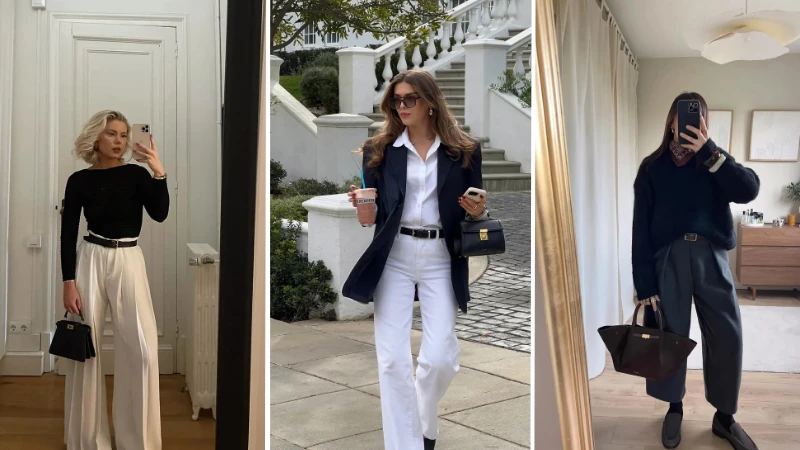
Polished 20+ Classic Work Outfits That Mean Business

Classic work outfits are supposed to be the easy answer, but most advice leaves you either too stiff or stuck in a time warp. The Pinterest-perfect blazer-and-silk-shell combo often forgets your actual commute, the office thermostat, and the fact that you need to move. Real women’s classic work wardrobe essentials don’t require a suit of armor or a time machine. They’re built on classic office wear for women that adapts to casual expectations without losing polish—and that’s exactly what you’ll find here.
For more on building a polished foundation, start with this guide to classy business outfits. And when dress codes get vague, the framework in business dress code decoding will save you from guessing.
25 Classic Work Outfits for Real Life
Most classic work outfit roundups show you editorial looks that fall apart by the time you reach your desk. These 25 outfits are different. Each one comes from real pieces — trousers, knits, blazers, and the occasional polished sneaker — that you can actually wear all day without tugging, adjusting, or dry-cleaning emergencies. No costume dressing, no stiff boardroom clichés. Just the formulas that make getting dressed feel like a decision you already made.
The Blazer & Coat Formula
A structure layer is the fastest way to signal you mean business. But it doesn’t have to be a rigid suit jacket. Here, you’ll see how an overcoat, a trench, a tweed jacket, or an oversized navy blazer takes a simple base — often a tee or a knit — and gives it the sharpness it needs. The secret is in the fabric weight and the way it sits on your shoulders, not the shoulder pads.
The Cream Coat Equation

A cream oversized wool-blend coat thrown over a white turtleneck and tan high-waisted trousers creates a neutral column that reads as intentional, not try-hard. The surprise comes from white sneakers — they knock the formality down a peg without losing polish. Look for a coat that skims your body, not one that overwhelms it; the fabric should drape from the shoulder, not pull across the back. This works for a creative office or a casual Friday where you still need to lead a meeting.
Trench Over Knit

A beige cotton-gabardine trench coat is the original multi-tasker. Layer it over a white cardigan and black straight-leg wool trousers, then finish with black loafers. The loafers keep the line lean, while the trench defines the shoulder. If your trench doesn’t have a back vent that actually opens, you’ll regret it the second you sit in a car. Check the button stance — too low and it cuts you off at the hip; too high and it looks stiff. This is the piece that rescues a plain outfit from forgettable.
Tweed Jacket, Black Jeans

A cream structured tweed jacket paired with a white tee and black skinny jeans walks the line between boardroom and bar. The jacket’s texture does the talking — it’s more interesting than a standard wool blazer but still reads as professional. Tweed can read as fusty if the cut isn’t modern; look for a slightly cropped or unfussy single-button style. Add black loafers and an oversized black tote, and you’ve got an outfit that transitions from a client lunch to an evening event without a detour home.
The Tonal Cream Suit

by @burcukemksz
Monochromatic dressing is a power move, but it risks looking like you tried too hard. This combination — a relaxed cream wool overcoat, white turtleneck, and cream straight-leg trousers — solves that by using slightly different tones and textures. Cream patent-leather pointed pumps and a dark brown structured tote break up the palette just enough. A tonal look like this can easily veer into bridal territory, so keep accessories minimal and modern — no pearls, no lace. Wear this when you want to command attention without saying a word.
Navy Blazer, White Trousers

An oversized navy wool-blend blazer thrown over a white button-down and white wide-leg denim trousers is the classic formula that always lands. The key is in the proportions: the blazer should hit mid-hip (not mid-thigh) to keep the look balanced with wide legs. A blazer that’s too long with wide trousers shortens the leg line; err on the side of a shorter jacket. Add a black belt, black handbag, and brown sunglasses for a touch of 1970s polish. It’s preppy but not predictable.
The Button-Down Blueprint
The button-down shirt has sustained decades of workplace reinvention for a reason. It’s the one piece that works equally well under a sweater as it does knotted at the waist with jeans. These seven formulas prove it’s not about a stiff, starched cotton; it’s about finding the right drape, the right sleeve length, and pairing it with the right trouser shape.
Striped Shirt, Light Jeans

A black-and-white relaxed cotton button-down tucked into light blue straight-leg jeans is the definition of classic business casual. The black-and-beige ballet flats and black shoulder bag keep it grounded, while the gold watch and chain necklace add a deliberate shine. The right fit matters more than the pattern. If you’re between sizes in a button-down, size up and have the shoulders taken in — gaping across the bust is almost always a fit issue, not a size issue. This outfit works for offices where jeans are allowed but the expectation is still pulled-together.
Tan Shirt, Cream Trousers

A tan linen button-down with cream cotton-blend tapered trousers and white leather sneakers feels like quiet luxury without the price tag. The brown leather belt and dark brown tote add a subtle coordination. Linen wrinkles — that’s its nature. If you can’t embrace the creases, choose a cotton-twill instead; the silhouette will read the same but the maintenance is lower. This is a Monday outfit for a boss who walks from the parking garage to the office and doesn’t have time for steaming.
Black Shirt, Tan Trousers

A black cotton button-down paired with tan wide-leg twill trousers creates a stark, graphic contrast that photographs well and wears even better. The black belt, black pebbled leather tote, and black acetate sunglasses pull the look into “old money” territory. Wide-leg twill can add volume at the hip; tuck the shirt fully and define the waist with a slim belt to avoid looking lost in fabric. This outfit handles a day of desk work, a sudden client video call, and an evening drink without a single change.
Blue Shirt, Cream Maxi Skirt

A slim-fit blue cotton button-down tucked into a high-waisted cream denim maxi skirt is the formal-but-not-fussy option for traditional offices. The black belt, black suede pumps, and black tote maintain the structure, while the gold jewelry keeps it from looking severe. Maxi skirts need length precision: the hem should just graze the top of your shoe, not pool on the floor. A tailor can take it up for less than $20. This outfit works for presentations, client lunches, or any day you want to feel put-together without wearing a suit.
Head-to-Toe Espresso

by @andreiagvr
A dark brown silk button-down tucked into dark brown high-waisted wool-blend wide trousers is a masterclass in monochrome. The black belt and dark brown pointed-toe heels anchor the look, while the dark brown handbag and sunglasses keep it cohesive. Satin or silk can read as sleepwear if it’s too glossy; look for a matte crepe or sand-washed silk that catches light, not glares. This outfit is for the days you need to project confidence without bright colors. It’s serious but never boring.
Stripes & White Denim

A blue-and-white striped relaxed cotton button-down with white straight-leg denim trousers is a warm-weather classic that ignores seasonal rules. The black sandals, black shoulder bag, and gold watch keep it office-appropriate. White denim picks up every smudge; carry a stain-removal pen in your bag and you’ll never worry about coffee spills. Roll the sleeves once or twice, and this look works just as well for a casual brunch as it does for a creative workplace on a Friday.
White Shirt, Black Jeans

A relaxed white cotton button-down tucked into black straight-leg jeans is the complete “I have five minutes to get dressed” outfit. The black belt and black loafers ground it, while the gold necklace and earrings keep it feminine. A true white shirt can be transparent; wear a seamless nude-to-you camisole or a skin-toned bralette underneath instead of a white bra, which will show through. This is the outfit you copy every week because it just works — no thought required.
The Knitwear Advantage
Knitwear — when chosen well — does the work of a blazer with the comfort of a blanket. The trick is finding cardigans and sweaters that hold their shape, not ones that sag at the elbow by lunch. In this section, you’ll see how a bouclé cardigan, a merino crewneck, or an oversized mohair sweater becomes the anchor of a classic outfit without adding bulk or age.
The White Bouclé Cardigan

A white bouclé cardigan worn open over black wide-leg denim trousers and black suede boots is proof that texture can replace the need for color. The cardigan’s nubby surface catches light in a way a flat knit doesn’t, instantly making the outfit feel more expensive. Bouclé can snag on jewelry and desk edges; keep your bracelets smooth and your workspace clear. A black leather handbag pulls it all into focus. This is a formal-leaning look for offices where a blazer would be overkill but a sweater alone would be too casual.
Layered Over a Button-Down

A grey regular-knit sweater layered over a light blue cotton button-down creates that academic-meets-executive appeal. The black slim wool-blend trousers and black suede ankle boots keep the bottom half sharp, while a black structured shoulder bag and gold watch add polish. The sweater must be thin enough that the shirt collar lies flat underneath; a chunky knit will bunch up and look messy by mid-morning. This is the outfit for days when you want warmth without sacrificing the authority a collar provides.
Blue Sweater Over Blue Shirt

A blue relaxed-knit sweater draped over a light blue button-down adds a nonchalant polish to white wide-leg linen trousers. The sweater can be worn tied over the shoulders for a country-club effect, or worn fully as a layer with the collar peeking out. If you tie a sweater around your shoulders, choose a fine-gauge knit; a heavy cable-knit will roll forward and choke you by the time you’ve walked to your car. A dark brown suede handbag and black belt complete the preppy, minimalist look.
The Grey Layer Trio

by @verena.lr
A white button-down under a dark grey oversized knit sweater, paired with grey wide-leg wool-blend trousers, creates a soft tonal effect that flatters most skin tones. Grey suede pointed-toe ankle boots and a black handbag ground the outfit. An oversized sweater can swallow your frame; look for a deep V-neck or a front tuck to create a diagonal line that points toward your face. This outfit is the quiet-luxury answer to a suit — softer, but just as commanding in a meeting.
Beige Sweater, Cream Jeans

A beige relaxed-knit sweater with off-white straight-leg jeans and white canvas sneakers is the weekend uniform that earns its place in a casual office. The burgundy tote and matching belt add just enough color to keep it from looking washed out. Canvas sneakers can look too gym-adjacent for an office; stick to crisp, all-white leather ones if your workplace leans more formal. Gold earrings are the final touch. This outfit handles a commute, a day of desk work, and a post-work errand run without blinking.
Grey Cardigan, Black Trousers

by @kavveeta
A grey regular-knit cardigan worn open over a white cotton t-shirt and black wide-leg fabric trousers is the definition of modern minimalism. Black pointed-toe flats and a black structured tote keep the line sleek, while black rectangular sunglasses add an edge. An open cardigan creates an unbroken vertical line that elongates the body — fasten it only if you need warmth or if the office air conditioning is aggressive. This outfit works for a day full of meetings where you need to be comfortable but still look composed.
Cream Cardigan, Grey Trousers

A white regular-knit cardigan over a white slim t-shirt and grey tailored wool-blend trousers is an exercise in restraint. The dark brown belt, suede mary janes, and shoulder bag introduce warmth, while gold jewelry catches the light. When a cardigan closes neatly with a single hook or button, it reads like a jacket — wear it over a silk shell for a look that rivals a suit. This outfit is formal enough for a presentation but soft enough that you’ll still feel like yourself.
Mohair Sweater & Wide Trousers

by @e_ddiee
A black oversized mohair-blend sweater tucked slightly into dark grey wide-leg wool-blend trousers is the nonchalant approach to work dressing. Dark grey suede loafers and a dark brown suede tote maintain the quiet-luxury mood. A burgundy cotton bandana tied at the neck or on the bag adds a controlled pop of color without breaking the classic silhouette. Mohair sheds — pair it with trousers that don’t attract every fuzzy fiber, and keep a lint roller in your desk drawer. This outfit is the answer for chilly mornings when you want to look like you didn’t try too hard.
The Minimalist Silhouette
Sometimes the simplest looks are the hardest to get right. These outfits rely on two things: a sculptural trouser and a top that fits exactly how you want it to. No extra layers, no elaborate accessories. Focus on proportion — where the waist sits, how the hem breaks — and the result is a clean, modern classic that never tries too hard.
The Cream Knit, Black Trousers

by @ritajokinen
A cream slim-fit jersey long-sleeve top and black wide-leg crepe trousers is the work-from-home outfit that looks pulled together on a video call. The top’s clean neckline frames the face, while the trousers’ drape creates movement without bulk. A jersey top with a bit of spandex keeps its shape through hours of sitting; pure cotton will bag out at the elbows. No bag, no belt — this is the stripped-down counterpart to a busy wardrobe. It proves that two well-fitting pieces can outshine ten mediocre ones.
Black Tank, Black Trousers

A black ribbed-knit tank top tucked into black straight-leg woven trousers is a stealthy monochrome base. White leather sneakers and a white shoulder bag break the darkness, while a black belt and gold watch pull it together. A tank top in a ribbed knit reads as intentional; a plain cotton jersey tank reads as underwear. Choose the former. This is the outfit for a smart-casual office where you want to feel cool, sleek, and completely at ease. Add a blazer if you need to level up for a meeting.
Black Halter, Grey Trousers

A black ribbed-knit halter top with grey wide-leg wool-blend trousers is a surprising corporate-chic combination. The halter draws the eye upward, balancing the volume of the trousers. A black structured tote and a slim black belt keep the look intentional. A halter top requires a supportive strapless bra or adhesive cups; test the combination before you commit to a full day. This outfit works best for warmer offices where your arms can breathe, or thrown under a blazer for an instant transition from day to dinner.
Black Tee, White Denim

A black regular cotton t-shirt and white straight-leg denim trousers is the blank canvas of classic dressing. A black belt, black sandals, and black shoulder bag maintain the color-block effect, while a gold necklace adds a focal point near the face. A thicker cotton tee drapes better than a tissue-weight one; it won’t cling or show every bra line. This outfit is the low-effort hero for casual Fridays, creative offices, or any day when you need to look presentable without a single scratchy seam.
Black Top, White Wide-Legs

A black slim-fit jersey long-sleeve top tucked into white wide-leg crepe trousers is a study in contrast and flow. A black waist belt sculpts the silhouette, while a black top-handle bag and gold jewelry add polish. Wide-leg trousers in white can read as clinical; break up the whiteness with a dark belt and let the hem brush the floor — no capris. This outfit is formal enough for a boardroom, yet the crepe fabric moves with you, not against you. It’s the kind of look that makes people think you have your life together — and that’s a pretty good side effect.
What Actually Makes an Outfit “Classic” (and What’s Just Dated)
The silhouette test: A truly classic piece balances shoulder, waist, and hip without exaggeration. If a blazer’s shoulder pads jut out like a 1987 linebacker or a pencil skirt restricts your stride to a 6-inch shuffle, it’s a costume—not a classic garment. The non-obvious tell? Check how the shoulders sit when your arms are at your sides, not just when you’re posing in the mirror.
Fabric tells the truth before the cut does: Real classy business outfits lean on natural fibers—wool, cotton, silk—that drape and age with you. Synthetic imitations might look crisp on the hanger, but they bag at the elbows and shine under office lights after a few wears. Run a hand over the sleeve: if it feels like plastic, it will betray you by lunch.
Color palette as a time stamp: A well-cut dress still reads dated if it’s drenched in a hyper-specific hue—think 2008-era teal or 2012’s radioactive coral. Classic office wear lives in neutrals and deep tones that escape a fashion moment: charcoal, navy, camel, cream. The insider detail? Even a “neutral” can be a trap if it carries an undertone that anchors it to a specific decade’s version of beige.
Over-adorned “classic” details cancel the effect: One subtle gold button or a slash pocket signals classic. A jacket covered in crest buttons, chain trim, and epaulets screams theater costume. The rule of thumb: if you’d describe the garment to a friend and lead with the number of decorative elements, not the shape, it’s a dated piece masquerading as classic.
The comfort paradox: A garment that requires constant adjustment cannot be classic. True classics work with the body—if you can’t sit, reach, or breathe naturally, the design relies on rigidity rather than proportion. Pull it on and immediately cross your arms. That tug at the shoulder seam? It’s the piece telling you it’s stuck in a different era’s idea of how women move.
Why Classic Work Outfits Are the complete Dress Code Hack
The “dress code uncertainty” problem: In offices where “business casual” means jeans on your boss and suits on the CEO, a formula of neutral trouser + quality knit + structured layer reads professional without screaming try‑hard or sloppy. It removes the daily guessing game entirely. The insider move is to rely on the silhouette, not the label, and you’ll never again stand frozen in front of your closet at 7 a.m.
Classic pieces function as visual armor: In male‑dominated spaces, a well‑cut blazer or a silk shell sends a subconscious message of competence and self‑respect. It shifts the meeting’s dynamic before you speak. I’ve watched women walk into a room where the only other blazer in sight is on the man across the table—and they own the visual conversation without a word. That’s not vanity; it’s strategy.
Avoiding the “trend victim” tax: Women in leadership often notice that overly fashion‑forward outfits invite a subtle credibility cost. When your sleeve shape draws more attention than your proposal, you’re paying a tax you never asked for. Sticking to classic lines keeps the focus on your work, not the puffiness of your shoulder. Think of it as business casual for women with the volume turned to low.
Navigating regional differences: The secret to making “classic” work from San Francisco tech to D.C. law is swapping the fabric, not the silhouette. A ponte knit blazer reads polished in a startup, while worsted wool signals formality in litigation. Keep the shape consistent and let the material do the code‑switching. The same formula holds—only the handfeel changes.
Transitioning from interview to day‑to‑day: Overdressing on Day 30 feels as awkward as underdressing on Day 1. Classic outfits let you recalibrate slowly. That navy shift dress that nailed the interview can be softened with a cardigan and flats by week three, without ever looking like you’re wearing a costume of your former self.
The Real Cost of Looking Cheap in the Office
Most budget guides tell you to stock up on fast‑fashion “classic” pieces. I’d argue that’s a false economy, because the per‑wear cost actually works against you. Here’s the math no one teaches you.
The per‑wear reality: A $120 blazer worn 50 times costs $2.40 per wear. A $40 knockoff that puckers after 4 wears costs $10 per wear. Over two years, the “budget” option drains your paycheck and your patience. The cheap piece wasn’t a deal—it was a rental with a hidden surcharge.
The hidden dry‑cleaning drain: Poly‑blend garments meant to mimic wool often need professional cleaning just as often. But the fabric holds odors and pills faster, so you’re at the cleaner’s twice as frequently. Meanwhile, a wool or cotton‑silk blend airs out between wears and rarely sees a chemical bath. Your wallet notices the difference by year’s end.
Skimpy seam allowances are an emergency waiting to happen: Off‑brand “classics” often cut corners with narrow seams that split under pressure. The embarrassment of a sudden split during a presentation has no receipt. But the replacement clothing you’ll buy to recover your confidence does. Every time a cheap blouse loses its shape, you lose shopping hours, fitting‑room frustration, and the reliability a work outfit should guarantee from 8 a.m. to 5 p.m.
The invisible line of quality: There’s a tier of mid‑range brands, often at Nordstrom Rack or The RealReal, where the quality jump is dramatic for just $30–$50 more. A jacket that costs $80 instead of $40 can last four years instead of four months. Knowing where that line sits is the difference between a wardrobe that drains you and one that quietly serves.
Outfitting Your Actual Body, Not a Mannequin
The conventional take is to buy classic pieces off the rack and then tailor. That misses the fact that most workwear is cut for a standard shape that doesn’t exist on most women. The better move is identifying which labels design for your specific proportions first.
Pattern grading realities: Many brands design for an exaggerated hourglass that bears little resemblance to a living, breathing body. Learning to recognize when a label cuts for a shorter waist, a fuller bust, or a straighter hip saves years of blaming yourself. If a blouse pulls at the bust but fits the shoulders, the pattern—not you—is the problem.
The commute conversion: Classic outfits must survive a train seat, a car belt, or a humid walk. The secret is a removable base layer—a thin merino tee under the blazer—and choosing fabrics that don’t hold wrinkles even when you do. A linen‑blend won’t look crisp after 45 minutes in traffic; a crepe or ponte will. That’s the kind of practical detail that makes corporate outfits actually wearable.
Hormonal and mid‑life shifts: Many women in their 40s and beyond think they can’t wear classic pieces anymore because weight distribution changes. In reality, swapping a pencil skirt for a bias‑cut midi and a single‑button jacket for an open duster maintains the classic profile while honoring a changing body. The silhouette is the same; it’s the engineering that adapts.
Bras as the real foundation: A silk shell or tailored dress lives or dies on the right undergarment. A seamless balconette can make the same blouse go from pulling to perfect, yet most outfit advice ignores this entirely. The non‑obvious detail: try a plunge T‑shirt bra under a button‑down—it prevents that gap at the placket that plagues so many women.
Footwear you can actually stand in: “Classic” often defaults to a stiletto pump. That’s a failure of imagination. A sleek pointed‑toe flat, a low block heel, or a polished lug‑sole loafer all preserve the outfit’s line while letting you walk from the parking garage without regret. Look at the sole before the heel height—if it’s rigid and slick, no amount of cushioning saves it. Swap into real work shoes that respect your day, not just your look.
The 10 Classic Work Wardrobe Essentials Every Woman Should Own
A single-button navy blazer: The one piece that recalibrates everything from dark jeans to a sheath dress.
Look for a seasonless wool blend with a cupro lining—it slides over a silk shell without catching. Most women skip the tailor, but shortening the sleeves by half an inch often transforms the whole silhouette. A small waist suppression on a quality off-the-rack blazer gives it a custom feel without a full reconstruction.
The perfect-for-you white button-down: A cotton-silk blend with a touch of mechanical stretch so you don’t pop a button reaching for a file.
The non-obvious detail is a hidden placket and a curved hem that stays tucked. Machine-wash cold and hang-dry—skip the iron, the slight natural crease reads as deliberate ease. A crisp white shirt anchors nearly everything, so it pays to get the one that actually fits your shoulders.
Trousers with a waistband that doesn’t dig: A cropped, crease-front style in mid-weight crepe that feels classic even if you’ve sworn off traditional trousers.
Crepe drapes without clinging and holds a center crease that lengthens the leg. Sizing up and having the waist tailored to your exact measurement is the move few women make, but it prevents that mid-afternoon pinch that ruins your concentration.
A sheath dress that actually fits: Not the body-con version, but an engineered knit that skims without gripping.
Many sheaths pull across the hip, so look for one marketed as “fit-and-flare” with a subtle back vent. Dark navy or charcoal in a ponte knit with just enough recovery means you sit through a three-hour meeting and stand up without a map of your chair on the back of the dress.
The cigarette-length pant in a dark neutral: Works with flats, loafers, or a low block heel, and transitions seasonally with a sock swap.
The hem should hit just above the ankle bone—never at the widest part of the calf—to avoid cutting off your leg line. A bit of stretch in the fabric lets you crouch to plug in your laptop without the waistband rolling down.
A silk-esque (washable charmeuse) tee in cream or navy: The item that elevates a cardigan from frumpy to French instantly.
A subtle cowl neck or a draped crewneck does the work without extra bulk. Machine-washable charmeuse blends exist now—Roland Mouret’s line for Banana Republic or Quince’s washable silk are realistic options—so you’re not babying a dry-clean-only top after a single wear.
Cardigan-jacket hybrid: Structured enough to wear like a jacket, soft enough to hug your arms without screaming “grandma.”
Look for a firm double-knit merino with defined shoulder seams and patch pockets. A bracelet-length sleeve keeps it crisp, and an open front skims the torso in a way that feels tailored rather than sack-like. Throw it over literally anything and you have an instant layer of polish.
Pointed-toe low-heel pump or polished loafer: In a bone or deep cognac shade that bridges nearly every outfit.
A 1.5-inch block heel pump is the unsung hero of the classic work wardrobe—it gives the line of a heel without the foot-cramp. A sleek loafer with minimal hardware (no horsebits, no chains) reads as intentional, not retired-banker. Both of these step easily from the parking garage to a client lunch.
Structured tote large enough for a laptop but elegant enough for a client lunch: Pebbled leather that hides scratches and a base that stands on its own.
A bag that puddles into a heap the second you set it down erases the sharpness of your blazer. Choose one with an open compartment or a slim divider so you’re not unzipping and re-zipping every time you need your ID badge. This one accessory signals “prepared” before you say a word.
The midi slip skirt: In a bias cut that moves when you walk—a feminine classic option for creative offices or any day you don’t want to wear trousers.
Wear it with a fine-gauge knit tucked in, not a tee, so the lines stay clean. Bias cutting means the fabric drapes diagonally, which naturally accommodates a wider hip and moves without clinging. It’s the piece that makes you feel pulled together without feeling buttoned-up.
FAQ
Can plus-size women wear classic work outfits without looking frumpy?
Yes. The real trap isn’t the classic pieces themselves but the fit. Look for trousers with a contoured waistband and a hint of stretch that moves with you, and choose open-front blazers that create a long vertical line instead of boxy cropped cuts. A well-placed dart or a bias-cut skirt does more for a classic silhouette than an oversized tunic ever could.
What classic work outfits work for hot summers?
Swap wool for tropical-weight cotton-blend suiting and layer a sleeveless shell under an unlined blazer you can shed. A midi shirtdress in chambray or a linen-blend, with flat mules and a thin belt, defines the waist while keeping air moving. The real hack: wear a moisture-wicking camisole underneath so you don’t stain your silk blend by noon.
How do I make classic work outfits not boring?
Use texture instead of print. Pair a nubby tweed jacket with a liquid silk camisole, or swap your black pumps for a pair of loafers in deep oxblood. One unexpected detail—a resin bangle, a sculptural earring, a single contrast button on a cardigan—signals personality without breaking the classic lines.
Are classic work outfits still appropriate for creative workplaces?
Absolutely. The difference is in the mix. Wear your classic crepe trousers with a raw-hem knit or an asymmetrical blouse, and finish with minimalist sneakers. The classic foundation keeps it intentional; you’re someone who knows the business casual guardrails and plays just outside them on purpose.
What shoes actually count as classic for work?
A round-toe ballet flat, a low-block-heel pump (1.5 inches or less), a sleek pointed-toe ankle boot, and a refined loafer all count. The common denominator: clean lines, leather or high-quality vegan materials, and minimal hardware. For a detailed rundown of silhouettes that elongate the leg and which ones shorten it, I’d start with the work shoes that actually hold up through a commute.
How many classic work outfits do I really need for a 5-day week?
Seven, not five. Life throws in an unexpected client lunch, a day you can’t face trousers, or a last-minute presentation. With seven core combinations built around 10 to 12 pieces, you rotate without repeating in the same week and never stand in front of the closet at 7:15 a.m. wondering what’s clean.