Always Looking Sloppy on the Trail? 16 Backpacking Outfits That Don’t

Most backpacking clothing advice assumes your body is a rectangle with no curves and no sweat glands. You start with a pile of merino, fleece, and a rain shell. Ten miles in, the waistband digs, the bra strap burns, and the “breathable” jacket feels like a sauna. Most Backpacking Outfits guides fail to address the real fit and confidence needs women face under a loaded pack. Women’s backpacking clothing rarely accounts for hips, bust lines, or the specific way we sweat and chafe. You need lightweight backpacking attire that handles weather without turning you into a sweaty, chafed mess.
If you need practical hiking outfit ideas that actually function on trail, start with that collection. For more on what to wear hiking beyond the basics, this guide covers the essentials.
16 Backpacking Outfits That Outsmart the Weather
If your current hiking outfits are a chaotic pile of yoga pants and hand-me-down fleece, you know the pain: soaked through by noon, chafing where the sun doesn’t shine, and freezing the moment you stop moving. These 16 backpacking outfits aren’t built for Instagram—they’re built for mud, sudden temperature drops, and that 3 p.m. drizzle that turns a trail into a creek. Each one layers cleanly, packs down small, and solves a specific problem, whether it’s thigh chafe, wet shoulders, or wind that cuts through cheap fleece. You’ll see the exact pieces, the fabric pairings, and the small tweaks that make a big difference when you’re miles from a dry anything.
When Rain Won’t Quit
A breathable waterproof shell is the backbone of any backpacking outfit, but the way you pair it changes everything. These four outfits use your rain jacket as the hero piece, not an afterthought—balancing ventilation, warmth, and movement so you don’t have to stop and de-layer the second the sun peeks out.
The Monochrome Mountain Look
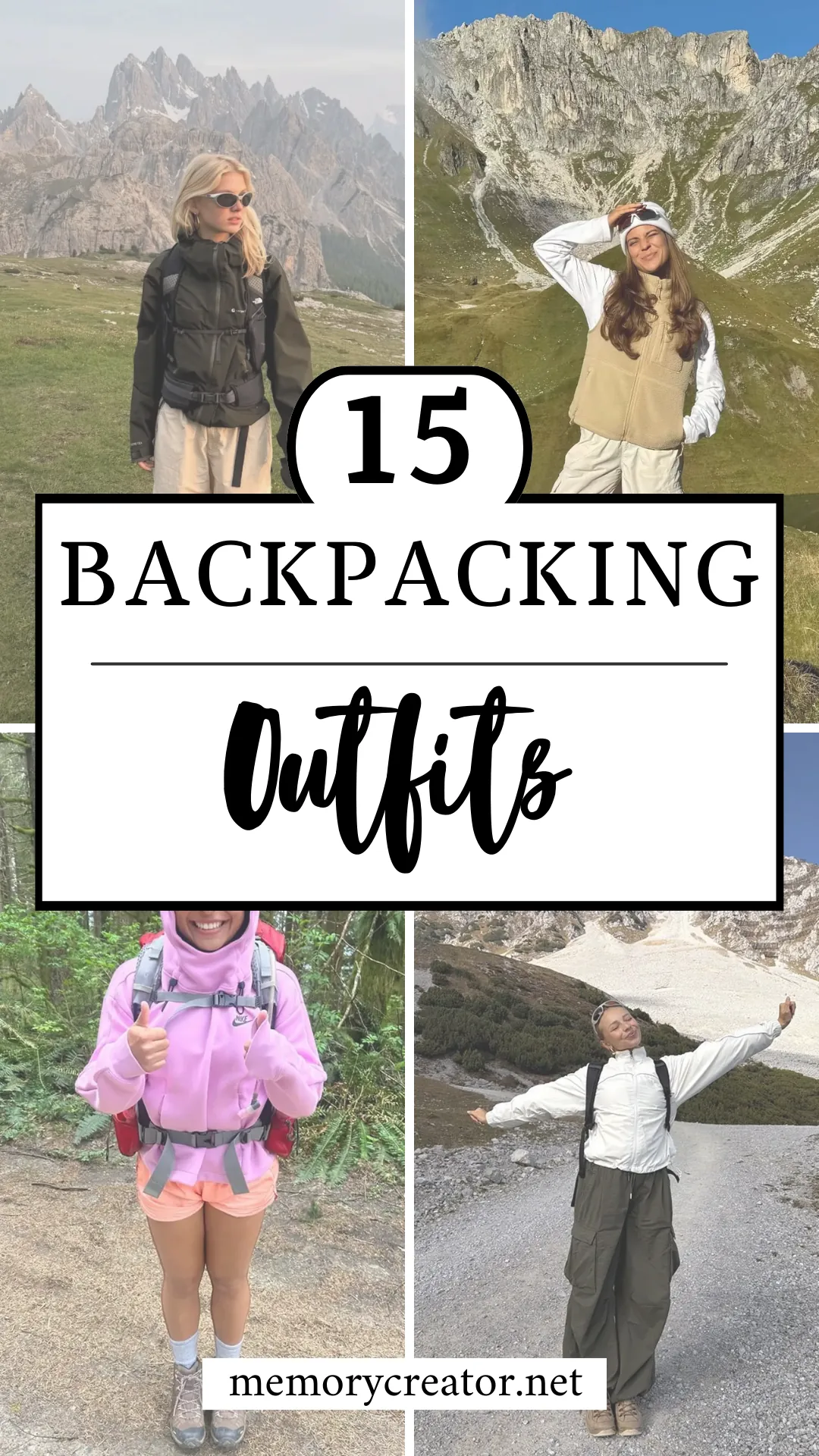
This look balances a slimming black shell with relaxed beige cargo pants, giving you full mobility without the trash-bag silhouette. The white and gray trail sneakers keep the bottom light, while white oval sunglasses add a sharp, mountain-editorial edge. A black backpack with chest and waist straps stabilizes the load. Small hoop earrings feel like a personal win until a shoulder strap yanks one out on a downhill scramble—swap hoops for tiny, flat-back studs when you’re wearing a pack all day. The palette stays crisp enough to transition from a morning ridge walk to a surprise café stop at the trailhead.
High-Contrast Fog Cutter
When the clouds are low and everything looks gray, this outfit cuts through the gloom with a high-contrast base: a beige-gray waterproof shell over a black base layer and wide-leg pants. The white beanie serves double duty—it brightens your face in flat light and worn under your rain hood, it stops the brim from flopping over your eyes when you dip your head to watch your footing. White trail sneakers stay visible on muddy trails, and a black backpack anchors the look. The black base layer hides sweat stains, so you can unzip the shell without broadcasting how hard you’re working.
Navy Shell, Red Signal
A navy shell and fitted black shorts is the quick-moving hiker’s uniform for mild, wet days. The red knit beanie not only adds a shock of color that a SAR team can spot from a helicopter, it also keeps heat from escaping before you realize you’re cold. Black oversized glasses protect your eyes from trail grit. The white crew socks break up the dark block below. But shorts under a shell leave your legs exposed; a packable rain skirt takes up less space than rain pants and you can pull it on without removing your boots. That’s the difference between a manageable drizzle and a miserable last mile.
Tan Shell, Trail Partner
A tan waterproof shell over all-black shorts and boots creates a clean, utilitarian look that somehow stays photogenic even when your dog is pulling you into a fern. The black wrist pouch keeps lip balm accessible, but if it sits above your pack’s hip belt, it can grind against your wrist with every stride—slide it down to your forearm or clip it to your shoulder strap instead. The black waist belt cinches the shell close when wind gusts, and the hiking boots handle slick rock. Notice the dog: a black Lab on a matching black leash is the best trail accessory you can pack, though she doesn’t carry her own weight.
The Utility Edit
When your pack weight already feels like a small child, neutrals are more than a style choice—they hide dirt, match everything, and let you re-wear pieces without looking like you slept in them (even when you did). These four outfits prove that muted doesn’t mean boring, and practicality is its own kind of polish.
Fleece and Wide-Leg Ease
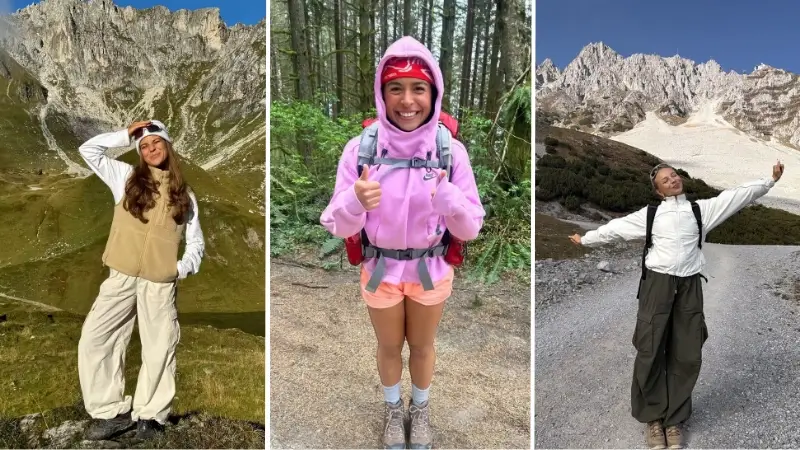
The dark green fleece zip-up is the unglamorous workhorse of backpacking—soft, quick-drying, and happy under a shell. Paired with black wide-leg pants and boots, it’s a no-brainer for cool, dry mornings. The blue-and-white patterned beanie adds a small hit of personality without tipping into flashy. But not all fleece is created equal: a grid-fleece backer moves moisture better than a fuzzy sweatshirt fleece, so if you run warm, prioritize the grid. Backpack straps worn over the fleece compress the insulation, so pull your shell over it when the wind kicks up to stop heat loss at the shoulders.
Basecamp to Summit in Clogs
This outfit is made for basecamp-to-summit days where you start in clogs. The beige-and-olive fleece-lined jacket pairs seamlessly with olive cargo pants, keeping the silhouette loose enough to layer a puffy under. The slip-on clogs are your camp reward; your real boots clip to the pack for the climb. But that dangling boot situation? It’s a recipe for bruised kidneys: lash them flat against the pack body with a compression strap instead of letting them swing. The stainless steel cup and water bottle keep you caffeinated. It’s a look that says “I know where I’m sleeping tonight, and it’s not in a car.”
The Minimalist’s Uniform
Stripped-back and serious. A black long-sleeve top with brown wide-leg pants is the minimalist backpacker’s uniform—nothing extra, nothing that doesn’t earn its place. The black sunglasses shield glare and keep you scanning for trail markers without squinting. Hiking poles in hand, gray trail shoes on foot. One non-obvious note: when your pack is loaded, wide-leg pants allow airflow but can snag on brush; choose a fabric with a tight weave like ripstop nylon to prevent tears. The result is an outfit that moves like a shadow through the trees and looks deliberate without trying.
Campfire Soft, Trail Ready
This is your campfire uniform. A navy oversized sweatshirt over taupe leggings and black boots—it’s what you want after 15 miles when your fleece is airing out and you’re spooning a bag of gorp. The small earrings keep a touch of you-ness. But this outfit is for sleeping and lounging, not for moving; if you sweat through that sweatshirt on a morning climb, you’ll be dangerously cold when you stop. Pack it in your sleeping bag stuff sack to keep it dry, pair it with the tan backpack straps that cut across clean, and let it be the softness you earn.
A Shot of Trail Color
Bold colors aren’t just for photos—they make you visible to your group, ward off hunters, and lift your mood when the miles feel long. These four outfits use saturated hues as functional gear, not fashion risks, while still solving for sweat, sun, and stride.
Orange Pop, Earthy Base
The cream fleece and sage leggings are a soft, earthy base, but the orange top underneath throws a burst of energy that a SAR team will clock from a distance. A dark green baseball cap shields your eyes, and tan hiking boots ground the look. The brown leather backpack is a style flex—just make sure it’s treated for water or your resupply snacks get soaked. Braids aren’t just decorative: they prevent the rat’s nest that forms under a beanie for days, and they lay flat under a hood or headlamp strap. Gloves complete the cool-weather system, ready for a frosty morning.
Lavender Hoodie, Red Beanie
This outfit is unabashedly playful—a lavender hoodie peeking over peach shorts, topped with a red patterned beanie that could be seen from a drone. It’s proof you don’t have to dress like a mud puddle to hike hard. The gray backpack and boots balance the brightness. But that pastel hoodie will show every drop of sweat along your spine, so if you’re prone to back sweat, swap it for a dark merino hoodie or wear a pack with a mesh back panel. The light gray crew socks blend into the boots and keep the focus north where you want it—on the trail ahead.
Summit-Day Brights
Summit-day energy. A teal cap and mirrored sunglasses block high-altitude glare, while a navy long-sleeve top with a white base layer hem shows you know how to layer for sun and wind. The bright blue running shorts and loud purple knee-high compression socks are a deliberate statement: you’re not invisible, you’re flagging the next switchback. Coral trail runners pop against rock and mud, making them easy to find when you inevitably kick them off at a viewpoint. The neck pendant and stacked bracelets add personal rhythm—just be sure they don’t tangle in your pack’s sternum strap.
Patchwork Personality
This outfit has personality stitched into every seam. A black oversized fleece anchors the look, while multi-color patchwork pants turn the trail into a runway of recycled fabric. The orange headscarf ties it together and also wicks sweat off your forehead. An orange stuff sack clipped to the outside of your gray pack adds function and color continuity. Be aware: those patchwork pants likely have interior seams that rub; turn them inside out before your trip and tape any rough spots with kinesiology tape to avoid raw inner thighs by lunch. The black-and-gray trail shoes play the straight man, letting the pants do the talking.
Puffers, Vests, and Warmth
When the temperature drops and your shell alone can’t keep you from shivering, a compressible insulation layer earns its weight. These four outfits use puffers and vests strategically—over a fleece, under a shell, or solo for dry, cold mornings—so you can strip down or bundle up in seconds.
Tonal Gray, Charcoal Vest
The gray-on-gray-on-charcoal layering here is a masterclass in tonal dressing that works hard. A light gray hoodie under a charcoal fleece vest creates a warm, breathable core while your arms stay free. Dark brown fitted shorts add contrast and a dose of “I’m not afraid of a little mud.” The white crew socks and gray trail runners keep the bottom light. This vest-over-hoodie combo is a favorite among thru-hikers because you can unzip the vest for a chimney effect, dumping heat without stopping to pull off a layer. The bracelet is a small reminder that you’re still you, even at mile 16.
White Puffer, Olive Cargo
A white puffer jacket sounds like a terrible idea for backpacking, and yet here it is, looking great over olive green cargo pants. The secret is in the details: a zip-up front for easy venting, a headband to keep hair off your face, and white-framed sunglasses that make you look like you’re on a space mission. Tan hiking boots anchor the look in reality. That white shell will show every pine smear, so carry a small microfiber cloth to wipe it down before it stains—dried sap is almost impossible to remove. The black backpack provides contrast and a place to stash your layers when the sun hits.
Cloud-Soft Alpine Palette
This outfit commits to a cloud-soft palette: white beanie and long-sleeve top, beige fleece vest, cream cargo pants. It’s like the anti-gorpcore—clean, calm, and deliberately not blending into the mud. Black hiking boots are the grounding force. The white sunglasses eliminate glare without adding color distortion. But cream-colored pants on a multi-day trip require a ritual: air them out inside-out each night and spot-clean with a damp wipe to keep them from turning into a topographic map of every sit-down break. If you can baby it, you’ll look like you’re glamping, even if you’re boiling water on a twig stove.
Lookout-Layer Modular System
This is the apex of cold-weather layering: a beanie, white sunglasses, a light gray puffer jacket over a brown fleece jacket, plus a cream oversized insulated vest. If that sounds like three too many pieces, it’s actually a modular system that lets you strip down to fleece when the sun climbs. Light gray pants and gray Salomon shoes keep the silhouette streamlined. The binoculars add a birding nerdiness that I fully support. But don’t let them bounce—use an elastic harness that holds them tight to your chest, or you’ll be holding them with one hand for miles. Silver rings glint in the sun, a tiny luxury at a fire lookout.
The Weather Reality That Changes Everything About Your Backpacking Outfits
Waterproof-Breathable Won’t Save You: A “waterproof-breathable” jacket wets out within two hours of sustained mountain rain—the membrane clogs with sweat and condensation, then you’re cold in a clammy shell. The backup that actually works is a synthetic insulated vest or jacket worn underneath. Unlike down, it holds heat when soaked, and you can revive it with body warmth while you hike. I’d argue the synthetic puffy is your real emergency layer, not the shell everyone overhypes.
Clouds Tell You More Than Any App: When the cumulus towers start flattening into an anvil shape or the wind suddenly shifts and cools, you have twenty minutes to pull on rain protection. You won’t have cell signal to check radar. Learn to read the sky—it changes how quickly you reach for rain pants before your legs are soaked and you’re losing heat faster than you can replace it.
Your Core Sweats, Your Extremities Freeze: Women’s physiology sends blood inward first; your torso will be drenched while your hands go numb. A convertible pant or an arm-warming sleeve system fixes the mismatch far better than a standard three-layer jacket. Unzip the legs or peel the sleeves when you’re climbing, and cover back up on the descent without stopping to dig through your pack.
The $20 Rain Skirt Over $200 Rain Pants: Most guides treat rain pants as essential. I’d argue a simple rain skirt does more—it ventilates while keeping your shorts dry, weighs nothing, and doubles as a groundsheet, pack cover, or modesty screen. On humid climbs, pants trap sweat and chafe; a skirt lets air move. That venting is the difference between finishing damp and quitting with raw thighs.
Shower in Your Full Kit Before You Go: Wear your loaded pack into the shower at home for three minutes, step out, and walk around indoors for ten. You’ll feel exactly where chills hit first—the back of your neck, your lower back, that gap at your hip belt. No amount of reading replaces knowing your own outfit’s failure point, and this test exposes every layering mistake before you’re miles from the trailhead.
The Body Hacks No One Puts in a Packing List
Body Glide Goes Exactly Here: Inner thigh at the point your shorts ride up, the under-band line of your sports bra, and the full hip belt contact line across your iliac crest. All-natural balms sound gentle, but many trap bacteria in sweat-drenched fabric and turn into a sticky paste that worsens friction. A synthetic anti-chafe stick dries clean and won’t feed the microbes making your skin angry.
Your Sports Bra Is Load-Bearing Gear: A clasp-back bra digs into your ribcage under shoulder straps by 3 p.m. and creates a hot spot that can end your day. A front-zip, padded-shoulder high-impact model distributes pack weight evenly across your back and eliminates that deep ache. It’s not a comfort upgrade—it’s what keeps you moving when every step feels like a small bruise. If your sporty outfits don’t include a pack-friendly bra, the miles will remind you.
Periods Don’t Need a Full Hygiene Kit: A menstrual cup plus one pair of dark backup period underwear replaces half a pound of disposable products. Practice insertion with cold hands in your kitchen sink two days before the trip—the dexterity you lose in chill is real. If you bleed unexpectedly into your only bottoms, wash them in a dry-bag with cold water and accept the stain; nobody on trail cares.
Seams Determine Whether Your Underwear Bites: A flatlock seam thong or boyshort in a wool-synthetic blend won’t turn into a blister machine after ten miles, unlike the elastic-edged cotton pair that looks fine at mile three. Damp feet create blisters, not the boot, so pack two pairs of socks—one on your feet, one drying against your body inside your sleeping bag at night.
Why Trail Style Is About Function, Not Trends
Muted Tones Look Pretty Until Search and Rescue Can’t Spot You: The Instagram palette of olive, tan, and slate blends you into the landscape. Bright, high-contrast colors—coral, cobalt, safety orange—make you visible to helicopters and impossible to mistake for an animal in low light. Choose visibility over a “cohesive” palette; your life may depend on it.
Patterns Hide What Solid Fabrics Show: A printed hiking top or speckle-knit legging camouflages trail dirt, sweat marks, and the day-three grime that makes solid gray look filthy. Florals and abstract prints aren’t un-outdoorsy—they’re strategic. They let you wear the same shirt longer without feeling self-conscious, which directly cuts pack weight.
Matching Sets Are a Weight Penalty: When you feel pressure to keep an outfit cohesive, you carry items you don’t need. Mismatched, thrifted, and borrowed pieces let you choose each layer based on function alone—the sun hoodie that dries in ninety minutes, the shorts with the pocket that doesn’t gap, the worn-in fleece from a friend. Function over cohesion also quiets the anxiety many women feel around ultralight hikers who eye their kit. If someone judges your mismatched gear, your comeback is that your clothes dry while theirs stay wet. Some of my favorite cute everyday outfits follow the same rule: specific beats matching.
Cotton Blends Belong in Town, Not on Your Back: A fashion top with even 30-percent cotton loses heat twenty-five times faster than wool once it wets out from sweat. Yet many women still pack one because “it looks cuter” at camp. That cuteness costs you precious body warmth. Swap it for a merino-blend shirt in a cut you actually like—style doesn’t have to cost you safety.
Keeping Your Clothes Functional (Not Foul) for Days on End
The Five-Minute Before-Bed Reset: Strip off your hiking clothes, turn them inside-out, and snap merino tops hard to shake loose skin oils and dead skin. Hang everything on a dry line or a tree branch where air can move. Ten minutes of airing cuts down the bacterial stink so your next day’s start doesn’t smell like a gym bag.
Never Wash Anything in a Stream: Biodegradable soap still pollutes fragile alpine water sources. Instead, fill a dry-bag with a splash of water and a capful of diluted vinegar, agitate your clothes inside, then dump the gray water well away from the water source. Vinegar kills odor-causing bacteria without leaving residue that attracts bugs or animals.
Two Sets, One Rule: One outfit for hiking, one for sleeping—and never the twain shall meet. Sleeping dry matters so much for muscle recovery that the weight of a dedicated sleep top is non-negotiable. A dry merino layer next to your skin overnight lets your body temperature regulate and reduces that stiff, cold morning you’d otherwise dread.
Drying Wet Socks Without the Stink: Stuff rain-soaked socks into a mesh bag or a clean stuff sack and tuck it against your thigh inside your sleeping bag. Body heat pushes moisture out overnight without creating the swampy smell that happens when you just ball them up. It’s the same principle that makes synthetic insulation recover; you’ll hear that down is always lighter, but down fails when wet. Synthetic insulation revives with body heat alone—for multi-day rain, I’d choose synthetic every time. When you’re building your winter outfits for shoulder-season trips, that difference is everything.
The 5-Minute Shakedown Test That Exposes Every Outfit Flaw
The Shower Simulator: Wear your fully loaded pack in the shower for 3 minutes, then walk around indoors for 10 minutes while everything is still soaked through. The spots that stay damp longest are where water seeps in—usually the back of your neck, shoulder seams, and hip belt line. Most jackets labeled “waterproof” are really just water-resistant for 45 minutes of drizzle, and this test exposes the lie fast.
The Squat-and-Reach Check: In your chosen hiking pants, squat all the way down and reach forward like you’re grabbing a rock. If the fabric binds behind your knees or the waistband rolls down, those pants will split or expose your lower back every time you bend over on trail. Pants that can’t let you touch the floor without resistance aren’t trail-ready—full stop.
The Hood Turn Test: Put on your rain jacket with the hood up, then spin your torso in a full circle while keeping your head facing forward. If the hood doesn’t rotate with your head, your peripheral vision gets sliced off the moment you need to scan for blowdowns or trail markers. I’d actually skip any jacket that only adjusts at the brim; you want a three-point system that pulls the sides tight against your skull, so the hood moves as an unit with your head instead of blinding you on scrambles.
The Pack-Rub Audit: After 15 minutes of pacing with a loaded pack, strip down and check for pink marks along bra straps, collarbone, and hip belt line. Those spots are pressure blisters waiting to burst by mile eight. Slide a folded buff or a thin sheet of foam under the strap in that exact place; if the mark still appears, that strap needs repositioning or a padded sleeve, not another layer of body glide.
The Noise Check: Walk in your full outfit on a quiet surface—no music, no conversation—and listen for zipper pulls clicking against buckles, Velcro ripping with each arm swing, or a squeaky pack frame. Those tiny sounds magnify in silence and will grind on your nerves after three hours. A dab of duct tape over metal zipper ends kills the rattle, and a smear of lip balm on squeaky hip-belt buckles silences them without adding weight.
Run these five tests before you leave, and you’ll catch the flaws that turn a weekend into a sufferfest. If a piece fails badly, swap it for something from these trekking outfit ideas that have actually survived miles of trail.
FAQ
Can I wear a regular bra under my backpack or do I really need a sports bra?
A regular underwire bra will dig into your ribcage under shoulder straps and create hot spots within a hour. A high-impact, front-zip sports bra with padded straps spreads pressure across a wider surface and stops the rib-cage ache that makes women quit early. If you absolutely must use a regular bra, remove the underwire and add silicone strap pads, but the real fix is a sports bra you’d trust for a 10-mile run.
What do I do if I get my period unexpectedly on trail and only have one pair of pants?
Fold a bandana or a clean sock into a pad and place it inside your underwear. At camp, rinse the pants in a dry-bag with cold water—never soap in streams—and accept that a bloodstain is a non-event; no woman on trail will blink. Better yet, permanently stash a dark-colored pair of period underwear in your kit so you’re never improvising again.
Will using regular deodorant ruin my hiking tops?
Aluminum-based antiperspirants mix with sweat to create yellow, stiff stains that set into merino and synthetics permanently. Switch to a baking-soda-free natural deodorant at least two days before your trip so your pores adjust without gumming up the fibers. Wipe your armpits with a damp cloth before bed each night to cut bacteria, and you won’t need the heavy-duty stuff.
Is it safe to hang my sweaty clothes out at camp when bears are around?
No—the salt in dried sweat can draw bears and rodents directly to your tent. Store sweaty clothes in an odor-proof bag inside your bear canister, or use a dedicated camp-only outfit that stays in the tent’s vestibule far from your sleeping area. If you must air them, do it during daylight while you’re moving, then seal them away before dusk.
How can I avoid looking like a total mess in trail photos?
Finger-comb your hair, tie a colorful buff as a headband, and set your sunglasses on top of your head. For group shots, stand slightly angled with your pack on—the load structures your silhouette and hides the shirt you’ve worn for three days. The look you’re after is “capable,” not “polished”; a little dirt tells the right story.
Do I really need to spend $200 on a rain jacket, or will a cheap one work?
A cheap jacket with a waterproof rating below 15,000mm will soak through in sustained mountain rain and leave you dangerously cold. Spend on the shell and save on fleece or base layers you can thrift. Your rain jacket is the single piece of your backpacking system that should cost real money—everything else can be borrowed or bought secondhand.