What to Wear Hiking: 26 Trekking Outfit Women Should Try

Searching for a trekking outfit women can actually wear on a real trail often leads to a frustrating gap: either perfectly styled looks that ignore sweat, chafing, and bust support, or technical advice designed for male bodies that dismisses how our own move and feel. You need hiking attire for women that works with your body—not against it. The right women’s trekking gear should let you focus on the climb, not on adjusting straps or hiding discomfort.
For more real-world ideas, browse hiking outfits built for day hikes and national park trips, or check backpacking outfits if you’re planning your first multi-day trek. Both offer practical, tested solutions that skip the fluff.
26 Trekking Outfit Women Ideas for Every Trail Condition
The search for the perfect trekking outfit usually ends in either a magazine spread that ignores sweat or a gear guide written for a male torso. Here, we bridge that gap. The 26 combinations ahead are built from real pieces women actually reach for—tested by movement, not by a photo shoot. Each one solves a specific trail problem, whether it’s chafing shorts, a pack that snags your jacket, or a base layer that shows every drop of salt. Find your next go-to look below.
The Vest Layering Trick
A well-chosen vest adds core warmth without restricting your arms—critical when you’re scrambling over rocks or adjusting trekking poles. These four outfits make a vest the hero.
Sage Green Layers for Woodland Light
A sage green fitted long-sleeve base disappears under a black sleeveless trekking vest, creating clean lines that won’t catch on branches. The black lightweight hiking pants are relaxed through the hip and thigh—a fit I’d pick over skintight leggings for long days when swelling sets in. Light gray hiking shoes and dark sunglasses finish the look with a sporty, no-fuss edge. If you run hot, unzip the vest fully on climbs; the long sleeves still protect you from sun and scratchy undergrowth. This is a transitional-weather uniform that moves with you, not against you.
Mustard Puffer Over Cozy Cream Fleece
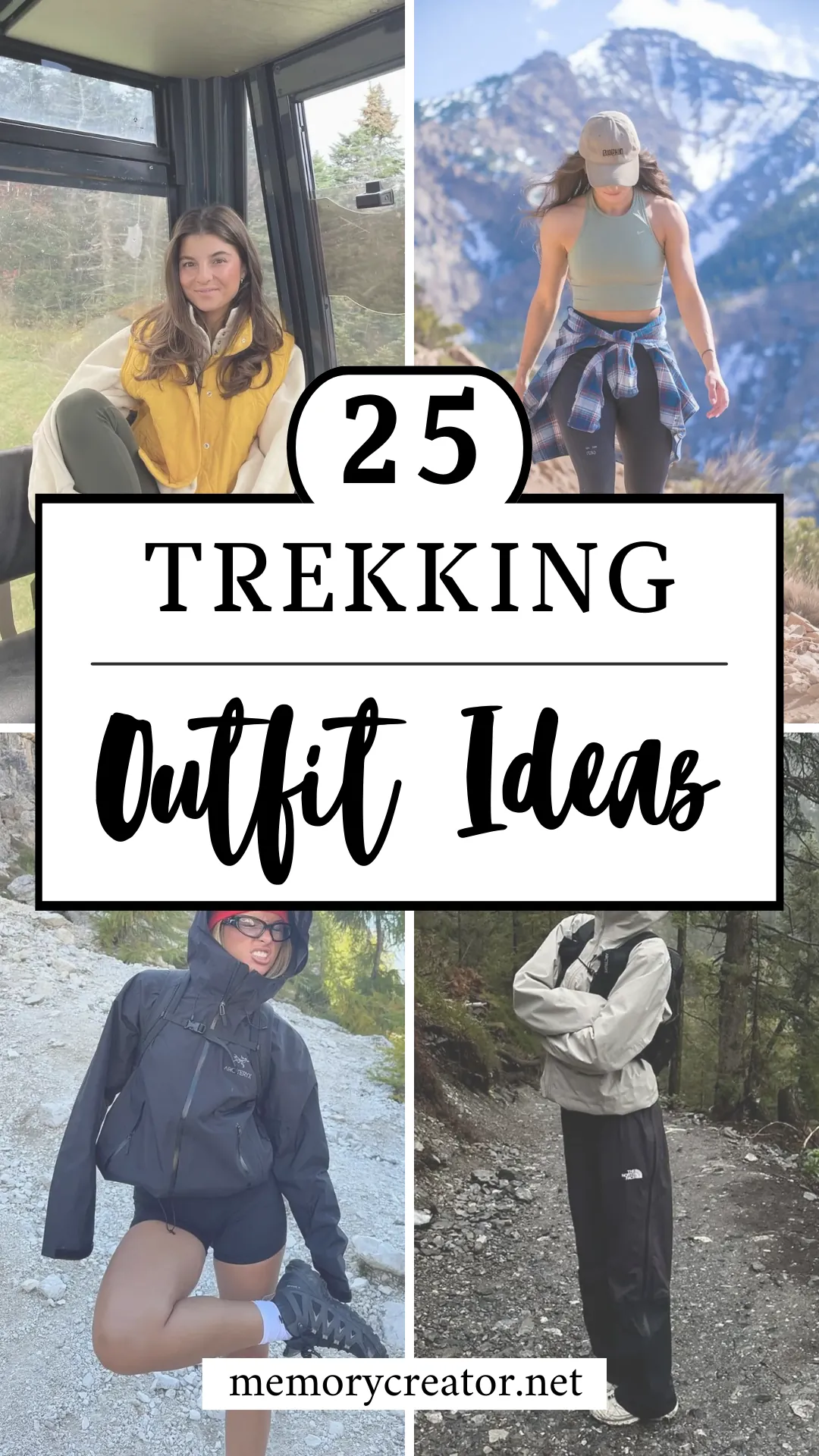
A mustard yellow quilted puffer vest slung over a cream oversized fleece sweatshirt gives you that shot of color that wakes up photos even on gray alpine days. The olive green leggings are practical—dark enough to hide trail dust—and the beige-and-brown trail shoes keep the palette earthy. Small hoop earrings add a hint of polish without dangling into your face when you turn. Keep your phone or lip balm in the vest pockets; the fleece layer underneath means you stay warm without having to zip up completely. This is the outfit you wear from the mountain gondola straight to the lodge without feeling out of place.
Burnt Orange Pop on Rock Slopes
A burnt orange fleece vest warms your core while leaving arms free, paired with a white short-sleeve tee that reflects heat. The cream ribbed shorts bring a clean, modern silhouette—but test them on a short hike first: ribbed fabric can bunch under a pack hip belt if the fit is too loose. White chunky sneakers work for well-groomed paths; I’d swap to trail runners if the terrain gets rocky. Bracelets and a black watch add personality, but skip the bangles if you’re using trekking poles—they’ll clang with every plant. This is a sporty outfit that doesn’t sacrifice style for sweat management.
The Cropped Vest Trail Shorts Combo
A white long-sleeve fitted top creates a clean contrast under a black cropped trekking vest—a silhouette that stays put even when you’re lunging over roots. The olive green biker shorts offer enough length to prevent inner-thigh friction, while black trail runners keep things grounded. White crew socks and black wraparound sunglasses pull the look together with an athletic, performance-first feel. Check that the vest’s bottom hem doesn’t creep up when you raise your arms; a cropped cut can expose your midriff and your kidney area to cold wind. Ideal for sun-dappled forest trails where you need mobility and a touch of edge.
Weatherproof Shells for Sudden Showers
A lightweight waterproof layer is the non-negotiable item every woman should have in her pack—even on bluebird days. These four outfits prove you don’t have to look like a human tarp when the sky opens up.
Navy Shell, Red Accent, Alpine Shorts
A navy hooded waterproof trekking jacket does the heavy lifting here, sized slightly oversized to slip over your pack in a downpour. The black fitted shorts keep your legs free, while white crew socks and black trail shoes anchor the look in classic hiking territory. A red headband and black gloves are more than style—they seal in heat at your extremities when the wind picks up at elevation. Choose a jacket with pit zips; you’ll be shocked how much heat dumps out without removing the shell. This is an alpine-ready getup that handles scree slopes and sudden hail without a second thought.
Beige Waterproof Shell, Black Track Pants
A light beige hooded waterproof shell jacket—unlined and packable—layers over a black base and black North Face track pants. The beige-to-black palette is deliberately minimal, so mud splatter and pine needles won’t ruin the look. A white beanie traps heat without weighing you down, and white trail sneakers brighten the overall mood. When choosing a rain shell, look for a brimmed hood that stiffens; a floppy hood will droop into your eyes and block your peripheral vision on technical stretches. This is the outfit you lean on when the forecast is damp, the trail is rocky, and you still want to feel put together.
Wide-Leg Beige Pants, Black Shell
This look swaps skintight bottoms for light beige wide-leg trekking pants, which I’d argue are smarter for hot days because they let air circulate around your legs instead of trapping sweat. A black waterproof trekking jacket and matching pack create a solid, confident silhouette. White-and-gray trail sneakers keep things light on your feet, while white cat-eye sunglasses and gold hoops add a fashion moment without impeding movement. Wide legs can snag on rocks if the inseam is too long; have them hemmed to just graze the top of your shoe. This breaks the mold of typical backpacking outfits by trading leggings for wide-leg pants.
Olive Green Shell, Black Leggings, Lake Views
An olive green hooded trekking jacket takes the lead, its relaxed cut leaving room for a mid-layer underneath when the alpine wind slices across the lake. Black leggings offer a seamless, no-bunch foundation, and dark gray hiking boots provide ankle support on uneven scree. A beige knit beanie and oversized black sunglasses add an understated, nearly editorial coolness. Check that your beanie is wool or a blend—acrylic knit won’t wick and will leave your forehead clammy after 20 minutes of uphill. This is the outfit you reach for when you want to feel protected but not puffed up, walking that line between cozy and capable.
Cozy Fleece and Sweatshirt Combos
When the temperature drops or the morning starts below freezing, these fleece and sweatshirt formulas deliver the warmth without the stiffness. They’re the pieces you’ll actually want to wear at camp, too.
Beige Zip Fleece, Charcoal Shorts Pairing
A beige zip-up fleece jacket over dark charcoal biker shorts walks the line between activewear and après-hike comfort. The shorts sit close enough to prevent ride-up but loose enough for a full stride, and white crew socks add a sporty rebound. Black trail sneakers ground the look for light trails, while white wraparound sunglasses give a polished, slightly futuristic edge. If you’re prone to inner-thigh chafing in biker shorts, look for a pair with a longer inseam—7 inches minimum—and flatlock seams. This is a biker shorts outfit that goes from trail to town without looking like gym gear.
Cream Fleece, Green Beanie Trail Look
A cream fleece pullover—the half-zip kind you can vent before you overheat—pairs with black leggings for a silhouette that’s cozy without being shapeless. A green knit beanie adds a shot of color and makes your face the focal point in photos. Gray hiking boots and white crew socks feel classic and reliable, while a light beige backpack keeps the whole palette soft and neutral. The one mistake I see with fleece pullovers? Not checking the zipper for a draft flap; a bare zipper against your chin will irritate after a hour of brisk walking. This outfit is for overcast days when you want to feel wrapped up but still mobile.
Gray Quarter-Zip Fleece, Sleek Leggings
An oversized light gray quarter-zip fleece pullover with navy trim offers a slouchy, borrowed feel that instantly reads as relaxed. Black leggings keep the lower half sleek, and a black crossbody belt bag holds your phone and snacks without adding a backpack’s bulk. Amber-tinted sunglasses and a gold necklace introduce a warm, glow-y finish that photographs well in bright mountain light. If you wear a belt bag across your chest, adjust the strap so it sits flat between your breasts, not compressed against them; otherwise you’ll end up with a friction rash on your sternum. This is a look for wide, sun-baked valley trails where comfort trumps technicality.
Golden Hour White Sweatshirt Look
An oversized white sweatshirt and charcoal gray leggings form one of the simplest, most reliable trekking outfits you can pack. The roomy top lets you move freely, while the dark leggings forgive every sitting-on-a-log break. Cream chunky knit socks peek out above white athletic sneakers—a styling move that adds texture but also acts as a cushion against ankle rub. Because white fabric shows dirt immediately, carry a small stain remover pen in your bag; a dot of mud on the front can make you feel uncomfortable before the hike is even halfway done. This outfit thrives at golden hour, when the light turns everything soft and the trail feels almost cinematic.
Light Sage Fleece, Beanie, Trail Pants
A light sage fleece pullover brings a delicate mountain tone to the often harsh alpine environment, balanced by a navy knit beanie that frames the face. The beige hiking pants are cut loose through the leg—a fit I prefer over leggings when I know I’ll be sitting on cold rock or damp ground because they don’t wick cold straight to the skin. A white crossbody belt bag replaces a full pack for short loops, and light gray trail sneakers keep the look grounded. In overcast conditions, choose a beanie that fully covers your earlobes; wind whistling past exposed ears can trigger headaches within the first mile. This outfit is built for open meadows and long, steady ascents.
Navy Sweatshirt, Taupe Leggings, Mustard Accent
A navy oversized sweatshirt flops exactly right over taupe fitted leggings, giving you that nonchalant, I-just-threw-this-together ease. Light gray hiking socks and dark boots add ruggedness, while a small backpack with mustard yellow straps injects a cheerful pop against the otherwise neutral palette. When wearing an oversized top, use a small carabiner to clip the hem to your waistband if the wind picks up; billowing fabric can throw off your balance on ridgeline traverses. This is a no-fail option for rocky slopes and forested switchbacks where the temperature wavers between cool and comfortable. It’s the outfit form of a deep exhale.
Plaid Flannel, Graphic Tee, Trail-Ready
A brown plaid flannel overshirt worn open over a light gray graphic T-shirt lets you regulate temperature instantly: button up when the wind rises, shrug off when the sun hits. Black leggings and brown hiking boots provide a steady, low-profile base, while striped crew socks peek out for a playful touch. A white baseball cap keeps the glare out of your eyes, and the green insulated water bottle is the only accessory you actually need. Choose a flannel that’s at least 70% cotton or a cotton‑poly blend; 100% synthetic flannel can feel clammy against your skin and won’t breathe as well during stop‑and‑go hiking. This outfit feels like the best kind of borrowed-from-the-cabin styling.
Shorts-Ready Trail Combos
When the mercury climbs, the right pair of shorts can make the difference between a comfortable trek and a chafing disaster. These combos keep things cool without exposing you to every thorn and branch.
Red Beanie, Black Shorts Alpine Edge
A bright red knit beanie adds a jolt of color to an otherwise all-black base: a fitted short-sleeve athletic top and fitted black shorts that move with you, not against you. Black hiking shoes and white crew socks create a clean, sporty line, while a gold-tone bracelet breaks the monochrome without being frilly. Even in fall, don’t underestimate sun reflection off alpine lakes; those black fabrics can absorb heat, so pick shorts with a mesh liner and a DWR finish if you’ll be sitting on damp surfaces. The red beanie also keeps your head warm during sudden chilly gusts by the water. This is a sharp, no-frills outfit for lakeside loops and pine-forested switchbacks.
Dusty Pink, White Shorts, Golden Hour Glow
A dusty pink fitted sleeveless athletic top feels feminine without slowing you down, tucked into white high-waisted shorts that elongate the leg. A light gray baseball cap shields your face, while gray hiking boots ground the pastel palette. A black backpack and camera strap give a purposeful, photographer-on-the-move vibe. White shorts can be a gamble on trail, but a small citric acid spray in your kit removes red‑clay mud stains instantly—just don’t rub, blot. The smartwatch and gray belt are practical touches that complete the adventure-ready look. Photograph this one at golden hour for images that need zero filter.
Desert Minimal: Sports Bra and Taupe Shorts
A black sports bra and taupe high-waisted shorts might feel like very little, but in dry desert heat, this is exactly enough. The shorts sit at your natural waist, giving coverage during bent-over rock scrambles, while white crew socks and dark brown hiking shoes protect your feet from sand and sharp pebbles. Black sunglasses and a braided hairstyle finish the look with a cool, capable edge. When wearing a sports bra only, apply sunscreen to your entire back and shoulders before you put it on—once the straps are in place, you’ll miss a strip that will burn painfully by mile three. This outfit works best on well-maintained, sun-exposed trails where overheating is your biggest threat.
White Zip-Top, Beige Shorts, Dusk Light
A white fitted zip-up long-sleeve top gives you optional ventilation: zip it down when you’re climbing, zip fully to block the chill as dusk settles. Light beige shorts keep the look bright and clean, and brown-olive hiking shoes tie into the earthy surroundings. Silver hoop earrings and a black ponytail hair tie add small, intentional details that catch the low-angle light. If your zip-up has a metal zipper tab, wrap it with a tiny piece of fabric tape; a bare metal pull can heat up in the sun and burn your chin during a brisk walk. This outfit is ideal for sunset rambles where the temperature drops quickly and you want to be both comfortable and photo-ready.
Black Crop Top, Cycling Shorts, Alpine Sun
A black long-sleeve cropped athletic top and black fitted cycling shorts create a streamlined, monochrome silhouette that handles heat without sacrificing coverage. The long sleeves ward off strong alpine sun while the shorts stay put thanks to a compressive fit. White crew socks break the darkness, and black trail running shoes keep the line clean. Avoid black wraparound sunglasses on overcast days; they can make trail markers look shadow-flat and you’ll miss a turn. This look is for the woman who wants function first, with a side of sporty minimalism that photographs like an editorial—even when you’re drenched in sweat and grinning on the summit.
Performance Top, Black Shorts, Orange Accents
A white long-sleeve performance top delivers serious sweat-wicking while covering your arms from the sun, and black running shorts give you full leg freedom. Gray and black trail running shoes with a pop of orange add just enough color to keep the outfit from feeling sterile. A black hydration pack sits slim against your back, leaving room for layers. The delicate silver necklace is pretty but tuck it under your top if you’re wearing a pack with a sternum strap, or it’ll catch and snap mid-stride. Small hoop earrings and rings whisper style without shouting. This is an outfit for the woman who treats trekking as a sport and still wants to look like herself at the finish.
The Sleek Leggings Foundation
Leggings are the backbone of countless trekking wardrobes, but not all leggings are created equal. These outfits show how to build around a reliable pair of tights for full days on the move.
Navy Leggings, Olive Crop, Woodland Stream
An olive green fitted crop top meets a pair of navy high-waisted leggings that stay in place even when you’re scrambling beside a waterfall. This is a leggings outfit built for actual movement, not just coffee runs. A black waist belt with a zip pouch holds your keys or a tampon without requiring a full pack, and the delicate silver necklace adds a touch of softness against the performance fabric. A pink hair scrunchie and gray-and-pink hiking boots pull color through the look in a way that feels deliberate. When layering a belt over leggings, test the pouch placement by bending forward; too low and it digs into your bladder, too high and it rolls.
Black Zip-Up, White Base, Sleek Leggings
A black zip-up athletic jacket over a white fitted base layer gives you instant temperature control: unzip on the ascent, zip up at windy overlooks. Black high-waisted leggings create a long, unbroken line, and gray-blue trail running shoes add a subtle color note without overshadowing the clean black-and-white palette. Light gray hiking socks bridge the shoe and legging gap. If your leggings don’t have a drawstring, thread a spare shoelace through the waistband for a makeshift tie; some high-waist styles can slip down when you sweat. This is a go-to for sunlit mountain trails where the views keep coming and you don’t want to fuss with your clothes.
The All-Black Sporty Jumpsuit Formula
A black long-sleeve zip-front fitted activewear jumpsuit is the complete one-and-done trekking piece—no waistband digging, no gap between top and bottom. A black headband wrangles flyaways, and black cat-eye sunglasses give a sharp, almost retro silhouette that works surprisingly well on trail. White crew socks and white athletic sneakers are the only non-black elements, pulling the eye down and creating a crisp, polished finish. The downside of a jumpsuit: bathroom breaks require stripping down to your bra. If you’re on a trail with limited privacy, pack a lightweight rain skirt as a modesty curtain. This jumpsuit is a reminder that an all-black outfit doesn’t have to be boring on the trail.
Sage Crop, Plaid Waist Tie, Mountain Sun
A sage green sleeveless athletic crop top peeks out from a blue-and-red plaid shirt tied at the waist—an instant layer you can untie when the mountain breeze turns cold. Black high-waisted leggings and gray hiking boots keep your lower half stable and protected, while light-colored socks soften the transition. A beige baseball cap shades your face without blocking your view of snowy peaks. The trick with a tied shirt is to knot it at the side, not the front; a front knot creates a bulky lump that interferes with your pack’s waist belt. This outfit feels like the sweet spot between practical hiking gear and a relaxed, campsite-ready look.
White Tee, Teal Leggings, Sunny Hillside
A white fitted short-sleeve T-shirt—the kind that wicks moisture and keeps its shape—pairs with teal-green hiking pants so vibrant they almost echo the grassy hills. The pants are cut like leggings but have enough structure to pass as a proper bottom layer, and the green backpack with a chest strap ties the whole palette together. A black smartwatch, bracelet, and ring add tiny moments of polish, while sunglasses pushed up on your head act as an accessory and a functional backup. Teal bottoms show dust and light-colored dirt less than black; they’re a smart pick for dusty trails where you don’t want to look like you’ve been rolling in ash. For open countryside rambles, this is one of those hiking outfits that feels as good as it looks.
Trail-Tested Packing Strategies Every Woman Should Know
Pack weight for a shorter torso: Most daypacks assume a male-typical back length, so the hip belt often lands on your waist instead of your iliac crest. Shift the heaviest items—water bladder, food—to sit against your shoulder blades, not your lumbar. That small adjustment prevents shoulder-groove pain and keeps the pack stable when you scramble. Most guides ignore torso geometry entirely. I’d argue this repositioning matters more than ultralight gear, because a badly balanced pack fatigues you long before the weight ever does.
The nylon privacy wrap: A lightweight rain skirt or a thin nylon tarp stuffs down to nothing but works as an instant changing room at exposed trailheads. When bathrooms lack doors or you need to swap out sweaty layers mid-hike, it wraps around you like a pod. Nothing else gives that fast dignity without adding bulk.
An urine funnel lives in my pack permanently: Squatting on a slope with tired quads is a recipe for soaked shoes and an UTI from incomplete emptying. A reusable funnel like a Freshette lets you empty fully standing up, even in wind, and it weighs less than a single extra active wear top. I clean it with a quick water bottle rinse and store it in a dry bag.
First-aid upgrade for women: Skip the generic kit and add a small tube of silicone-based anti-chafe balm, two benzoin tincture swabs to make tape stick to sweaty skin, and an extra hair tie that can cinch a loose pant leg or secure an emergency tampon discreetly. No store-bought kit includes these, and they fix problems men never face.
The Trail Survival Pouch: A single zip-loc holds a mini deodorant wipe, SPF lip balm, a folded Kula cloth, and a carb-heavy snack. When fatigue and irritability hit, you grab that pouch without digging through your pack. It’s all within one pocket, and it has stopped more than a few meltdowns on mile eight.
Managing Sweat, Chafing, and Other Unspoken Trekking Realities
Cotton is worse than the cheapest polyester: Cotton absorbs 27 times its weight in water and holds that moisture against your skin, creating a friction coefficient that soars the moment you start climbing. That’s why inner-thigh chafing and underboob heat rash often appear within 30 minutes. Even a $15 polyester shirt moves moisture better and dries faster. The fabric isn’t glamorous, but it works.
Thigh-chafing fix from your beauty stash: An invisible solid antiperspirant applied between your thighs cuts friction far longer than many balms. It contains the same dimethicone slip agents found in pricey anti-chafe sticks, without the sticky residue. I swipe it on clean, dry skin before I even lace my boots, and it lasts a full day.
Bra sweat and fabric choices: Look for encapsulation sports bras—not just compression styles—with a polyester-elastane blend and a mesh racerback that has a patented quick-dry finish. Those whisk moisture away from the inframammary fold, where heat and dampness can trigger fungal infections. Compression-only designs just press sweat into your skin, which is exactly what leads to irritation under the band.
Downpour backup without a full change: One seam-sealed ultralight poncho that covers your pack gives instant shelter. Most water-resistant jackets wet out after sustained rain, but a poncho traps body heat and sheds water completely. It also airs out as you move, so you don’t end up with a clammy interior.
Salt-stains trick: If your skin leaves mineral residue that stiffens shirt underarms, spritz diluted white vinegar onto the fabric before the trek. The acetic acid neutralizes the minerals before they set. No scrubbing on the trail, and your hiking outfits don’t turn into stiff, white-streaked boards by noon.
Solo Trekking as a Woman: Safety Measures That Go Beyond the Obvious
Digital backup that outsmarts a forgotten check-in: Apps like Garmin Explore or the free version of Cairn let you set a timeline alert. If you don’t cancel it by a deadline, the app automatically sends your last GPS point to your emergency contact—even if you lose cell signal or can’t reach your phone. It’s a passive safety net that doesn’t rely on you remembering to press send when you’re exhausted and distracted.
Geotagging in real time is a liability: You’ll hear advice to share your location for safety. The better move is to post your photos only after you’re back in cell service or home, because tagging a trailhead while still hiking tells anyone with poor intentions exactly how long they have to reach you. That digital breadcrumb turns a remote trail into a map for trouble.
A decoy wallet costs nothing: Stash an old gift card, a few single bills, and an expired ID in a cheap coin purse. If someone demands your belongings, you hand over that dummy while your real credit card and ID stay hidden in your sports bra’s secret pocket. It buys you compliance seconds without giving up anything valuable.
Scripted responses that shut down creeps: “My boyfriend is waiting at the next switchback” works instantly, even if you’re single. A firm “I don’t share my itinerary with strangers” leaves no negotiation room. Practice these phrases so they come out flat and final, not apologetic. You owe no one friendliness on the trail.
Why a doorstop belongs in your daypack: A small rubber doorstop wedged under a trailhead bathroom door or your car’s side door at a remote lot creates a physical barrier in seconds when locks are absent. It weighs less than a cute gym outfit accessory and can’t be pushed open from outside without significant force.
How to Build a Trekking Outfit Women Actually Feel Confident In
The mirror test is a gear shakedown: Before a trek, bend over, squat, and raise your arms in your full outfit. You’re looking for a gaping waistband when you stoop, a rolling waist strap, or a shirt that untucks the second you reach down. Fix those at home. Catching them on mile two guarantees a day spent yanking and adjusting instead of enjoying the trail.
Unisex sizing fails women: The conventional take is that unisex cuts save money. That misses how a boxy hip measurement creates fabric drag that leads to inner-thigh chafing. Look for women-specific pants with a curved waistband and articulated knees. If you must use unisex, size down one from your usual if your shoulders are narrower, but the hip fit will never be right.
Dark bottoms are strategic, not just slimming: Deep charcoal, olive, and black trekking tights hide mud splatters, sweat patches, and period leaks completely. That buys hours of peace of mind when you’re miles from a bathroom. It’s the single simplest confidence hack I use on long days.
Layering that flatters: A fitted merino base layer inside a slightly boxy lightweight fleece gives warmth without bulk. Unzip the fleece to create a V-neck silhouette so your outfit doesn’t look like a shapeless sack. This isn’t vanity—it’s about seeing yourself in photos and feeling like you, not like a bundled laundry bag.
The one accessory that pulls everything together: A wide-brim unstructured packable hat protects your face, ears, and the back of your neck entirely. A baseball cap misses the ears and neck, but a packable brim gives full coverage and intentional style that photographs cleanly. It’s the piece that makes a sporty outfit look deliberate rather than thrown together.
Your 10-Minute Pre-Trek Gear Shakedown
The 3-point seam check: Run your fingers inside the underarms of your shirt, along the inner thighs of your pants, and into the toes of your socks.
Seam burrs you’d never notice at home become blister factories after mile three. A quick snip with nail scissors or a dab of fabric glue on a scratchy thread end saves hours of discomfort.
Pre-waterproofing spray sprint: If your boots or rain jacket have lost their DWR, hit them with a silicone-free spray and let it dry for five minutes before you walk out.
Silicone sprays can trap sweat inside a breathable membrane, making things worse. A water-based or fluoropolymer-free option like Nikwax restores beading without that trade-off, and even a rushed air-dry gets you out the door protected.
Tech readiness in 90 seconds: Download your offline map, switch on battery-saver mode, and clip a small power bank with a short cord already attached to your pack’s shoulder strap.
Battery-saver mode stops background app refresh, which drains power fast when your phone hunts for signal. Starting with it engaged can preserve 15% more battery by day’s end, which is the difference between a trail selfie and a dead screen.
The shake test for pack weight: Load your daypack, clip every strap, then shake it side to side like a dance move you’d regret.
If the pack sways independently, reposition heavy items closer to your spine and cinch the load lifters at your shoulders. A swinging pack torques your core with every step and can cause lower-back fatigue by mile two.
The silent whistle check: Make sure your emergency whistle is attached to a shoulder strap, not buried in a pocket or clipped to the back of your pack.
In a fall or a shaky encounter, you need to reach it with one hand while the other steadies you. Use a breakaway lanyard so it releases if snagged, and test that you can blow hard without repositioning.
All these checks fit into ten minutes, and they turn a collection of hiking outfits into a system that won’t fail you on the trail.
FAQ
Can I wear yoga pants for trekking?
Only if they have flatlock seams and a high polyester content. Many yoga outfits use cotton blends that trap moisture and chafe thighs raw within thirty minutes of uphill walking.
How do I handle my period on a multi-day trek?
Use a menstrual cup—it needs emptying only twice a day and cuts waste. Practice cleaning it with a water-bottle rinse at home first, and carry a wet-dry bag system: a sealable plastic bag for used items inside an opaque dry bag.
What if I get a blister mid-trek?
Stop immediately. Clean with an antiseptic wipe, cut a donut-shaped moleskin pad around the blister, then cover with medical tape. Do not pop it without sterile lancets and alcohol; a drained blister on trail invites infection that can end your trek.
Is it safe to trek alone as a woman?
Yes, with preparation. Stick to well-signed, popular trails for your first solo trips, text a friend your turn-by-turn route with a return time, and carry a personal alarm on your shoulder strap. Trust your gut: a section that feels off is reason enough to turn back.
How can I look good in trekking photos without looking high-maintenance?
One vivid accessory—a bright buff or patterned rain jacket—adds contrast naturally. Skip foundation; use tinted SPF and a hydrating lip tint in your pocket for a fresh-faced, just-finished-a-mountain look.
What’s the best way to prevent thigh chafing while trekking?
Apply a silicone-based balm to clean, dry inner thighs before you start sweating. If you’re a repeat chafing victim, wear lightweight high-waist compression shorts under your trekking pants as a fabric barrier that won’t bunch or ride up.
Do I really need expensive hiking boots?
No. Trail runners with deep lugs provide grip and zero break-in time for many women. If you frequently roll your ankles, invest in a mid-cut boot with a wide toe box and a women-specific last, where fit matters far more than price.