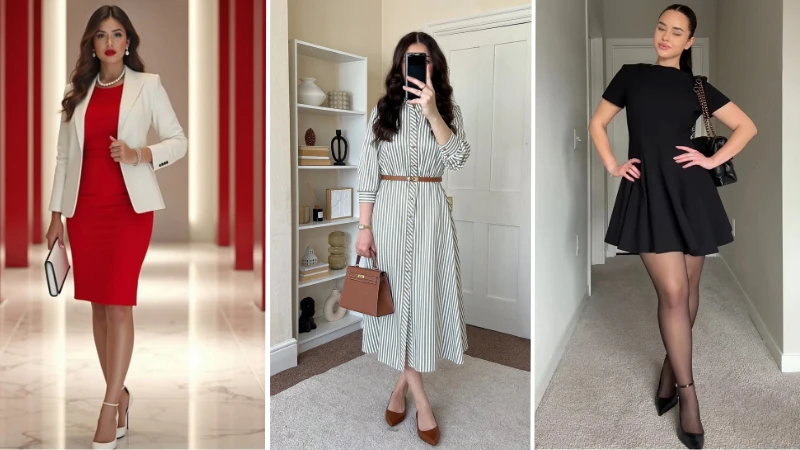
Sleek 10+ Work Dress Outfits for the Modern Office

Searching for a Work Dress online is deceptively simple. You type the query, and the results offer page after page of perfectly posed models in clean lines and muted tones. But none of those images answer the questions running through your mind: Will this dress ride up by lunch? Is the fabric see-through in fluorescent office light? Does “business casual” in your firm mean something different than it meant at your last job? The search results are a gallery of products, not a guide to the actual experience of wearing a dress in a real office with real rules, real sitting, and real self-consciousness. This article is that missing guide.
I’ve gathered insights from stylists and real women to address those hidden rules. For a deeper look at how dress codes vary by industry, start with decoding your office’s unspoken rules. And if you’ve ever felt that nagging worry that your outfit might be wrong, wearing the wrong thing will feel uncomfortably familiar.
19 Work Dress Outfits for Real-Life Offices
These 19 outfits aren’t just aspirational Pinterest pins — they’re built from pieces that actually survive a commute, a full workday, and the occasional spilled coffee. I’ve divided them into four clear categories so you can steal the exact formula, whether you’re in a strict corporate environment or a smart-casual start-up.
The Sheath Dress Edit
When you need to look like you mean business, a sheath dress does the job. These seven fitted styles range from courtroom-ready to color-pop confident, each with a shape that defines your waist and keeps the focus on your competence.
The Navy Wrap Authority Dress

by Pinterest
The navy belted wrap sheath brings the structure of a suit without the bulk. The tailored knee-length cut and subtle pleated front feel serious, while the wrap neckline flatters without revealing too much. Gold accessories — hoop earrings, a watch, and a delicate necklace — add warmth against the dark fabric. Carry the black structured tote and you’re set for any meeting that demands a business dress code understanding. A quick tailor fix: if the wrap gapes when you sit, have a small snap sewn into the inner fold; it takes ten minutes and saves you from constant adjusting.
The Bold Puff-Sleeve Statement

by Pinterest
Lime-yellow in a work dress is a power move, not a mistake. This tailored midi has dramatic puff sleeves that add just enough architecture to your shoulders, while the black strappy sandals anchor the look. The body-skimming pencil silhouette ensures the dress still reads as professional, even with the vibrant color. Puff sleeves can make your shoulders look disproportionately wide in photographs, so stand with your arms slightly away from your body to avoid the ‘linebacker’ effect. Stick to minimal gold jewelry and let the dress do the talking — this one works for a creative office or a business casual Friday where you want to be remembered.
The Black Belted Minimalist

by Pinterest
Sometimes the most powerful thing you can wear is a simple black dress that fits like a glove. This sleeveless sheath hits mid-calf — a length that reads more senior than a knee-length hem — and the wide silver-buckle belt does the work of a blazer by giving you a defined waist. The pointed-toe pumps keep the line long and lean. Check the armhole depth before you buy: if you can see your bra when you reach for a file, the dress is too low-cut for the office. The black leather tote is a workhorse; pair it with this dress and you’ve just made your morning decision in under 60 seconds.
The Red Power Suit Dress

by Pinterest
A bright red sheath under a structured white blazer isn’t for the timid — it’s for the woman who wants her appearance to match her ambition. The pearls soften the look without undermining the authority, and the white pointed-toe heels echo the blazer for a crisp finish. This is the kind of look that makes the unwritten rules of corporate attire work in your favor. If your office leans conservative, save this exact combination for client presentations or external events; inside a quiet cubicle culture, the red might feel louder than intended. A sleek clutch and minimal additional jewelry keep the spotlight on the suit-dress hybrid.
The Minimalist’s Midi

by Pinterest
There’s beauty in a dress so simple it almost disappears — leaving only you. This black sleeveless midi has a gentle flare at the hem, giving it movement without any fuss. Pointed-toe heels are the only real “statement,” proving you don’t need embellishment to look expensive. Be vigilant about lint and pet hair on solid black; keep a travel roller in your desk drawer. The absence of a belt or jewelry makes the dress itself a blank canvas, which is why it works so well for a formal office. On days when you need to transition from desk to dinner, just add a bold lip or a scarf — but during work hours, keep it exactly this spare.
The Fresh Blue Sheath

by Pinterest
Light blue is an underrated workwear color: it reads as approachable yet professional, and it looks crisp against almost any skin tone. This fitted sheath has a defined waist and a hem that hits just at the knee — a length that works on most heights without immediate alteration. The black tote and heels anchor the look and keep it from feeling too precious, while the silver accessories add a cool contrast. Pastels show sweat stains faster than dark colors, so if your office runs warm or your commute is a stress test, wear a sweat-proof undershirt or choose a different color for high-pressure days. This is a smart pick for a summer corporate outfit when you want to look fresh, not frazzled.
The Neutral Ruffle-Sleeve Sheath

by Pinterest
Beige gets a bad rap for being boring, but when the cut is this precise, it becomes a quiet flex. The short ruffled sleeves add a soft, feminine detail that breaks up the otherwise severe sheath silhouette. Gold accessories — belt, bracelet, earrings — lift the neutral palette and keep the dress from falling into the all-neutral trap. The taupe structured top-handle bag and nude pointed-toe heels create a long, unbroken line. Be mindful of your undergarments: beige dresses demand a seamless, skin-toned bra that disappears under the lightest fabric, especially under office fluorescents. This dress says ‘polished’ without saying a word.
The Flared & Midi Collection
For days when you want to look polished without feeling constricted, a flared or midi dress gives you room to move — literally. These silhouettes are forgiving, feminine, and often more comfortable for long days at a desk. Plus, they hide the fact that you’ve been sitting for six hours.
The Tights-and-Mini Equation

by Pinterest
A mini dress can work for the office if you treat opaque black tights as part of the fabric, not an add-on. This black fit-and-flare hits above the knee, but the sheer coverage of the tights and the pointed-toe pumps create a long, unbroken line that feels modest despite the shorter hem. Do the fingertip test: if the hem is higher than your fingertips when your arms are at your sides, pair it only with tights and a closed-toe heel. The quilted chain-strap shoulder bag adds a hint of texture, but keep jewelry minimal — small studs and a slim bracelet — so the look stays sharp. This is a formula that respects the boundary between the length that breaks everything and a deliberate, put-together choice.
The Pleated Cream Midi

by Pinterest
This cream dress looks deceptively simple — the ribbed bodice and knife-pleated skirt create texture that photographs well and hides small wrinkles. The thin brown belt defines your waist at exactly the right spot, which is crucial if you’re short-waisted or tall. Nude pointy-toe heels and a brown clutch keep the palette tonal and polished, while the delicate gold necklace adds a touch of shine. When wearing a light neutral like cream, avoid drinking coffee while standing — one splash and the dress is a write-off for the rest of the day. Carry a stain pen in your clutch. The overall effect is elegant and understated, perfect for a classy business outfit that doesn’t try too hard.
The Belted Knit Midi

by Pinterest
A black ribbed knit dress is the Swiss Army knife of workwear: comfortable, stretchy, and impossible to wrinkle. The wide belt with a gold buckle turns a basic silhouette into something deliberate, and pointed-toe flats keep it walkable without looking frumpy. Make sure the fabric is thick enough to conceal your belly button and any seam lines from your underwear; hold the dress up to the light before you buy. This outfit can handle a twelve-hour day — from desk to dinner, no change required — because the monochrome palette reads intentional, not lazy. If you’re worried about the dress riding up, a half-slip underneath solves the sitting-to-standing problem and adds a layer of polish.
The Button-Front Midi

by Pinterest
The button-front detail on this black midi dress gives it a shirt-dress sensibility without the collar, which makes it a touch more relaxed. The thin black belt with a gold buckle is non-negotiable; without it, the dress can look like a sack. Gold bracelets, rings, and hoops warm up the black and feel intentional, not gaudy. Check that the buttons don’t gape at the bust: if they pull when you sit, you need a larger size or a discreet snap sewn between buttons. The quilted top-handle bag with a chain strap adds luxury, and the dress itself transitions easily between office departments — this is a work outfit that works across different dress-code interpretations.
The Collared Midi with Edge

by Pinterest
This dress takes a vintage-inspired collared silhouette and keeps it modern with a flared midi skirt and a sharp black-on-black palette. The thin black belt pulls in the waist, and the ankle-strap heels add height without compromising stability — practical for office corridors. Wear a half-slip underneath to prevent static cling and to give the skirt better drape as you walk. The dark sunglasses are a commuting prop, but once inside, a simple pair of studs is all the jewelry you need. There’s a self-assurance to this look: it says “creative department” without saying “I tried,” and the monochrome keeps it from ever feeling sloppy.
The Pinstripe Fit-and-Flare

by Pinterest
Pinstripes on a dress do the same job they do on a suit — they elongate your frame and add a subtle pattern without overwhelming. This navy sleeveless midi has a defined waist and a flared skirt that moves nicely in a breeze, making it a solid choice for outdoor meetings or a lunch walk. The black structured bag and gold watch keep the look professional, not nautical. Vertical stripes can emphasize a larger bust if they pull horizontally; make sure the fabric has enough stretch recovery to bounce back after sitting. This dress feels particularly smart for a summer corporate outfit when you need to look authoritative but the thermostat is working against you.
The Sporty-Chic Knit Dress

by Pinterest
This black knit midi borrows from polo-shirt territory with its white contrast piping and mock collar, but the body-hugging fit keeps it firmly in dress territory. Nude heeled sandals lengthen the leg without cutting the line at the ankle, and the cream handbag adds a soft counterpoint. Knit dresses can be unforgiving in harsh sunlight, so wear smoothing underwear that won’t create visible lines across the hips. The white button placket detail gives the dress a vertical line that draws the eye upward. This is a great option for a smart-casual Friday when you still want to look like you lead the meeting, not just attend it — exactly the kind of piece that navigates the business casual gray area with ease.
The Shirt-Dress Formula
The shirt dress is the complete workwear cheat code: it’s structured like your favorite blouse but fits like a dress. Button-front details and collars add just the right amount of formality, and the vertical lines make you look taller — always a bonus before a presentation.
The Classic Stripe Shirt Dress

by Pinterest
This navy and white striped shirt dress nails the balance between structured and relaxed. The tailored midi fit, sharp collar, and button front signal “I’m organized,” while the rolled sleeves and tan leather belt add a hint of ease. Brown pointed-toe pumps and a matching top-handle handbag tie the earthy accents together, making the whole outfit feel considered without feeling stiff. To avoid a shapeless look, always belt a shirt dress at your natural waist — not your hips — even if the dress has its own sash. The gold wristwatch and small hoop earrings bring a polished finish that works equally well for a team meeting or an one-on-one with your manager.
The Olive Stripe Relaxed Shirt Dress

by Pinterest
Olive green is a stealth neutral — it pairs with tan, brown, and gold as easily as black does, but feels more interesting. This long-sleeve shirt dress uses vertical stripes to elongate, and the A-line skirt offers plenty of room for a long day. The thin tan belt defines the waist, while brown pointed-toe flats keep it grounded and practical. Long-sleeve dresses in lightweight cotton can bag at the elbow by 3 p.m.; test the fabric by scrunching it in your hand and seeing if it bounces back. The overall mood is softer than the navy version, making it a smart choice for days when you need approachability over authority. The tan structured bag and gold watch once again prove that olive and tan are a foolproof neutral combination.
The Two-Piece Strategy
Not every work outfit has to be a dress. Sometimes the most professional look is a crisp blouse paired with a pencil or midi skirt, or a clever layered combo that doubles your wardrobe options. These three looks prove you can skip the dress and still nail office attire.
The All-Black Separates Formula

by Pinterest
This isn’t a dress, but it mimics the streamlined effect of one. The long-sleeve blouse with flared sleeves brings a touch of drama to an otherwise strict pencil skirt, creating a silhouette that’s both current and serious. When wearing a blouse with wide sleeves, test your typing range of motion: if you can’t reach the keyboard without the cuffs dragging, the sleeves are too long for practical office work. A gold pendant necklace breaks up the monochrome, and the black structured handbag ensures you never look like you’re heading to a cocktail party. The all-black palette is a masterclass in corporate attire, and the pointed-toe heels add just the right amount of polish.
The Polka-Dot Break-Up

by Pinterest
When a solid dress feels too predictable, a printed midi skirt and a crisp white blouse offer the same one-and-done ease with more personality. The puff sleeves on this blouse add volume at the shoulder, which balances the softly flared A-line skirt. To keep a print like this office-appropriate, pair it with neutral accessories — the beige pointed-toe flats and gold bracelet here do exactly that, letting the skirt be the focal point without screaming for attention. The black-and-white spotted pattern reads as playful but not juvenile, and the overall look is a fail-safe formula for a creative office or a business-casual Friday where you want to feel less like a corporate template.
The Layered Shift Dress

by Pinterest
Layering a charcoal gray sleeveless shift over a crisp white long-sleeve button-up is a styling trick that extends your wardrobe into cooler months and gives a menswear-inspired feel. The straight shift silhouette stays minimal, while the under-layer shirt adds structure and warmth. White pointed-toe heels sharpen the whole look, and a black tote anchors it. A word of caution: the under-layer shirt must be fitted well in the arms and shoulders, or the whole outfit will look rumpled by lunch. This combination is preppy, smart, and entirely office-ready — it’s the kind of work outfit that makes you look like you have a five-year plan, even if you’re just trying to find your phone charger.
The Work Dress Code Decoder: What Your Office Really Expects
Business casual deciphered: In a tech startup, a cotton shirtdress with white sneakers might fly. In a law firm, it signals you didn’t read the room. The unwritten rule of business casual is that the more client-facing or traditional your industry, the more structure your dress needs. Look at what women two levels above you wear—not your peers—for the real dress code.
The skirt-length litmus test: That “just above the knee” hemline you saw on the model? On you it might be two inches higher if you’re tall, or gap awkwardly if you’re petite. The real test: sit down in front of a mirror. If you’re tugging at the hem before you’ve answered one email, it’s too short. Authority often lives in a midi that hits mid-calf—it reads deliberate, not apologetic.
Sleeves, shoulders, cleavage: Bare arms aren’t inherently unprofessional, but in conservative offices, they’re a gamble. If the most senior woman in the room wears a blazer even in July, follow suit. A V-neck is fine until you notice people’s eyes dipping. Keep a blazer or structured cardigan at your desk, and choose dresses with higher necklines or cap sleeves when in doubt.
Your boss’s style is the real manual: If she wears structured sheaths exclusively, a flowy boho dress will undermine your authority, no matter how pretty. You’re not copying her; you’re matching her level of formality. Her choices telegraph what’s respected in that specific ecosystem—read that before you read any HR PDF.
The Silent Saboteurs: Fabric, Fit, and Function in Professional Dressing
The 10-a.m. wrinkle test: Linen looks crisp in photos, but by your first meeting it’s a crumpled mess. Most guides recommend it for summer; I’d argue linen is an office trap because those creases scream “I slept in this.” Cheap rayon is even worse. Fabrics that survive a commute and a full workday: ponte knit, heavy crepe, triacetate blends. Scrunch a hidden seam for ten seconds in the store. If it doesn’t bounce back, leave it.
Lining is not optional: An unlined dress will show every panty line, every drop of sweat, and static will glue it to your tights. Check product photos for a visible lining or a description that mentions it. If you can see pocket linings through the fabric, imagine what your bra will look like under office fluorescents.
The sitting test you actually need: A dress looks divine on a hanger, but after eight hours at your desk it can stretch at the hips, ride up, or gape at the bust. Before buying, mimic a full workday: sit, lean forward to type, cross your legs. Watch how the fabric recovers. Ponte knits with good recovery pass; clingy jersey often fails. This problem catches even the most confident dressers off guard.
Bust-hip-waist reality: Standard sizing assumes one ratio. It rarely fits all three. Fit the largest measurement first—usually bust or hips—and then tailor the rest. That $30 dart or side-seam adjustment turns a so-so dress into your signature. Never size up everywhere to accommodate one zone; you’ll end up looking boxy.
Temperature survival: Arctic AC and a steaming commute demand strategy. Layer a thin, seamless camisole under a sheath for warmth; slip it off in the bathroom when the office turns into a sauna. Keep a structured topper at your desk year-round. A dress alone can’t handle both extremes—the right blazer makes any dress work in any climate.
The Perception Playbook: How Your Work Dress Shapes Your Professional Presence
Color whispers before you speak: Navy signals trust and competence—wear it for high-stakes meetings. Burgundy projects quiet authority without being aggressive. Bright white reads fresh but also high-maintenance; one coffee spill and you’re done. Match the hue to the outcome you want, not just the season.
Structure vs. flow: The conventional take is that a boxy shift is the safe office bet. I’d argue it rarely flatters anyone under 5’8” because it adds visual bulk without defining your waist. A sheath with princess seams does the same job of coverage while showing you have a shape. A structured knit bodycon with a higher neckline often commands more respect than a stiff A-line that swings like a school uniform.
The accessory pivot: The exact same black sheath can read “assistant” with ballet flats and a cardigan, or “executive” with a thin belt, pointed-toe pumps, and a structured tote. Corporate attire upgrades happen in seconds. Keep a belt at your desk; it’s the fastest transformation tool you own.
The “too sexy” line: It’s not about a dress being fitted; a thick ponte knit hugging your shape often feels more professional than a stiff A-line with a lot of leg. Red flags: fabric that looks shiny, necklines that gape, or hemlines that require constant adjustment. If you catch yourself smoothing or tugging, that feeling of being the wrong person in the room starts with a dress that distracts you from your work.
Posture changes everything: A soft dress reads confident when you stand with shoulders back and take up space. Slouching turns any dress into a sack. Walk like you belong, not like you’re apologizing for the hemline. The dress is just fabric; your presence gives it meaning.
The Tailoring Truth: Why Off‑the‑Rack Work Dresses Rarely Fit and How to Fix Them
Size tags are fiction: A 6 in one brand is a 10 in another. Ignore the number. Measure your bust apex, natural waist, and shoulder-to-shoulder width, then compare to the brand’s size chart. The dress that fits your shoulders will drape correctly everywhere else; one that’s too narrow up top can’t be fixed.
The $20 alteration that fools everyone: Most guides tell you to buy off-the-rack as-is. I’d argue a $20 hem is the single best investment you can make in a Work Dress, because length that’s slightly off makes even an expensive dress look borrowed. Hemming to land at the most flattering point—just below the knee for petites, mid-calf for taller frames—transforms the entire silhouette. Skip expensive sleeve shortening; it rarely pays off.
Petite and tall: On a 5’2” frame, a “midi” often pools at the ankles, and the waist seam sits at the hips, killing proportion. On someone 5’10”, sleeves end too short and “knee-length” becomes a miniskirt. Check the model’s height before ordering. One wrong hem can sabotage an otherwise perfect dress.
Plus‑size reality: Stretch alone isn’t the answer—it can cling in all the wrong places. Look for curvy fit construction: deeper armholes, wider bust darts, and seams that follow your shape. A wrap dress with a secure tie and full lining flatters without adding bulk. The right undergarments do heavy lifting here, too.
The bra dilemma: Strapless, backless, or sheer panels demand planning. A low-back converter costs $10 and lets you wear a standard bra with a low-back dress. Keep fashion tape and disposable nipple covers in your desk drawer. Better: choose dresses that work with a regular bra—smart workwear always accommodates what’s underneath.
Your 7‑Point Work Dress Checklist: Never Buy Another Regret Again
Sit‑and‑squirm test: In the dressing room, cross your legs, lean forward as if typing, then stand up and check for gaping at the bust, riding up at the thighs, and stretched-out knees.
Don’t just perch on the edge—slouch a little the way you would after a long meeting. Fabric that bags at the hip or pulls across the lap will drive you crazy by noon, even if it looked fine standing still.
Under‑garment scan: Turn your back to the mirror and shine your phone flashlight between your shoulder blades.
A dress that looks perfectly opaque from the front can turn sheer across the back and rear in direct light. Check for panty-line outlines, bra-strap bumps, and any nipple show‑through; if you see them now, the office fluorescents will only amplify them.
Wrinkle simulation: Scrunch a hidden section of fabric in your fist for ten seconds, then release.
If creases remain, the dress will look like a road map by 10 a.m. Linen and cheap rayon fail this test instantly; ponte, heavy crepe, and triacetate blends bounce back and keep you looking crisp through the commute.
Care label reality check: If the tag says “dry clean only” and the fabric is rayon, put it back.
A machine-washable ponte or triacetate-blend dress can look boardroom‑fresh without the errand. The tell: many washable poly crepes have a subtle weight and a matte finish that passes for far more expensive carewise.
Alteration potential: Flip the dress inside out and look for at least ½ inch of seam allowance at the sides and a hem that’s not topstitched.
That breathing room is what lets a tailor take the waist in or shorten the hem for under $25. If the seams are surgically tight and the hem is serged flat, skip it—the fixes will cost more than the dress.
Armhole peek‑proof: Raise both arms like you’re reaching for a file on a high shelf.
If you can see the side of your bra, the armhole is cut too low. A tailor can’t easily fix that, so this is a hard pass unless you’re willing to keep your elbows glued to your ribs all day.
Lighting double‑take: Check the dress in the soft muggy light of the fitting room, then step into a hallway with fluorescent bulbs.
That harsh overhead light is what most offices actually have. It can reveal an unexpected sheen, a shadow of your navel, or a color shift that turns “rich navy” into “dusty black”—and you want to know that before you cut the tags.
FAQ
Can I wear a bodycon Work Dress to a conservative office?
A lined ponte knit with a higher neckline and midi length can work. Stay away from anything shiny or tissue‑thin—those cling and highlight every seam of your undergarments. If the dress rides up when you sit or shows every curve under office lights, save it for date night.
How do I keep my Work Dress from riding up when I walk?
The culprit is almost always a fit that’s too snug through the hips or a fabric that’s too light. A bias-cut skirt or a half-slip creates a slick layer that stops creeping immediately. For a lasting fix, size up in the hips and stick to midweight fabrics like ponte or crepe—they drape and stay put.
What’s the best bra to wear with a Work Dress that has a low back or sheer panels?
A low‑back converter strap or a crisscross back bra solves most cutout puzzles. For sheer panels, layer a tonal camisole underneath—it reads as intentional coverage, not a mistake. The most stress‑free route: have a tailor add a small snap or adjust the back so you can wear a standard bra you already trust.
Are sleeveless Work Dresses ever OK in a courtroom or formal business setting?
Only with a blazer or structured topper that stays on all day. Bare arms still read as weekend in legal and financial environments—unwritten dress codes haven’t relaxed that much. If you’ll remove the jacket at any point, pick a dress with at least short sleeves; even cap sleeves shift the formality level noticeably.
How do I find a Work Dress that doesn’t make me look boxy if I have a large bust?
Look for a dress with defined waist seams—real seaming, not gathered elastic. Surplice wraps, princess seams, and tailored sheaths carve a shape without pulling or adding bulk. Buy to fit your bust first, then take the waist and hips to a tailor; it’s a quick fix that transforms a tent into a silhouette.
Can a Work Dress be machine washable and still look professional?
Absolutely, if you shop by fabric. Ponte, triacetate blends, and many polyester crepes come out of a cold wash and hang-dry crisp with zero ironing. Skip silk, linen, and rayon‑rich blends—they demand dry cleaning or steaming that you won’t have time for on a Tuesday morning.
How short is too short for a Work Dress?
Keep the hem within two to three inches of the middle of your kneecap. If you can’t sit, cross your legs, and lean forward without tugging the hem down, it’s too short. On a petite frame, a midi often lands in a safer, more authoritative zone than a traditional knee‑length that rides up when you move.