Sweating Through the Workday? 24 Summer Corporate Outfits

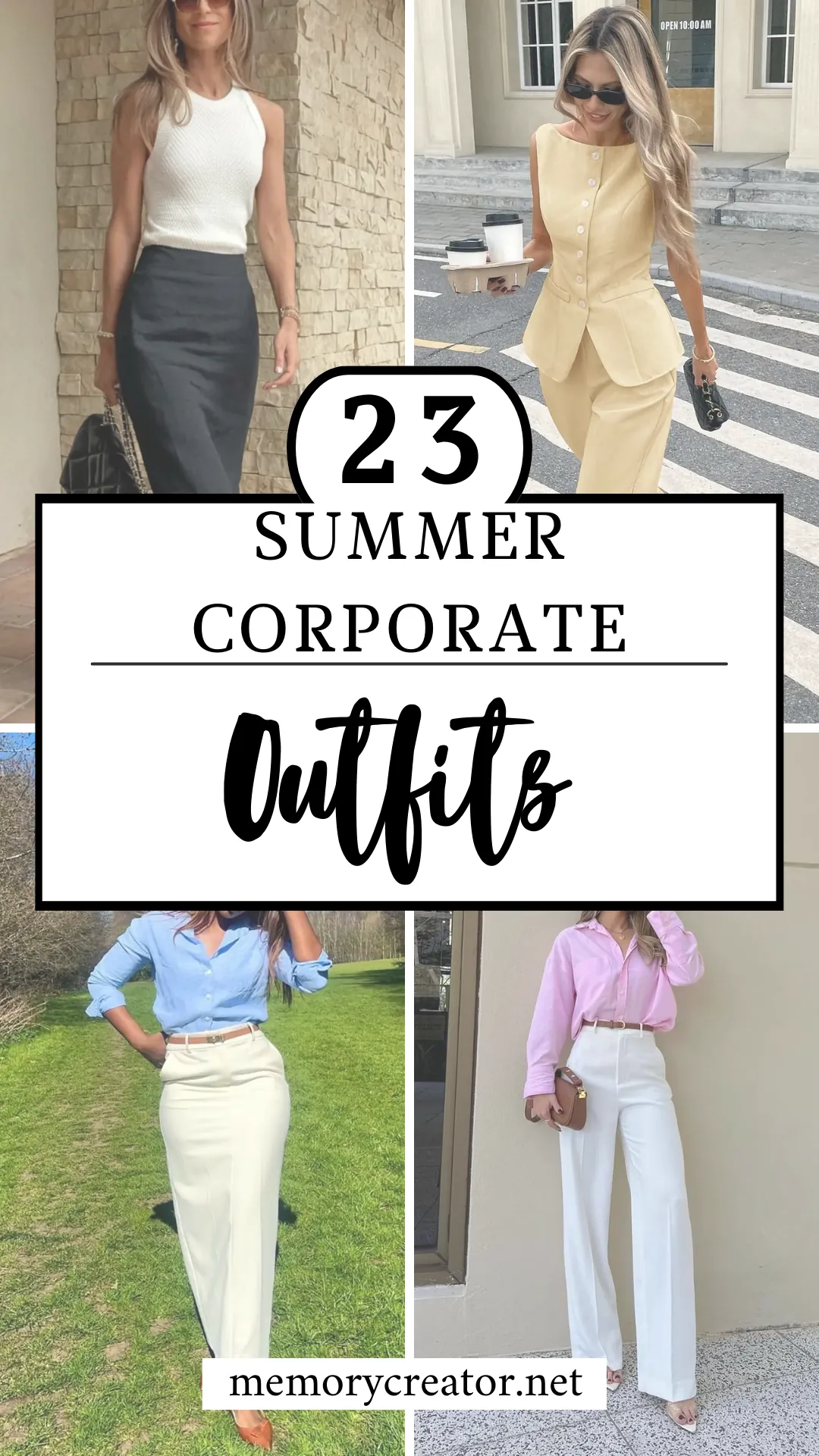
The heat outside hits 92°F. Your office blasts 66°F air. Summer Corporate Outfits have to survive both extremes without making you look like you packed for a camping trip. Most advice treats summer office wear for women as a single-temperature problem. It is not. You need a fabric that breathes on the sidewalk but holds warmth in a conference room. A cotton cardigan won’t cut it. A sleeveless shell without a structured topper will leave you shivering. That isn’t a style choice. It is physics.
Summer office outfits get the basics right, but the temperature gap demands a different logic. Corporate dress code fundamentals help you stay within bounds while you solve the real problem.
25 Summer Corporate Outfits That Outlast the AC and the Sun
These 25 outfits aren’t just assembled for a photo — they’re engineered for women who commute through a steam bath and then sit under an air vent set to arctic. Each one solves for fabric, layering, and that unpredictable moment your boss calls an impromptu meeting right as you’ve melted. I’ve grouped them by dress code so you can find what fits your office’s particular breed of summer chaos.
Boardroom-Ready in 90 Degrees
For offices where the corporate dress code is unwritten but ruthlessly enforced, these looks project authority without wilting. They’re built on polished trousers, structured toppers, and fabrics that don’t betray you by noon. Every piece here passes the “your most critical colleague” test.
The Striped Shirt That Doesn’t Sleep

A blue-and-white striped relaxed cotton button-down, loosely tucked into cream wide-leg crepe trousers. A black slim leather belt, white leather handbag, and black strappy leather sandals ground the airiness. Gold sunglasses and a necklace add a quiet gleam. This crepe fabric is the secret weapon: it resists wrinkles and doesn’t cling. Crepe trousers often come unlined — if your office is a meat locker, add a half-slip underneath; the extra layer won’t bulk but will cut the wind chill on your legs without altering the drape.
The Fine-Gauge Polo

by @ewa_vu
A white slim-fit knit polo, not piqué but a fine gauge, tucked into white tailored linen-blend trousers. A tan slim leather belt and tan handbag offset the monochrome. Beige pointed-toe flats and a gold watch whisper luxury. The knit structure means zero collar-curl by 3 p.m. Avoid cotton piqué polos — they read “golf course” and won’t survive a day under office AC without looking rumpled. A fine-gauge merino or cotton-silk knit is the kind that gets promotion comments, not dress-code ones.
The Ice-Blue Linen Equation

A light blue linen button-down, unbuttoned at the collar, tucked into high-waisted white wide-leg linen trousers. A black slim leather belt defines the waist. Taupe leather tote and beige suede slide sandals keep the look grounded. Dark sunglasses add a shield for the commute. Linen is airy, but white trousers under office lights can be high-risk. Choose a lined option so fluorescent beams don’t reveal more than you intend — a lightweight cupro lining disappears against skin and saves you from the silhouette show.
The Preppy Sweater Switcheroo

A white slim-fit cotton tank tucked into white wide-leg relaxed woven trousers, with a navy regular-knit sweater tied over the shoulders or lightly buttoned at the neck. A tan slim leather belt and white pumps complete the look. This is the outfit that defies the “cotton cardigan trap.” The sweater draping your shoulders adds wind resistance against the AC without turning you into a shapeless bundle — and it’s a natural layer for the commute when the sun dips, no second bag required.
The Satin Shell, De-Glossed

A white relaxed satin sleeveless top drapes out of tan wide-leg cotton-blend trousers. A matching tan fabric waist belt, cream pointed-toe pumps, and gold watch and earrings complete the look. Satin can look evening, but a matte crepe-backed satin reads daytime. Test your satin under office lights — anything with a high-shine finish will photograph as wet. Choose a sand-washed or sueded satin that absorbs light rather than bouncing it, and you’ll look composed, not coated.
The Navy Monochrome Cool-Down

A navy slim-fit knit sleeveless top, streamlined and unadorned, paired with wide-leg navy trousers that hold their crease. The tan handbag breaks the monochrome without shouting, and brown sandals and sunglasses add warmth. This outfit works because it’s a single color column — you look taller and more pulled together even when you’ve just sprinted from the train. A knit that drapes off the body rather than clinging is the secret to staying cool indoors without a second layer.
The Dove-Grey Minimalist

A white relaxed satin sleeveless top floats over grey wide-leg woven trousers. A black structured leather handbag, gold loose bracelet, and gold ring. The outfit relies on fluidity and texture over pattern. Grey trousers in a heathered wool-blend hide lint and creases better than solid black. Grey also magically conceals the fine dust that settles in overly air-conditioned vents — a small win that saves you from looking like you’ve been storing your lap under the desk.
The Halterneck Authority

A white slim-fit ribbed-knit halter top — high neck, no cleavage — tucked into black wide-leg wool-blend trousers. A brown structured leather handbag and slim leather belt add polish. Black suede sandals and a gold watch complete it. This top shows shoulders but keeps the chest covered, the precise ratio many conservative offices will accept. Observe senior women before going bare-shouldered without a blazer; if they don’t, this stays under a blazer until you’re at your desk and safely out of the meeting sightline.
The Coastal-Chic Blazer Gambit

by @e_ddiee
A white relaxed linen blazer thrown over a slim blue cotton button-down, tucked into high-waisted white linen shorts. Gold sandals and a beige tote lighten the look, while gold earrings and sunglasses polish it. This is a summer power play if your office allows shorts. Even in a coastal-chic office, confirm shorts are explicitly permitted before you walk through the door — this look reads “executive” only where the culture already accepts it, and you don’t want to be the test case.
The Tweed Short-Suit Solution

A white structured tweed jacket with a brown slim-fit jersey top underneath, paired with relaxed white cotton-blend shorts. A brown slim leather belt and matching handbag tie it together. Brown leather sandals finish the look. Tweed sounds heavy, but an open weave makes it summer-weight. The jacket’s structure hides sweat marks on the back, but test the lining with a palm-sweat test before buying — you want unlined or half-lined in breathable viscose, not a polyester sauna that traps heat against your skin.
Smart-Casual Without the Guessing Game
Smart-casual is the trickiest summer territory — too tailored and you look like you’re giving a deposition, too soft and you risk getting labeled as “relaxed” in a performance review. These outfits thread that needle with exactness: polished but not punitive, and never the outfit HR remembers for the wrong reasons.
The Summer Skirt Suit Rethink

by @verena.lr
A blue tailored linen-blend blazer and matching A-line mini skirt, with a white slim cotton top underneath. Cream leather handbag and beige pumps keep it light. A mini skirt feels summer-appropriate, but the matching blazer signals you’re not on vacation. In an A-line cut, the skirt gives you room to breathe; just ensure the length hits no more than two inches above your knee — that’s the invisible line for most office tolerance, even on hot days.
The Waistcoat Remix

A pink regular-fit linen-blend waistcoat buttoned over nothing but a gold necklace, paired with white tapered cotton trousers. Tan leather sandals and a beige silicone smartwatch modernize the preppy roots. The waistcoat gives arm coverage without a full jacket, solving the bare-shoulder dilemma. In a pink as muted as this, the waistcoat reads more “directional tailoring” than “baby shower.” Keep your trousers crisp and your hair sleek to anchor the soft color with instant authority.
The Linen Short-Suit, Fully Legitimized

by @verena.lr
A beige relaxed linen blazer over a white slim-fit cotton-blend tank, tucked into white tailored twill shorts. A brown leather belt and clear-heeled sandals keep the bottom light. This is the iteration of the short-suit that even a law firm might permit on a relaxed day — provided the shorts hit just above the knee and the blazer stays on. The clear heel is risky: it can look like a styling gimmick, but in a minimalist outfit it registers as a “barely there” lift. Make sure the ankle strap is secure; a slipping heel ruins the effect instantly.
The All-Black Waistcoat Equation

by @demelza_may
A black tailored crepe waistcoat, buttoned high, paired with black relaxed crepe trousers. Black slim acetate sunglasses and a gold necklace. This is a power move for a creative director or a lawyer who just won her case. An all-black summer outfit in crepe is cool to the touch and hides any sheen of sweat, but static cling can build in overly air-conditioned rooms — a quick pass with a dryer sheet inside the trouser hem fixes it before you walk into your 2 p.m.
Casual Days, Still In Charge
When your office signals “dress down” but you still need to look like the decision-maker you are, these outfits deliver. No one will mistake you for the intern, even in a polo or shorts. The secret is in the fabrication and the fit — not in a logo tee. These are the days you spend less time on the ironing board, not less authority.
The Weekend-Shirt Weekday Hack

by @_katiepeake
A blue-and-white striped relaxed cotton button-down, half-tucked into white straight-leg linen-blend trousers. A brown leather waist belt, beige canvas tote, and brown flat leather sandals. Black sunglasses. This feels borrowed from Saturday but sized up in formality with the trousers. Canvas totes can kill an outfit if they’re fraying — invest in one with leather handles and a coated interior, and it’ll read as boardroom-acceptable even when the dress code drops to casual.
The Pink Shirt Statement

A pink relaxed cotton button-down, unbuttoned at the cuff, tucked into white wide-leg polyester-blend trousers. A white mini leather handbag, white flat synthetic sandals, white slim leather belt, and a gold watch. All that white makes the pink pop without shouting. Polyester-blend trousers have a bad rap, but in a wide-leg cut with a matte finish, they resist wrinkles and offer a crease that doesn’t quit — ideal for a 10-hour desk day that includes a surprise client walkthrough.
The Short-Sleeve Reset

by @mint_label_
A white relaxed cotton short-sleeve shirt, collar unbuttoned once, tucked into beige wide-leg linen trousers. Black pointed-toe suede flats, pearl stud earrings. This is the definition of quiet luxury — no logos, no fuss, just perfect proportions. Linen trousers in beige will wrinkle at the lap; choose a heavier weight (around 200gsm) and the wrinkles will fall out as you walk, rather than cutting into deep creases that scream “I sat in a chair.”
The Sneaker-Polo Tension

A white slim-fit ribbed-knit polo tucked into beige wide-leg woven trousers. A brown slim leather belt, white low-top leather sneakers, a tan leather shoulder bag, and gold jewelry. Sneakers in a corporate setting? Only if they’re pristine leather and the rest of the outfit is unassailably polished. The trick is the trouser break: a wide-leg trouser that just skims the shoe lace line looks intentional, not lazy. If the trousers puddle over the heel, you’ve lost the plot — and the dress code argument.
The Contrast-Top Power Strike

A black-and-white slim-fit ribbed-knit tank top, graphic but controlled, tucked into black wide-leg crepe trousers. A black slim leather belt, black block-heel suede sandals, and a gold watch. The two-tone top draws the eye up, away from any commute-induced creasing on the trousers. Crepe trousers hate heat, but in an air-conditioned office they’re crisp and movement-friendly; once you step outside into 90° humidity, the fabric releases heat faster than cotton because it doesn’t hold moisture against your skin.
The Minimalist’s AC Uniform

by @cocobeautea
A white relaxed cotton sleeveless top with clean armholes, tucked into dark navy wide-leg linen-blend trousers. Beige suede loafers, a black oversized coated-canvas tote, and gold-plated jewelry. This is the uniform for women who want zero thought-dressing. Linen-blend trousers often look pressed for the first hour then give up; look for a blend with at least 30% viscose or lyocell to hold the crease without sacrificing the breathability that gets you through a sticky morning commute.
The White Blazer, No Sweat

A white tailored crepe blazer over a white slim-fit jersey bodysuit, tucked into beige tapered woven trousers. White leather sandals and gold jewelry. The bodysuit eliminates the constant re-tucking fight. A white blazer in summer lyocell or crepe won’t show sweat like linen does, but keep a stain-removing pen in your desk — white blazers attract coffee drips like a magnet, and you won’t spot it until you’re three steps into the meeting.
The Charcoal Halter, Full Control

A black slim-fit ribbed-knit halter top with a high front, paired with grey relaxed wool-blend wide-leg trousers. A black structured pebbled-leather tote, black slim leather belt, gold watch, and gold rings. The top is sleeveless but the high neck and dark color read as serious. Wool-blend in summer? In an air-conditioned office, tropical-weight wool breathes and resists pilling — it’s a far better thermal regulator than polyester or heavy cotton, and it won’t look bedraggled by the time you leave.
The Color-Block Move

by @havanattan
A white slim-fit cotton halter top anchors navy wide-leg wool-blend trousers. Red pointed-toe patent-leather pumps and a red structured leather shoulder bag inject controlled energy. Tortoise-shell oval eyewear and a gold bracelet-style watch add a dash of vintage. The red accessories carry the whole look. Patent leather can stick to sweaty skin; reserve these heels for days you’re not walking far, and use a no-slip grip pad at the back of the shoe to prevent the tell-tale slide that scuffs the heel.
The Vest-Over-Nothing Moxie

by @ohmboutique
A blue tailored linen-blend vest worn alone over a bare décolletage, paired with white wide-leg crepe trousers. A beige structured leather shoulder bag, gold stackable bracelets, and a dainty necklace. This is not for the faint of heart — or a HR hawk. If you’re going to wear a vest without a shirt under, the armholes must fit close to the body and the front must not gape when you reach for a document. Test it seated; if there’s a gap, a sheer mesh layer underneath prevents a wardrobe citation.
The Green Short-Suit Statement

by @ohmboutique
A bright green tailored woven blazer and matching high-waisted woven shorts, a white slim-fit jersey tank underneath. Cream handbag and cream heeled sandals, gold necklace and bracelets. This suit owns the room. The color is confident, the tailoring keeps it from being costumey. Bright colors in a short-suit demand impeccable fit — any pulling across the hip or gap at the waist will be visible from across the conference table. Spend the extra $40 on tailoring and this becomes your summer armor, not a regret.
Surviving the Office Freeze: Layering Tricks Summer Sweaters Can’t Solve
The cotton cardigan trap: Most summer layering advice points you to a thin cotton cardigan. I’d argue that’s exactly wrong for aggressive AC. Cotton has zero wind resistance—a chilled vent blows right through the open knit, leaving you colder than bare arms. An unstructured wool-silk blend traps body heat without weight, acting like a quiet thermal shield.
Anatomy of an office-warm layer: Look for a high, round neckline, three-quarter sleeves, and a hem that hits just below the hip bone. This shape hugs your heat zones—wrists, collarbone, lower back—without bunching under a blazer or adding bulk over a sheath dress. A shawl collar or draped front just adds visual weight, not warmth.
The commute-to-desk transition layer: A breathable, unlined blazer in a wool-crepe blend works for the walk to the station and then insulates you once you’re sitting still. The key is wearing it the entire journey—not carrying it. You adjust by rolling the sleeves up outdoors and rolling them down at your desk. One piece, no extra bag.
Hidden thermal buffers: Unlined trousers in tropical wool or crepe breathe during the commute but block cold air when you’re stationary. A half-slip is the unsung hero here—it adds a thin windproof layer over your thighs without feeling lined. I’d skip the poly lining that turns into a personal sauna by noon.
Why the desk blazer fails: That blazer draped over your chair collects dust, absorbs static, and inevitably needs dry cleaning when a surprise meeting hits. The permanent solution is a single, seasonless wool blazer you never take off—you just roll the sleeves. One good one in your bottom drawer for emergencies is fine, but it’s backup, not strategy.
The Sweat-Proof Fabric Code Every Corporate Woman Should Crack
Why “breathable” isn’t enough: You’ll hear that linen is the gold standard in most summer style guides. The better move for a corporate office is a high-twist cotton or tropical wool, because linen’s breathability collapses in high humidity—moisture hangs in the fibers, then the AC freezes it into stiff wrinkles. Tropical wool wicks moisture and lets it evaporate when the air dries inside, so you don’t arrive looking steamed.
The color science of sweat marks: Light grey, powder blue, and blush pink telegraph dampness instantly. Charcoal, deep navy, and dark olive hide moisture because they absorb light rather than reflecting it. A heavy silk charmeuse in a dark color can mask damp patches; a lightweight silk crepe de chine or sand-washed silk does it even better, diffusing moisture across the textured surface.
Anti-odor beyond “natural fibers”: Silver-ion and mineral-treated polyester blends—look for them in performance suiting lines—inhibit bacteria growth without smelling synthetic. After a packed summer board meeting, they won’t hold odor the way a cotton-blend blouse will. This is an investment that pays off on the 90-degree commute home.
Wrinkle vs. sweat trade-off: A crisp cotton-poplin blouse looks fresh at 7 a.m. but wilts fast and holds sweat stains. A heavy crepe or micro-textured knit absorbs minimal moisture and keeps its structure even if you’re power-walking from the train. I’d trade a little initial crispness for a fabric that still looks composed when the AC kicks on at full blast.
The lining lie: A full polyester lining traps body heat like a trash bag. Test a garment’s lining in-store: press your palm against it for 30 seconds. If you feel a damp, sweaty seal, skip it. An unlined or cupro-lined piece lets heat escape, keeping you cooler than a lined linen dress ever will.
Decoding Summer Corporate Dress Codes Before HR Does
The “Summer Fridays” loophole that doesn’t exist: Many women see the memo and reach for linen shorts or backless sandals. Those get noted, not overlooked. The safe formula: a tailored culotte or wide-leg crop in a suiting fabric, a capped-sleeve top, and a closed-back mule or low block heel. Coverage, not casualness, signals you read the room.
Regional dress code dialects: A San Francisco creative agency might accept a sleeveless silk shell and open-toe sandals; a Dallas law firm will flag that same outfit as unpolished. In the Southeast, seersucker is seasonally understood; in the Northeast, it can read as a costume. When in doubt, observe what senior women in your specific office wear—and copy their coverage level, not their exact pieces.
The bare-shoulder boundary: In an East Coast conservative office, a cap sleeve that covers the acromion bone is the absolute minimum. Anything less—even a thick tank strap—reads as “sleeveless” and can violate unwritten rules. If you’re unsure, a sheer organza sleeve over a nude lining gives the illusion of bare skin without exposing a centimeter.
Client-facing vs. internal days: Check your calendar before dressing. A spaghetti-strap sundress under a cardigan might work for a desk day, but an unexpected video call reveals exactly what you’re wearing. Keep a structured blazer or silk scarf at your desk to quickly upgrade a top that’s too bare. Pre-planning means you’re never caught off-guard.
When to break the rules deliberately: A silk camp-collar blouse, worn untucked over tailored trousers, signals confidence—not cluelessness—because it’s an intentional deviation. Anchor it with severe tailoring: a nipped blazer, sharp pleats, and closed-toe heels. This says you understand the business dress code well enough to bend it once, not that you don’t know it exists.
From Subway to CEO Desk: How to Look Unruffled in 88% Humidity
The commute-proof shoe matrix: Patent leather warps in heat; suede water-stains from a sudden downpour. Stick with calfskin or pebbled leather that sheds humidity without damage. A 2-inch block heel won’t snag on subway grates, and a pointed-toe flat in a glossy finish still reads as corporate when you need a break from height.
Hair that holds after the bag strap: A low twisted updo pinned at the nape survives the crush of a handbag strap and won’t unravel in a strong AC draft. A clear gel-cream—not a mousse—brushed through damp hair before twisting seals the style against humidity. When you step into the office’s unforgiving bathroom light, every strand stays put.
The bag that carries your summer armor: A mid-size nylon-blend tote with a structured shape hides your emergency kit—blotting papers, mini deodorant, travel dry shampoo—without looking like a gym bag. Choose a leather that resists water spots, like saffiano or crossgrain, and a dark color that masks contact with damp sidewalks. This work tote is your mobile command center.
Makeup that doesn’t migrate: Start with a water-based primer, not silicone-based; silicone slides under office fluorescents by midday. Follow with a light layer of long-wear foundation, a matte setting spray, and a powder puff to press it in. Silicone primers might feel smooth on the platform, but under cool, dry office air, they separate and highlight pores.
The 3-minute reset kit: Stash a mini steamer, a blotting sheet, and a travel-sized lint roller in a bottom drawer. Before your 11 a.m. meeting, run the steamer over your collar points to re-crisp them, press a blotting sheet over your T-zone, and roll away any train lint. You’ll look like you arrived by car, not subway.
The Summer Workwear Longevity Routine Your Dry Cleaner Won’t Tell You
Under-wash your suiting: Wash tropical wool blazers and tailored trousers only after every fourth wear—or longer if they haven’t absorbed odor.
Every trip through the machine weakens the wool’s natural protein fibers, leading to the slow-motion shrinkage that kills a blazer’s shoulder fit by August. Between wears, hang the garment inside-out in a bathroom with good ventilation to let moisture evaporate, and spot-clean only visible marks with a damp, undyed cloth. Skip the dryer entirely; even a cool cycle slowly felts the fibers.
Forget the freezer: Don’t put your office wear in the freezer hoping to kill bacteria—it doesn’t work.
Odor-causing bacteria go dormant in freezing temperatures, then reactivate the moment the fabric warms on your body. The real fix: a handheld garment steamer held a few inches from the armpit and crotch areas. The combination of heat and moisture collapses the bacterial cell walls, and the steam lifts trapped sweat particles without overwashing. For an UV-light alternative, 20 minutes in direct sunlight on a balcony (if you have one) does the same thing for free, but never on dark colors—it fades them fast.
Pilling prevention for knits: Wash silk-cotton cardigans and lightweight knits inside a fine-mesh garment bag with the density of a sheer curtain.
The tiny holes prevent friction from other fabrics, which is what turns a pristine knit into a bobbled mess after three washes. Use a short, cold-water cycle and turn the garment inside-out—the exterior never touches the drum. For drying, skip the rack; lay it flat on a towel and reshape while damp so the fibers don’t stretch under their own wet weight.
Sweat-stain removal on silk: Lift dried-in deodorant-sweat yellowing from a white silk shell with an aspirin paste, not bleach.
Crush two uncoated aspirins into a powder, mix with just enough cold water to form a thick paste, and dab it onto the stain. Let it sit 20 minutes, then rinse with cold water. The acetylsalicylic acid dissolves the mineral buildup from antiperspirants that bleach can’t touch and won’t yellow the silk. Never use hot water—it cooks the protein in the silk and sets the stain permanently.
Rotational math: To cut fiber stress in half over a hot summer, own at least three pairs of trousers, five shells, and two structured toppers that you rotate so each piece rests two days between wears.
This gives fibers time to release tension and moisture, which drastically reduces pilling and odor buildup. When you’re building a summer work capsule, the pair count matters more than the fabric content: eight days of continuous wear on one trouser pair will destroy even the best tropical wool. A three-trouser rotation, meanwhile, can keep a capsule sharp from June through September with minimal washing.
FAQ
Can I wear open-toe sandals if I have a pedicure?
No. A pedicure doesn’t override most corporate safety and dress code policies—the rule forbids the open toe, not the unpolished nail. If your office explicitly permits open-toe shoes, choose a low block heel with a covered back and a vamp that hides all toe cleavage; otherwise, peep-toe is the visual boundary you can push without getting flagged.
How do I stop my thighs from chafing in a pencil skirt?
Wear a thin, seamless anti-chafe short in moisture-wicking microfiber underneath—it eliminates skin-on-skin friction and the embarrassing “legs unsticking from chair” sound. Apply a chafe balm (the wax-based kind, not powder) at the inner-thigh crease as backup for humid commute days. Baby powder seems sensible but turns to paste as soon as you sweat and leaves white dust on your hem.
Is sleeveless really that bad if I have a blazer over it?
In many offices, a sleeveless shell under a blazer is fine—until you remove the blazer. Then you may violate a “no bare shoulders” rule you didn’t know existed. Unless you’ve observed senior women confidently wearing bare arms in meetings, keep the blazer on whenever you’re visible, even for casual catch-ups. One quick jacket removal can be the thing a manager quietly notes.
What if my office has a “no bare shoulders” rule but it’s 100 degrees outside?
Invest in a structured, short-sleeve blouse with a high neckline—cap sleeves at minimum—in pima cotton or lyocell. It reads as fully covered while letting air move through the weave instead of exposing skin. A sheer organza sleeve layered over a nude tank is another workaround that drafts cool air onto your arms without violating the rule; no one can argue it’s bare when fabric covers the shoulder, even if it’s transparent.
How do I handle boob sweat in a silk blouse?
Avoid silk charmeuse entirely—its smooth surface shows moisture instantly. Use sand-washed silk or silk crepe de chine, which diffuses dampness into a barely-there texture that won’t broadcast. Underneath, place an ultra-thin bamboo bra liner or silver-infused sweat pad to absorb moisture before it reaches the outer layer, so the blouse stays dry and you don’t feel chilled once the office AC hits.
Can I wear linen if it wrinkles the second I sit down?
Yes, but only heavyweight Belgian linen or a linen-viscose blend in a dark color, and only if the piece never comes off—a double-pleated trouser or a blazer that stays on all day hides the sitting creases in its structure. A few wrinkles are the textile’s character, not a failure. If you can’t accept that, choose crepe instead; it delivers the same breathability with zero visible rumpling.
Are shorts ever acceptable in a corporate office?
Only if your employer has a formally communicated “summer casual” policy and the shorts are tailored, hit just above the knee, and are made of the same suiting fabric as a matching blazer. Never be the first to test it; wait until you see the approved version on at least two colleagues and verify the policy in writing. Otherwise, the message you’ll send is that you misunderstood the assignment.