Chic 10+ Minimalist Office Ideas That Banish Clutter

The trouble with most minimalist office advice is that it stops at the surface. You clear the desk and hide the cables, yet three weeks later the paper tray is full and the drawer looks like a filing cabinet exploded. The look stayed. The logic didn’t. A minimalist office holds up only when the materials and lighting do the daily work for you, when every surface resists clutter before it starts. That is what the choices below are about — keeping a workspace free of clutter without constant policing.
These choices pair naturally with the small home office ideas for tighter rooms. The desk organisation habits also round out the routine once the paper piles start to creep back.
17 Minimalist Office Choices That Cut Visual Noise
These 17 spaces prove a minimalist office doesn’t need to feel cold or stripped bare. Each room balances clean lines with materials that warm the eye—wood, wool, soft plaster—and storage that hides the mess without making you dig for a pen. What follows isn’t a catalogue of beige boxes. It’s a collection of real-world setups where calm and function coexist, sorted by what matters most: freestanding simplicity, compact corners, built-in systems, and the selected touches that make the space yours.
For the Freestanding Minimalist
The simplest setups often feel the most serene. A good desk and chair, anchored by art and plants, can turn any corner into a workspace you look forward to.
Sage Walls, Oak Desk, Calm Glow

by @affordablehsedecor_n_interiors
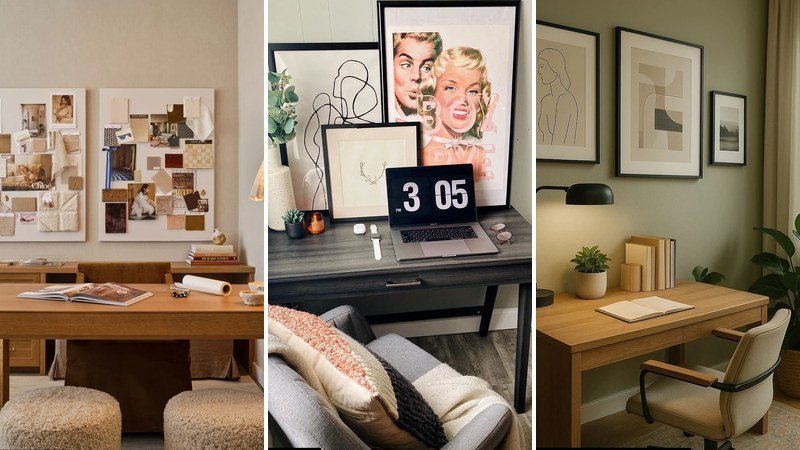
A wooden desk in natural oak sits against a sage green wall, grounding the room without shouting. The beige office chair adds softness, while a black desk lamp casts a warm pool for late-afternoon work. Three framed art prints hang in a neat row, anchoring the vertical space without visual clutter. A floor plant in a woven basket tucks into the corner, breaking the clean lines with organic shape. A light-coloured desk mat in beige or cream prevents pen scratches better than a bare wood top while keeping the palette quiet. The sheer curtain diffuses daylight, so the room never feels harsh—even in midday sun. This setup works because every piece has a job, and nothing fights for attention.
Charcoal Desk with Soft Grey Velvet

by @affordablehsedecor_n_interiors
A black desk anchors this modern space, paired with a grey velvet chair that makes you want to sit down and stay a while. Above, a simple pendant light hangs from the ceiling, its downward beam defining the work zone without add-on lamps. Two large black-and-white photographs lean on the wall, framed identically, adding depth without colour disruption. A palm plant adds height next to the desk, while a small glass vase holds a few fresh stems—proof that minimalist doesn’t mean lifeless. On a stark black desk, a leather desk mat hides cable clutter while offering a warm landing for your wrists. The window’s sheer white curtains soften the incoming light, keeping the room cool in tone but warm in feel. If you love the crisp contrast, a few black and white office ideas can help you refine the palette.
Grey Walls, Warm Wood, Framed Memories

Against light grey walls, a wooden desk in natural oak feels both clean and lived-in. The sage green seat on a simple wooden chair brings a subtle colour note without overwhelming the monochrome palette. A small side table holds a camera—ready to grab for calls or a quick break—while a potted plant filters the light from the large left-side window. Four framed photographs in identical frames create a personal gallery above the desk, proving that meaningful objects don’t need to clutter surfaces to feel present. Position the monitor slightly off-centre so the framed photos become your focal point—not the screen. The open, airy layout avoids the closed-in feeling that plagues many small home offices.
Bright White Desk, Bouclé Chair, Big Plant

by @neues_nest
White furniture often looks sterile, but here the textured cream bouclé chair and a dramatic rubber plant bring instant warmth. The floating wooden shelves above the desk display a few ceramic vases and framed art—enough to feel dressed but never crowded. A low-pile patterned rug under the desk defines the zone visually and catches crumbs that a hard floor would broadcast. The sheer white curtains admit generous daylight, which bounces off the light wood floor and makes the whole room feel bigger. Because the palette stays in warm whites and natural oak, the space stays calm even with a monitor, laptop, and peripherals on the desk. It’s a room you can breathe in, and it leans on the same principles you see in a well-lit bright home office.
Wire Shelving and a Marble Side Kick

by @ohhomee
A light oak desk with a monitor riser lifts the screen to eye level and frees up surface area. Above it, a white wire wall shelf displays books and decorative objects without trapping dust like solid wood shelves do—an airy, modern choice. To the right, a small marble-topped table holds a lamp, extending the workspace without adding bulk. When using wire shelving, choose objects in a limited colour range (here, creams and taupes) to keep the visual quiet. A framed abstract print hangs next to the shelf, its soft geometric shapes echoing the room’s calm geometry. The sheer curtain filters light from the left, so the whole corner feels softly lit throughout the day.
Standing Desk, Circular Cabinet Details

A light oak standing desk takes centre stage, flanked by a matching cabinet with subtle circular door details that add interest without handles that protrude. Above, a floating shelf holds three identical-framed abstract pieces, creating a horizontal band of art that draws the eye upward. A leather desk mat in a warm brown corrals your keyboard and mouse, dampening sound and hiding wear better than a plastic mat. A ring light clips to the monitor, ensuring you look fresh on camera while avoiding the clutter of a separate lamp. The tall ceramic vase with green foliage on the cabinet injects vertical life. The overall effect is clean, yes, but never clinical—thanks to the warm wood and soft textiles.
Corners That Work Hard
Small footprint, big payoff. These corner desks maximise every inch without feeling cramped.
Integrated Shelves in an Airy Corner

by @flexandfurn
This corner setup makes the most of a small footprint by building storage directly into the desk. The light wooden desk extends upward with open shelving that holds a lamp, a reed diffuser, and small essentials—clutter contained without a separate bookcase. A felt desk mat softens the workspace and keeps the keyboard from sliding. The large monstera plant to the right fills the vertical void and adds a lush, living presence that belies the room’s modest size. In a corner, bounce a task lamp off the wall instead of pointing it downward—it spreads light more evenly and reduces harsh shadows on your screen. Natural light pours in from the right, washing the pale desk and beige walls with a warm glow that makes the room feel spacious. For more ways to maximise a corner desk setup, small adjustments like wall-mounted shelves make a big difference.
Sage Paneling and Cosy Charcoal

by @fy.shop
Tucked into a corner, this dark wood desk feels intimate rather than cramped, thanks to sage green paneled walls that wrap the space in colour. Three framed art pieces lean casually against the wall behind the laptop—an easy arrangement that you can swap out without drilling new holes. A grey armchair with a textured pillow pulls up in front, making the setup equally suited for writing and reading. When leaning art on a desk, use a small piece of museum putty to steady frames so they don’t slide when you open a drawer. A candle and a small succulent add just enough scent and life. The overall mood is cosy but never messy because the palette stays tight: sage, charcoal, cream, and soft peach.
Bouclé Chair and a Mushroom Lamp

by @hava.castro
A wooden desk with a three-drawer cabinet sits neatly in the corner, while two floating shelves above display books and a glass vase—storage and display, balanced. The cream bouclé chair with chrome legs introduces soft texture and a hint of shine that keeps the corner from feeling rustic. A dark brown mushroom-shaped lamp casts a focused circle of warm light, perfect for reading or writing notes by hand. Book spines add colour, so if you want a calmer look, turn them spine-inward on open shelves—the pages create an uniform, soft texture. The light grey wall with classic molding gives the nook an architectural backbone. Even with no window in sight, the space feels deliberate and inviting.
Built-In Storage That Vanishes
When storage is part of the architecture, the room stays open. These floor-to-ceiling systems hide clutter behind clean lines.
Marble Desk with a Warm Wood Backdrop

by @brunobordon
A floor-to-ceiling wooden bookshelf dominates the back wall, but it’s the oval marble desk that steals focus—its creamy surface reflecting light from the long pendant suspended above. Two rattan-seated chairs face the desk, ready for a client chat or a partner’s quick visit, while a white office chair tucks behind. The sheer curtains diffuse daylight, softening the hard edges of the marble. To prevent the marble from looking cold, anchor the space with a textured area rug in natural fibres—it adds warmth underfoot and defines the zone. Integrated LED strips within the shelves highlight books and objects without adding visible hardware. This room feels professional but never stiff, borrowing a few notes from CEO office design without the corporate chill.
L-Shaped Light Oak Setup with Hidden Storage

The L-shaped desk gives you room to spread out, while a tall white cabinet to the right swallows files, supplies, and anything unsightly. Floating shelves above the desk hold books, a plant, and decorative canisters, their integrated under-shelf lighting eliminating the need for a desk lamp. When using open shelves in an office, store items in matching containers—here, canisters in the same tone keep the lineup cohesive. The light wood floor and paneled walls run throughout, making the room feel larger and more connected. Two chairs at the desk mean it can double as a homework spot or collaborative zone without losing its calm, grown-up appeal. Even the air conditioning unit gets tucked unobtrusively above the shelves.
Greige Built-In with a Marble Backsplash

This workspace disappears into the wall when the chair is pushed in. Light-coloured upper cabinets and open shelves frame a desk surfaced in a marble-patterned laminate—fuss-free and easy to wipe down. A grey office chair rolls up, its neutral tone blending with the greige cabinetry. Install LED strip lights inside open shelving rather than above it; they highlight what’s stored without casting harsh downward shadows on your face during video calls. A small potted plant and a modern table lamp add life and task light without cluttering the surface. The curtain to the left suggests a window nearby, balancing the built-in’s solidity with softness. It’s a setup that feels bespoke but costs less than you’d think.
Dark Walnut Shelves, Soft Taupe Backdrop

Warm taupe walls envelop this office, setting a rich but quiet stage for the dark walnut desk and floor-to-ceiling shelving. The shelves glow from within, each cubby softly lit to showcase books, a brass lamp, and sculptural vases. The light-coloured swivel chair provides contrast without competing—its upholstered seat keeps long hours comfortable. If you use dark wood shelves, group objects in odd numbers and vary their heights to avoid a museum look—it keeps the display feeling personal. Two ceiling spotlights add focused brightness when needed. The symmetrical arrangement of shelves flanking the desk creates a balanced, intentional layout that feels both executive and intimate. No paper piles, no chaos—just a space that helps you think clearly.
Tall Shelving with an Integrated Desk

A floor-to-ceiling shelving system in light oak wraps around the desk, giving every object a dedicated home. The off-white cabinetry above and below keeps the look cohesive, while the open desk slot invites you to sit and work without visual obstacles. Five framed certificates hang vertically on the adjacent wall, turning official documents into a design feature—a clever way to display achievements without a cluttered gallery. Dust shows less on light oak than on dark finishes, making this a practical choice if you’d rather work than wipe. A modern desk lamp provides focused light, and the window with blinds on the right lets in controlled daylight. The result is a workspace that feels custom-built for focus and function.
Work Zones with Character
Minimal doesn’t mean impersonal. These setups use pinboards, art grids, and room dividers to inject personality while keeping surfaces clear.
Abstract Art, Symmetrical Shelves, Textured Warmth

A large abstract painting commands the wall behind the desk, while dark, floor-to-ceiling shelves flank it on both sides—symmetry that soothes the eye. Warm recessed shelf lights bounce off book spines and objects, casting a gentle glow that makes the taupe walls feel soft. In front, a round side table holds books and glasses, inviting you to pause. When using dark shelving, balance it with a lighter desk or floor—here, the light herringbone wood does the heavy lifting. The light-coloured sofa in the foreground hints at a sitting area, so the office doubles as a reading nook. It’s a space that feels selected but never overstyled.
Pinboard Wall and a Pleated Lamp

This creative office puts materials on display. Two large pinboards behind the desk hold fabric swatches, paper samples, and inspiration—proof that minimalism can coexist with a working moodboard. The velvet office chair in a creamy taupe adds luxury without clutter, while two low textured stools offer extra seating that tucks under the desk when not needed. A pleated table lamp casts a soft cone of light across the work surface. To keep pinboards from looking messy, stick to a monochromatic palette of clippings and arrange them in neat rows or a loose grid. The stack of books adds weight and a quiet scholarly air. It’s a space where creativity feels orderly, not chaotic.
Behind the Slat Divider: Work and Rest

When your office shares a bedroom, a room divider becomes your best friend. Here, a vertical wooden slat screen separates the white desk and pink chair from the bed, carving out a visual—and psychological—work zone. A pegboard above the desk keeps notes and small tools off the surface, while floating shelves hold selected objects and books. The ceiling fan provides overhead light and air flow without dangling cords. Choose a divider with open shelving or slats rather than a solid panel, so light passes through and the room doesn’t shrink. The soft pink chair and beige walls keep the mood playful but serene. At 5 p.m., you slide the chair in, and the office disappears. When floor space is tight, the same ideas that make a home office work in a small space apply here—vertical storage and furniture that pulls double duty.
Desk Surfaces That Resist Clutter Before It Starts
Pick by material, not by shape: Most people buy a desk because the silhouette looks good in a photo. The smarter move is to prioritise the surface itself. Matte, non-porous laminates and low-sheen quartz composites repel fingerprints and dust far better than glossy lacquers or heavily grained wood. An uniform, light-toned surface creates a quiet baseline—crumbs and eraser shavings simply don’t register the way they do on dark walnut with pronounced grain. I’d argue this one choice shapes your daily experience more than any organising bin. A smart desk organisation system matters, but the surface sets the stage.
Texture reduces static cling: Contract-grade laminates with a subtle texture offer an overlooked benefit. They prevent papers from sliding and cut the static that drags dust onto screens and keyboards. You get a cleaner look without constant wiping. That anti-static quality alone keeps a Minimalist Office feeling fresh between resets.
Cooler materials keep you seated longer: Engineered stone stays noticeably cooler than solid wood. If your office sits in a warm upstairs room or catches afternoon sun, that temperature difference matters. You’ll stay comfortable without needing a fan that adds visual noise. In a smaller space, like a converted closet, a light quartz top reflects daylight and stops the nook from feeling stuffy—something cloffice setups often struggle with.
Avoid surface chaos from the start: A desk that visually fragments everything you place on it will never read as calm, no matter how much you declutter. Start with a surface that absorbs minor imperfections, and you’ve already won half the battle.
Lighting Layers That Make a Minimal Room Feel Alive
One fixture per job, nothing extra: Most guides treat lighting as an afterthought. I’d argue it’s the foundation—bad light makes even a pristine desk look chaotic. Use a single statement pendant or slim track for ambient wash, a hidden LED strip under a floating shelf for task, and one wall-washing sconce for accent. Three sources, zero clutter. That layering gives depth without adding objects. For a bright home office, bounce light off the ceiling with the sconce to soften the whole room.
3500K is the sweet spot: Many bulbs are labelled “office white” at 4000K, but that bluish tone glares on glossy paper and strains eyes over hours. 3500K feels neutral, cuts glare, and is gentler. For evenings, when your office doubles as a guest room or reading nook, a 2700K lamp on a dimmer shifts the mood without adding another fixture.
Indirect light erases complexity: Light bounced off walls or ceilings removes the hard shadows that add visual weight. Every line in a Minimalist Office should feel intentional, and shadows from a poorly placed downlight create a jumble of dark shapes. Wall-washing makes the room breathe.
Pre-set dimmers prevent lamp creep: Install a dimmer switch with two pre-sets: “focus” and “wind-down.” That simple hardware choice stops you from adding table lamps later to fix the atmosphere. A clutter-free workspace stays intact because the lighting already adapts.
Spatial Planning Fixes for Your Minimalist Office
Float the desk, open the floor: A wall-mounted desk and matching floating drawers create an uninterrupted sightline to the baseboard. That single move makes a small room feel 10–15% larger, especially in a tight bedroom corner or working with a compact footprint. You also eliminate the dark dust void under traditional legs—no more crouching to retrieve escaped pens.
Apply the 60-30-10 rule with texture: A monochrome palette can feel cavernous without material variety. Use 60% soft beige walls, 30% light oak surfaces, 10% charcoal accessories. The warmth comes from the wood grain and a wool throw, not from extra objects. In an open-plan living area, pull the 10% accent from a colour already in your sofa to tie the zone together invisibly.
Control the first glance: Position your desk so the entry sightline lands on a calm focal point—a low plant, a simple print—rather than open shelving that demands constant tidying. A basement office benefits doubly here; a placed lamp at the focal point draws the eye away from low ceilings.
Scale to the longest axis: A long, narrow desk against the longest wall elongates the space, while a shallow desk on a short wall leaves breathing room. Heavy L-desks often choke flow, especially in rooms under 10 square metres. For a corner placement, a slim corner desk with open legs keeps the perimeter airy.
The Eco-Conscious Home Office That Lasts a Decade
Second-hand solid wood outlasts particleboard: A maple or oak desk from an estate sale or Habitat ReStore will likely serve you longer than a new big-box option. Sand it down and finish with a low-VOC hardwax oil, and it develops a patina that looks richer with time, not tired. The simple lines often echo Japandi thinking—fewer, better pieces that age gracefully.
Metal organisers, not plastic: Wire management trays and steel drawer pulls can be repainted or recycled entirely. Most plastic equivalents won’t survive five years before cracking, ending up in landfill. This small swap supports a clutter-free workspace without future waste.
Natural fibres underfoot: Choose wool or jute rugs instead of synthetic polypropylene. Wool’s natural lanolin repels light spills and hides dust between vacuums. It also avoids shedding microplastics into a room where you breathe for hours. A flatweave wool rug in a tight loop fits under a rolling chair without bunching.
Paint that doesn’t off-gas: Zero-VOC, water-based paints with Greenguard Gold certification are critical in a small home office with minimal ventilation. You’ll sit centimetres from those walls for eight hours; choose a finish that doesn’t silently release solvents. Soft matte on walls and ceiling in one warm neutral keeps the room airy and safe.
A 10-Minute Weekly Reset That Keeps Your Minimalist Office Honest
The Caddy Sweep: Grab a small handled caddy and gather every stray item from desk and floor into it.
Then put back only what you will actually need for the week ahead. Everything else gets filed, returned to its drawer, or donated. The trick isn’t the basket – it’s the ruthless edit you make in under three minutes, before your brain has time to negotiate.
Surface Reset: Wipe every horizontal surface with a damp microfibre cloth and a single drop of unscented dish soap.
That’s it. No multi-surface sprays, no separate glass cleaner. Dish soap cuts the skin oils and coffee rings that make a matte-white desk look dingy by Wednesday, and it rinses away without leaving a film that attracts more dust. A clean surface is the fastest way to make a room feel freshly made.
Two-Minute Digital Declutter: Hide your desktop icons, close every tab you’re not actively using, and silence phone notifications.
A visually quiet screen reinforces the physical calm you’ve built. When your eyes don’t have to scan twenty tiny badges and bright folder icons, you settle into work faster. This step matters more on a thirty‑two‑inch monitor, where every pixel of chaos screams.
Check One Hidden Spot: Open one drawer, cord tray, or cabinet and re‑home anything that doesn’t belong.
The mess you think nobody sees still registers – your brain knows it’s there, humming in the background. A single weekly check of a stash spot prevents the slow creep of “just for now” items that sabotage a minimalist office faster than anything on the desk itself.
The Remove‑One‑Thing Rule: Remove exactly one object that isn’t serving a clear purpose this week.
That peeling plant in the corner, the pen pot holding three dried‑out markers, the decorative bowl collecting hair ties – take it out. Rooms get better by subtraction, not addition. You’ll notice the space exhale, and you’ll rarely miss what you took away.
FAQ
Won’t a truly Minimalist Office feel cold and unwelcoming?
Texture is the secret handshake. A chunky knit throw on the chair, a live‑edge wooden shelf, or a natural wool rug injects warmth without adding visual clutter. Minimal doesn’t mean bare – it means everything present serves either function or feeling.
How do I hide my printer without breaking the minimalist look?
Use a shallow wall cabinet with a lift‑up door in the same finish as the wall. Printers generate heat, so cut a small vent slot at the top rear – invisible from the front. If you rent, a woven seagrass basket with a lid on a floating shelf does the job while adding texture.
What if I have paperwork and supplies I actually need daily?
Mount vertical sorters on the wall, not on the desk. They keep papers in arm’s reach without claiming surface area. Use matching opaque folders in a single tone – no labels showing on the outside. Inside, go wild with coloured tabs for your own sanity, but the exterior stays calm.
Can a minimalist office work in a shared bedroom or living room?
Yes, if you use furniture that pulls double duty. In a bedroom, a drop‑front secretary desk that closes up at day’s end resets the room to “life” mode. In a living room, a slim console desk behind the sofa disappears when not in use. A kitchen corner benefits from a wall‑mounted drop‑leaf table that folds flat. For more clever layouts that maximise every inch, the same principle holds – let one piece do two jobs.
Is a standing desk still minimalist if it has a bulky motorised base?
Look for a dual‑motor C‑frame model where the works are tucked under one side. Even better, choose a hand‑crank or telescoping manual lift – slimmer profile, no cord snake. A thick solid‑wood top in a warm tone above a slim white steel base keeps the silhouette light and intentional.
How do I child‑proof a Minimalist Office without ruining the aesthetic?
Anchor floating shelves into studs and cover cords with paintable raceways the colour of the wall. Low‑profile, soft‑close drawer locks mount inside, invisible from the exterior. Store art supplies in modular felt bins inside a cabinet – children access what’s theirs without marring a selected surface.