Plus Size Formal Outfit Ideas for Every Special Occasion

Search for plus size formal guidance and you’ll get the same image: a model in an A-line gown and a promise that confidence will solve the rest. The search doesn’t tell you how to handle a formal invitation when the sizing chart stops matching your body, or how to walk in when the room feels like it wasn’t designed with you in mind. It shows plus size formal dresses, but not the fit decisions and social dynamics that decide whether the night actually works. That part is what I want to fix.
The basics still matter, though. Get the ground rules of formal attire before you shop, then look for formal outfit ideas that work with your body instead of against it. They anchor you when the options get noisy.
16 Plus Size Formal Looks That Work With Your Body, Not Against It
Plus size formal dressing isn’t just about finding a dress that zips. It’s about navigating armholes cut too narrow, waistlines that sit too low, and the whispered worry you’ll be the only one not wearing a sample size. The outfits ahead solve for those real, physical problems—whether you’re walking into a ballroom or a bridal shower. Each one is shown on a curvy body, with a tip that addresses what standard formal attire guides ignore.
For Black-Tie Evenings
These gowns meet the strictest formal dress codes without making you feel like you’re wearing a costume. They address fit at the arms, bust, and length so you can focus on the champagne.
The Off-Shoulder Burgundy Gown with a Slit

A deep burgundy off-the-shoulder maxi shapes the body with an asymmetrical draped bodice that cinches at the waist and falls to a high-slit floor-length skirt. Gold accessories—a clutch, layered bangles, and statement earrings—warm up the rich hue without competing. The slit isn’t just for show: it gives you room to walk and sit without the fabric pulling across your hips. For large busts, off-shoulder styles can slip; have a tailor sew a thin strip of silicone grip tape along the inside neckline to hold everything in place without constant tugging.
The Abstract One-Shoulder Gown

by @diversyhire
A navy and cream watercolor print one-shoulder maxi pairs a voluminous puff sleeve with a sleek A-line skirt. The gold chain belt defines the waist exactly where you want it—no awkward shirring that rides up. A gold clutch and statement earrings complete the look. One-shoulder styles often lack bust support; ask your tailor to add a hidden strap that hooks onto your bra band, so you can raise your arms without exposing more than you plan. The nude heels elongate the leg without breaking the line. This gown works for summer galas where you want to feel covered but never heavy.
The Sequined Gown, Layered

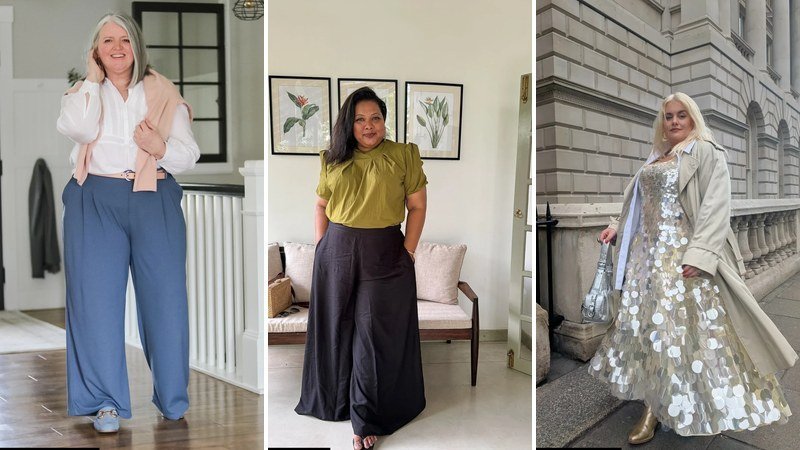
A full-silver sequin maxi dress gets an unexpected edit: a crisp white button-down shirt worn underneath and a beige trench coat thrown over. Gold ankle boots and a metallic silver handbag finish the look with an editorial edge. For a creative black-tie event, this layering lets you control opulence—remove the trench for the main event. Sequin fabrics often have raw interior seams that scratch; line the underarm area with a strip of silk ribbon sewn in by hand to prevent irritation over a long night.
For the Pants-and-Vest Route
When a gown isn’t your answer, a well-cut vest or tailored trousers does the job with zero apology. The trick is in the proportions—here’s how they actually sit on a curvy frame.
The Monochrome Vest-and-Trouser Suit

A sleeveless button-up vest in black pairs with matching wide-leg trousers for a monochromatic base. White woven pointed-toe flats and a cream floral-shaped handbag break the dark palette with precision. The oversized oval sunglasses and large floral earrings add a playful but deliberate contrast. Sleeveless vests often gape at the armhole on larger chests; look for styles with a slightly higher cut and have the side seams taken in at the top—a fit audit can catch the problem early. This is a formal look that says you take your style seriously without a blazer.
The Crisp White Shirt and Power Trousers

A textured white button-down shirt tucks neatly into high-waisted black wide-leg trousers, held by a black leather belt with a gold buckle. Black pointed-toe heels and a structured black handbag keep the look authoritative. Gold jewelry—hoops, a necklace, and a bracelet—add just enough warmth to avoid a sterile feel. When a shirt pulls across the bust, don’t just size up and lose the shoulder fit; instead, sew small pieces of invisible tape between the buttons to keep the placket lying flat. This combination handles formal office events and seated dinners with equal ease.
The Sage Green Vest Suit

by @itsamiedev
A sleeveless double-breasted blazer vest in sage green buttons over matching wide-leg trousers. A quilted shoulder bag with a gold chain strap and strappy heeled sandals upgrade the look into warm-weather formal territory. Gold hoop earrings and a bracelet echo the hardware. Double-breasted cuts can add bulk across the stomach; choose one with a deep V-neck to draw the eye vertically and elongate your torso. This monochromatic set works for outdoor spring ceremonies where you want tailored structure without a jacket.
The Three-Piece Navy Vest Suit

A crisp white button-down shirt layers under a navy blue tailored vest and matching navy trousers. Black pointed-toe heels ground the look, while simple eyeglasses keep it boardroom-ready. The cinched waist creates a hourglass line even on a straight-cut vest. If the vest buttons pull at the bust, have the side seams let out instead of moving up a size—this keeps the armholes from dropping too low and restricting movement when you reach for a handshake. This suit transitions from a formal work ceremony to an evening reception without missing a beat.
For Cocktail and Semi-Formal
Not every formal event calls for a full gown. These mid-length dresses and dressy separates bridge the gap, working for weddings, fundraisers, and that ambiguous ‘cocktail attire’ line on the invite.
The Puff-Sleeve Midi for a Casual Take

A black dress in a fit-and-flare cut features a smocked bodice and voluminous puff sleeves that balance a fuller bust while defining the waist. White double-strap platform sandals add a chunky, modern sole, and gold necklaces plus hoops finish the look. The floral phone case on a beaded strap is a personal touch. For a smart-casual formal event like a welcome dinner, swap the platforms for a gold strappy block heel—the added height elongates the leg without losing the dress’s easy energy. The smocked back offers flexibility, but check that it doesn’t gap when seated.
The Olive Flutter-Sleeve Midi

An olive green midi dress in an A-line cut features a fitted bodice, cinched waist, and flutter sleeves that move with you. The keyhole neckline and subtle floral embellishment at the waist add detail without bulk. Black accessories—a handbag, sunglasses, and a watch—keep the look sharp. Midi lengths can be tricky: for plus sizes, the hem should end just below the widest part of your calf to avoid cutting the leg at its thickest point—the wrong hem can ruin an otherwise perfect dress. This dress works for a fall formal where you want to feel covered and feminine.
The Puff-Sleeve Olive Blouse and Black Trousers

by @lovexlbyd
A high-neck olive green blouse with puff sleeves and subtle pleating tucks into black wide-leg trousers. A woven straw handbag and black sandals keep the look grounded. The voluminous sleeves balance the wide hem, creating an even vertical line. High necklines on larger busts can create a shelf effect; ensure the fabric has some drape—look for rayon or viscose blends that soften over curves rather than stiff cotton that tents out. This outfit bridges the gap between casual and event-ready when you add a heel.
The Satin-and-Print Wide-Leg Moment

A champagne satin short-sleeve top tucks easily into high-waisted wide-leg trousers with a chocolate-and-white geometric print. A layered pendant necklace, hoop earrings, and a bracelet add soft polish. Satin can cling to shapewear seams and create visible lines; wear a slip-like smoothing cami underneath that extends to the hip to prevent bunching where the top meets the trouser waist. This combo works for a formal dinner where you want to look dressed but not overdressed—swap flats for a heel if the invite demands it.
The Architectural Tunic and Balloon Trousers

A black short-sleeved tunic top with an oversized fit pairs with black balloon-leg trousers for a striking, voluminous silhouette. Burgundy textured clutch, red Mary Jane flats, and gold accessories—watch, hoops—inject controlled hits of color. Balloon cuts add volume at the calf, which can shorten the leg visually; if you’re under 5’5”, opt for a cropped version that shows a sliver of ankle to break the expanse of fabric. This look reads as fashion-forward at an art gallery fundraiser where the dress code says ‘creative formal.’
For the Daytime Formal Event
Daytime formals—bridal showers, church ceremonies, work brunches—demand a polished look that handles daylight and hours of mingling. These pieces keep you comfortable and appropriately refined.
The Preppy Sweater-Draped Ensemble
.webp)
by Source
A white button-down blouse with pintuck details gets a soft upgrade with a light peach knitted sweater draped over the shoulders. Dusty blue wide-leg tailored trousers and a peach leather belt unify the palette, while light blue suede loafers with horsebit detail keep it preppy. Draping a sweater over the shoulders adds polish, but stick to fine-gauge knits like cashmere or merino—bulky yarns add unnecessary width at the shoulder line for already broad frames. This is a strong choice for a daytime formal bridal shower where you’ll be sitting and standing for hours.
The Soft Peach and Blue Separates

Another take on the pastel theme: a white pintuck button-down, a peach knit sweater draped over the shoulders, and blue wide-leg trousers belted at the waist. Light blue loafers with gold hardware continue the preppy note. When wearing wide-leg trousers with a tucked shirt, consider the rise: a mid-rise that sits at your natural waist is more flattering and stays put when you sit, unlike low-rise styles that slide down and create a muffin top. The pastel palette keeps it light for spring daytime events.
The Relaxed Blue Shirt and Navy Trousers

by @iamkieys
A light blue button-down worn with the collar open and a semi-tucked front relaxes the standard office uniform. Navy blue straight-leg trousers and nude pointed-toe pumps elongate the leg. To take this from desk to a formal work dinner, switch the cotton shirt for a silk or charmeuse version and add a bold earring—the liquid drape instantly elevates without needing a full outfit change. The semi-tuck works when the trousers have a flat front; avoid with pleats, which bunch up.
The Polished Tee and Cropped Trousers

A black t-shirt and light grey high-waisted cropped trousers read minimalist but sharp thanks to a black belt with gold buckle and white pointed-toe kitten heels. Oversized square-frame sunglasses and a small crossbody bag keep the look intentional. Cropped lengths can work for semi-formal events if they hit the narrowest part of your ankle; pair with a pointy toe to continue the leg line and avoid ankle straps that cut across the foot. This outfit proves you don’t need a blazer to look pulled together for a daytime ceremony.
When the Dress Code Says “Formal” but Your Body Says “No” to Standard Cuts
The invisible math of sizing charts: Formalwear blocks assume a 8-to-10-inch difference between bust and waist. If your body doesn’t match that ratio, you’re left gapping at the armhole or pulling across the back. Most guides tell you to size up and tailor down. I’d argue that skips the real fix: construction details that absorb disproportion without a seamstress. Princess seams follow a curved torso instead of fighting it. Bias cuts skim without clinging. Raglan sleeves remove the shoulder-fit problem entirely. What you need is a quick fit audit of the garment’s seams, not a larger size tag.
The silhouette myth that backfires: “Universally flattering” is a phrase that does actual harm. An A-line dress can swallow a short-waisted frame, making you look wider than you are. Empire waists on a full bust often read as maternity, not elegant. The silhouette language that works is personal: if your vertical balance is short torso/long legs, a dropped waist creates proportion. If your torso is long, a higher waist with a defined seam raises the eye. Pay attention to where your own waist breaks in a mirror—that’s the line your dress should honor, not the one the pattern prescribes.
The test no roundup shows you: Off-the-rack formal assumes you’ll stand and pose. Real life means sitting through a three-course dinner, leaning forward to hear someone speak, raising your arms to hug. The dress must pass the two-hour seat test, and that means the sitting-to-standing problem is non-negotiable. Before you commit, wear it at home on a low chair. Does the waistband roll? Do the sleeves pull at the elbow? No photograph captures that strain, but your body will register it all night.
The Cost Per Wear Anxiety That Plus Size Women Don’t Talk About
The markup you never see listed: Formal pieces are expensive. In plus sizes, that price climbs further because “specialty” lines carry hidden surcharges. You’re doing a different kind of mental math: if your size fluctuates even one dress size, will this $300 gown become closet weight? Add the silent pressure of knowing some peers will notice a repeat wear, and the cost per use feels impossibly high. The solution isn’t to avoid buying—it’s to choose garments where the structure, not just the style, can adjust slightly with you. A lace-up back or a wrap silhouette gives you a margin that a zippered sheath never will.
The rental lie: Renting markets itself as the affordable answer, but real plus size rental inventory is thin. A “16W” often means a straight-size 16 with no extra room for hips or bust, leaving you with a dress that zips but doesn’t move. The workaround requires understanding fabric grades. Natural fibers with a small percentage of elastane accommodate curves better than full synthetics. More practically, building a relationship with a local alterations specialist means you can buy off-the-rack from a broader size range and have it tweaked for less than a rental fee over two events. That shift saves money and the last-minute panic of a rental that doesn’t fit.
The social tax no one warns you about: There’s a drained feeling when a slim friend offers, “Just borrow my dress!” or suggests the boutique where nothing goes above a 12. You end up explaining, gently, that your body requires a different infrastructure. That’s emotional labor, and it costs you. You don’t owe anyone an education. A simple script works: “My proportions need something with more internal structure—but I love that dress on you.” It closes the door without inviting debate. Your budget counts time and energy as currency, too.
Why “Just Be Confident” Is Not a Strategy for a Plus Size Formal Entrance
Hypervisibility isn’t a mindset problem: Confidence advice often skips the physical reality: when you’re the largest woman in a formal room, eyes land on you first. That recognition isn’t imagined. Forced positivity won’t quiet the sensation. Instead, cognitive reframing changes what you do with that awareness. Rather than telling yourself to disappear, ask: “What would I notice about this space if I weren’t focused on myself?” Shifting from internal to external observation cuts the anxiety loop faster than any affirmation.
The 3-second scan-back that resets the room: Entering a formal space, do this: pause just inside the door. Scan the room quickly—acknowledge the space itself, not the faces. Locate one friendly person or an open spot near a table. Then move. That deliberate sequence interrupts the perceived judgment loop. You’re not walking into a wall of stares; you’re navigating toward a point. It sounds mechanical, but it works because it gives your brain a task that overrides the instinct to freeze or speed-walk to the nearest corner. Practice it in a less charged setting first, and it becomes automatic.
The script for the comment you didn’t ask for: Someone will say your dress is “brave” or ask how you’re “so confident.” Mentally rehearsing a neutral response removes the sting. “The construction on this piece is worth it” or “I feel good in a well-cut jacket” redirects to the garment and removes you from the role of body educator. These are deflection scripts, not rebuttals. They keep the conversation moving without handing over personal vulnerability as a public offering. You get to decide what’s up for discussion.
The Fabric Intelligence Every Curvy Woman Needs Before Shopping
Stretch tells you more than size: Not all spandex is equal. A fabric with under 5% elastane will hold its shape through hours of sitting; above 8%, and heat from your body can cause bagging at the seat and knees. The conventional take is to look for “stretch.” I’d argue that’s useless without percentage and weight. Crepe grips and skims, scuba molds without pulling, and ponte reads as formal under event lighting while forgiving movement. Before buying, zoom in on the fabric content label online and cross-check it with the garment’s cut. A fabric check takes thirty seconds and prevents a melted silhouette by dessert.
The lining layer that makes or breaks a night: Lining is not just modesty. A full polyester lining on a plus size formal dress traps moisture against your skin, raising the chafing risk after a hour of dancing. Silk or cupro linings breathe, wick, and feel cool. If your dress has the wrong lining, a separate slip—not shapewear—in silk or a moisture-wicking blend can rescue it. You’ll notice the difference after the first hour, when you’re not tugging at your inner thigh. This detail changes the physical experience of the event without adding compression or heat.
Understructure defects you spot from product photos: Built-in bra cups often stop at a B cup, leaving a gap or zero support. Boning that ends at the high waist won’t clear a fuller belly, digging in when you sit. Online, zoom on the side seam and back shots. If the cups sit flat on the model and she’s clearly larger-chested, they’re likely too small. If the boning curves oddly at the front view, it won’t lay flat on you. Recognizing these deficits from a screen saves return shipping fees and the disappointment of a dress that photographs well but wears terribly.
The Pre-Event Fit Check That Costs Nothing and Prevents Everything
The 10-Minute Sit-and-Move Test: Put on every layer—shapewear, dress, shoes—and move through three real motions: sit in a low dining chair, lift your arms as if pulling someone into a hug, and climb a short flight of stairs. Mark any pinch, pull, or gape with a small sticky note so you know exactly what to adjust.
Most fitting room mirrors only show you standing still under harsh lights. The real test is that deep sit where the waistband might roll, or the stair climb that reveals a too-tight step. This is what I call the sitting-to-standing problem, and ignoring it is why some dresses look perfect in photos but feel impossible by the second hour.
Theatrical-Grade Fashion Tape: Stash true theatrical fashion tape, not the drugstore version. Look for “heavyweight” or “sweat-resistant” on the label; standard tape will unstick the moment your body warms up.
Plus size formal attire often means more surface area and more fabric weight. A cheap tape fails when a wrap neckline shifts or a sleeve keeps slipping. Topstick, used by film wardrobe departments, holds firm even through dancing. One roll in your clutch solves gaping necklines and drooping straps without constant bathroom checks.
The Secret Safety Pin Strategy: Slide a large safety pin inside the hem of your dress, hidden behind the lining, before you leave home. If a seam pops or a strap snaps, you won’t have to borrow a pin from a stranger or improvise with a paperclip.
I’ve seen bridesmaids stitch a popped zipper with dental floss in a stall. A pre-loaded pin placed at a stress point—like the side seam near the hip—gives you a five-second fix. Pair it with a tiny sewing kit that has matching thread, and you’ll never be the woman holding her dress together with one hand all night.
Beat Static Before It Starts: Run a dryer sheet over your tights, lining, and the interior of your dress before you put it on. Static isn’t just annoying; it makes lightweight linings cling to your legs in ways that photograph poorly.
Synthetic linings like polyester build a charge the moment you slide out of a car. A quick sweep with a dryer sheet—or a spritz of anti-static spray into the dress, not on it—stops the dress from creeping upward. If you want to understand which linings cause trouble, start with a fabric check before you buy.
The Confidence Reset in a Stall: Pack a small hand fan or a folded piece of card stock in your bag. Use it to give your face a quick breeze if the venue heats up, and also to reset your mental game if you start spiraling about a bulge.
Overheated cheeks and a sweaty upper lip can make you feel twice as self-conscious. A five-second cooling break in the bathroom can interrupt the anxiety loop. Look in the mirror, adjust nothing, and say to yourself, “I wore the right thing.” Then walk out.
FAQ
Will I look matronly in a plus size formal dress?
Matronly usually means the sleeve hit your elbow and the neckline landed too high. Pull the sleeve above the wrist bone by an inch, and lower the neckline even just a half-inch—a V or sweetheart at the collarbone—instantly sharpens everything. It’s a proportion fix, not a size issue.
What if I’m the only plus size woman at the formal event?
Choose one focal point that’s a conversation starter: a sculptural earring, a jacquard fabric, a bold but good shoe. It gives people a visual path that isn’t your body, and you’ll get “I love that texture” instead of “You look so brave.” That is a much better opener for you and for them.
Can I wear a plus size formal jumpsuit to a wedding if the couple didn’t specify attire?
Yes, if the invitation says “formal” and the venue isn’t a strict house of worship. A woven crepe jumpsuit in navy or charcoal works. But if the ceremony is religious, pair it with a structured jacket or a cape that matches your jumpsuit’s line—not a shrug that looks like an apology.
How do I stop worrying about my arms in a sleeveless plus size formal look?
Arm anxiety often spikes right before you’re photographed. Wear a featherweight topper or a sheer embroidered kimono for the first hour, then remove it when the dance floor opens. That transition makes going sleeveless feel like a deliberate choice, not a reveal you have to brace for.
Do I really need shapewear with my plus size formal dress?
Only if the dress depends on it. Many structured plus size formal fabrics like scuba or heavy crepe smooth you without compression. Snap a photo of yourself from ten feet away with your phone. If the silhouette looks clean, skip the shapewear—you’ll avoid the mid-event heat trap and the bathroom wrestling match.
What’s the one tailoring fix that changes everything for a plus size formal gown?
Raise the waistline seam, even just half an inch. Most plus sizes are graded from a straight-size block, so the waist sits lower, shortening your leg line. Pulling it up re-proportions your whole figure for under $30.
How do I respond when a friend says my plus size formal dress is “brave”?
Redirect to the garment: “The construction on this pleating really is brave—I wasn’t sure the fabric would hold.” It refuses the backhanded compliment without starting a fight, and you become the friend who talks about design, not body size.