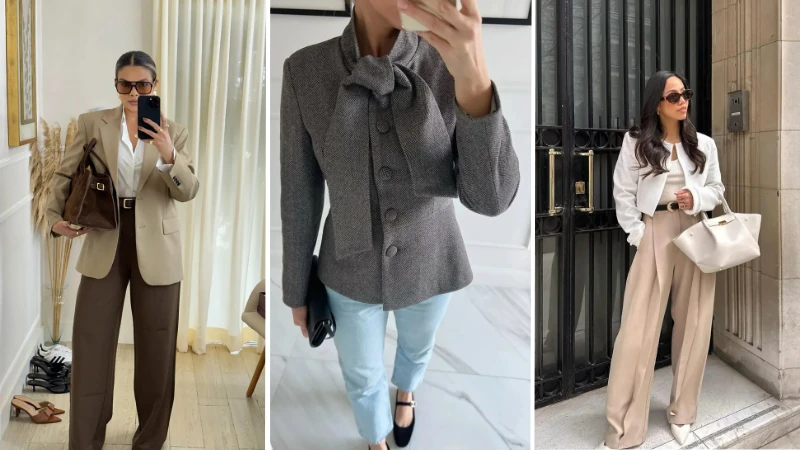
Chic 15+ Client Meeting Outfit Ideas That Impress Instantly

You scroll through a grid of Client Meeting Outfit photos, but none of them answer the real question: will this outfit actually help you connect with the client, or will it quietly undermine your credibility? The usual advice gives you a look without a strategy—no way to translate a blazer-and-trousers combo into the specific judgment calls your industry, geography, and meeting venue demand. What’s missing is a method for reading the room before you step into it, so your Client Meeting Outfit works as a tool, not a risk.
For a deeper dive into how one wrong accessory resets your entire formality level, read The Bag That Kills the Outfit. And if you’ve ever worn something that felt off and wondered whether anyone noticed, The Meeting Where I Wore the Wrong Thing examines the real cost.
20 Client Meeting Outfits to Command the Room
The right client meeting outfit doesn’t just look good—it buys you the first three minutes of any conversation. Below, 20 real-world formulas sorted by the strategy they serve, from full-on power suits to the art of the non-blazer authority. Each one solves a specific problem you’ll actually face when you’re walking into a room and need your clothes to work as hard as you do.
The Full Authority Set
When the meeting demands you bring your A-game, a suit or tonal set signals you’ve done your homework. These looks lean into crisp tailoring and deliberate color matching—the essence of business formal without the stiffness—to leave zero doubt about your competence.
The White-Hot Power Suit

by @verena.lr
A white tailored crepe blazer cuts a sharp silhouette, worn over a slim-fit black-and-white striped long-sleeve top. The matching white slim-fit cotton-blend trousers elongate the frame, and caramel-brown pointed-toe heels add warmth without breaking the monochrome spell. A mini beige leather handbag keeps the look light. If you’re worried about white suiting reading too bridal, the dark stripes and brown shoes anchor the look firmly in the boardroom. The crepe fabric holds its shape through hours of sitting, so you stand up looking as crisp as when you arrived.
The Black-and-White Equation

A white tailored boucle jacket, with its subtle texture, lends gravitas to a simple white slim-fit cotton top. The black slim-fit crepe trousers and a matching leather belt create a long, uninterrupted line, complemented by classic black pumps and a structured black shoulder bag. Boucle fabric hides wrinkles better than smooth wool—a win for travel days when you’re racing from the airport to a meeting. This combination never reads as trying too hard, because it relies on proportion, not flash.
Tonal Luxury in Cream and Beige

A white structured tweed jacket and a cream slim-fit knit top sit above beige wide-leg trousers that move with you. The black slim belt provides a deliberate waist definition, while cream pointed-toe leather shoes and an off-white structured handbag keep the palette united. When building a tonal look, vary the texture in each piece—here, tweed, knit, and fluid crepe—to avoid looking like a swatch card. The dark oval sunglasses add a touch of urban polish.
The Monochrome Maven

by @sharon.bca
A beige structured wool-blend blazer and matching wide-leg trousers create an elongated canvas. The grey slim-knit top adds just enough contrast to define your upper body, and a brown structured canvas handbag breaks the beige without clashing. Gold choker necklace and chunky ring act as quiet signals of intention. In a monochrome look, fit matters exponentially—get the trousers hemmed to the correct break for your shoes to avoid a rumpled finish. The wide-leg trouser shape modernizes what could be a stuffy suit, and the gold accessories keep the face illuminated.
The Cream Suit, Summer Edition

A cream relaxed crepe blazer and wide-leg trousers form a non-stuffy suit that breathes. The cream silk top catches light without adding bulk. Beige accessories—a slim belt, leather handbag, and nude open-toe sandals—extend the leg line. The gold watch is the only metallic. Open-toe sandals in a client meeting are rarely a safe bet, but if the office culture already embraces them, keep them minimal and in a neutral that matches your skin tone to reduce visual noise. This is warm-weather power dressing at its quietest.
The Suit with Sneakers Power Play

by @audreyafs
A white tailored crepe blazer and matching wide-leg trousers read as intentional luxury, but the white chunky leather-and-mesh sneakers pull the look into modern territory. A black structured handbag and oversized black sunglasses add sharp contrast. When swapping sneakers into a suit, keep the rest of the outfit impeccably tailored and the sneakers box-fresh—any scuff reads as carelessness, not cool. The deep V of the blazer’s opening and the wide leg balance the chunk of the shoe. This works for creative fields, media, or a walking meeting in a city you’re there to own.
The Blazer, Remixed
A blazer is the workhorse of client-facing style. Paired with jeans, contrasting trousers, or even a cardigan, it adapts to everything from a startup office to a creative agency. Here’s how to make it look intentional, not accidental.
Brown Blazer, Black Jeans, Easy Confidence

by @freyakillin
An oversized brown wool-blend blazer throws a relaxed silhouette over a simple white slim-fit tee. Black straight-leg jeans keep the bottom half structured, while dark brown velvet ballet flats introduce soft texture. A black leather belt and shoulder bag provide cohesion, and a gold necklace lifts the neckline. Velvet ballet flats in a meeting can read as evening wear; choosing a dark neutral and pairing with full-length trousers pulls them firmly back into daytime. The oversized cut prevents the dark denim from feeling too heavy, and the gold watch ties the warm brown into the cool black.
Tweed Jacket, Wide Denim

by @romillanh
A black-and-white tweed jacket, cut close to the body, brings instant texture. Underneath, a black slim-fit jersey crew neck top tucks into dark-wash wide-leg jeans, with a black leather belt defining the waist. Gold hoop earrings and an olive green shoulder bag add personality without overpowering. The tweed-and-denim combo works because the jacket provides the formality the jeans lack—but only if the denim is dark, un-distressed, and hemmed to the right length. This is a creative-industry hero piece.
The Preppy Power Play

A relaxed beige wool-blend blazer hangs softly over a light blue button-down shirt, half-tucked. White straight-leg trousers keep the scheme clean, and beige mary jane flats nod to a classic library aesthetic. A matching beige structured handbag and slim belt tie it together. If the office leans casual, swapping the trousers for a dark wash jean of the same cut makes this outfit instantly weekend-client-ready. The light blue shirt softens the beige, making the whole look feel approachable—ideal for a first meeting.
Earth Tones, Clear Authority

A beige relaxed blazer and a crisp white button-down shirt are a time-tested formula, but the dark brown wide-leg crepe trousers pull the look into richer territory. The dark brown suede tote and matching slim belt create a cohesive column, and oversized brown tortoiseshell sunglasses add mystery. When wearing wide-leg trousers, ensure the hem just grazes the floor in your chosen shoes—too short, and the proportion collapses. This combination works for a site visit or a client lunch where you need to move but still mean business.
The Grey-Blazer, Light-Jeans Shortcut

by @mint_label_
A tailored grey wool-blend blazer brings structure that light blue straight-leg jeans usually lack. Black suede flats and a simple black clutch bag keep the look uncluttered. Underneath, a neutral silk shell or white t-shirt would dissolve into the background. Light-wash denim can read as overly casual; pairing it with a sharp blazer and dark, polished flats pulls the formality back up to client-appropriate. This is a fail-safe for a creative agency owner or a gallery visit.
Double Navy, Double Duty

A navy tailored wool-blend blazer layers over a matching navy slim-knit cardigan, creating a tonal top block that feels intentional and warm. Dark blue straight-leg jeans and black slim leather heels anchor the look, while a black structured handbag keeps it professional. Wearing a cardigan under a blazer adds bulk—opt for a fine-gauge knit that sits close to the body, and leave the blazer open to maintain a clean line. This outfit handles a chilly office or an off-site strategy day without losing an ounce of polish.
Texture-Only Black

by @freyakillin
A black regular-fit boucle jacket, with its nubby surface, becomes the outfit when everything else is black. Black straight-leg jeans and black leather ballet flats create a long, lean line, broken only by the gold bracelet at your wrist. A black leather handbag completes the monochrome. An all-black outfit requires visible texture to avoid looking flat—here, the boucle does the heavy lifting, but you could also lean on a ribbed knit or a glossy bag. The ballet flats keep the look grounded and walkable, the uniform for an architect or design director meeting a client at a gallery.
The Soft Authority Edit
Not every client meeting calls for a jacket. Cardigans, coats, sweaters, and even a great t-shirt can project authority if the pieces are intentional. These outfits prove soft does not mean weak, and they often buy you more warmth from the person across the table.
The Cardigan-CEO Combo

by @mint_label_
A cream chiffon pussybow blouse with a relaxed fit tucks into beige straight-leg crepe trousers. Over it, an oversized grey knit cardigan drops the formality of the bow into approachable territory. Taupe pointed-toe pumps and a taupe leather handbag tie the neutrals together. Pussybow blouses under cardigans keep the bow from going floppy—the weight of the knit holds it in place and keeps the look intentional, not saccharine. The grey-on-beige palette is quiet enough that the bow becomes the focal point, making this a smart choice for female-forward industries.
The Coat-as-Armor Move

A black tailored wool overcoat worn open acts as the statement piece, revealing a beige-and-black knitted sweater underneath. Black slim-straight trousers and sleek black leather loafers continue the column, while a large black shoulder bag holds everything you need. When you keep an overcoat on in a meeting, treat it like a jacket: it should be impeccably pressed, never rumpled, and the sleeves shouldn’t cover your watch—otherwise, you look like you’re sneaking out. This ensemble works for a day of back-to-back off-site meetings in cooler months.
Stripes and a Sweater, No Pretension

by @jeanwang
A black-and-white striped long-sleeve top peeks out from under a beige relaxed knit sweater, adding dimension to the neutral palette. Grey wide-leg wool-blend trousers bring a soft, elegant drape. Nude pointed-toe suede pumps elongate the legs, while a beige large leather tote and black sunglasses handle the business of the day. Layering a sweater over a striped top instantly adds visual interest, but make sure the sweater’s hem doesn’t hit at the widest part of your hip—it’ll truncate your frame. This is a smart-casual staple for an account manager on the go.
Navy Stripe, White Canvas

by @jeanwang
A white-and-navy striped cardigan buttons over a simple top, paired with crisp white wide-leg cotton trousers. The tan structured leather handbag adds a warm anchor, while beige pointed-toe raffia pumps push the look into summer territory. Gold earrings provide a subtle gleam. Raffia or woven pumps can read as vacation-only; opt for a closed, pointed-toe version in a neutral color to keep them boardroom-appropriate through Labor Day. This outfit says “I’m organized and I’m easy to work with.” The wide-leg trousers give it presence, the cardigan gives it warmth.
The Perfect Tee, Executive-Level

by @ewa_vu
A white regular cotton t-shirt—substantial, not sheer—tucks into black tailored wool-blend trousers. A black slim leather belt and a black structured handbag keep the top half sharp, while beige-and-black two-tone pumps add a hint of play. A gold watch is the only jewelry. A t-shirt in a client meeting works only if the fabric is thick enough to hold its shape and opaque enough to hide the outline of your bra—test it in harsh light before you commit. This is the uniform of the confident minimalist who lets her work do the talking.
All-Black Layers, White Denim

A black relaxed wool coat tops a black regular knit cardigan and white slim cotton t-shirt, creating a monochromatic base that white straight-leg jeans cut through. Black leather loafers and a black canvas-and-leather tote finish the outfit with an edited ease. White jeans in a client meeting require a dark, structured top layer to balance the informality—without it, the look can float into weekend territory. This is for the Friday site visit or the coffee-shop strategy session where you still need to be taken seriously. The tote’s size and shape signal you’re prepared for anything.
The Blouse-and-Trouser Foundation

by @mint_label_
A white relaxed silk blouse, undone at the throat, softens the crispness of black slim-fit crepe trousers. Black leather loafers keep the silhouette clean and unfussy, matched to a black structured handbag. Silk blouses wrinkle if you sit for too long—choose a crepe de chine or a heavier silk weave that releases creases as it moves, or keep a lint roller in your bag to handle the aftermath of a long car ride. This is the go-to for a lunch meeting that might extend into an evening proposal, with zero extra pieces needed.
Why Your Client Meeting Outfit Makes a Difference Before You Speak
Enclothed cognition: The term sounds academic, but the effect is practical. Researchers found that wearing a lab coat described as a doctor’s coat improved sustained attention. Your professional meeting outfit operates the same way. A blazer with sharp shoulders and a decisive lapel doesn’t just signal authority to the client—it quietly tells your own brain to sit up and negotiate harder. Most people treat outfit choice as a communication tool aimed outward. I’d argue it’s equally an internal performance switch, because what you wear changes how you think before you even say hello.
Seven-second snap judgments: Clients process competence in the time it takes to shake hands. They’re not analyzing your résumé in that window; they’re reading fabric weight, fit, and finish. A client-facing style that leans on substantial materials—wool suiting, heavy crepe, crisp cotton—registers as attention to detail. Pilling, loose threads, or a drooping hem register as distraction. You don’t need to understand garment construction. You do need to understand that these micro-signals stack up silently.
Fabrics carry class cues: A wool blazer signals seriousness. A visible polyester sheen, even on an expensive-looking print, often reads as budget-conscious in ways that undermine authority. These aren’t snobbish observations; they’re perceptual shortcuts the client’s brain takes without permission. If you’re building a blazer-based meeting uniform, choose natural fibers or high-grade synthetics that don’t shine under fluorescent light. The difference is subtle, but it’s one of those things that either recedes into polish or whispers “cost-cutting.”
Accessories as credibility test: A scuffed bag or tangled earphone cord peeking out broadcasts chaos. One intentional, well-kept piece—like a structured leather tote—does the opposite. It says you’re on top of details, down to the hardware. I’ve seen a bag that kills the outfit undo a perfectly good suit, simply because it looked like it had survived a decade of subway floors.
Reading Between the Lines of Client Dress Codes
LinkedIn is your real dress code: A company’s written policy is often aspirational. Their tagged team photos are accurate. Scroll through event albums, office birthday posts, and candid desk selfies to spot the actual unified uniform. Note how it shifts between departments—engineering might live in logo hoodies while sales leans blazer-and-dark-jeans. Your client meeting attire for women should borrow from the client’s side of the table, not your own office norms.
The venue sets the formality floor: If you’re meeting at a hotel lobby with a marble bar, the context lifts expectations, even for a startup. If the client suggests a coffee shop, you can strip away a layer. The room does half the reading for you. Factor in whether you’ll be walking between buildings or sitting in one conference room—the answer changes footwear and outerwear choices immediately.
Industry subcultures write unwritten rules: In tech, a blazer with clean sneakers can read as approachable authority. In finance, that combination reads as disrespect. The same logic applies to creative agencies, where full suiting can look like you showed up in costume. Most guides advise “dress for the industry you want to be in.” That’s too vague. Dress for the specific office’s actual daily rhythm, which you learn by mining those photos.
Don’t ask directly: “What should I wear?” forces the client into an awkward position and makes you seem unsure. Ask instead: “Will we be walking much between buildings?” or “Is there a coat check at the venue?” The answers reveal formality level without the cringe. That one move separates women who get client culture from those who just read the handbook.
Geography is a dress-code layer: A client-facing style that works for an energy client in Dallas often feels stiff and overbuilt for a design firm in Portland. Factor in regional culture as heavily as you factor in industry. The same suit, worn in the wrong city, can shift from “polished” to “out of touch” by the time you cross the lobby.
The Confidence Cost of Wearing the Wrong Thing
Imposter phenomenon sits in the seams: When a blazer pulls across the back or a skirt waistband digs, your brain starts dedicating bandwidth to self-monitoring. Am I tugging? Is this gaping? That mental chatter steals focus from the client’s problem. What should be a seamless conversation becomes a split-screen operation—half for the meeting, half for your outfit. I’d call that a cognitive tax you didn’t agree to pay.
Physical discomfort drains executive function: Pinching shoes, fabric that won’t breathe, a neckline that shifts every time you gesture—each pulls attention from listening and quick thinking. Your brain is allocating resources to discomfort signals that could go toward reading the room’s subtle cues. A professional meeting outfit that fits well and feels neutral against your skin keeps the CPU free for the parts of the meeting that actually earn your fee.
Negotiation posture rises with confidence: Research suggests that women who feel confident in their clothing negotiate more assertively and concede less. That’s not about vanity; it’s about removing a distraction. When you’re not monitoring your appearance, you stay present. The conventional take is that substance trumps style. That misses the mental bandwidth argument entirely. It’s not about dressing to impress—it’s about dressing to stop thinking about what you’re wearing.
One misstep can override a strong presentation: Memory research tells us that what’s salient sticks. If a client notices a broken heel tip or a gaping button, that image can become the anchor memory, overshadowing even brilliant slides. Fair? No. But it’s how primacy effects work. I learned this the hard way in the meeting where I wore the wrong thing—and nobody else noticed, but I did, and that was enough to throw me off for the first ten minutes.
One Signature Look, Multiple Client Meetings
A power uniform is a decision shortcut: It’s not a literal uniform. It’s a silhouette, palette, and fabric language you repeat deliberately. When clients see you in a sharp shoulder, a specific shade, and a consistent length story, they recognize you before they place your name. That repetition also removes morning decision fatigue, leaving you more brainpower for the meeting itself. Most guides push variety as the goal. I’d argue repetition is the smarter play, because brand consistency—even a personal brand—builds memory faster than novelty.
Invest heavily in the 20% that crosses contexts: One impeccably cut blazer can anchor looks for a startup founder on Tuesday and a government agency on Thursday. Pair it with business formal trousers for the boardroom, then swap in dark denim for a creative pitch. The coat does the heavy lifting. Spend your budget where fabric and fit are irreplaceable—blazers, structured outerwear, one great pair of trousers—and save on the rest.
Color consistency is a memory signal: Pick a signature shade—a particular deep navy, a specific ivory, a muted olive—and thread it through your client-facing outfits. That doesn’t mean head-to-toe monotony. A navy blazer one day, a navy scarf the next, a navy stripe in a blouse later—it ties your appearances together. Over time, you stop being “the consultant in the meeting” and start being “the woman in that shade of blue,” which is much harder to forget.
Accessory swaps are the highest-leverage refresh: Changing hardware (silver to gold), scarf texture, or shoe silhouette between meetings keeps a capsule fresh without adding bulk. For travel, pack outfits by client scenario rather than by calendar day. A selected mini-capsule that covers business casual, formal, and a hybrid setting removes the panic of a shifted agenda. This is where a structured tote and a careful business outfit strategy do the work of a much larger wardrobe.
A Pre-Meeting Outfit Audit That Catches What Mirrors Miss
3-Foot-and-10-Foot Check: Look at your outfit from conversation distance, then from across the room.
At 10 feet, your silhouette should read as one clean shape—no broken lines, no unintentional bunching. I’ve seen otherwise crisp outfits collapse at distance because a too-long blazer sleeve caught the light and dragged the eye down. At 3 feet, scan for pilling, frayed button thread, and foundation smudges on the collar. They’re invisible in the mirror but scream at handshake distance.
Meeting Room Lighting Test: Stand under a light source that mimics the room you’ll actually be in.
Fluorescent overheads can turn a soft ivory blouse a sickly yellow and make a black professional meeting outfit look linty. Hold your phone flashlight at eye level and angle it down—it’s the closest preview you’ll get of conference-room downlighting. Check for sheen, transparency, and how your jewelry catches glare. If a necklace sparkles enough to distract you, it will distract the client.
Seated-Mirror Check: Sit in your outfit in front of the same mirror you’ve been skipping past.
Skirts ride up, waistbands dig, and necklines that looked demure standing suddenly gap when you lean forward to take notes. The sitting-to-standing problem is that most women only test their clothes while upright. You’ll spend most of a meeting seated, so cross your legs, lean back, and note exactly where the fabric pulls. If you can’t sit comfortably for ten minutes in your living room, you won’t last a hour in a boardroom.
Walk-and-Reach Test: Move through the most common meeting motions before you walk out the door.
Reach across an imaginary table to grab a pen, stand up to write on a whiteboard, and take a few long strides. A blazer that lifts at the shoulder when you extend your arm doesn’t just feel constricting—it communicates tension. Anything that rustles loudly or snags on itself will be the only thing you hear when you’re trying to listen.
Taped Bag Checklist: Keep a short, specific reminder list inside your work bag that you actually look at.
Not a digital note you’ll ignore. Tape a piece of cardstock to the pocket lining that reads: static cling, tags on new items, lipstick on teeth, phone battery, backup tights. These are the tiny failures that hijack your confidence in the first thirty seconds. A single wrong accessory—a scuffed tote handle or a fraying hair elastic on your wrist—can reset the formality of even the most expensive suit. Use the list as a hard stop, not a suggestion.
FAQ
What if I accidentally overdress for a client meeting?
Overdressing almost always reads as respect, not error. Remove one formal layer—ditch the blazer or swap heeled pumps for a low block heel—and your warmth will close any perceived formality gap faster than an apology would.
Can I wear open-toed shoes to a client meeting in the summer?
Only if you’ve seen multiple women in that exact office wear them first. In client-facing roles where you’re building trust quickly, closed-toe shoes remain the silence that never hurts you, especially with conservative or unknown industries.
How do I build a Client Meeting Outfit when I’m visibly pregnant?
Stick to structured fabrics that follow your silhouette without clinging, and find one impeccably tailored maternity blazer. It signals that your expertise is the headline, and your body is simply the context—keeping the focus where it belongs.
Is it okay to repeat the same Client Meeting Outfit with the same client?
Yes, and it’s smarter than starting from scratch. A repeat look builds brand consistency; just swap one noticeable accessory—a necklace, scarf, or shoe color—so the outfit feels like an intentional signature uniform, not laundry-day desperation.
What’s the most common Client Meeting Outfit mistake women make in creative industries?
Borrowing a full corporate suit and hoping it reads as “polished.” It reads as tone-deaf instead. Swap the blazer for a knit jacket or duster, and anchor the look with one conversation-starting accessory—an architect’s brooch or a sculptural ring—to signal you understand the culture without abandoning authority.
How do I transition my outfit if a client meeting runs into an unexpected dinner?
Remove the most “office” layer—usually the blazer—and add a bold lip color plus a pair of heeled mules stashed in your bag. A silk scarf that doubles as a wrap around your shoulders changes the entire mood without making it look like you tried too hard.
What if I’m meeting a client whose office is famously casual but I don’t want to lose authority?
Use refined casual pieces that blend in without disappearing: dark, unfaded denim, a silk or heavyweight cotton tee, and a structured cardigan-jacket. The fabric quality keeps your presence felt, and you’ll avoid the common pitfall of dressing from a corporate playbook that doesn’t fit the room.