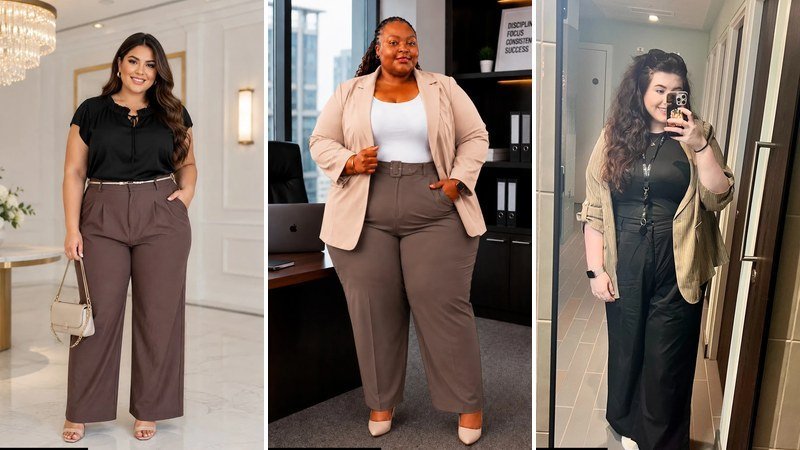
Gorgeous 10+ Plus Size Office Outfits You Can’t Miss

Most advice on Plus Size Office Outfits assumes your body shares the proportions of the sample garment. It doesn’t. The real work starts with a blazer that buttons without gaping and sleeves that actually reach your wrist. That’s the gap most office style advice misses: what professional plus size clothing must do on a real curvy body. Nobody tells you which fabrics hold their shape by 5 p.m., or how to read a dress code written without your body in mind. You learn by trial and error, with a drawer of near-misses to show for it.
If your office demands formal, start with plus size corporate outfits. For relaxed dress codes, plus size business casual keeps the same polish with fewer rules and none of the stiffness.
18 Plus Size Office Outfits That Actually Work
Most office outfit roundups use straight-size samples and call it a day. These 18 looks are different. They were built with real plus-size proportions in mind—ample hip room, no gaping buttons, and fabrics that don’t quit at 2 p.m. I’ve grouped them into four style lanes: Polished & Classic, Modern Minimalist, Creative & Playful, and Relaxed Professional. Pick the lane that matches your office vibe and your mood, and start building a work wardrobe that fits the body you have today.
Polished & Classic
These are the outfits that anchor a corporate wardrobe without leaning frumpy. Tailored blazers, crisp button-downs, and sharp trousers that command respect. If your office still expects a suit or the environment feels conservative, start here. Every piece pulls its weight, and nothing needs constant adjustment.
The Wrap Blazer Effect

A brown wrap blazer does two things a regular blazer can’t: it defines your waist without a belt, and it softens the shoulder line just enough. Here, it’s layered over a black camisole and black wide-leg trousers—a base that could read too stark on its own. Tan pointed-toe pumps pull the brown through to your feet and elongate the leg. If you’re short-waisted, choose a wrap blazer that ties at the side seam, not the center, to avoid adding bulk at the front. The whole look says “I run the meeting” without a single statement necklace.
The Textured White Button-Down

A white button-down is the office uniform piece, but a textured jacquard or seersucker version solves the “I look like a waiter” problem instantly. This one is tucked into high-waisted black trousers with a sharp crease. Gold hoop earrings, a layered chain necklace, and a black leather belt with a gold buckle add finish. The black pointed-toe heels keep the leg line long. Skip the ironing board: hang this shirt in the bathroom while you shower and the texture will disguise any minor wrinkles. It’s crisp, authoritative, and zero percent boring.
The Untucked Blue Shirt

by @iamkieys
Sometimes a French tuck feels like a compromise. This light blue button-down goes fully untucked, falling just past the hip over navy slim-leg trousers. The effect is more relaxed than a full tuck, but the tailored trousers keep it from sliding into weekend territory. Nude pointed-toe heels disappear against your skin, making your legs look miles long. Make sure the shirt hem hits at the widest part of your hip—not the thigh—or it’ll shorten your silhouette. This is a smart-casual look that works for casual Fridays or any office where a blazer isn’t mandatory.
The Striped Shirt, Reconsidered

A vertical striped button-down in slate blue and white does all the optical work a blazer usually handles: it draws the eye up and down, creating a long line. Tucked into black high-waisted wide-leg trousers, it reads professional without screaming “boardroom.” Black strappy block-heel sandals and a black leather hobo bag keep the palette tight. Gold hoop earrings and a bracelet add just enough polish. If the shirt gapes at the bust, use a tiny safety pin between buttonholes on the inside; nobody will see it, and it prevents the dreaded peek-a-boo. This is the outfit for a day packed with Zoom calls—put-together from the waist up and comfortable below.
The Neutral Power Suit

A beige blazer and taupe high-waisted belted trousers work like a suit without the matching set stiffness. A white tank underneath keeps the look fresh, and nude pumps don’t break the clean line. The belt is the real hero here—it defines your waist exactly where you want it. For a smoothing effect, size up in the trousers and let the belt do the cinching; a too-tight waistband will bunch and dig by midday. This is the kind of outfit you can wear to a job interview or a performance review and forget you’re wearing it because nothing pinches, rides up, or distracts.
Modern Minimalist
For days when you want to get dressed in under four minutes and still look intentional. These outfits bank on one or two neutral colors and strong silhouette—no print, no fuss. The kind of business casual looks that work because they don’t over-explain themselves.
The Vest-As-Top Move

A cream sleeveless double-breasted vest worn as a top over matching wide-leg trousers is a masterclass in monochrome. The deep V-neckline elongates your torso, and the tailored waist nips in without a belt. A burgundy quilted clutch adds a controlled pop of color—nothing jarring, just enough to break the beige. White strappy sandals keep it summer-appropriate. If you’re over a C cup, look for a vest with interior bra-keepers or wear a stick-on bra to avoid strap peeks; the clean neckline is the whole point. This outfit works for creative offices, hot days, or any time you need to look expensive without trying.
Sweater Over Shoulders

Throwing a brown sweater over your shoulders isn’t a preppy cliché—it’s a practical layer that adds visual weight up top and balances wide-leg trousers on a larger hip. Here, a white tee and high-waisted brown trousers with a brown leather belt anchor the look. White sneakers keep the silhouette modern, not matronly. The sweater should sit across your shoulders, not your neck, otherwise it reads as a scarf and adds bulk exactly where you don’t want it. Oversized sunglasses and layered gold jewelry finish the outfit for a commute-to-desk transition that feels straightforward.
Head-to-Toe Chocolate

Deep chocolate brown from collar to hem is a power move that works on every skin tone. A short-sleeved blouse with a slight drape over high-waisted wide-leg trousers creates a fluid line. The white clutch and gold chain strap interrupt the brown just enough to keep it from looking muddy. White shoes and gold jewelry pull the red-carpet minimalism into real-office territory. Monochrome outfits live or die on texture—make sure the blouse and trousers have slightly different finishes (matte top, subtly satin pant, for instance) or you’ll look like a coffee bean. This is the outfit for a presentation day when you want to look commanding but not costumey.
Earthy Black and Brown

Black and brown together used to be a fashion crime; now it’s a shortcut to looking intentional. A short-sleeve black blouse tucked into high-waisted brown wide-leg trousers creates a strong divide at the natural waist. A thin beige belt bridges the two colors, and a beige shoulder bag with a gold chain strap repeats the trim. Open-toe sandals in beige keep the look warm-weather ready. If you carry weight in your upper arms, choose a blouse with a slightly longer sleeve length—just to the elbow—and a wider neckline; this one covers while still feeling light. The palette is neutral but not boring, making it a safe bet for meeting new clients.
Creative & Playful
Office dressing doesn’t have to be beige. These outfits prove you can have fun with pattern, texture, and unexpected accents while still looking pulled-together. Think of it as plus size business casual that actually has a pulse.
Ruffle Sleeves, Red Flats

A white blouse with voluminous ruffle sleeves does the talking, so keep everything else quiet. High-waisted light wash wide-leg jeans ground the romance with casual structure. Red pointed-toe flats with embellishments (think tiny studs or a bow) add a hit of personality without screaming for attention. A dark brown structured handbag and gold watch finish the look. If you’re busty, make sure the ruffle starts at the shoulder seam and falls outward, not inward, so it frames your face rather than widening your chest. This outfit works for a creative office, a Friday pitch, or any day you want to feel like the most interesting person in the Zoom grid.
The Sweater-Over-Tee Layering

A navy crewneck sweater over a white tee is the definition of borrowed-from-the-boys polish. Paired with light wash wide-leg denim, it feels approachable, not try-hard. White chunky athletic sneakers keep the vibe grounded and practical. Brown leather shoulder bag and gold jewelry (rings, bracelet) add the necessary adulting signals. The white tee hem should peek out no more than an inch below the sweater or you’ll look like you forgot to finish getting dressed. This is the outfit for a day when you need to look pulled-together but your brain is at 40% capacity. It’s an uniform disguised as an afterthought.
Bold Stripes, Wide Leg

A red and white vertical striped button-down tucked into high-waisted black wide-leg trousers is a masterclass in pattern play. The stripes do the elongating work, while the black trousers anchor the look and keep it office-appropriate. White oval sunglasses and white loafers create a modern, bookend moment. A gold wristwatch adds polish. When wearing a bold stripe, make sure the trouser waistband sits exactly at your natural waist—if it sags even an inch, the vertical line breaks and you lose the lengthening effect. This outfit transitions seamlessly from a morning all-hands to post-work drinks without looking like you tried too hard.
Ruffled Shoulders, Fuchsia Trousers

This look is for the woman whose office color palette is “anything but beige.” A black ribbed turtleneck with ruffled shoulders and gold buttons pairs with high-waisted wide-leg trousers in a fuchsia and black geometric print. The result is controlled chaos: the top is sleek, the bottom is a party. Black platform shoes add height without the ache of stilettos. If the print feels too loud, repeat the black in your shoes, bag, and jewelry to anchor the outfit—just like this does. A gold pendant necklace sits right at the collarbone, not competing with the ruffles. Wear this to a brainstorming session or a client meeting where you need to show you’re not afraid of a little color.
The Pleated Teal Co-Ord

by @solystoore
A teal pleated cardigan and matching wide-leg trousers are a co-ord set done right—relaxed, fluid, and often machine-washable (check the tag). A white crew-neck tee underneath breaks up the teal and prevents the set from reading like pajamas. White sneakers continue the casual through-line, while a brown suede fringe bag adds an unexpected boho twist. Layered gold necklaces and rings add subtle shine. If the trousers puddle on the floor in flats, get them hemmed—a half-inch above the ground with sneakers is the sweet spot for that “I meant to do this” vibe. This is for creative offices, warm-weather conferences, or any day you want to wear something soft that still feels professional.
Relaxed Professional
The smart casual sweet spot: polished enough for a client call, comfortable enough to sit through three hours of deep work. Sneakers and denim allowed, with rules. These outfits prove you don’t need a stiff blazer and heels to look like the person in charge.
The Pinstriped Sneaker Combo

by @_jessicalow
A tan pinstriped blazer over a black fitted top and black wide-leg trousers is the grown-up version of a t-shirt and jeans. White sneakers replace heels, making the whole outfit feel like a choice, not a concession. A gold necklace and smartwatch keep it contemporary; black lanyard and sunglasses add utility. Pinstripes on a plus-size frame work best when the stripes are spaced at least half an inch apart—anything tighter can create a disorienting optical effect. This is the outfit for a commuting day when you’re walking four blocks to the train and can’t risk a blister. It says “I’m serious, but my feet are comfortable.”
Graphic Print Under a Blazer

A black blazer opens over a tan and black geometric print top, creating a neat framing effect that draws the eye inward. The slim-leg black trousers and pointed-toe heels keep the silhouette sleek, while a lanyard with an ID badge adds workday realness. The print top does all the heavy lifting—choose a pattern with at least 30% black in it so the blazer doesn’t fight it. This outfit works for a business-casual office where a head-to-toe black suit would feel overdressed, but you still want to signal authority. Swap the heels for loafers if you’re standing all day; the look won’t break.
Navy Blazer, Denim, Silver Heels

by @pearlfoba
A double-breasted navy blazer over a black camisole and wide-leg blue jeans is the definition of polished denim. Silver metallic pointed-toe heels push the outfit firmly into “dressed up” territory—no one will ask if you’re allowed to wear jeans. A silver pendant necklace echoes the heels. To keep the blazer from pulling across the bust, button only the top button of a double-breasted style and let the rest hang open. This is a Friday power move. It says you’re ready for a client lunch and a happy hour, in that order.
Beige Blazer, Baggy Jeans, Sambas

by @saragb83
An oversized beige blazer thrown over a white and black striped tank balances the slouch of light wash baggy jeans. Classic Adidas Samba sneakers in white and black tie into the tank’s palette while keeping the outfit firmly in comfort territory. A structured brown and white handbag adds a professional anchor, and black sunglasses shield you from morning sun. If your office has a strict “no jeans” policy, swap the baggy denim for a wide-leg trouser in a similar light wash—the silhouette stays the same. Gold bangles and a few rings bring just enough polish for a desk lunch date.
How Office Dress Codes Unfairly Target Curvy Bodies—and What to Do About It
The Unwritten Double Standard: A midi skirt that reads “modest” on a straight-size colleague can be labeled “provocative” on you. Most dress code policies use subjective terms like “revealing” or “distracting”—words that get interpreted through a biased lens against curves, even when your outfit is identical in coverage and intent.
Reading Between the Lines: When a policy bans “clingy” or “body-conscious” fabrics, it’s often code for “don’t emphasize a large bust or hips.” The fix is rarely a shapeless sack. Instead, choose fabrics with enough weight to skim rather than grip—a ponte knit or crepe that moves with you instead of vacuum-sealing to every line. For necklines, a structured V-neck wrap dress keeps things professional while avoiding the gape-prone button-up trap. The difference between “too tight” and “tailored” is often a half-inch of ease at the hip or bust. When in doubt, a lightweight, open-front blazer adds instant office code compliance without hiding your shape.
Document Before You’re Questioned: I’d argue most dress code advice tells you to defend your outfit after a complaint. The better move is to quietly document before anyone says a word. Snap a discreet mirror selfie each morning in the office restroom, showing your full outfit with the date. If HR later calls something inappropriate, you have a record that proves you’ve worn the same silhouette without issue. This shifts the conversation from “you look unprofessional” to “this policy is being applied selectively”—and that’s a headache most managers want to avoid.
Scripts That Work: If a manager pulls you aside, keep your response calm and fact-based: “I’m following the same dress code as my colleagues. Can you point to the specific policy this violates?” This forces them to articulate a concrete rule, which usually crumbles under scrutiny. If the issue persists, escalate with your documentation and ask for a written clarification that applies to all body types. The goal isn’t to fight—it’s to make selective enforcement too much trouble to continue.
Why Your Plus Size Work Wardrobe Costs More—and Where to Find Budget‑Friendly Gems
The Hidden Fat Tax: Even within the same brand and same fabric, plus size workwear often carries a $20–$35 markup. This isn’t just about a few extra inches of material—it’s a pricing strategy that assumes you’ll pay more because you have fewer options. Knowing this, I skip full-price purchases at retailers that won’t discount extended sizes and instead wait for the rare moments when plus inventory gets included in sitewide sales.
The Polyester Trap: Retailers push inexpensive polyester blouses and trousers because they’re cheap to produce and crease less on hangers—but they pill, trap heat, and wear out fast. Most budget guides tell you to avoid polyester entirely. I’d argue the real savings come from buying affordable natural-fiber blends during off-cycle markdowns. Look for triacetate or lyocell blends at Nordstrom Rack and Banana Republic Factory when they quietly clear out last season’s inclusive office style pieces. These fabrics breathe better and survive a full workday without looking matted.
Rental and Resale Smart Moves: Platforms like Nuuly and Poshmark let you rotate professional plus size clothing for a fraction of retail. I watch Poshmark for ELOQUII and Universal Standard blazers that originally retailed for over $100 but resell for $30 after a few wears. The Plus Bus in LA also curates pre-loved curvy workwear. If you’re sizing into a new job, rental is a low-risk way to test corporate outfits before committing.
Quick Math That Justifies a Splurge: A $90 blazer worn twice a week for a year costs about $0.87 per wear. A $40 blazer that loses its shape after six months? $1.33 per wear—and you’re shopping again sooner. The higher upfront price often wins long-term, but only if you time the buy right. Set alerts for the brands you trust and snag them at 40% off or better.
Fabrics That Survive 9‑to‑5 Without Clinging, Creasing, or Betraying You
Ending the 11 a.m. Butt Shine: That waxy sheen on your trouser seat comes from friction plus a cheap polyester blend with no give. Triacetate and lyocell blends resist that shine because their fibers are smoother and less porous. When you read a fabric tag, look for “triacetate/polyester” or “lyocell/wool”—they’ll keep you matte through back-to-back meetings.
The Polyester Sweat Trap: Moisture-wicking is a marketing term that usually means a synthetic double-knit. It wicks sweat away from your skin but traps it in the fabric, so you stay damp and hot while the blouse feels dry. For true breathability, skip the “active office” fabrics and reach for a textured crepe or a linen-cotton canvas. These natural blends don’t cling to a sweaty back, and the linen myth—that it wrinkles beyond rescue—only applies to pure linen. A blend with cotton holds its structure while letting air circulate.
Predicting Pill Before You Pay: Pilling isn’t a laundry failure; it’s a yarn-twist problem. Short, loosely twisted fibers rub together and ball up. On a fabric tag, you can’t see the twist, but you can feel it. Run your thumb over the surface in a circular motion—if tiny pills form immediately, leave it on the rack. Sweaters and knit blazers in tightly twisted merino or a high-twist cotton won’t pill after a season and look far more business casual appropriate than stretched-out acrylic.
Lining Changes Everything: An unlined dress or trouser can pool and drag over your belly, highlighting every contour. A simple half-lining or a smooth cupro lining adds slip, so the garment floats rather than clings. When a piece is unlined, I budget for a tailor to add one—especially through the hip and thigh—because it instantly upgrades both the fit and the professional look. The cost is under $30 and doubles the wearable life.
The Truth About Plus Size Office Outfits and Dry Cleaning Bills
“Dry Clean Only” Often Means “We’re Being Cautious”: Manufacturers stamp that label on plenty of items that can handle a gentle hand-wash. Wool-blend trousers, viscose blouses, and even some structured blazers can be submerged in cool water with a mild detergent, then laid flat to dry. Test a hidden seam first, but I’ve hand-washed “dry clean” pieces for years without a single casualty. The exception: anything with interfacing (structured collars, waistbands) can bubble, so let the cleaners handle those.
The $7 Tool That Buys You Extra Wears: A handheld fabric steamer is the single best investment for stretching time between cleanings. A 30-second steam session releases wrinkles, kills odor-causing bacteria, and refreshes the armpit area of wool-blend blazers without chemicals. I steam my work trousers after every two wears and only dry clean them once a season. You’ll recoup the steamer’s cost in avoided dry cleaning bills within a month.
Stop Yellowing Before It Starts: The most common spot-cleaning mistake is rubbing a wet stain with a dry cloth, which pushes it deeper. Instead, use an enzymatic cleaner like Puracy on armpit and neckline stains immediately. These cleaners eat protein-based residue (sweat, deodorant) that eventually oxidizes to yellow. For light-colored office tops, this one habit saves them from looking dingy after a dozen wears.
Alterations That Pay for Themselves: Hemming trousers ($15–$25) and taking in a waistband ($20–$30) are the two alterations that make off-the-rack inclusive office style pieces look custom. When a $50 thrifted blazer gets $25 in tailoring, it often out-performs a $200 department store find. I’d argue that most women replace ill-fitting workwear too quickly—a nip at the waist or a sleeve shortening keeps professional plus size clothing in rotation for years, not months.
Machine-Washable Professional Picks: Hunt for care labels that say “machine wash cold, lay flat to dry” rather than “hand wash.” Brands like Universal Standard and EILEEN FISHER design work-appropriate pieces you can toss in the gentle cycle, but you have to read the tag—not the marketing copy. Avoid anything with a “do not wring” symbol, which usually means the fabric will stretch permanently if you breathe on it wrong.
A No‑Stress Way to Keep Your Office Looks From Feeling ‘Recycled’
3-Word Outfit Mantra: Pick a three‑word filter like “sharp column silhouette” or “soft power neutral” that every purchase must pass.
A mantra stops you from buying the same black trouser five times because it feels safe. It also forces separation between “this is cute” and “this fits my formula.” One client I know uses “textured, tonal, elongated”—she hasn’t stared blankly into her closet since.
Three‑Piece Rule: Start with a blazer, trouser, and blouse in a cohesive palette, then add one textured layer like a knit vest or a printed scarf to remix into eight distinct outfits.
The shift in texture tricks the eye enough that nobody notices you’re recombining the same core items. If you keep all three pieces in a matching weight of fabric, the proportions stay intact regardless of which pair you wear. I’d skip the printed scarf does all the work advice—texture does it with less noise.
Mental “Worn This Week” List: Before bed, mentally log which pieces you’ve worn in the last five workdays, and if one repeats three times, consciously rest it next week.
This isn’t about shame—it’s about avoiding the 11 p.m. panic that your favorite business casual cardigan suddenly looks like an uniform. The exercise also reveals which items you’d grab in a fire, so you can stop spending on aspirational pieces you never choose.
Weekly Mirror Selfie: At the end of each week, take one quick phone photo of whatever you’re wearing, without posing or rearranging.
You build a visual log that overrides the morning fog of thinking you look sloppy—because the camera proves otherwise. Within a month, you’ll spot patterns: that one blazer hits at the perfect point, while the belt you keep trying always breaks your line. The photo doesn’t need to be shared; it just needs to exist.
Coworker Fit Check Prompt: Text a trusted colleague, “Be ruthless—is the back view okay on this, or does it pull?” without apologizing for asking.
Direct questions about fabric tension or hem placement get an useful answer; vague “how do I look” texts get a polite lie. This works because you’ve removed the emotional labor on their end and focused on a physical detail they can actually assess.
FAQ
Can I wear leggings as a plus size woman in a business‑casual office?
Only if they’re a dense ponte knit with zero sheerness, worn under a tunic or blazer that fully covers your rear. Leggings read as gym gear the second the top layer ends above the widest part of your hip, so the outfit’s success rides entirely on coverage length.
How do I hide a lower belly in office clothes without wearing painful shapewear?
Choose trousers with a wide, flat waistband that anchors at your natural waist instead of cutting across the belly, and pair them with a fluid blouse that has a slight peplum or asymmetric hem. A hem that hits at the right point on the blouse does all the optical redirection shapewear claims to do, without the afternoon rib ache.
Is it unprofessional to show my arms if I have plus size arms?
No workplace policy bans arms based on size—that’s a social noise you don’t have to obey. If you feel exposed, a three‑quarter‑sleeve blazer or a lightweight open cardigan gives you the coverage without attaching a morality to your skin. A well‑cut armhole that doesn’t dig matters far more than coverage inches.
What do I do if my pants split at the office?
Stash a black cardigan that can tie around your waist in your desk drawer, along with safety pins for a temporary seam. Slip to the restroom, secure the split, wrap the cardi, and carry on—then when you’re home, reinforce the replacement pair’s center‑back seam before you wear them again.
How do I deal with thigh chafing in office trousers?
Chub‑rub is a fabric problem, not a body problem. Buy trousers in smooth‑finish polyester blends or lined wool, and avoid any unlined brushed fabric that grips itself with every step. For extra insurance, run a lightweight anti‑chafing stick along your inner thighs before dressing—it won’t stain the fabric the way creams do.
Are there Plus Size Office Outfits that don’t emphasize a large chest?
Lean on vertical detailing: a v‑neck wrap dress, a longline blazer left open, or a scarf that draws the eye down the center line. Ditch high‑necked button‑ups that gap, and instead use a drape‑front blouse. A structured bra that separates lifts the entire silhouette more effectively than any top can on its own.
Can I wear white or light colors without worrying about sweat marks?
Stick to white tops in cotton or linen blends—they breathe instead of turning into a plastic wrap when damp. Add a thin moisture‑wicking layer underneath, like a Cami Secret, to block any show‑through entirely. For trousers, keep a Tide Pen in your desk because coffee defense is non‑negotiable.