Stylish 10+ Bright Home Office Setups You’ll Copy

Sunshine is lovely until it hits your monitor. Your bright home office turns the screen into a mirror by 10am, and the colours you picked look washed out by noon. The rug fades a little more each week, and the room warms up like a greenhouse by afternoon. Inspiration photos never show that part, and they rarely explain the fix either: a bright home office needs deliberate lighting layers rather than more lamps, and home office lighting tips that work with the sun instead of against it.
If you like the light, minimal Scandinavian home office look, its pale woods and sheer fabrics suit a sunny room well. And for walls that carry the sunshine even when the window doesn’t, a yellow office palette adds warmth without the glare.
15 Bright Home Office Setups That Survive Sunlight
A beautiful sunny room inspires a thousand mood boards—but working in one is different. Glare on the screen at 11 a.m., heat building by 3 p.m., a webcam that turns you into a silhouette. The spaces here were chosen because they look good and because the furniture, layout, and materials actually hold up. They show that a bright home office can be visually soft, physically comfortable, and still flooded with light.
Scandi Simplicity
Light wood, white walls, and barely‑there decor—this is the Scandinavian way to work in sunshine. A scandinavian home office embraces natural light by keeping surfaces simple and clutter low. In these setups, every piece earns its place, and nothing competes with the brightness.
Warm Glow Behind a Sit‑Stand Desk

by @by.angellee
The light-wood desk sits centrally against the wall, with a curved monitor and a pegboard above. A textured cylindrical stool adds a sculptural touch to the left, while an ergonomic chair in grey balances the right side. Warm LED strips behind the desk and monitor cut the harsh brightness ratio between the window‑lit room and the screen, reducing eye fatigue. Floating shelves hold a few books, and the rug underfoot keeps the look soft. The whole room feels ordered but never sterile—cream walls and subtle sage accents bring just enough colour.
Monochrome Setup Against a Bright Window

by @cicloarq
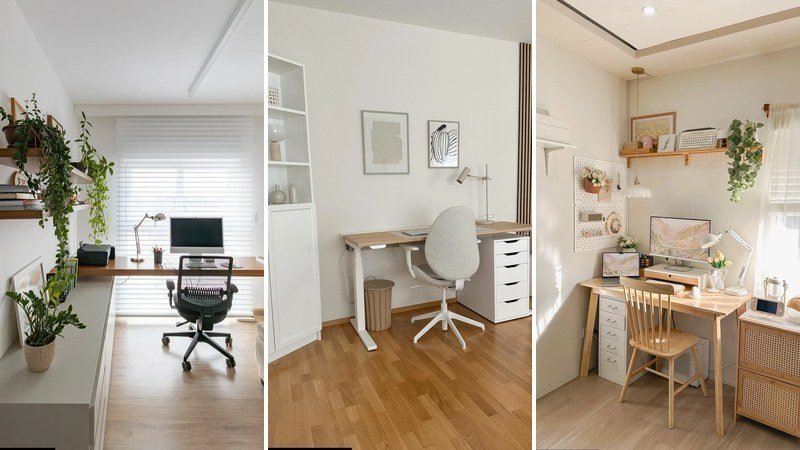
A long slim desk runs along the wall directly under a wide window. White horizontal blinds filter the light, so the room stays luminous without blinding you. A black mesh chair and a matte grey storage unit keep the palette restrained. If you face the window while working, tilt the blinds upward so the light bounces off the ceiling instead of hitting your screen head‑on. A task lamp provides focused light for paperwork, and a large potted plant on the cabinet brings a living green presence against the neutral tones. It is a no‑fuss workspace built for focus.
Standing Desk with Herringbone Underfoot

A light‑oak desktop on white legs, a pale grey upholstered chair, and a tall white bookshelf filled with ceramic vessels set the scene. Framed art above the desk and a section of vertical wood slats on the adjacent wall break up the white expanse. The herringbone floor reflects light in different directions at different times of day, so the room never looks flat. A small drawer unit on castors tucks under the desk for extra storage. It is a space that feels both airy and anchored, the standing desk switch a reminder to move when the afternoon sun gets too warm.
The ‘Work From Home’ Sign and Sunlight

A compact desk in light oak, a white office chair, and a chest of drawers form a simple triangle. Horizontal blinds cover the window, and a bare pendant bulb hangs overhead. A tall ceramic vase with dried grasses and a framed sign that reads “WORK FROM HOME CLUB” add personality. Keep the radiator beneath the window unobstructed—trapping heat under a desk turns a bright office into a sauna by 2 p.m. The neutral carpet softens sound and warmth, making the room feel grounded rather than echoey. It is proof that even a small rented space can be crisp and intentional.
Tufted Chair and Two Floating Shelves

A light‑wood desk fits into the corner, with a white tufted chair that stays cooler than leather in direct sun. Two floating shelves above hold small plants, a picture frame, and a candle—just enough to feel personal without collecting dust. Pair a fabric chair with a sheer curtain; the fabric won’t heat up like vinyl, and the curtain doubles as a light diffuser. The soft beige walls absorb some brightness, so the screen is easier to read. A laptop on a stand and a separate monitor make it a dual‑screen setup that doesn’t crowd the surface. Clean, cosy, no‑fuss.
Pegboard and a Rattan Cabinet Combo

by @withmaiki
A wooden desk sits in a corner, with a white pegboard on the left and a rattan cabinet on the right near the window. A sheer curtain softens the sun, and a pendant light hangs overhead. A desk lamp adds focused task light. The rattan cabinet hides the clutter that direct sun would otherwise fade or discolour. Shelves hold trailing plants, and the wood tones—oak, rattan, and light beech—warm up the white walls. A laptop, a monitor, and a few ceramic pots keep the workspace clean but not cold. It’s a room that honours both light and function.
Boho Warmth
If you love texture, plants, and a collected‑over‑time look, the boho approach handles sunshine well. A boho home office is all about mixing natural fibres with personal treasures, and here the sunlight just adds to the layered effect. These setups build depth through contrast—woven baskets, glossy leaves, matte ceramics—making the brightness feel comfortable rather than relentless.
Botanical Prints and a Floating Desk

by @boho.nest
A compact nook wraps the desk wall‑to‑wall, with two floating shelves above packed with books and trailing plants. A wooden drawer unit slides under the desk, keeping the surface clear. The patterned rug on the floor absorbs sound and light, so the room doesn’t feel echoey or overexposed. A mid‑century style chair with a curved back adds a soft line against the white shiplap wall. A woven pendant light casts a dappled glow, and a large floor plant by the window filters the harshest midday rays. Framed botanical prints echo the greenery, tying the whole nook together.
Rattan Chair and a Window Corner

Tucked between a window and a tall wardrobe, this corner works surprisingly hard. The white desk keeps the footprint light, while a rattan chair with a soft cushion can be pulled into the sunbeam or pushed back as needed. Rattan is light to move, so you can shift your seat when the afternoon glare gets strong—no struggle with a heavy swivel chair. A black wire grid on the wall displays small photos, and two shelves hold a macrame plant hanger and a VOGUE print. A black task lamp anchors the darker accents. The whole corner feels personal and never overdecorated.
A Conservatory Desk, Plants Everywhere

by @flowbylara
A wooden desk faces a window wall that opens to a garden, with a glass roof overhead. A tall shelving unit on the right holds books, woven baskets, and yet more plants. In a glass‑roofed room, a simple desk lamp becomes a crucial tool—it pinpoints a warm, focused light so your eyes don’t wash out in the uniform brightness. The chair has a textured woven seat, and a patterned rug adds warmth underfoot. The palette—warm oak, creamy off‑white, sage green, terracotta—blends with the outdoor view. It feels like working in a greenhouse, minus the humidity.
Sheer Curtains and a Wooden Writing Desk

by @flowbylara
The desk faces a large window dressed in white sheer curtains, which soften the sun without blocking the view. On the adjacent wall, three wooden shelves hold books and trailing plants. The sheer fabric diffuses light across the entire room, so you get consistent brightness all day—no harsh patches on your screen. A rattan‑and‑wood chair pairs with a patterned rug, and a woven floor basket collects spare throws. The palette runs warm wood, cream, sage, and terracotta—colours that deepen with sun exposure rather than fighting it. A small desk lamp sits ready for early mornings or overcast afternoons.
Sunburst Mirror and Botanical Art

A wooden desk with built‑in drawers, a spindle‑back chair, and three floating shelves anchor this setup against a white wall. A sunburst mirror hangs above, catching the light from the window opposite and doubling it across the room. A mirror placed opposite a window reflects sunlight deeper into the space, making a small office feel twice as bright without extra glare on the desk. Framed botanical art, a wicker basket, and a tall potted plant layer texture. The patterned rug underfoot brings together the cream, wood, and sage tones. It’s a room where the light is the main accessory, not an obstacle.
Corner Pegboard with Macrame Hangers

A wall‑mounted desk and a round wooden stool make the most of a tight corner, with shelves wrapping upward. A sage‑green pegboard on the adjacent wall displays a sunburst mirror and tiny plant shelves, while macrame hangers suspend trailing greenery from above. The pegboard keeps everything within reach—an office desk organization essential that adapts as your storage needs shift with the seasons. An Apple monitor, a few books, and a ceramic pot sit on the desk. The whole arrangement floats on the wall, keeping the floor open. Ideal for a rental where you can’t drill into every surface but still need storage that works hard.
Polished Professional
When your video calls include clients or a team, or you just prefer a more tailored look, these offices handle sunlight with refined materials and considered layouts. They prove you can have gold accents, built‑ins, and upholstered seating without sacrificing comfort or screen visibility.
Gold Accents and a Built‑In Library

by @cleyatelier
A wood desk with brushed gold legs sits facing a massive built‑in shelving unit filled with books and objects. Two white upholstered chairs—one for working, one for guests—face the desk. Large windows on the right bring in light, which catches the gold sputnik chandelier and a gold desk lamp. An oversized glass vase of white hydrangeas on the desk scatters the incoming light softly, preventing the gold from creating sharp reflective hotspots. A charcoal‑and‑white abstract rug grounds the arrangement. The room feels luxurious but still approachable, the kind of space where bright morning light makes the brass glow rather than glare.
The Recessed Nook with Warm Under‑Lighting

Built into a recess, a L‑shaped white desk with drawers maximizes every inch. Open shelving above holds books and a single plant, while a patterned upholstered chair adds comfort. The under‑cabinet warm lighting eliminates the shadows that overhead fixtures cast onto the work surface—critical in a deep nook where daylight only reaches so far. A recessed ceiling light supplements the natural brightness from the side. The palette stays cream, off‑white, taupe, and charcoal—neutral enough to let the light define the space. It is a tailored hideaway that feels much larger than its footprint, a small home office trick worth borrowing.
Window Seat and a City View

A large wooden desk, a rolling chair, and a wall of open shelving define the work zone, while a built‑in window seat along the far wall offers a place to think or read away from the screen. The window overlooks a cityscape, flooding the room with light that picks up the texture of the area rug. Switching to the window seat for a 10‑minute break gives your eyes a chance to reset to distance vision, reducing the afternoon dullness that comes from staring at a monitor in a bright room. Grey walls and light oak keep the palette calm, and under‑shelf accent lights add warmth after sunset, making the room functional way past daylight hours.
Lighting Layering That Makes a Bright Home Office Work
Three-point daylight supplement: Relying on sunlight alone leaves your face in shadow during video calls. Add a diffuse task light on the desk, a bias light behind the monitor to soften the contrast, and a wall-wash fixture that grazes light across the background. This trio mimics daylight’s fill without the harsh spots.
Warm colour temperature: Most articles suggest ‘daylight’ bulbs at 5000K. I’d skip those. In a room already flooded with sun, that bluish tone fights the natural warmth and tires your eyes by midday. Stick to 3000K–3500K — it’s the colour of early afternoon sun, so artificial light blends rather than competes.
Manage luminance ratios: A window wall that’s ten times brighter than the opposite wall confuses your iris. Follow the 2:1 rule: no surface should be more than twice as bright as the one next to it. I hang sheer vertical blinds I can slide to one side, balancing the light. A mid-tone sage wall opposite the window absorbs enough light to keep the contrast gentle, without turning the room dark.
Living diffusers: A row of plants on the windowsill isn’t just pretty — leaves break up direct beams before they hit your desk. A snake plant or rubber tree with thick foliage works like a natural scrim, softening the light while keeping the view intact. For more ideas on arranging plants in tight spots, a small space office layout often leans on vertical greenery anyway.
Why Your White Walls Might Be Sabotaging Your Video Calls
Overexposed background: High-gloss white walls reflect so much light that your webcam auto-exposes for the brightest area, turning you into a silhouette. Paint the wall behind your chair a medium tone — greige, muted terracotta, or dusty blue. The camera then finds your face easily, and the room still feels airy because the other walls stay light.
Window behind you: A window in the background creates a blown-out ghost effect, even with exposure lock. The fix isn’t blocking it — position your desk perpendicular to the window instead. Cross-light from the side sculpts your features without blinding the lens. I see this in many Scandinavian style offices where simplicity of layout solves the problem before decor even enters the picture.
Glossy surfaces: Glass-front cabinets and high-gloss paint bounce sun patches directly into the camera as hot spots. Swap for matte finishes: a chalk-painted dresser, a linen curtain, an upholstered chair. These materials eat scattered light, making your video feed look intentional rather than accidentally bright.
Depth cues on camera: Without shadows or texture, you get ‘floating head syndrome’ where you appear detached from the room. Install a narrow shelf at picture-frame height behind you and place a few matte ceramic objects on it — a vase, a book, a small bowl. This gives the camera a depth reference and gives your eyes something to rest on during long calls.
The Truth About Fading: Materials That Actually Survive a Sun-Drenched Room
Upholstery lightfastness: Sunlight doesn’t fade evenly — UVA rays slip through glass and break down dye molecules while heat accelerates the damage. Before buying a sofa or chair, check for an ISO 105-B02 score of 6 or higher out of 8. That means the fabric resists fading for years, not months. A boho style workspace with a rattan chair might look charming, but untreated natural fibres can bleach in one summer if they sit in direct sun.
Unfinished wood: Oiled or raw wood — popular in bright, casual offices — yellows unevenly where light hits it. I lay a flat-weave rug under the desk to break the sun’s path across the floor, and I use a desk pad on the work surface itself. If you must have that natural look, seal the wood with an UV-inhibiting lacquer beforehand.
Artwork protection: Standard picture glass transmits over 85% of UV. For anything you value, switch to museum glass or UV-filtering acrylic. A cheaper alternative for casual pieces: woven wall hangings or macramé. They don’t rely on vibrant dyes, so sun bleaching becomes a soft patina rather than a flaw.
Accessory materials: Acrylic trays, polypropylene boxes, and laminate surfaces turn yellow fast in bright rooms. Swap them out for glass, powder-coated metal, or untreated stone — these are inert to UV and keep their colour. I learned this after a set of white plastic organisers went butter-yellow by August.
Plant placement: Even sun-loving plants can burn if light focuses through a south-facing window. Choose varieties with thick, leathery leaves — snake plant, ZZ, rubber tree — and pull them back a foot from the glass. Misting in the morning adds a protective film of moisture against leaf scorch.
How to Cool a Sunny Workspace Without Blocking the View
Low-E window films: Solar heat gain through windows can raise room temperature by 30%. Blackout curtains kill the bright office feel, so try a clear low-E film instead — it rejects up to 70% of solar heat while staying invisible. Renters can use static-cling versions that peel off cleanly. In a bedroom office where privacy matters too, a slightly frosted film solves both problems at once.
Ceiling fan direction: Most guides say fans are pointless in small rooms. I’d argue they’re essential — set to counterclockwise in summer, a ceiling fan pushes air down and creates a breeze that makes your skin feel 4–5° cooler. Place your desk right where the blade edge passes for the strongest airflow.
Light-coloured surfaces: A dark desk in direct sun acts like a radiator. Swap it for maple, white laminate, or glass-topped furniture. If you can’t replace it, use a light-coloured adhesive film on the desktop — an afternoon project that changes how the room feels by 2pm.
Evaporative cooling: Heat isn’t just about temperature; humidity plays a part too. A small USB fan with a water mist option, or a desktop humidifier, lowers felt temperature through evaporation — perfect for dry climates. Point it towards your face, but away from paperwork.
Floor insulation: In rooms over a garage or crawlspace, the floor radiates heat upward. A thick natural-fibre rug — jute or wool — isolates you from the warm surface and can make the space feel 5°F cooler. In a living room office zone, the rug also defines the workspace visually, which helps when you’re trying to mentally switch off at the end of the day.
The One-Page Bright Home Office Maintenance Calendar
Spring window wash: Clean the glass inside and out with a microfiber cloth and warm water.
Winter leaves a film of road dust and heating residue that diffuses light before it even enters the room. Adding a teaspoon of white vinegar to your water removes the alkaline layer that causes streaks, so every beam of sunlight arrives clean and sharp on your desk.
Summer furniture shuffle: Rotate your desk or rug 90 degrees clockwise at the start of June.
Sun tracks differently in summer, and a spot that was shaded in April might now catch four hours of direct heat. Mark the rug corner with a small pencil line under the edge so you can reset it precisely in autumn without trying to remember where it was.
Autumn film check: Inspect any window film for peeling edges or trapped bubbles.
A peeling corner lets in unfiltered sunlight that fades the floor in an uneven patch you won’t notice until spring. Warm the film gently with a hairdryer on low to soften the adhesive, then press down from the centre outward.
Winter diffuser deep clean: Wipe the inside of every lampshade and monitor hood.
Artificial light does the heavy lifting from November to February, but a dusty shade can cut output by a third. A damp cloth run along the inside once a month restores brightness without buying stronger bulbs, and it helps your video calls look less grey.
Monthly shadow walk: Spend five minutes at 10am, 1pm, and 4pm one sunny day each month, noting where shadows hit your desk and screen.
The exact angle changes every week as the sun shifts altitude. Keep a small notebook with fast sketches of the shadow line across your desk; by the third month you will see the pattern and can move your task lamp before the glare arrives. A bright home office that works hard needs this kind of unglamorous attention—function over trend, every time.
Annual fabric snapshot: Take a photo of your sofa or desk chair on the same date each year, with a plain white sheet of printer paper in the frame.
The paper gives your phone camera a true white reference so you can compare actual colour fading year to year without guessing. If the arm that catches morning sun is paler than the cushion, it is time to rotate or add a throw.
FAQ
Will a bright home office ruin my computer screen with glare?
Not if you position your monitor correctly. Place the screen so your line of sight is perpendicular to the window, and add a matte filter hood if direct light still hits. The glare comes from the sharp contrast between the bright window and the dark screen, not from the overall brightness of the room.
Can I put plants in a super bright home office without killing them?
Yes, choose plants with thick, waxy leaves like snake plants or rubber trees, and keep them at least a foot back from the glass. Direct sun through a window can act like a magnifying lens and scorch the leaves, but a little distance turns that same light into a growth boost. Misting in the morning adds a moisture buffer without blocking the sun.
Does a bright home office make the room look smaller?
Not at all, but it depends on how you handle the light. A room with only white walls and no shadows will feel flat and featureless; adding one mid-tone wall or a painted ceiling in a slightly deeper hue creates depth that makes the space feel larger. The contrast gives your eyes a place to focus, which tricks your brain into reading more volume.
How do I stop my bright home office from feeling like a sauna?
Start with a clear, heat-rejecting window film that you can apply yourself—it cuts solar heat by up to 70% without darkening the glass. Pair that with a ceiling fan running counterclockwise in summer, and swap any dark furniture for light wood or white laminate that does not absorb and radiate heat onto your skin.
Will my bright home office furniture really fade that fast?
Yes, especially textiles in direct sun. A fabric sofa can lose visible colour within three months of daily exposure if it lacks a lightfastness rating of 6 or higher on the ISO scale. Rotate cushions monthly and use UV-filtering film on the window as the first line of defence, because once fading starts, it is permanent.
How does a bright home office differ in a bedroom versus a living room versus a dedicated room?
In a bedroom, the office needs to switch off visually at night, so use a folding screen or a tall bookcase to hide the desk and keep the colours soft enough that the room still invites sleep. In a living room, the desk should not be the focal point; place it perpendicular to the window with a rug that defines the work zone, and choose closed storage to tuck away work things after hours. A dedicated room can handle bolder colour and a desk positioned for the best natural light, because you never need to pretend it is anything other than a workspace.