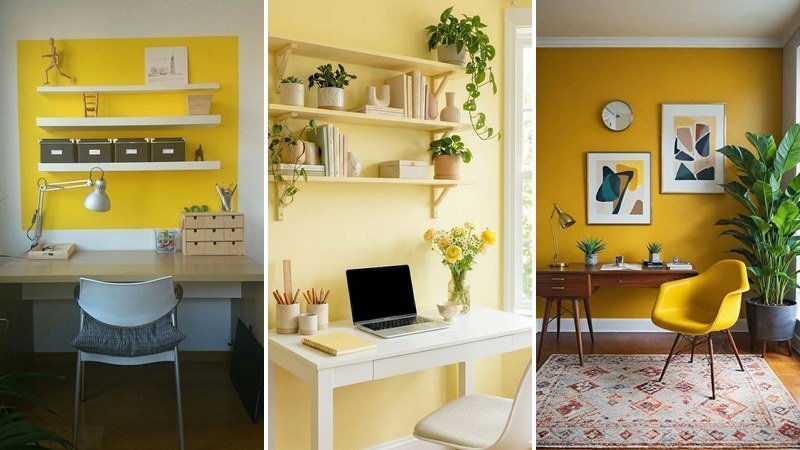
Sunny 10+ Yellow Office Ideas That Spark Happiness

Most yellow office inspiration online looks like a showroom: perfect light, no cables, nothing that suggests a human being works there. The rooms photograph well. They rarely answer the real question: how you bring this colour into your actual workspace without it turning childish or wearing thin by spring. Yellow is the hardest colour to get right in a working room because it changes with the light and the surface. Get the shade wrong and it buzzes. Get it right and it lifts the mood without demanding attention. Get that difference clear before you pick up a paintbrush.
For the wider picture, a bright home office shows how light and air carry a sunny workspace, while a blue office offers the cooling contrast that keeps yellow from overwhelming a small room.
17 Yellow Office Setups That Look Grown-Up and Actually Work
Most yellow office photos show spaces that are either too staged to function or too chaotic to concentrate. I’ve pulled together real setups—each with something that makes the yellow feel intentional, not accidental. Whether you want a full-sun wall or just a chair that lifts the room, there’s a way to do it without the headache.
Full Yellow Walls, No Regrets
Painting every wall yellow is the boldest path, but it can be the most rewarding if you balance the brightness with the right textures and neutrals. Here are seven rooms that commit fully and still feel poised.
The White Desk Counterbalance

by Pinterest
This room gets it right because it doesn’t try to soften the yellow—it lets it be the main event while keeping everything else quiet. The white desk sits low and wide, drawing your focus forward and away from the walls. The brown leather chair breaks the colour intensity without darkening the room; it acts like a visual full stop mid-sentence. Shelves in white, placed asymmetrically so the yellow shows through, keep the space from feeling cluttered. Potted plants on those shelves add a cool green that stops the yellow from turning buttery-sweet. The large window pours natural light across the desk, but because the screen faces a solid wall, there’s no glare fighting to read the screen. A white pendant light finishes the room without pulling the ceiling down.
The Monochrome Yellow Moment

by Pinterest
When you match the chair to the walls, the effect should look deliberate, not like a paint spill. Here, the yellow office chair picks up the exact same saturated tone as the walls, creating a colour block that’s surprisingly restful—because there’s no clash. Charcoal black in the desk lamp and the rug pattern interrupts the yellow enough to stop it from feeling like a lightbox. The white desk and floating shelves give the eye somewhere to blink, and the tall potted plant in the corner brings in a deep green that pulls the whole scheme back to nature. A large floor painting propped against the wall adds height without hanging anything permanent, which is smart if you rent. Natural light from the side window and a recessed ceiling light keep the room bright without flattening the colour.
The Plant-Layered Yellow

by Pinterest
Yellow plus plants is the design equivalent of lemon and basil—fresh, not sweet. This room leans into its mustard walls by surrounding them with every shade of green a houseplant can offer. The wooden writing desk is old-school solid, no paint in sight, and the yellow upholstered office chair tucks under it like it belongs. Open shelving and a gallery wall filled with botanical prints break the yellow into manageable pieces; you never see a solid block of colour, only slices between leaves and frames. The boho approach layers texture over colour, and it works especially well with mustard. I’ve gathered more boho home office ideas if you want to see how plants and patterns do the heavy lifting. A patterned rug with red and terracotta pulls the floor plane together without adding yellow, which is smart—too much mustard on every surface would feel like a restaurant.
White Furniture as Reset Buttons

by Pinterest
Mustard walls can feel heavy after a few hours, but the white desk, white chair, and white shelving in this room hit pause on the colour every time your eyes land on them. It’s a rhythm: yellow, white, yellow, white. The light wood herringbone floor keeps the room from feeling sterile, and a tall potted plant in the corner adds the necessary green note. Floating shelves filled with books and small plants interrupt the mustard without covering it up—each shelf acts like a horizontal stripe that breaks the wall into readable bands. The desk sits squarely against the main wall, and a laptop, lamp, and tiny plants occupy the surface without clutter. A large window on the left bathes the room in natural light, which is how mustard looks its best—warm, not muddy.
The Yellow-on-Yellow Gamble

by Pinterest
Yellow walls and a yellow floor sound like a loud mistake, but this room pulls it off by keeping the surfaces as flat as possible. The white desk and filing cabinets act like speed bumps for your eyes’ slide across the colour, giving you somewhere to rest before you spin. The yellow office chair blends into the background—which might be the point—while a tall white shelving unit on the right adds height and storage without adding more pigment. A black desk lamp and a black monitor cut through the sunshine with much-needed neutral weight. A green potted plant near the window adds the only cool tone, and it’s enough. The white floating shelf and small picture frame on the wall break the yellow just before the ceiling. Natural light from the left window stops the room from feeling like a box of crayons.
The Nook That Holds You

by Pinterest
This corner doesn’t try to be big; it tries to be good. The warm mustard walls wrap around a wall-mounted desk that floats above a round rug, freeing up floor space and making the tiny area feel open. A yellow armchair sits low, not clinical, and fairy lights strung around the walls and plants make the space glow after dark. Mounting the desk to the wall instead of using legs gives you a few extra inches of walking room—and that matters in a room this small. If your office is basically a closet with a window, I’ve covered similar tight-space wins in my cloffice ideas. Framed art, little shelves, and a riot of potted plants in terracotta pots do the heavy decorating, so the yellow wall is more backdrop than feature. A red mug and sticky notes on the desk are the only signs that actual work happens here.
Scandi Meets Sunshine

by Pinterest
Yellow and Scandinavian minimalism usually keep their distance, but here they share a small room politely. The bright yellow wall behind the desk is tempered by white everything else: white desk, white chair, white picture frames. Two wooden shelves mounted above hold terracotta pots, sage green plants, and a few books, all arranged in the loose, uncluttered way of Nordic design. The terracotta and sage tones pull the yellow back from lemon to chamomile, which is easier to live with long-term. It’s the Scandinavian way—clean shapes, natural light, and just enough colour to feel human. More on that ethos in my Scandi office collection. A yellow notebook and a small vase of flowers on the desk repeat the wall colour without screaming. Soft natural light from the right window washes the whole setup, and there’s no overhead fixture fighting it.
Strategic Accents That Do the Heavy Lifting
You don’t need four yellow walls to feel the lift. An accent wall, a painted rectangle, or a clever tile choice can give you the mood boost without the full saturation. These six setups show how to place yellow where it counts.
The Two-Tone Split

by Pinterest
This corner solves the “too much yellow” protest before it starts by cutting the wall in half. The bright yellow sits above a charcoal grey wainscoting effect, a trick that drops the yellow’s visual volume instantly. The dark lower half absorbs light, so when you’re seated, the yellow is in your peripheral, not in your face. A black desk slots neatly against the wall, and a yellow velvet chair with matching ottoman brings softness without adding another hard colour. The gallery wall—framed prints, a wire grid memo board, even a little sign—breaks up the expanse of yellow and gives the room personality. A potted plant sits handy in front, and a small black desk lamp keeps task lighting right where it’s needed. This is a setup for someone who wants yellow but also wants to be able to think straight after 3 PM.
The One-Wall Wonder

by Pinterest
An accent wall behind the desk, not the one you face, is the unsung hero of yellow office design. This setup puts the mustard warmth behind you, where it shows up on video calls but doesn’t burn into your retinas during a spreadsheet deep-dive. The mid-century wooden desk and sleek yellow plastic chair are a study in contrasts: warm wood versus cool plastic. The patterned area rug beneath anchors both furniture and colour, so the yellow wall doesn’t just float unattached. Two framed abstract pieces and a round mirror break up the wall without making it busy. A large potted plant near the window softens the corner, and a brass desk lamp adds focused light when the afternoon sun dips. No repaint needed, just a single wall commitment.
Lighting That Does the Heavy Lifting

by Pinterest
No paint fumes, no wallpaper paste—just three yellow lights that transform a grey room into a sunny one. The large yellow pendant hangs above the desk, the yellow desk lamp points at your work, and a yellow panel behind the monitor glows gently. That back panel reduces the contrast between your screen’s white glow and the grey wall, which cuts eye strain during long video calls. Good lighting can fake a yellow wall; I’ve written about bright home office tricks that don’t involve paint. The light wood desk with two drawers and a matching ergonomic chair keep the setup functional and warm. Picture frames and a small potted plant on the desk add personal touches without stealing the spotlight from the lights. Neutral carpet underfoot absorbs sound, which you’ll appreciate on hour three of a client call.
The Shy Yellow Block

by Pinterest
For anyone who can’t decide between full yellow and pure white, this is your answer. A large yellow rectangle is painted on the wall behind the desk, essentially acting as a backsplash for your work zone. It frames the floating shelves and wooden organizer without demanding the whole room surrender to the colour. The white desk and chair keep the area crisp, while the light oak desk organizer and wooden mannequin figure add warmth without adding more yellow. Three white floating shelves hold storage boxes and a framed picture, so the yellow peeks around them like a painted mat board. A silver desk lamp provides task lighting, and the overall palette stays minimal. This works especially well in a Scandinavian-inspired space where clean lines matter more than punchy statements.
The Tiled Focal Point

by Pinterest
Wallpaper gets torn, paint gets scuffed—but ceramic tile wipes clean and lasts years. This setup uses glossy yellow hexagonal tiles on the wall behind the desk, giving the room a texture that flat paint can’t touch. Tile reflects light differently than painted drywall, so the yellow shifts subtly throughout the day without overpowering. A yellow office chair and a matching rolling storage unit pull the colour through the room, while floating shelves above hold books and plants to break the hard surface. The light wood desk and floor keep the space from feeling cold, and a large window on the left lets in natural light. A desk lamp focuses on the keyboard, so you’re not relying solely on the ceiling lights. File organizers and a little bin keep the work surface clear, even during deadline season.
The Corner Command Center

by Pinterest
This L-shaped desk uses every inch of corner space, and the yellow accent behind it defines the office zone without painting an entire room. The bright yellow rectangle on the wall acts like a highlighter for the desk area, while the crisp white shelving and storage keep the rest of the room neutral. A patterned yellow and white rug underneath the chair adds a soft layer of colour that ties the accent to the floor plane. The yellow task chair is comfortable enough for long stints, and the large plant to the right adds the necessary green counterpoint. A table lamp and plenty of natural light from the left window keep the workspace bright but not harsh. Baskets and a filing cabinet handle the clutter, so the desk stays clean even when life gets messy.
Let the Furniture Do the Talking
When walls can’t change—or you simply don’t want to pick up a brush—the smartest move is to put the colour on the pieces you touch. These four offices use yellow chairs, desks, rugs, or storage to carry the sunny energy, leaving the walls blessedly neutral.
The Chair That Does It All

by Pinterest
If painting walls isn’t an option (hello, rental deposit), this is your proof that a single piece of furniture can carry a whole colour scheme. The bright teal desk and the yellow tufted chair sit together like they were designed to argue—but in a good way. Teal and yellow are complementary, which means your eyes don’t have to work hard to switch between them; it feels energetic but never frantic—a trick I lean on in blue office schemes too. A large abstract painting with pink, yellow, and navy ties the wall to the desk, and a magenta-and-navy patterned rug does the same for the floor. Two small lamps—one brass, one yellow—layer the light so you can work without overhead glare. The window with yellow curtains softens the incoming sun, and a tall potted plant adds a neutral breathing point.
The Colour Swap

by Pinterest
Flip the script: this time, the desk wears the yellow and the wall stays neutral. A bright yellow desk sits in a corner, paired with a teal upholstered chair that cools the whole setup. Teal sits opposite yellow on the colour wheel, so the eye reads the contrast as balanced, not chaotic. Above, a gallery wall of framed prints—a pineapple, a dog, botanical sketches—creates a personal anchor that distracts from the fact that there’s no painted wall at all. A yellow desk lamp picks up the desk colour, and small potted plants break the surfaces into soft zones. The patterned rug underneath defines the corner as a dedicated workspace, which is crucial when your office is part of a larger room. A side window throws natural light across the desk, ending any chance of feeling like you’re working in a closet.
Ergonomics First, Yellow Second

by Pinterest
The most important piece in any office is the chair you’ll sit in for six hours; here, a supportive ergonomic chair happens to be the same vibrant yellow as a jar of mustard. It’s paired with neutral grey walls and a white L-shaped desk that gives you plenty of real estate. A solid yellow rug under the desk anchors the chair and adds a soft surface that also absorbs sound—useful if you tap your foot during calls. Wall-mounted shelving holds books, small plants, and the odd yellow decor piece—enough to tie the room together without a single drop of paint on the walls. Woven baskets on the floor stash cables and spare notebooks. Natural light pours in from a large window, and a desk lamp covers the cloudy days. The chair is adjustable, supportive, and the exact shade of a sunflower’s centre—practicality doesn’t have to look beige.
The Built-In That Steals the Show

by Pinterest
A full wall of yellow shelving is the biggest commitment on this list, and it works because the rest of the room takes a back seat. The light wood desk sits in front of a window, so your back is to the shelves—you see them when you walk in, not when you’re staring at a screen. A rattan chair and a jute rug absorb light and add texture, stopping the glossy yellow unit from feeling like a plastic toy. Books, plants, and decorative objects fill the shelves in a way that’s more library than storage. A yellow desk lamp on the workspace ties the colours together, and a woven basket stool adds another natural fibre. The round yellow rug under the desk mirrors the shelf colour without shouting, and the whole setup is bathed in natural light from the side window. It’s organized, cheerful, and absolutely not a nursery.
The Yellow Office Lighting Mistake That’s Making You Squint
Why warmth vanishes at 5 PM: A buttercream wall can turn muddy green by late afternoon because standard bulbs have a low colour rendering index. Yellow pigment needs a CRI above 90 to keep its true character. In a north‑facing room, cold daylight amplifies grey undertones. Swap any bulb labelled “daylight” (5000K and above) for a 2700K–3000K LED — that range keeps yellow walls from looking flat or sickly, especially on video calls where flat light makes a yellow accent wall office seem more beige than intentional.
Layered light fixes video‑call face: A single overhead fixture casts shadows that flatten colour. I place a floor lamp opposite the window, bouncing warm light back onto the wall. The reflected glow fills in the shadows and stops the yellow from turning washed‑out on camera. It is the cheapest way to make a sunny office idea actually work on Zoom. And it means you are not the one squinting at 2 PM.
Dimmers are the real grown‑up tool: You would never keep a bright yellow room at full intensity all day. A dimmer lets you shift from clear morning energy to a softer afternoon calm, reducing eye fatigue without a repaint. Most guides will tell you to pick the right bulb temperature and stop. I would argue that the dimmer is the missing half: you can tune the yellow to suit the light outside, not fight it. If your yellow home office sits in a corner of the living room, that same dimmer lets the space double as a cosy reading nook by evening — one lamp, two personalities, no clutter. It also works well in a bedroom nook where you need the desk corner to feel separate from the sleep space.
Your Paint Finish Is Sabotaging Your Yellow Walls
Flat finish, fast regret: Flat or matte walls might hide drywall seams, but they soak up every handprint, coffee splash, and chair‑back scuff. After the first wipe‑down, the colour looks faded and patchy. That pretty yellow accent wall office turns into a high‑maintenance chore.
Gloss overloads the eye: Semi‑gloss and high‑gloss yellow reflect too much artificial light. You get hotspots that strain your eyes and make a small room feel like a plastic canteen. The sweet spot is eggshell or satin — enough sheen to wipe clean, no glare on your monitor.
Scrub rating saves you from repainting: A kitchen‑and‑bath grade paint with a light reflectance value between 50 and 65 will survive five years of daily chair bumps and still look intentional. Most labels hide the scrub rating, but a good paint shop can check the technical sheet. If your yellow home office is actually a corner of the kitchen, then satin is non‑negotiable: you need a finish that handles steam and cooking oils without breaking down. For a hallway nook that doubles as a sunny office idea, eggshell holds up to coat brushes and bag handles every morning.
Low‑VOC for a real work week: That first lock‑in week you spend in a freshly painted room can bring headaches if the paint off‑gasses heavily. Look for Greenguard Gold certification, not just “low odour” labels. A low‑VOC yellow in the correct sheen means you can move your desk back in after 24 hours and actually breathe. Many guides recommend flat for its forgiving finish, but I would choose eggshell every time in a workroom — it handles a coffee spill without making you repaint, and the colour stays true even after you scrub.
A Tiny Room and Big Yellow Ambitions — Making It Work Without Claustrophobia
Yellow advances, but you can reverse the squeeze: An all‑over saturated yellow in a room smaller than 10×10 feet makes the walls feel like they are stepping towards you. To fix this, paint the ceiling and trim a tone lighter than the walls — not stark white, but a warm ivory that softens the boundary. That one move pulls the eye up and undoes the visual compression.
The 60‑30‑10 rule rewritten for yellow: Let yellow be your 30% — on the wall behind the monitor, for instance. Keep 60% neutral (greige, warm ivory) and use 10% in a deeper accent like a mustard file cabinet. This keeps the room breathing, unlike a four‑wall yellow that shouts at you. In a tiny rental, removable wallpaper on that single wall gives you all the sunny office ideas without a painter’s bill.
Furniture scale matters more than paint: A bulky dark wood desk against a yellow wall creates a hulking silhouette that makes the room feel like a tunnel. A narrow console desk with open legs keeps sightlines long. The same principle works in a small home office or a cloffice where every inch counts.
One vertical stripe tricks the ceiling: Instead of painting a whole wall, a single vertical band of yellow — painted or self‑adhesive — draws the eye upward and makes a low‑ceilinged rental feel taller. It is the yellow accent wall office reduced to a single stripe, and it reads as deliberate, not crowded. In a bedroom corner where the desk sits under a sloping eave, this trick pulls the whole nook open.
Staying Focused in a Yellow Office — What the Science Actually Says
Yellow over‑stimulates, but a cooler colour pulls it back: Colour studies show that yellow increases serotonin, yet in large doses it can over‑activate the amygdala. The fix is to pair it with a colour opposite on the wheel — a soft navy or slate blue in a rug, a chair, or a blue office accent piece. That visual “cooling” effect stops the room from feeling like it is buzzing.
Retinal fatigue is real on white‑screen days: Staring at a bright yellow wall while reading white documents causes after‑images and squinting. A pendant light with a warm‑white shade, positioned to cast a gentle wash behind the monitor, breaks that hard contrast. You stop fighting the colour and start working with it.
Keep yellow below eye level if you are migraine‑prone: Constant peripheral stimulation from a full wall can spike cortisol. Instead, try a painted wainscoting in a soft ochre, or a mustard rug under the desk. You get the mood lift without the tension. That small edit turns a yellow home office from a possible trigger into a genuinely restful work spot.
Circadian timing is the hidden upgrade: A room with yellow walls that catches morning sun helps regulate your sleep‑wake cycle. But after 2 PM, swap blue‑heavy LED task lights for amber‑toned ones. Otherwise your own biology fights the late‑day calm. You will hear that any yellow is a sunny office idea that energises you. The better move is to let the light temperature shift through the day, because focus in the morning and calm in the afternoon both live in the same yellow room.
The Yellow Office Supply Run: One Trip, No Returns
Grab the right samples: Order three peel-and-stick swatches from one brand—a sunny yellow, a muted buttercream, and a mustard tone. Live with them for 48 hours before committing.
Computer screens lie about undertones. The yellow that looked warm online can read greenish under your ceiling light. Stick the swatches next to your monitor and on the wall opposite the window, then check them at noon and again at dusk. You will spot the problem within a day.
Start with a grey primer: Use a high‑hide grey primer on builders’‑grade drywall or any wall that was previously dark. It blocks old colour from bleeding through and cuts your yellow topcoat from three coats to two.
Most women skip primer because the paint tin says “one‑coat coverage.” That promise fails spectacularly on porous drywall. A gallon of grey primer costs less than the extra yellow paint you would otherwise waste, and the final colour reads cleaner and truer.
Pack the right roller and tape: Add a mini foam hot‑dog roller to your trolley—it gives crisp edges without brush marks. Buy FrogTape, not generic masking tape; yellow‑to‑white lines punish cheap tape with wobbly bleed.
Also swap the plastic drop cloth for a canvas one. Plastic slides on hardwood and bunches under your ladder. Canvas stays put, absorbs drips, and can be reused for the next project you will inevitably start six months later.
Pick a self‑priming paint if your wall is smooth: Benjamin Moore’s Aura line in “Yellow Marigold” and Sherwin‑Williams Emerald in “Butter Up” both adhere well without separate primer on previously painted surfaces that are in good shape.
Once you open the tin, check the sheen—eggshell or satin keeps the room professional. Gloss on yellow walls amplifies glare on your monitor and turns a calm workspace into something that feels like a school cafeteria.
Swap the bulbs while you are at the store: Grab a 2700K warm‑white LED bulb to test alongside your swatches. The “daylight” bulb you have in the desk lamp right now will turn your buttercream wall a sickly green by late afternoon.
Put the new bulb in a floor lamp opposite the window, turn off the overhead light, and see how the yellow softens. That one change often saves a room you were about to repaint.
FAQ
Will a yellow office make me feel anxious or distracted?
A full‑wall bright yellow can over‑stimulate, but keeping it to an accent wall behind you or using a muted shade like ochre usually lifts mood without agitation. Pair it with plenty of white space and a blue‑grey rug to ground the energy. The key is to keep the yellow out of your direct eyeline when you are seated.
How do I keep a yellow office from looking like a nursery?
Skip pastel‑yellow paint with a glossy finish—that combination reads baby’s room instantly. Go for mustard, ochre, or a saturated sunflower in eggshell sheen, and add matte black or brass hardware. Never use yellow on all four walls without heavy doses of crisp white trim and adult‑scale artwork that anchors the room as a workspace, not a playpen.
Can I pull off a yellow office if I rent?
Yes. Removable wallpaper in a yellow pattern, a mustard‑coloured curtain hung floor‑to‑ceiling, or a large canvas painted yellow and leaned against the wall all create the effect without losing your deposit. Swap the landlord’s overhead fixture with a plug‑in yellow pendant bought second‑hand—you take it with you when you leave.
What is the best shade of yellow for a windowless office?
Buttercream with a warm undertone and a light reflectance value around 70 reflects what little artificial light you have without feeling cold. Avoid lemon or chartreuse‑leaning yellows—they turn grey and flat under standard office LEDs. Test the swatch under your actual desk lamp before painting.
Do yellow walls show dirt and scuffs easily?
They show dust less than dark colours, but handprints and chair scuffs telegraph on any paint. Choose satin or eggshell sheen with a scrub‑rated formula and keep a magic eraser in your drawer—it wipes marks away in seconds without pulling off the paint.
Is mustard yellow too trendy for a home office?
Mustard has had a strong decor run, but when anchored with classic navy, charcoal, or warm wood, it reads as timelessly tailored—think Savile Row, not fast fashion. The trick is using it on textiles or a single piece of furniture rather than on all four walls. A mustard filing cabinet or rug gives the mood boost without dating the room.
How do I adapt yellow for a bedroom office versus a living room corner versus a dedicated room?
In a bedroom, confine yellow to the wall behind the desk only; you want to see it when working, not when winding down for sleep. For a living room corner, keep the yellow on a chair, rug, or window treatment—enough to define the work zone without shouting over the rest of the room. In a dedicated room, you can paint two adjacent walls a muted yellow, but leave the wall you face on video calls soft white so your complexion reads naturally on camera.