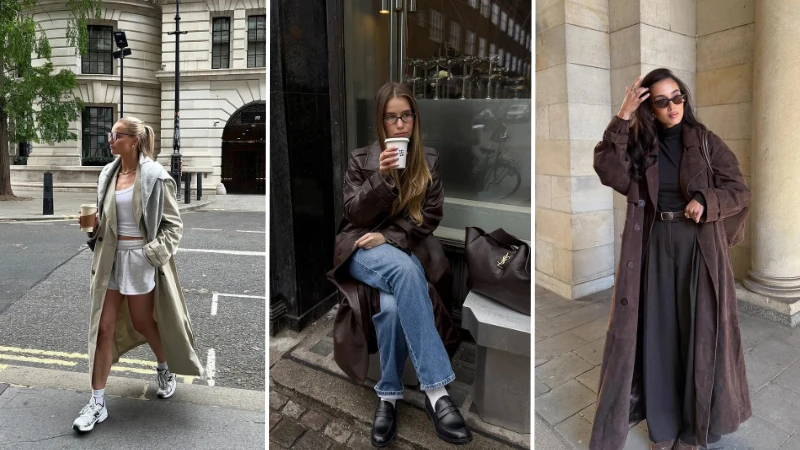
Elegant 15+ Long Coat Outfit Ideas You Need

The problem with most long coat outfit advice is that it assumes you live in a photo studio. The coat hangs perfectly in the mirror then catches a car door, inflates in the wind, or bunches awkwardly when you sit. This isn’t a styling article about which color to buy. It’s about how to engineer the proportions and movement so your coat actually survives the day without making you look like you’re wrestling a blanket.
If you’re still figuring out the foundational pieces, our winter outfit ideas offer solid layering systems that let your coat do the heavy lifting. And for warmer months, the trench coat outfit framework works the same proportion logic with lighter fabrics.
22 Long Coat Outfit Combinations That Actually Move With You
The following 22 long coat outfits aren’t plucked from a runway still. Each one is a wearable equation I’ve seen on streets, in coffee lines, and across offices — proof that a long coat can solve proportion problems instead of creating them. Use these as starting points, not strict blueprints. The details (a sock height, a bag shape, a hem length) are what make or break the whole look, and I’ll point them out as we go.
The Coat-Over-Maxi Formula

by @amanda_sand
A camel wool coat thrown over a black maxi skirt and beige button-up cardigan creates a long, clean line that instantly reads as intentional. The white crew neck underneath keeps the top half bright, while the tan leather tote pulls the coat’s shade forward. Watch the gap between the coat hem and the skirt’s widest part — if the coat hits at your calf’s widest point, it shortens your leg line, so let the skirt fall past the coat by at least a palm width. The tortoiseshell sunglasses add a quiet finish that works for a park walk or a casual office day.
Trench, Leggings, Platform Slippers

by @alexcrpn
A beige trench coat gets a cozy reworking here with black ribbed leggings and cream shearling platform slippers. The white crew socks peeking above the slippers break up the dark leg, which matters because an all-black lower half under a light trench can look disjointed. Platform soles give you literal lift without a heel, but make sure the coat hem doesn’t skim the floor when you’re on flat ground—it should clear by at least an inch and a half. The black structured handbag adds polish, balancing the slippers’ softness. This is a coffee-run uniform that doesn’t try to be anything else.
Long Coat and Wide-Leg Jeans

by @lissiejudd
Pairing a long taupe wool coat with white wide-leg jeans and Adidas Samba sneakers reads as relaxed but still tailored. The beige ribbed cardigan buttons up to create a slim column under the coat’s open front, which prevents the loose layers from adding bulk. When wearing a long coat over wide-leg pants, check that the coat’s back vent opens cleanly when you stride—the hem should never catch on your pant leg or you’ll fight it all day. The brown leather handbag echoes the sneaker’s brown stripes, tying the whole look together without extra effort.
Leather Trench, Light Denim

A dark brown leather trench coat feels fresh when grounded with light blue straight-leg denim and black loafers. The leather’s structure gives the outfit a strong frame, but the white socks and relaxed jeans keep it from looking like a costume. Leather coats trap heat quickly, so wear a thin knit or a cotton button-up underneath—chunky sweaters will bind at the arms and make you sweat indoors. The oversized leather tote matches the coat’s sheen, and the tortoiseshell eyeglasses are a small detail that makes the whole ensemble look selected rather than thrown together.
Teddy Coat on a Ribbed Set

A long teddy coat in warm brown over an all-white ribbed knit set is the kind of head-to-toe texture play that feels like a hug but looks polished. The flared trouser silhouette balances the coat’s volume, preventing a top-heavy outline. The teddy coat will inevitably shed on dark items, so avoid wearing it over a black base unless you keep a lint roller in your bag. Brown suede platform boots ground the monochrome without cutting the vertical line, while the black shoulder bag acts as a punctuation mark. Oversized sunglasses finish the look with a slight off-duty model edge.
The Tonal Beige-and-Brown Equation

by @sibel_arsu
A beige wool coat layered over a taupe turtleneck and brown tailored trousers demonstrates why tonal dressing works so well in real life: the colors blend rather than contrast, so the eye travels smoothly. The dark brown belt and crocodile-embossed handbag add just enough texture to keep it interesting. In a head-to-toe neutral look, make sure at least one element—here the handbag—has a subtle sheen or grain, or it risks looking flat. Black sunglasses sharpen the whole outfit, and the oversized coat cut ensures you can move without pulling at the back.
Off-Duty Black Coat with Draped Sweater

by @lissiejudd
The black long coat and black leggings form a sleek blank canvas, while the light grey sweater draped over the shoulders and white chunky sneakers break the darkness. A charcoal beanie and gold rings add tiny moments of interest. Draping a sweater over a coat only works if the coat has strong enough shoulders to hold it; if the pad-free style slides, skip the drape or you’ll spend the day adjusting. The quilted leather bag brings texture and a dose of luxury, proving that even an outfit built on leggings can read polished when the coat does the heavy lifting.
Double-Breasted Brown with Black Jeans

by @cocobeautea
A brown double-breasted wool coat partnered with a taupe turtleneck and black straight-leg jeans feels substantial without stiffness. The horsebit loafers add a sharp, classic touch, while the gold hoops and rings give a gentle gleam near the face. Double-breasted coats can pull open across the chest if the buttons sit too high for your torso; always test by reaching forward in the fitting room to see if the placket gaps. Carrying a dark brown leather tote that matches the coat’s depth unifies the look, and black sunglasses do the rest of the work for you.
Camel Coat with a Baseball Cap

by @kerifay
Here, a camel wool coat gets a sporty remix with a navy baseball cap and wide-leg dark wash denim, while the white button-down and black draped sweater add prep-school structure. The leather loafers and belt prevent the cap from taking this into errand-only territory. When adding a baseball cap to a tailored coat, avoid branded or faded caps; a plain, dark cap in good condition reads intentional rather than lazy. The black structured tote squares off the silhouette, and the overall effect is a woman who knows how to move between dress codes without changing her coat.
Trench, Mini Skirt, Knee Boots

A tan trench coat worn over a navy cardigan and a dark plaid mini skirt proves that long outerwear doesn’t have to hide what’s underneath. The suede knee-high boots extend the leg line, so the mini skirt doesn’t create a truncated look. When showing that much leg below a long coat, choose a boot with a close-fitting shaft and a pointed or almond toe; a wide, slouchy boot will widen the calf and work against the coat’s vertical line. This outfit knows exactly what it’s doing: it’s polished but a little playful, perfect for a fall day when the temperature hasn’t fully dropped yet.
Suede Trench, Wide Trousers

A long suede trench coat paired with a black turtleneck and wide-leg trousers is the kind of texture-forward look that requires no pattern to feel rich. Brown sneakers keep it ground-level comfortable, and the brown leather shoulder bag repeats the deep brown without matching exactly. Suede is unforgiving in damp weather; treat it with a high-quality waterproof spray before your first wear, and never brush it while wet—wait until it’s dry to restore the nap. The rectangular sunglasses add a sharp, modern finish to an outfit that otherwise relies on material to do the talking.
Plaid Coat Over White Jeans

A plaid long coat over white jeans is an equation that works because one patterned element does the heavy lifting while the rest recedes. A dark brown cardigan adds warmth and softens the graphic lines of the coat, while knee-high boots tuck the jeans cleanly. When wearing a patterned coat, ensure the plaid’s dominant color appears at least once elsewhere—here the brown boots and handbag ground the print so it doesn’t float away from the outfit. The black leather belt and gold ring are tiny details, but they keep the whole from sliding into costume territory.
Sweatsuit Under a Long Coat

by @lissiejudd
A long taupe wool coat thrown over a grey sweatsuit is a masterclass in making loungewear public-ready. The black baseball cap and quilted shoulder bag introduce structure, while white-and-black sneakers keep the comfort intact. Sweatpants under a long coat only look intentional if the waistband is covered—a slightly longer sweatshirt or a half-tuck prevents the drawstring from announcing itself. A gold necklace peeking at the neckline is a small signal that you didn’t just roll out of bed. This outfit works for travel, school runs, or any day where soft fabrics are a non-negotiable.
Grey Monochrome, Zebra Loafers

The all-grey ensemble of a double-breasted wool coat, tailored vest, and wide-leg trousers could easily feel flat without the zebra-print loafers. Those loafers act as a controlled burst of pattern in an otherwise monochromatic frame. When using a statement shoe to wake up a tonal outfit, keep the rest of the accessories minimal—the brown leather tote and silver hoops here do just enough, nothing more. The grey sweater draped over the shoulders adds texture and a nonchalant attitude, making the full look feel modern and Scandinavian in spirit rather than boardroom stiff.
Winter White and a Taupe Coat

Winter white feels sharper when anchored by a long taupe coat and dark brown accessories. The white turtleneck and wide-leg trousers create a continuous pale column that the coat frames without cutting. A dark belt interrupts the white just enough to define a waist, but if your torso is short, place the belt under the coat so the line stays unbroken. Black leather ankle boots and a suede tote add weight to the base, so the outfit doesn’t feel floaty, while tortoiseshell sunglasses tie the browns together without adding another solid color. This is polished but never fussy.
Trench, Turtleneck, Baseball Cap

A classic beige trench coat over a taupe turtleneck and white wide-leg trousers gets a sporty shift with a two-tone baseball cap and grey suede sneakers. The crossbody brown leather bag keeps the look practical and hands-free. Pairing a trench with sneakers works when the sneaker is low-profile and doesn’t have excessive branding; chunky running shoes will compete with the coat’s structure rather than contrast it. The cap softens the formality, making this outfit appropriate for a casual work setting or a weekend where you still want to feel pulled together.
Graphic Sweatshirt Meets Tailored Coat

by @lissiejudd
A taupe wool coat over a graphic sweatshirt and leggings is the uniform of the woman who knows that high-low dressing is really just proportion math. The white crew socks and sneakers pull the eye downward, while the quilted chain-strap bag lifts the whole look out of gym territory. A graphic sweatshirt under a long coat works best when the graphic sits high on the chest and is partially hidden by the coat’s lapel, so it reads as a flash of personality rather than a billboard. Sunglasses finish the outfit with an air of mystery, and the coat does the rest.
Shearling Coat, Mini Skirt, Leg Warmers

A faux-shearling lined coat in chocolate brown over a white knit sweater and brown mini skirt is a texture-rich take on fall dressing. White leg warmers spilling into tan platform UGGs add a nostalgic, Y2K-inspired softness. Shearling-lined coats add visual weight; keep the bottom half fitted or short—a mini skirt and slim boots prevent the outline from becoming a rectangle. The white knit sweater peeks out at the neck, drawing attention up despite the coat’s oversized shape. Sunglasses and a brown monogram bag finish the campus-to-coffee run with a deliberate, not sloppy, attitude.
Neutral Base, Leopard Sneakers

by @cheriedari
A dark brown wool coat over a white knit cardigan and white maxi skirt creates a clean, neutral backdrop for leopard-print Adidas sneakers. Those sneakers are the only pattern, so they become the focal point without overwhelming. When adding an animal print to an otherwise minimalist outfit, limit it to one piece—here the sneakers—and let the rest of the look be solid and subdued. The dark brown tote and black sunglasses maintain the coat’s refined nature, while a small white butterfly hair clip is a blink-and-you’ll-miss-it hint of whimsy.
Trench Over Sweat Shorts

by @lissiejudd
A beige trench coat over a grey hoodie and sweat shorts flips the typical script on loungewear. The dressy coat acting as a robe over gym shorts works because the proportions are extreme in a good way: the trench’s length contrasts with the shorts’ brevity. If you’re going bare-legged under a long coat in transitional weather, keep the shorts high-waisted and the coat open so the eye registers the waistline, not just a floating expanse of fabric. Gold hoops and layered necklaces add polish, and the grey-and-white sneakers feel weekend-ready.
Cream Coat with Oversized Scarf

A cream wool coat gets a cozy street-style treatment with an oversized scarf and a baseball cap. The wide-leg trousers and platform slip-on boots ground the volume up top, so the silhouette stays balanced. When looping a bulky scarf over a long coat, make sure the scarf’s bulk sits above the bustline; any lower and it adds width where you likely don’t want it. The crossbody bag pulls the coat closer to the body, creating a subtle waist, while the platform boots give a solid stance in cold-weather snow. It’s practical, but considered.
Tube Top and Wool Coat

A taupe wool coat over a strapless tube top and high-waisted wide-leg trousers sounds like a fashion magazine conceit, but it works in real life when you need to transition from a heated indoor event to a fall street. The pointed-toe buckled boots lengthen the line, and the shoulder bag leaves hands free for a coffee cup. A tube top under a heavy coat only works if the fabric has enough structure to stay put—silicon grip strips along the top edge are a small investment that prevents reading wardrobe malfunction. Sunglasses anchor the look with just enough nonchalance.
The Hemline Trap: How Coat Length Really Affects Your Walk
The Tripping Threshold: Elegance ends and hazard begins when the hem drops below the point where your ankle flexes to climb a stair. For most US women, that’s roughly 3 inches above the floor with your usual shoes on. A coat hem that brushes the ground when you stand still will catch under your toe the second you step off a curb. Measure from the floor, not from your knee—floor-to-hem ratio, not arbitrary inches, is what keeps you upright.
The Calf-Slash Illusion: Most guides recommend a “midi” coat that hits mid-calf. I’d argue that’s terrible advice, because it chops your leg at its widest point and visually shortens you by a full two inches, even if you’re tall. The fix isn’t necessarily heels; it’s a heel height that lifts your ankle just enough to shift the hem’s visual endpoint. A 1.5-inch block heel or a pointed flat with a low vamp can restore that line, no stilts required. If you’re pairing with loafer outfit-style flats, look for a coat hem that stops at upper calf, where the muscle tapers.
Slit Sabotage: Side slits that open toward the front of your body will hook onto a car door edge every time. The slit’s direction matters more than its height. A well-placed slit angles slightly backward or sits directly on the side seam, so fabric falls away from your forward motion. If a coat you love has forward-facing slits, a tailor can flip the overlap panel for cheap—less than $20 in most alteration shops.
The Fitting Room Walkability Test: Put the coat on, button it fully, and walk toward a full-length mirror while glancing down at your feet. Then step up onto a fitting-room bench as if it’s a curb. If the hem catches your shoe or you feel a tug across the back of your knee, the coat will trip you on stairs. Next, pivot fast as if you heard your name; the coat should swing without wrapping around your calves. Last, sit on the bench and cross your legs—if the front panels gape or pull at the hip, you’ll struggle in a restaurant booth. This takes thirty seconds and saves you the price of the coat in future frustration.
Long Coat Outfit Survival: What To Do When Weather Betrays Your Look
The Sail Effect: Wind doesn’t just flap your coat open; it inflates the back seam, turning you into a human sail. The hidden feature that stops this cold: a small weight sewn into the back hem, no bigger than a few metal washers sandwiched between the lining and the wool. If your coat lacks it, an interior snap tab at the center back vent that fastens to the lining prevents the panel from billowing out. You can add one for less than $10 at a tailor.
The “Water-Resistant” Lie: A fabric denier below 700 with no taped seams isn’t waterproof—it’s a damp sponge that transfers moisture directly to your silk blouse in twenty minutes. For a long coat that protects without steaming you, you need a breathability rating of 10,000 g/m²/24h or higher and a denier of at least 1000 at stress points like shoulders and sleeves. If you’re building a rainy day outfit that actually works, start with a coat that passes this test, not a fashion fabric spray-coated to look teflon-slick on a hanger.
The Transit Roll: On a packed bus or train, grab the coat’s bottom edge and fold it upward in thirds, like a letter, so the dirty hem is tucked inside. Hold the roll against your thigh with one hand; it stays closed and keeps street grit off your trousers. No garment bag, no folding theatrics. You’ll be that woman who gets off the train with a clean coat, every time.
The Wet Wool Smell Vanishes: Wool absorbs odor-causing bacteria from rain, but heat sets it permanently. Spritz the affected area with cheap vodka (ethanol kills bacteria, then evaporates) and hang the coat in your freezer overnight. The cold shrinks and freezes the remaining moisture, pulling the particles out of the fibers. In the morning, one light steam, and it smells like nothing happened. No dry-cleaning solvent, no waiting days for a turnaround.
Coat Architecture: Why Shoulder Pads and Sleeve Cut Change Everything
Sleeve Type Dictates Layering: A set-in sleeve has a circular armhole that restricts the amount of fabric you can push into it; a raglan sleeve slants diagonally from underarm to collarbone, leaving the armhole open. Before you buy, slide your hand inside the coat’s armhole while wearing your bulkiest sweater. If your fingers can’t wrap around the seam easily, you’ll never wear that coat in actual cold weather without shedding layers. For a long coat you plan to live in, a raglan cut is the quiet, practical choice.
Shoulder Pad Landmarks: The conventional take is that shoulder pads are a dated power move. That misses the point. A properly placed pad ends exactly at your acromion—the bony point at the outer edge of your shoulder—and gently tapers into the trap insertion near your neck. If the pad extends even half an inch beyond that bone, it widens your frame without adding structure and gives you a borrowed-jacket silhouette. Look in the mirror side-on: the shoulder line should run clean from neck to sleeve cap without a bump or hollow.
The Hanger Length Lie: The “knee-length” tag on a hanger measures the center back only. But if the front hem is cut longer—common on coats with a shaped silhouette—the extra fabric drags backward as you walk, ruining the vertical line that makes a long coat flattering. The quick check: stand sideways in front of a mirror and look for a horizontal line at the hem. If the back hangs below the front by more than half an inch, the coat needs a hem even-out, a 20-minute tailor fix.
The Button Stance Nobody Checks: When the waist button sits above your natural waist—even by an inch—the bottom front panels will flare open in a triangle at the hips as soon as you move. That gap screams “off-the-rack” and adds visual width. A tailor can move the button down in fifteen minutes to match your torso length, instantly centering the coat’s weight. It’s the difference between a coat that hangs and one that wears you.
From Car Door to Conference Room: The Unseen Friction of Long Coats in Daily Logs
The No-Crease Desk Fold: In a restaurant booth or at a coworking bench, unbutton the coat, grab the inside side seams near the hem, and fold the entire coat in half lengthwise (lining out), then drape it over your chair back with the folded edge down. The weight of the fabric holds it in place without pressure points, so you’ll stand up with zero horizontal crease across the seat. This works because you’re folding along the vertical grain, not crushing the back panel. For a full day at a desk, this small move makes your classic work outfits look crisp until 6 p.m.
Office Chair Shredding Prevention: Long coats snag on chair wheels because the hem dips into the caster’s rotation path. A two-inch strip of clear silicone edge grip—sold for rugs—taped to the inside of the hem at the back adds just enough rigidity to lift the fabric a quarter-inch off the floor as you sit. The silicone is invisible and peels off with no residue. No more tiny rips or that sad unraveling thread you notice too late.
The Seatbelt Tangle Fix: Before you buckle in, unbutton the coat completely and sweep both front panels toward the center console, laying them flat over your lap. Then fasten the belt across the unbuttoned fabric. This keeps the buckle’s edges from chewing the cloth and avoids the diagonal crease that forms when you sit with the coat buttoned. For a coat with a deep back vent, leave the lowest two buttons done—this stops the back from blowing open when you exit the car.
The Elevator Grab: In a packed elevator, reach inside your coat through the front opening and grab a handful of the facing fabric near your thigh, pulling it forward and away from the stranger behind you. You’re essentially creating a fabric buffer that keeps the coat from brushing anyone’s legs. It looks like you’re adjusting your pockets, not performing a defensive maneuver. This is the single most useful trick I’ve ever learned, and once you try it, you’ll wonder why no one teaches it.
The One Tailoring Move That Makes Any Long Coat Outfit Look Bespoke
The Shoulder Sleeve Shortening: Have sleeves shortened from the shoulder, not the cuff, so the original button details and vent stay exactly where the designer placed them.
Cutting from the cuff removes buttonholes and leaves the sleeves looking blunt — a dead giveaway of an alteration. A tailor who works from the shoulder instead keeps the proportion intact. I’d rather you spend $40 on this one fix than on another coat that won’t fit your arms either.
The 3/8‑Inch Rule: Leave exactly 3/8 inch of shirt cuff visible beyond the coat sleeve when your arms hang at your sides.
Less than a quarter inch, and the sleeve reads as too long. More than half an inch, and it looks like you borrowed the coat. That narrow window is what signals you didn’t just pull it off the rack — you finished the outfit. Test it with a long‑sleeve knit or a button‑up you actually wear, not just the tissue‑thin blouse you happened to try on.
The Felt Undercollar Question: Ask the tailor, “Do you work with felt undercollars?” A real coat specialist will answer yes without pausing.
The felt undercollar is a hidden structural layer inside the lapel that gives the collar its roll and prevents it from collapsing after dry cleaning. A generalist who only hems trousers won’t know how to reattach one if it has to be lifted for shoulder work. If they look confused, find someone else.
The Button Material Swap: Replace plastic buttons with corozo or horn in the exact same shade.
Your eye registers texture before you can name it. Horn buttons carry tiny, natural variations that read as expensive even from six feet away. It’s a $15 upgrade that makes the whole coat feel twice its price — and nobody thinks to look for it.
The Back‑Neck Dart: Add a tiny dart at the back neckline if the collar stands away from your nape.
Off‑the‑rack coats often gap there because the pattern is cut for a broader upper back than yours. A ¼‑inch dart, placed right below the collar band, pulls the coat flush against your neck without changing the shoulder width. It’s invisible under hair, but it erases the draft and the slouch.
FAQ
Can I wear a long coat if I’m short?
Yes. The issue isn’t length — it’s where the hem stops. A coat that hits at upper calf with a back vent that opens cleanly will elongate you. Pair it with a pointed‑toe shoe or a low heel under 2.5 inches, and avoid mid‑calf lengths that segment your leg at its widest point.
How do I keep a long coat from dragging on the ground when I walk?
Dragging almost always means the hem circumference is too narrow for your stride, not that you’re too short. Add a 2‑inch side slit on each side seam to let the fabric release around your feet. When buying, do the step test: walk fast in the fitting room and watch whether the front hem flips up — it shouldn’t.
Do long coats make you look bigger?
They do only if the pocket placement fights your frame. Pockets set too far forward add width across the hips; moved toward the side seams, they practically vanish. Unbelted, a long coat lengthens the body — the vertical line is your friend, not your enemy.
What shoes make a Long Coat Outfit work with wide calves?
Slim ankle boots with a pointed toe and a shaft that ends below the ankle bone. That low cut-off lets the coat hem fall straight, so there’s no horizontal line slicing at the widest part of your calf. Skip any strap, buckle, or wrap detail across that area.
Is it weird to wear a long coat with jeans?
Not even a little bit, but the jeans need to pull their weight. A straight or slim‑straight leg without heavy whiskering gives a clean plane so the coat drapes instead of bunching. A raw hem adds deliberate texture that reads as intentional contrast — the kind of detail that turns simple casual outfits into a real look.
How can I sit in a long coat without wrinkling the back into oblivion?
Unbutton the coat and, as you lower yourself, pull the back panel outward from the side slits so it drapes over the chair back instead of getting crushed beneath you. It sounds finicky but becomes automatic after three tries, and it prevents the deep horizontal seat crease that never falls out.
Are puffer long coats ever appropriate for a nice Long Coat Outfit?
Yes — if the outer fabric is a matte micro‑denier and the quilting runs horizontally. Belt it with a narrow leather belt and keep everything underneath tailored; the puff then registers as a design texture, not a sleeping bag. For the full picture, this works with the same layering logic you’d use for cold weather outfits where polish matters.