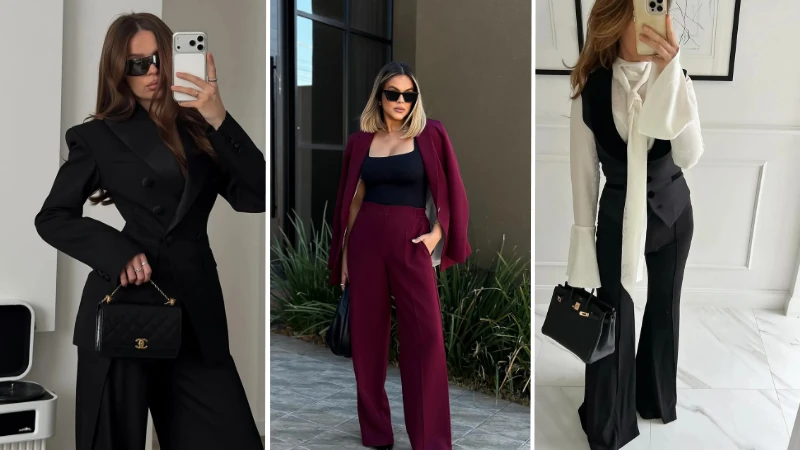
Gorgeous 15+ Office Siren Outfits You Need to Try

There’s a narrow corridor between blending into the gray upholstery and landing yourself a casual chat with HR about “professionalism.” Office siren outfits promise that elusive middle ground—a way to project authority and allure without telegraphing that you’re trying too hard in either direction. But in environments where a woman’s hemline gets more attention than her quarterly results, knowing which pieces actually hold their weight requires more than a mood board.
The office siren sits somewhere between a classy business outfit and the more overtly trendy corporate baddie vibe.
22 Office Siren Outfits That Actually Work in Conservative Offices
You’ve seen the extremes — frumpy potato sacks and looks that belong at a lounge, not a quarterly review. These 22 outfits exist in the space between: calibrated doses of allure that read as intentional, not inappropriate. I’ve pulled them from what I see on real women in banking, law, and corporate roles. No fantasy styling, just pieces you can actually wear for eight hours and still feel like yourself.
The Unbloused Blazer
You don’t need a blouse. When the tailoring is right, a blazer worn directly against skin creates a clean, uninterrupted line that’s commanding, not scandalous. Keep the neckline moderate, the fabric substantial, and the accessories minimal. These six looks prove the technique.
The Bare Black Blazer

A tailored black wool‑blend blazer and straight‑leg trousers with no layer underneath. A slim patent‑leather pump adds a glossy note, while the structured handbag and oversized acetate sunglasses suggest you’ve just selected a merger. Gold earrings are the single soft signal. Avoid a visible bra by using fashion tape on the blazer lapels, not your skin, to keep the neckline exactly where you want it. This is the entry point to the blazer‑only strategy.
The Blackout Suit

Black wool‑blend blazer and wide‑leg trousers, again with nothing underneath. Pointed‑toe leather pumps elongate the leg, and the structured shoulder bag sits neatly under the arm. With a wide‑leg silhouette and no top layer, make sure the trousers sit at your true waist — a lower rise breaks the visual line. No belt, no necklace. The tailoring does all the work. This is corporate dressing stripped to its most potent form.
The Relaxed Black Blazer

A looser wool‑blend blazer and trousers replace the sharp shoulder with soft power. The blazer dips lower, so it needs careful taping or a discreet bralette. An oversized black bag and wrap‑around acetate sunglasses add urban edge. A single silver ring is the only jewelry. The deeper the V, the more critical your posture: stand tall and never fiddle with the lapels, or you’ll undermine the entire look.
The Cocoa Blazer Gamble

Oversized dark‑brown wool blazer and matching wide‑leg trousers, worn bare. Burgundy pointed‑toe pumps are the only color break, drawing the eye down. Oversized black sunglasses and gold earrings finish the look. Warm brown suits can read as dated ’70s revival unless the shoulder fit is exact — let the rest drape, but get that shoulder line perfect. Wear this when you’ve already earned the room’s attention.
The Unbloused White Suit

A stark white wool‑blend blazer and wide‑leg trousers, with no fabric between you and the jacket. Black accessories — an oversized leather clutch, pumps, and sunglasses — create sharp contrast. Small gold earrings are the only warmth. White fabric shows every wrinkle and trace of foundation; keep a lint roller and blotting papers in your clutch. Reserve this for days you’ll be seated more than sprinting between buildings.
The Bare Pink Suit

Tailored pink crepe blazer and slim‑fit crepe trousers, worn with nothing underneath and pointed‑toe clear PVC heels. The clear shoe is a gamble that works only because the suit is so severely covered. Clear heels read as a fashion gimmick unless the rest of the look is structured to the point of severity — save them for full‑suit moments like this. A simple gold watch is all the jewelry this needs.
The Androgynous Authority
Sometimes the strongest siren signal isn’t skin — it’s swagger. These looks borrow from menswear tailoring to create a competence‑first allure that’s impossible to dismiss. Vests, ties, and sharp lines prove you can project magnetism without a single curve on display.
The Red Waistcoat Suit

A tailored red crepe waistcoat and matching wide‑leg trousers — no jacket needed. Worn over bare skin or a thin silk camisole, the waistcoat becomes the full statement. Black accessories (oversized sunglasses, a leather handbag, gold jewelry) anchor the bold color. If the waistcoat pulls across the bust when buttoned, size up and have a tailor nip the waist; a gaping button is the first thing anyone notices.
The Black‑Op‑White Vest

by @mint_label_
A loose silk white blouse under a tailored black wool‑blend waistcoat, paired with flared black crepe trousers. Softness from the blouse, structure from the vest. A structured black handbag keeps the monochrome intentional. Let the collar and cuffs spill naturally — if you tuck everything too tightly, the look shifts from sensual to sterile. This is a modern alternative to the blazer for heated boardrooms.
The Pink Power Three‑Piece

A relaxed light‑pink polyester‑blend blazer over a tailored pink vest and wide‑leg trousers. Monochromatic and soft in hue, but the three‑piece architecture reads pure business. Black accessories (a structured handbag, oversized sunglasses) provide the necessary grounding. When you wear a pastel three‑piece, keep the shoes and bag dark so you don’t drift into bridesmaid territory. Gold jewelry warms up the cool pink.
The Waistcoat & Sneakers Combo

A black wool‑blend blazer, slim‑fit waistcoat, and wide‑leg trousers, broken by chunky white leather sneakers. A pearl choker and oversized black sunglasses pull the street‑wear element back to sophistication. Sneakers work here only because the suiting is sharp and the vest is properly buttoned — swap the trousers for joggers and the office‑read disappears. This is for the woman who walks to work and refuses to change her shoes.
The Brown Suit with a Tie

An oversized brown wool‑blend blazer and wide‑leg trousers, with a crisp white cotton button‑up and a grey silk necktie. Yellow‑tinted round sunglasses and a black handbag add dark‑academia weight. A tie on a woman reads as intentional costume unless you commit fully — wear it straight and never wink. If your office is conservative, swap the yellow lenses for clear glass. This leans on business attire conventions and bends them just enough.
The Sculpted Silhouette
The right inner piece can transform a basic suit into a magnetic presence. These outfits use bodysuits, corsets, and mesh layers to create a clean, curve‑aware line under the blazer — without exposing anything that would raise HR eyebrows. The magic is in the fit of the foundation.
The Charcoal & Burgundy Bodysuit

A charcoal‑grey wool blazer and slim‑fit trousers with a light‑grey jersey bodysuit underneath. The bodysuit guarantees a crease‑free tuck, so the line from neck to waist is uninterrupted. Burgundy pumps and a matching handbag inject a dark, romantic contrast. A bodysuit should be taut but not digging — if you see horizontal pulling at the shoulders, size up; a too‑small bodysuit will ride up all day. Gold necklace and black sunglasses complete the look.
The Burgundy Bodysuit Suit

Tailored burgundy crepe blazer and wide‑leg trousers, with a black jersey bodysuit forming a smooth second skin. A slouchy black handbag and rectangular acetate sunglasses keep the mood relaxed, not rigid. Bodysuits with snap closures can be tricky in a marathon meeting — choose one with a thong bottom to minimize lines, and test the snaps before you commit to a full day. A choker‑length gold necklace adds a subtle gleam.
The Mauve Bodysuit Look

An oversized mauve wool‑blend blazer and wide‑leg trousers with a form‑fitting black jersey bodysuit. Burgundy pointed‑toe heels add a darker anchor. A structured black handbag and cat‑eye sunglasses keep the lines strong. Mauve can wash out cool skin tones; if you’re fair, break it with a darker shoe and bag exactly as shown here. This is a softer entry point to the bodysuit strategy without sacrificing authority.
The Hot‑Pink & Black Top Combo

A tailored hot‑pink polyester blazer and straight‑leg trousers, worn with a slim‑fit black jersey top — likely a bodysuit or a very smooth knit. The contrast is immediate and confident. A small black crossbody bag and gold rings are the only additions. When a color is this loud, treat it like a monochrome and avoid introducing a third hue; let the black do all the anchoring. This outfit says you’re the most self‑assured person in the budget meeting.
The Light Blue Corset Suit

by @mrshanbrown
A pale blue oversized polyester‑blend blazer and wide‑leg trousers, with a white satin corset top peeking out. The corset shapes the torso without visible boning, and the satin catches light softly. White pumps, a cream beaded handbag, and a gold watch keep the palette airy. A corset top should fasten snugly, not tightly — if you can’t sit comfortably for a hour, it’s a costume, not an office outfit. This is peak modern‑feminine power dressing for blazer outfits that refuse to play it safe.
The Mesh Turtleneck Under Suit

A structured black wool‑blend blazer and wide‑leg trousers get a sensual edge from a slim‑fit black mesh turtleneck. Texture does the heavy lifting in this all‑black look. A waist‑cinching black leather belt defines the middle, while black handbag and gold earrings finish. Mesh is office‑appropriate only if it’s tightly knit and fully opaque at the bust and arms — hold it up to a window before wearing it to work. This works for creative workplaces that still demand polish.
Quiet Authority
When the suit is neutral, the cut is everything. These looks don’t rely on skin or statement pieces. They project professional charisma through proportion, fabric, and an unwavering commitment to fit. Quiet doesn’t mean forgettable; it means you’re so intentional that people pay attention without knowing why.
The Preppy Power Layering

A slim‑fit black knit layered over a light‑blue cotton button‑down, half‑tucked into wide‑leg light‑blue trousers. A white leather belt and black pointed‑toe heels pull the mix together, while a leather work tote in black anchors it for the office. When layering a sweater over a button‑down, choose a fine‑gauge knit so the collar and cuffs lie flat without bulking. This is smart‑casual siren for days you need to look put‑together but not overdressed.
The Burgundy Boardroom Standard

by @mint_label_
A tailored burgundy wool‑blend blazer and wide‑leg trousers with a crisp white cotton button‑down. Gold earrings are the sole jewelry. No handbag, no belt — just excellent fabric and a commanding color. A burgundy suit reads as executive‑level; wearing it to a client pitch signals you’re the decision maker without saying a word. This is a masterclass in how corporate outfits can be both rigorous and magnetic.
The Beige‑Black Equation

A tailored beige synthetic‑blend blazer and wide‑leg trousers, worn with a slim‑fit black jersey top. Black accessories — a leather handbag, sunglasses, and gold earrings — create a high‑contrast minimalist statement. Beige can look cheap if the fabric has too much sheen; look for a matte finish with enough weight to hold a crease. This is a summer‑weight power suit that moves between business‑casual and formal offices without missing a beat.
The White Sleeveless Summer Suit

A white tailored crepe sleeveless blazer and loose wide‑leg trousers, pulled together with a black adjustable leather belt. Black boots and a black shoulder bag provide stark contrast. Black sunglasses add a touch of mystery. Sleeveless blazers demand precise armhole tailoring — if the armhole gaps, the entire look loses its authority. Wear this to a summer board meeting when you want to look cooler than everyone else in the room.
The Black Sleeveless Edge

A tailored black polyester‑blend sleeveless blazer and tapered trousers, paired with a simple black jersey tank. A dark‑brown suede handbag and matching heels keep the palette rich rather than flat, while a black belt and gold watch add structure. Tapered trousers can shorten the leg visually; counter that with a pointed‑toe heel in a similar tone to lengthen the line. This is how you do summer power dressing without baring a single shoulder.
The Double Standard of the Office Siren: What No One Tells You
The Executive Bias: A man in a sharp suit walks into a meeting and gets labeled ambitious; you walk in wearing a body-skimming sheath and suddenly you’re a topic. That double standard isn’t just whispered—it’s baked into how workwear magnetism is read. Your corporate outfits get policed because allure on a woman’s body is still mistaken for a lack of seriousness, while his tailoring is seen as a power play.
The Competence Trade-off: Research consistently shows attractive women in professional settings are rated less competent unless they signal authority overtly. Most guides tell you to neutralize your shape. I’d argue the real fix is counterbalance: pair one form-fitting piece—a silk knit top—with unmistakably authoritative accessories, like a heavy-link necklace or a structured folio, so your professional charisma isn’t questioned because you forced them to see command first.
Neutralizing the Backhand: When someone says, “Wow, brave outfit today,” the amateur move is to explain yourself. The professional move: redirect. “Thanks, the Q3 projections are what I’m really focused on.” You acknowledge without defending, and you shift the conversation to your work, not your hemline.
When It Works For You: Heightened corporate allure does have an utility. In a high-stakes internal presentation where you’re already a known quantity, walking in with deliberate presence commands the room before you’ve spoken. Your reputation for competence is established; the outfit just frames the authority you already own.
The Quiet Resentment Factor: If you’re the first in your department to push the envelope, you become the de facto trendsetter—and a target for colleagues who feel shown up. Don’t dim your light, but document your wins visibly in group settings so your style stays a footnote, not the headline. Resentment fades when results talk louder.
Reading the Room Without Losing Your Edge
Microclimates Matter: The same business casual look that makes you a star in your creative team’s all-hands can make your CFO avoid eye contact. Every office has its own unspoken dress temperature. Before you get dressed, map your stakeholder list: who’s in the room today, and what’s their tolerance for deviation from the standard uniform?
The Client Meeting Litmus Test: A reliable rule: if you’d hesitate to wear it to a pitch with an old-school insurance client, save it for an internally focused day. Your workwear magnetism shouldn’t be the thing a new prospect remembers. When you’re building trust from scratch, let your expertise set the tone, and keep your silhouette one notch quieter.
Read the Visible Hierarchy: Scan how women above Director level dress. If not one of them wears anything but neutrals and relaxed cuts, you have intelligence, not a permission slip. It doesn’t mean you can’t test the waters; it means you adjust the dial gradually, noting where the invisible line sits.
The High-Low Formula: A silk charmeuse blouse (pure siren) with tailored wool trousers (pure boardroom) signals “I know what I’m doing” even in the most buttoned-up settings. You don’t have to choose between personality and propriety. You just need one element that reads alluring and another that reads unequivocally authoritative.
The Third-Piece Reset: If you misread the room, a longline blazer, a structured leather tote, or a block-heel pump can rebalance the entire outfit on the fly. That third piece isn’t just styling—it’s your emergency off-switch for too much allure, and it works in under a minute.
The Body Language That Makes or Breaks Your Office Siren Look
Stride Control: A pencil skirt shortens your natural gait if you let it. Short, hurried steps telegraph discomfort, not authority. Before you wear it to work, practice a deliberate heel-ball-toe walk in front of a mirror until the movement looks unhurried and owns the space. Your shoes for work should feel grounded, not precarious.
Kill the Adjustment Loop: Tugging at a hem, pulling up a neckline, or re-crossing your legs every few minutes broadcasts anxiety about your outfit to everyone in the room. Every fidget undercuts the corporate allure you’re projecting. Before you leave the house, do a sit-stand-reach test; if you can’t go 30 minutes without touching your clothes, the fit is wrong, not your confidence.
Eye Contact Calibration: When you’re wearing a wrap dress or a form-fitting knit, holding eye contact for a beat longer than feels natural actually defuses sexual interpretation. It signals that you’re present as a professional, not an image to be scanned. Professional charisma is as much about where you look as what you wear.
The Ankle-Tuck Rule: In any above-the-knee hem, crossing your legs tightly at the knee is a wardrobe malfunction waiting to happen, and it makes you look rigid. Learn the ankle-tuck: cross at the ankles and angle both knees to one side. It reads polished and keeps your silhouette composed without the risk.
The Power Pause: When you enter a room, pause just inside the door for two seconds. Scan the space, settle your shoulders, then move. That brief stillness frames your outfit as a deliberate presence, not a provocation—and it gives you a moment to confirm you read the room correctly.
When the Dress Code Isn’t the Problem, the Culture Is
Document Everything: Many companies have gender-neutral business dress code policies on paper but informal policing that targets women who embrace their shape. Every time a manager or colleague comments on your attire, write down the date, time, and exactly what was said. A pattern is leverage; a stray remark is noise.
Bias vs. Feedback: There’s a difference between “That skirt doesn’t meet our client-facing presentation standard” and “That outfit is distracting.” If the criticism mentions “fit” or “distraction” without citing a specific, objective rule, you’re likely facing body-based bias, not a style misstep. Push back on vague words—ask for the written policy they’re referencing.
Scripts That Shut It Down: When a colleague says your look is “a lot for the office,” reply calmly: “I’m comfortable, and my work speaks for itself.” You’re not defending your choices; you’re reframing the conversation around your output. Most people can’t argue with that without revealing their own discomfort.
Your Legal Footing: Federal law doesn’t prohibit strict dress codes, but selective enforcement based on gender, race, or body type can constitute discrimination. If you notice a pattern, consult an employment attorney or your employee resource group before you’re the one being called into HR. Knowing your rights is the difference between feeling targeted and being protected.
The Solidarity Strategy: If multiple women notice the same double standard, address it collectively—not as a complaint about outfits, but as a conversation about culture. “Several of us have received appearance-focused feedback that doesn’t align with the written policy. Can we clarify the standards?” A group voice is harder to dismiss and protects you from getting singled out.
The 5-Minute Siren Audit: Does Your Wardrobe Pass the Test?
The Three-Cue Check: Run each piece through three quick questions before you leave the house: (1) Does this demand I adjust it constantly? (2) Could I deliver a presentation without thinking about my clothes? (3) Would I confidently wear this to lunch with a female mentor I respect deeply? If you answer no to any, it’s not siren—it’s a gamble.
Question three is the sleeper. It filters out outfits that seek attention over respect. If you can’t picture your mentor nodding in approval, the room will sense it before you speak.
The Camera Test: Ask a friend to photograph you sitting, standing, and reaching for a high shelf. Areas of tension—visible bra lines, gaping buttons, riding hems—are the details HR registers before your charisma.
What feels like a subtle tug in the mirror becomes obvious in a still image. A side seam straining over your hip or a blouse pulling at the bust undoes the authority you’ve built in an instant.
The Silhouette Swap: Identify the one alluring element (a slit, a cowl neck, a curve-skimming knit) and offset it with an equally strong authority piece—a structured coat, a substantial watch, a bag that could hold a laptop and a presence.
Balance isn’t about toning down the allure; it’s about matching its volume. A silk charmeuse blouse reads as intentional when paired with a sharp-shouldered blazer, not a cardigan that apologizes.
The Elevator Pitch Reframe: Describe your outfit in your head the way you’d describe a colleague you’re recommending for promotion: “She looks composed, intentional, and approachable.” If the words “sexy” or “loud” sneak in, recalibrate.
Your inner monologue is a truth detector. When you lead with “hot” rather than “sharp,” your clothes are announcing a different agenda. Pivot until the adjectives land on leadership, not lounge.
The Yes Folder: Every time an outfit nails the balance, snap a photo and save it to a dedicated album on your phone. Before a critical day, scroll through your wins instead of inventing a new combination from scratch.
On mornings when doubt creeps in, a five-slide gallery of you looking authoritative in the same conference room you’re about to enter is more powerful than any fashion advice. Keep it on your home screen.
FAQ
Can I wear a bodycon dress as an office siren outfit without HR calling me?
A thick ponte knit with a knee-length hem and a blazer that hits at your hip bone changes the entire equation. Avoid anything with elastane content over 5 percent, sheer panels, or a mini silhouette—HR sees visible tension and skin, not intent. If you’d wear it to a friend’s birthday dinner, it’s probably not Tuesday’s boardroom material.
How do I know if my office siren outfit is too tight in all the wrong places?
Use the whiteboard test: reach both arms overhead as if writing on a tall surface. If fabric pulls across the bust, buttons gape, or the waistband rolls over, size up. Tailoring a larger size to fit your waist always looks more refined than stretching a smaller one to its limit.
Will wearing office siren outfits make my female colleagues dislike me?
Only if you’re seen as competing rather than collaborating. Starve the threat by sharing credit publicly—mention a woman’s smart idea in a meeting, invite a junior colleague to a project—so that your outfit registers as personal style, not a power play. Envy rarely starts with fabric; it starts with perceived threat.
How do I respond when someone says my outfit is “distracting”?
Stay calm and say, “I’m comfortable, and my work has been well received—can you point to a specific policy this violates?” The word “distracting” is a subjective weapon; you force it back into objective territory by asking for a rule, not a feeling. If they can’t cite a code, you’ve just made their bias visible without raising your voice.
Is it possible to be an office siren if I’m over 50?
Absolutely, and often with less scrutiny because age grants unspoken authority. Lean into luxurious fabrics—a silk crepe wrap blouse with draping at the neck—and skip micro-trends. Diane Lockhart in The Good Fight is the blueprint, not a twenty-something influencer.
What shoes make an office siren outfit cross into “unprofessional” territory?
Any heel above 3.5 inches that wobbles, lucite details, or a platform sole heavier than half an inch. A sleek pointed-toe pump in dark patent or suede keeps the look grounded in office reality. If you can’t walk a city block without breaking your cadence, they don’t belong in a conference room.
How do I keep my office siren look from aging me into a “real housewives” stereotype?
Avoid head-to-toe shine, animal print mixed with heavy jewelry, and a blowout that’s been shellacked to your head. Choose one sensual element—like a bias-cut skirt or a deep-V wrap—and pair it with quiet grooming: a low bun, neutral nails, matte lips. The siren reads aspirational, not camp, when the volume stays in the clothes, not the accessories.