Classic 10+ Lawyer Outfit Ideas That Mean Business

Search for a “lawyer outfit” online and you’ll find plenty of boardroom editorial spreads. The blazers are unstructured, the heels are six inches, and nobody seems to carry anything heavier than a cell phone. That imagery isn’t just aspirational — it’s misleading. It ignores the actual dress codes, the double standards that still penalize women for looking either too severe or too soft, and the physical grind of hours on your feet in a jury box or sprinting between courthouses in July. This guide closes that gap, delivering actionable, field-tested knowledge for what actually works.
Understanding these courtroom-specific nuances starts with mastering the broader business professional standards that underpin court attire, and extends to the corporate outfit strategies that save time without sacrificing authority.
19 Lawyer Outfit Formulas That Stand Up in Court (and Everywhere Else)
Most lawyer outfit advice treats you like either a fashion victim or a mannequin. These 19 looks are different. They’re built for the reality of legal practice: long hours under fluorescent lights, last-minute client calls, and security lines that eat your morning. I’ve grouped them by setting so you can grab the right level of authority without second-guessing. Whether you’re in front of a judge or just trying to survive a Tuesday, there’s a formula here that works.
Courtroom Authority
These outfits are built for the highest-stakes environments: oral arguments, jury trials, and appearances before a judge who remembers everything. They stick to dark neutrals, structured cuts, and minimal shine — because business formal here isn’t a suggestion, it’s a survival tool. Every piece was chosen to keep the focus on your argument, not your hemline.
The Black Tweed Suit

A tailored black tweed jacket over wide-leg crepe trousers gives you texture without the shine. Slim black suede heels and a compact crossbody bag keep the look anchored. Tweed holds heat and wrinkles permanently if you sweat into it — save it for air-conditioned courthouses or winter appearances. Black acetate sunglasses add polish for the commute. This suit does the kind of quiet signaling that makes a jury trust you without knowing why.
The High-Contrast Skirt Suit

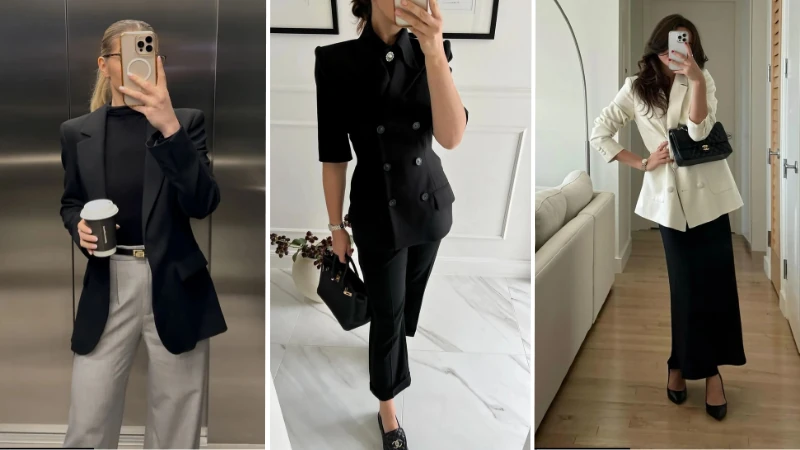
A relaxed white wool-blend blazer sits over a black straight silk skirt — the black-and-white contrast is intentional, not accidental. Black heels and a black handbag keep the palette disciplined. A gold watch is the only jewelry you need; it adds just enough warmth without becoming a distraction. In a conservative district, a skirt suit like this still carries more unspoken authority than the most expensive pantsuit. This is the outfit you wear when you want to look like you already argued twice before breakfast.
The Pleated Satin Skirt Suit

A black wool-blend blazer and slim black knit top anchor a dramatic A-line satin pleated skirt. The texture shift — matte on top, subtle sheen below — forces the eye downward, which keeps the jury focused on your face. Black leather accessories (handbag, belt, pumps) unify the dark palette, while a silver necklace and black sunglasses add a controlled edge. Pleated satin can catch on courtroom chairs; do a sit-test at home before you commit. This is a skirt suit for the lawyer who finds traditional pencil skirts too predictable.
The Beige Overcoat Silhouette

An oversized beige blazer, a relaxed white cotton button-down, and grey wide-leg trousers form a neutral column that reads authoritative but not aggressive. Black loafers and a structured top-handle bag keep the look grounded. A slim black belt defines the waist without cinching. Loafers are acceptable in court only if they’re structured, unscuffed, and paired with a full suit — otherwise they read as too casual. This outfit is a smart choice for a long day when you need to stand and move without tugging at anything.
The Charcoal Authority Set

by @mint_label_
A structured black wool-blend blazer meets wide-leg grey crepe trousers for a combination that says “partner track” more than “first-year associate.” Black pointed-toe suede heels and a structured black handbag add height and polish. Silver earrings and a slim silver watch are the only shine you need. Mixing black and charcoal in a single outfit works better than a full black suit in front of a family-court judge, who may read all-black as too severe. This look is quiet luxury without the quiet part.
The Burgundy Statement Suit

by @mint_label_
A tailored burgundy wool-blend blazer and matching slim-fit trousers paired with a crisp white shirt. That’s the whole outfit — and it’s enough. No extra accessories are needed; the color itself carries the weight. Burgundy reads as authoritative but warmer than black, making it a strategic choice for client-facing hearings where you need to seem firm but approachable. Save this for days when you’re the lead attorney and want to be remembered without being quoted for the wrong reasons.
The Minimalist Black Suit With a Brooch

by @mint_label_
A tailored black jacket and straight-leg trousers, black loafers, and a structured black handbag form a seamless column. A silver brooch on the lapel and a two-tone watch introduce micro-doses of character without breaking the spell. A brooch is the one piece of jewelry that a jury won’t register as flashy — but it signals care to a judge who notices details. Skip the necklace; the brooch is doing the work. This is the kind of black suit you keep on rotation when you need to look impeccable but invisible at the same time.
Office Power Moves
The office floor lets you flex a little more personality. Waistcoats, polo shirts, and a well-chosen denim maxi skirt can all work — if you know the unwritten rules. These outfits project authority without looking like you’re auditioning for partner during lunch. They’re designed to transition from internal meetings to client pitches without a change.
The Black Three-Piece Suit

by @pauline__dt
A relaxed black wool-blend blazer, a matching tailored waistcoat, and wide-leg trousers create a silhouette that borrows from menswear without sacrificing fit. A black clutch and oversized black sunglasses add a downtown edge. Reserve a three-piece for internal firm meetings or client pitches where you already have credibility; in court, a waistcoat can read as costume-y. The waistcoat gives you a polished profile when you take off the blazer — for more ways to wear one, a suit vest can anchor a dozen office looks.
The Grey Androgynous Three-Piece

An oversized dark grey wool-blend blazer, matching waistcoat, and wide-leg trousers over a white button-down — the proportions are deliberately borrowed from the boys’ club, but the fit is yours. Black leather handbag and sunglasses, plus gold earrings, add a slight softener. When you wear a tie-less three-piece, keep the shirt collar crisp and the blazer buttoned when standing; open waistcoat buttons look sloppy fast. This is the look for a big presentation to a board where you need to project authority before you speak.
The Tie-Suit Formula

by @mint_label_
A tailored black blazer, a white cotton button-down with a slim black silk tie, and straight-leg trousers. Black pumps finish the look. The tie is the focal point — it says you’re serious, maybe a little intimidating, and you don’t need to smile to make your point. Knot the tie neatly and keep it at the collarbone level; a dangling tie looks like a costume piece. Consider this an advanced pantsuit styling move for days when you want to occupy space in a room full of senior partners who still underestimate you.
The Earth-Toned Operator

by @mint_label_
A tailored brown wool-blend blazer, a slim white jersey top, and relaxed beige cotton trousers shift the palette away from corporate black without losing formality. A silver watch is the only accessory. Brown reads as approachable in a deposition but can seem too casual for a federal appellate argument — know your room. This outfit works because the fabrics — wool-blend, cotton, and jersey — all hold their shape after hours of sitting, but they don’t wrinkle like pure linen. It’s a smart rotation for days when you need to seem trustworthy, not combative.
The Polo-Under-Blazer Gambit

A relaxed grey wool-blend blazer and wide-leg tan cotton-blend trousers get a sporty jolt from a white ribbed-knit polo. A slim dark brown belt and pointed-toe tan pumps pull the tones together, while a taupe shoulder bag and a gold watch lean into the old-money aesthetic. Polo shirts under a blazer work only if the knit is fine-gauge and the collar stays flat — chunky polos add bulk and ruin the line. This is a confident choice for a casual office day or a client lunch where a full suit would feel overdressed.
The Sleeveless Precision

A relaxed cream crepe sleeveless top paired with black straight-leg tailored trousers. Beige pointed-toe flats keep the palette soft, and a chunky gold bracelet is the lone statement. If you wear a sleeveless top in a client meeting, carry a blazer in your bag — bare arms are still a gamble in certain corners of the legal world. This outfit works for an internal office day where the thermostat is set to “unpredictable” and you need to move between desks and document rooms without overheating.
The Denim Maxi Skirt Gambit

A slim-fit blue cotton button-down tucked into a high-waisted cream denim maxi skirt, cinched with a slim black leather belt. Black suede pumps and a black leather tote ground the look, while gold jewelry adds preppy polish. A denim maxi skirt in the office only works if it’s dark-wash or cream, full-length, and paired with a button-down — any fading or whiskering and you’re in weekend territory. This is the outfit for the female lawyer who knows the firm’s unwritten dress code well enough to bend it without breaking.
The Black Turtleneck Minimalist

A tailored black wool-blend blazer, a slim black fine-knit turtleneck, and grey wide-leg trousers. A black leather belt and tortoiseshell glasses add sharp, unfussy character. A turtleneck under a blazer is the most polished no-tie option — but it must be thin enough to lie flat, or you’ll spend the day adjusting it. This is the kind of classic work outfit you reach for on a Tuesday when you have back-to-back meetings and no time to think about what you put on. It’s a reliable formula, not a fashion risk.
The Smart-Casual Edit
For bar association dinners, casual Fridays, or networking events where a full suit would read wrong. These looks use blazer outfits and structured separates to keep you professional while letting you breathe. The goal is “sharp, not stiff.”
The Layered Knit Intellectual

by @verena.lr
A white cotton button-down under a dark grey oversized knit sweater, paired with grey relaxed wool-blend wide-leg trousers. A black leather belt and black handbag keep it crisp, while grey suede ankle boots bring the look to full stop. Layering a sweater over a button-down is a classic academic look — but avoid bulk by leaving the collar and cuffs neatly exposed and the sweater unbuttoned at the hem. This is the outfit you wear to a bar association dinner or a casual firm event where you still want to signal “thinking deeply about torts.”
The Beige Academia Statement

by @livia_auer
An oversized beige wool-blend blazer and matching wide-leg trousers, a white-and-blue striped button-down, and a dark brown silk tie. Black pointed-toe heels and a structured black handbag add precision. When you wear a tie without a suit jacket, keep the blazer hanging off your chair; the tie alone with trousers can read as “trying too hard” without the context of the full outfit. This is a smart-casual look for a networking mixer where you want to be memorable but not in a costume way.
The Tie-and-Boots Equation

by @mint_label_
A relaxed white cotton button-down, a slim black silk tie, and high-waisted black crepe trousers. Fitted black leather boots give the outfit its spine. Boots in a professional setting are only appropriate if they’re sleek, polished, and worn with trousers that break at the ankle — chunky boots sabotage the line. This outfit doesn’t need a blazer; the tie and trousers carry enough structure. Wear it to a gallery opening with colleagues or a late-night strategy session where you want to feel sharp but not corporate.
The Monochrome Off-Duty Uniform

A slim black jersey sleeveless top, wide-leg dark grey wool-blend trousers, and a relaxed black knit sweater layered on top. Black leather flats, tote, and belt tie the monochrome together without distracting accessories. When you go all-black in a casual setting, mix textures — here knit, jersey, and wool — to avoid looking like you’re on your way to a funeral. This is a straightforward, comfortable look for a Friday with no client meetings, when you still need to project competence if you run into a partner in the elevator.
The Hidden Hierarchy of Legal Dress Codes
Public Defender vs. BigLaw M&A: The same outfit reads differently depending on who’s looking. A public defender in a visibly expensive suit can alienate a jury that’s already skeptical of the system. A corporate lawyer in anything less than impeccable business professional attire loses client confidence instantly. Approachability and authority trade off in ways most guides ignore.
Federal Circuit Court Culture: Certain conservative federal districts still expect a skirt suit, not because of any written rule but because old-guard judicial culture hasn’t shifted. Walk into oral argument in a pantsuit, and the judge may not say a word—but the subtle credibility cost is real. Knowing the jurisdiction’s unwritten code is a career skill.
Color Hierarchy Beyond Neutrals: Navy signals trust and calm. Charcoal reads precise and unflappable. Black can work but often lands as too aggressive in family court or before certain juries. This isn’t a mood board preference; it’s a strategic choice that affects how your credibility lands in the first thirty seconds.
The Female Partner Calculation: Many women partners deliberately dress a half-step more formally than their male peers to close the credibility gap that research consistently documents. It’s not personal style—it’s an unwritten survival tactic. You’ll notice it once you look: the extra structure in the blazer, the more formal shoe, the absence of any piece that could be labeled “distracted.”
Same Room, Different Purpose: What you wear to a bar association dinner is genuinely judged differently than what you wear to a client pitch. The room is the same, the stakes aren’t. At the pitch, every detail—scuffed heel, visible bra strap, bag that looks tired—gets filed under your attention to detail. At the dinner, slightly softer tailoring signals collegiality without sacrificing authority.
Your Lawyer Outfit Has to Survive More Than a Day
Wool vs. Poly-Blend Reality: A 100% wool suit breathes well—until you’re stuck in a non-air-conditioned rural courthouse for six hours. Then it wrinkles irreversibly. Most style guides push pure wool. I’d argue a high-quality poly-blend often outperforms it in real court conditions, because it sheds creases and handles humidity without looking cheap.
Underarm Marks Are a Career Hazard: Women lawyers routinely avoid entire fabric categories—silk shells, certain light grays—because invisible staining becomes glaringly visible under deposition-room fluorescents. The fix isn’t a different deodorant; it’s choosing tighter-weave cotton or technical underlayers that never betray you by 2pm.
The “Pantyhose or Not” Debate Is Actually a Shoe Issue: Bare legs in court pumps without a reinforced toe box can cause enough friction and discomfort to distract you through an entire morning session. It’s less about outdated etiquette and more about foot mechanics. If you skip tights, the shoe’s interior structure has to work harder—a detail most shoes for work outfits advice misses entirely.
Hidden Pockets That Earn Their Keep: A blazer with hidden pockets that lie flat means you can skip the bag through courthouse security. That saves you ten minutes you’d otherwise spend unpacking and repacking. Male colleagues take this for granted; women’s suiting rarely prioritizes it unless you specifically hunt for it.
Stress Tests Matter: Any outfit you plan to wear to court should pass three checks: sit for 30 minutes, stand and pace for ten, then carry a heavy trial bag for a block. If anything twists, rides up, or exposes a gap, it’s not ready for a deposition, let alone a trial.
What a Jury Actually Sees When You Stand Up
Matte Textures Read Sincere: Trial consultants find that juries associate matte fabrics with honesty and shiny ones with slickness. A subtle satin lapel on your suit might feel elegant to you, but it can register as too polished in front of a jury. Stick to wool crepe, cotton blends, and sueded finishes.
A Trendy Piece Can Backfire: An obviously designer blouse or a current-season shoe pulls jury attention away from your argument and onto your choices. Research consistently shows jurors rate female attorneys lower on competence when they notice the outfit. The goal is to be so appropriately dressed that no one remembers a single item.
Subdued Jewelry Isn’t Prudish: No movement, no noise. That’s not about modesty—it’s about keeping the jury’s eyes on your face and the evidence screen, not your jangling bracelets or oversized necklace. Even a watch with a reflective bezel can catch the light and distract during a crucial cross-examination.
Rural Jury vs. Urban Jury: A rural jury pool might trust a soft cardigan-jacket combination more than a structured suit, because it reads as genuine rather than formidable. An urban jury expects the suit. You’ll hear “dress for the courtroom” in most articles. The better move is to dress for the jury you actually have—and that varies by county.
The Narrow Window of Softness: Studies show jurors find female attorneys more persuasive in slightly softer silhouettes—think a set-in waist or a gentle drape instead of severe tailoring. But lean too soft, and authority drops fast. The window is narrow, and finding it means testing your corporate outfits for women on someone who’ll give you honest feedback about how you’re perceived.
Building a Rotation That Keeps You Out of Dry Cleaning Hell
Spot-Cleaning Extends Wear Cycles: A wool-blend blazer can go four days between cleanings if you spot-clean smudges immediately and air it out. The real secret most women miss: the lining traps odor more than the wool. Look for cupro or Bemberg linings; they breathe and release smells overnight instead of holding them.
Shoe Rotation Matters More Than Suit Rotation: Letting shoes rest 48 hours between wears prevents foot pain and keeps leather from aging prematurely. Scuffed, misshapen shoes make even a pristine suit look careless. Rotate two or three pairs of work shoes and you’ll get years more life out of each.
The Underlayer System Nobody Teaches You: A thin, breathable camisole worn under blouses absorbs sweat before it reaches your shirt, so you can steam the blouse and re-wear it midweek. It also kills visible bra lines without special lingerie. Pick one in a quick-dry fabric—cotton takes too long and stays damp.
A Capsule Based on Your Real Schedule: Most business attire advice shows you a Pinterest board. Instead, count your actual court and meeting days. Three neutral bottoms (navy pant, grey skirt, charcoal trouser) and five interchangeable tops will cover a full rotation without decision fatigue. You cut dry cleaning bills nearly in half and stop staring at your closet at 6am.
Bag Rotation Sends a Signal: A scuff-free bag with clean lines isn’t about luxury—it’s about signaling that you notice details. Rotate between two workhorse bags, condition the leather quarterly, and you’ll project steadiness without ever saying a word.
Your Lawyer Outfit Emergency Kit: 5 Desk Staples You Can’t Afford to Miss
Fashion tape strips in two strengths: Keep a roll of clear, medical-grade double-stick tape and a roll of fabric-specific garment tape.
The medical-grade version handles silk blouses that gap at the bust when you sit — it holds without puckering. The garment tape is for hems that betray you on a stairwell. I learned the hard way that the cheap drugstore stuff leaves a residue that dry cleaning won’t touch.
A travel-sized instant fabric de-wrinkler spray with a neutral scent: Store it next to your keyboard, not in a bag you’ll forget.
Sprays that smell like lavender or “fresh linen” announce exactly what you’re hiding. Look for one that dries scentless — the point is to release creases, not perfume the bench. Downy Wrinkle Releaser works but the floral version is too strong; the unscented “Light” formula is the one you want.
Blister gel cushions in a shade that matches your skin tone: The kind that blend in, not the fabric bandages with adhesive that rolls up inside a pump.
Apply them preventatively on your pinky toes and heels before you leave the house, not after the damage starts. The clear hydrogel ones (like Compeed) are invisible under sheer tights and stay put for twelve hours. A blister by 10 a.m. doesn’t just hurt — it changes your stride, and the jury notices when you’re favoring one foot.
A single pair of opaque sheer-to-waist tights in your exact skin shade: Buy two pairs and sacrifice one to your desk drawer.
This is for the day you snag a fresh pair on the courthouse door’s edge or discover a runner ten minutes before oral argument. Opaque sheer-to-waist means no control-top line cutting into your ribs, no shine, and enough pigment to cover the snag you didn’t see. Match the color to your inner wrist, not the back of your hand.
A magnetic name badge holder alternative: Not for badges — for wrap-style tops that decide to shift under a blazer.
A pair of small, strong magnets with a smooth backing can tame a crossover neckline that gapes when you lean forward to take notes. Sandwich the fabric between the magnets on the inside, and the closure is invisible. It holds without puncturing the material, which is more than you can say for safety pins. Your dry cleaner will thank you.
FAQ
Can I wear pants to court as a woman?
Yes, in nearly every U.S. jurisdiction. But “pants” means full-length, pressed trousers that match a blazer — not a mismatched separates look that reads as business casual. In some older federal circuits, a skirt suit is still the safer bet for oral arguments, so check the local practice before you assume.
Are open-toed shoes ever okay for a female lawyer?
Never in court, client meetings, or anywhere partners might see you. Even in a casual office, bare toes undercut the authority you need to project. Closed-toe pumps or low-heel loafers are the only reliable choices — you can find work-appropriate shoes that don’t look orthopedic.
What should I wear to a law firm interview in the summer?
A lightweight wool suit in a light neutral like stone, with a shell top underneath, and the blazer stays on even if your interviewer is in short sleeves. Bare arms are one of the fastest ways to look like you didn’t research the firm. Interview outfit mistakes are avoidable when you remember that you’re dressing for the offer, not the weather.
How do I dress as a summer associate without looking like I’m trying too hard?
Pick an uniform and stick to it: tailored trousers, a blouse, and a blazer you can remove in your own office. Avoid anything that reads “going out” — even at firm socials, your attire is still being evaluated. The goal is to look like you already belong, which means corporate outfits that don’t scream for attention.
Do I have to wear tights with a dress in court?
In most courthouses, yes. Bare legs still carry a risk of being perceived as too casual or even inappropriate, particularly if your judge or region is conservative. A pair of sheer, skin-tone tights is a non-negotiable part of business formal attire in traditional legal settings.
What color suit is the safest for a female attorney?
Navy, always. It signals trustworthiness and approachability without the severity of black. Charcoal is a close second for when you need precision and authority. If you’re building a suit for women collection from scratch, start there and skip brown entirely — it’s too casual for court.
How can I build a lawyer wardrobe on a budget?
Buy two impeccably tailored suits on end-of-season sale rather than five cheap ones that look rumpled by lunch. Consignment stores near legal hubs often carry lightly-worn pieces from women who left practice. And learn which alterations — sleeve shortening, waist suppression — turn an off-the-rack jacket into something that fits like it was made for you.