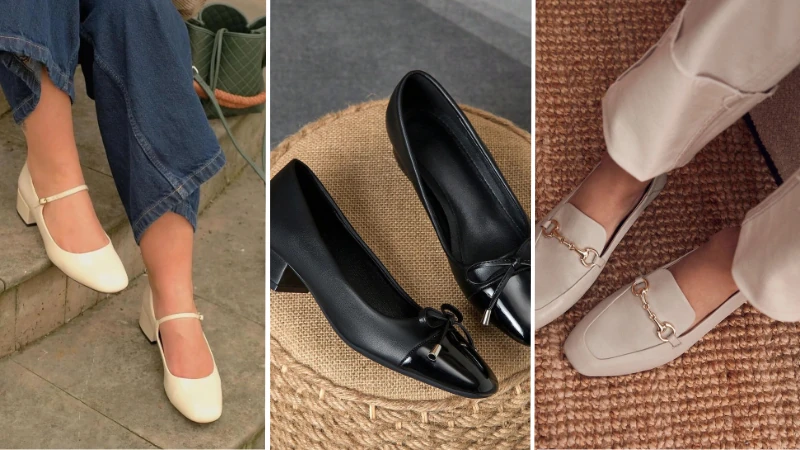
Chic 15+ Work Shoes That Make Your 9-to-5 Stylish

The problem with Work Shoes isn’t finding them. It’s finding pairs that don’t force you to choose between looking polished and walking without pain by lunch. Most brands sell you a lie: style now, support never — or soles that feel great but look like medical devices. That gap isn’t your fault. It’s a design failure. What you actually need are comfortable work shoes for women that don’t sacrifice polish, and office-appropriate work shoes that won’t leave you limping.
If you’re still hunting, start with our roundup of work shoes that earn their keep and the case for why comfortable shoes belong in every professional closet.
19 Work Shoes That Deliver Polish and Proper Support
Most “work shoe” roundups show you shoes that look like they belong on a nurse’s ward or a fashion week runway—neither of which handles a mile-long commute, a standing desk, and an unexpected client dinner. The 19 shoes below bridge that gap. They won’t announce your foot condition to the entire conference room, but they will keep your arches from collapsing and your posture from slouching by 4 p.m. Because the real sitting-to-standing problem isn’t just your outfit—it’s the shoes you chose to anchor it.
The Loafer Roster
Flats don’t have to mean flimsy. The right loafer—or pointed flat—grounds an outfit with just as much authority as a heel, often much more when you factor in the confidence of being completely stable on your feet.
The Gold-Chain Loafer with Plaid Trousers

by Pinterest
This is the shoe for the woman who wants a flat that doesn’t feel like a surrender. The beige leather blends into the palette while the gold chain adds just enough visual weight to balance a straight-leg gray plaid trouser. It slips on and looks like you put thought into it, even if you didn’t. If you plan to wear these sockless with wool trousers, keep a moisture-wicking insole handy. Bare leather on bare skin in an AC-blasted office gets clammy fast, which breaks down the interior lining and leaves you with an unwearable crack along the heel counter.
The Black Loafer with Ribbed Socks

by Pinterest
Visible socks with a tailored loafer is a deliberate styling move that reads “I know what I’m doing” rather than “I forgot my no-show liners.” The cream ribbed crew socks add texture against bare legs and turn a basic black leather loafer into a modern preppy anchor for a skirt or cropped pant. Thin bamboo or merino no-show liners breathe better than cotton and will save your leather interior from sweat stains and squeaking. Cotton traps moisture and accelerates the squeaking sound that announces every single step you take down the hallway.
The Chunky Lug-Sole Loafer

by Pinterest
The classic gold-tone horsebit is a heritage detail that signals good taste, but the chunky lug sole makes this shoe actually walkable for a mile-long commute. It’s a perfect balance of legacy and logistics—polished enough for the conference table, bottom-heavy enough to keep you upright on wet pavement. Lug soles wear down on the outer edge first if you overpronate. Keep a cobbler on speed dial; replacing the rubber sole early salvages the upper for another two seasons of hard wear.
The Polished Ballet Flat

by Pinterest
A glossy black patent ballet flat with a rounded toe and that tiny bow is the quickest way to make a pair of work dresses feel intentionally grounded rather than just “dressed up.” The high-shine finish protects against minor splashes and gives it a structured look that cloth flats lack. Ballet flats with zero arch support will flatten your feet over time. If you can fold the shoe in half and toss it in your bag, it’s not stabilizing your gait; the ache will travel right up to your lower back by the afternoon.
The Patent Bow Loafer

by Pinterest
This is what you wear when you want a loafer but need a heel. The low block heel gives you just enough lift to balance wide-leg trousers, while the satin bow softens the high-shine patent. It strikes the exact right note for client-facing meetings where you want to look meticulous but not intimidating. The Achilles’ heel of patent leather is capping—a plastic coating that can crack. Store these with shoe trees and keep them away from extreme heat to prevent the gloss from spider-webbing into a mess that no amount of polish can fix.
The Cream Leather Loafer

by Pinterest
Cream leather with a gold chain is the neutral strategy that works for every spring or summer stylish work outfit you’ve planned in your head. It looks expensive, even if it isn’t, and the hardware detail catches the light in a way that dresses up simple beige trousers instantly. Prepare for the scuff factor with a matching cream polish stick in your desk. Light leather picks up dark marks from desk chairs and stairwells; a quick buff at lunch keeps them looking fresh all week.
The Taupe Pointed Flat

by Pinterest
Forget the rounded ballet flat—a sharp pointed toe in a soft taupe neutral makes a flat look just as commanding as a heel, arguably more so because you’re striding without pain. It disappears into the outfit, letting your business casual separates do the talking. The pointed toe needs a half-inch of dead space past your longest toe. If your nail beds touch the leather, every downhill step will bruise the nail and warp the tip of the shoe into a misshapen curl.
The Mid-Heel Stance
This is the sweet spot: high enough to pitch the arch correctly, blocky enough to distribute weight, and strapped enough to stay on securely during a brisk walk to the sandwich shop.
The Black Patent Slingback with Cropped Jeans

by Pinterest
Pairing a glossy black pump with a raw-hem dark indigo jean is the uniform of the “I tried, but I didn’t spend a hour on it” boss. Instead of hiding the shoe, the wide crop puts it on a pedestal. The gold buckle ankle strap catches the light just enough to register as an accessory. If the slingback strap doesn’t hug your heel without digging in, walk away. It will not tighten over time; it will just slip off and drive you insane by 11 a.m., no matter how many clear gel stickers you apply.
The High-Sculpture Slingback

by Pinterest
Dark chocolate brown patent in a sculptural heel offers the same authority as black without looking like you matched your shoes to the printer cartridge. The slingback silhouette breathes better than an enclosed pump, and that flash of gold buckle is strategically placed to draw the eye down. A point this sharp will thrust your toes forward; schedule a trial walk on a carpeted floor first. If you feel cramping in the ball of the foot within twenty minutes, you need a wider size, not a longer one.
The Brown Square-Toe Block Heel

by Pinterest
Square toes aren’t stuck in the ’90s—here they look modern and a little bit French. The leather slingback combined with a modest block heel is the low-effort way to look incredibly put-together in a dark brown that pairs well with navy, black, or ivory. It’s the shoe that makes a business casual dress code feel intentional. Don’t trust the stretch myth on a leather slingback. It should fit securely right out of the box; if your ankle is slipping, the friction will blister your heel rather than soften the leather into submission.
The Pointed-Toe Ankle Boot

by Pinterest
For fall or aggressive air conditioning, a sleek dark brown ankle boot with sheer black tights extends your wardrobe into polish territory while hiding the fact that you’re functionally wearing socks. The pointed toe and block heel create a long, lean line under a midi skirt or cropped trousers. Spray these with a silicone-free waterproofer before the first wear. Salt and sidewalk grime will etch the glossy finish permanently if you don’t wipe them down with a damp cloth by the end of the day.
The Cream Mary Jane with Wide-Leg Jeans

by Pinterest
A Mary Jane strap isn’t juvenile when it’s rendered in a cream block heel. Visually anchoring the foot, it makes dark indigo wide-leg jeans feel more structured and deliberate for a creative office. The quilted bucket bag adds a nice textural break from the leather. Watch for the strap scraping your instep. It should sit flush against your foot without gapping; a loose strap will rub holes in your tights and create a raw spot right at the bone, making every step feel like sandpaper.
The Cream Pointed-Toe Ankle Strap

by Pinterest
The ankle strap provides lateral stability that a pump alone can’t offer, which makes this the secret weapon for navigating cobblestone or sloped office parks. It reframes a black floral midi dress as “gallery opening” rather than “garden party,” clean and precise. Never buckle an ankle strap so tight it indents your skin. Swelling increases throughout the day; a sliver of space for a pinky finger means you’ll survive the 4 p.m. pinch without unbuckling under the desk.
The Pointed Pump
A formal pump is required attire in certain rooms, but that doesn’t mean you need to sacrifice your nerve endings. These take the classic silhouette and apply modern mechanics—wider toe boxes, hidden padding, and structured heel counters.
The Sleek Kitten-Heel Pump

by Pinterest
The kitten heel is the spy of the shoe world—it does the work of a formal pump while staying under the radar. Rendered in black with a sharply pointed toe, it looks elegant and understated on a tabletop or on your foot. This is what you wear when the dress code requires serious, but the agenda requires sprinting between floors. Check the toe spring before you buy. A flat-sitting pointed toe can slap the ground loudly; a slight upward curve at the tip ensures a quieter, smoother stride that won’t echo through the lobby.
The Glossy Stiletto Pump

by Pinterest
The boardroom standard isn’t dead, but it demands more than a thin strip of leather under the arch. A glossy black stiletto adds the ceremonial business professional edge that flats can’t replicate for large presentations. The cream backdrop in the shot reminds you: this is a clean, intentional look. Stilettos require an insole swap, not just a gel pad. Pull out the flimsy factory sock liner immediately and drop in a trim-to-fit orthotic with a deep heel cup to stabilize your foot.
The Nude Patent Heel with Anklet

by Pinterest
Nude patent creates a leg-lengthening line that looks seamless with bare legs or sheer hosiery. The addition of a fine gold chain anklet is a subtle, deliberate detail that moves this shoe from “accounts payable” to “fashion director.” It’s polished and clean, grazing the wooden floor softly. Watch for toe cleavage tension. If the vamp is so low your toes spill out and pucker the leather, the shoe is too shallow; that crease will bite into your skin after hour two and leave a lasting red mark.
The Low-Heel Patent Pump

by Pinterest
A glossy black pump with a bow walks the line perfectly between serious and celebratory. The wide-leg trouser skimming over the low heel creates a grounded, steady silhouette that looks completely in control. It’s a minimalist power move: no color, just texture and shape. Swap the flimsy ribbon bow for a sturdy shoe clip if the fabric frays. It extends the life of the shoe and lets you customize the look for under ten dollars at any craft store, saving you from tossing an otherwise fine pair.
The Satin Bow & Lace Pump

by Pinterest
A metallic-tipped lace and satin bow add texture to an otherwise classic black pump, moving it solidly into the “interesting” category without making it loud. It’s primed for a work conference outfit where you want to stand out subtly against a sea of basic leather. The low block heel keeps things civil. Metallic tips on laces can snag nylons instantly. Run your finger along each aglet before wearing; if there’s a burr, sand it down lightly with a nail file to avoid a run.
The Black-on-Black Sculptural Heel

by Pinterest
An all-black uniform demands shape to avoid looking like a void. The sculptural block heel and needle-sharp toe do exactly that, providing a jolt of architectural interest against a cropped tailored trouser. It’s minimalist, but not boring. Keep your hem length right above the ankle bone here. Any longer and the cropped trouser will knock against the back of the heel with every stride, slowing your walk and eventually scuffing the delicate leather.
Your Foot’s Worst Enemy Isn’t the Heel Height
Cushion does not equal support: Memory foam gets a lot of hype, but most podiatrists will tell you a marshmallowy midsole destabilizes the foot. Your arch needs a firm yet flexible shank and a contoured footbed that doesn’t collapse after lunch.
The two-inch heel rule isn’t universal: Completely flat shoes can overstretch the Achilles in women prone to plantar fasciitis. A 1–1.5 inch block heel often reduces arch strain better than a dead-flat loafer. Most comfort guides treat cushion as the answer. I’d argue that they’re feeding the fatigue cycle, because foam that flattens under weight forces micro-adjustments that tire you faster.
Your feet swell during the day: Up to half a size, especially in warmer offices. A toe box that fits perfectly at 9 a.m. can compress the forefoot by 3 p.m. Test fit in the late afternoon, with the same hosiery you actually wear—never barefoot or in the morning.
Your walk destroys shoes unevenly: If you overpronate, the outer sole edge wears down fast. A subtle medial post or a reinforced heel counter redirects that grind, which can double the shoe’s life. It’s not about the price tag—it’s about matching the shoe’s structure to your gait.
Break-in pain is a red flag: A properly designed work shoe should feel stable and comfortable straight out of the box. If it doesn’t, you’re not “molding” it to your foot—you’re deforming the support and inviting bursitis down the line. If you’re building a power lineup that handles back-to-back meetings, start from the ground up.
What Your Work Shoes Say Before You Open Your Mouth
Closed-toe pumps telegraph competence: Fashion psychology research shows low-saturation neutrals in a classic pump silhouette are read as signals of decisiveness and authority. Overly ornate or extreme shapes can, unfairly or not, project a desire for attention rather than control.
Wobbly heel caps undermine you: A broken-down heel block communicates disorganization faster than a wrinkled blazer. Replacing rubber heel caps every 8–12 weeks (daily commuters, I’m looking at you) is a quiet power move that costs less than a coffee subscription.
Creases aren’t the enemy: In creative or startup environments, a faint, clean crease across a full-grain leather loafer signals hustle and approachability. Factory-fresh luxury can read as out of touch. The line is “I care” without “I’m precious.”
Silhouette shapes perception: A pointed toe elongates your line and commands attention during presentations. An almond toe softens your presence, ideal for collaborative, client-facing work. Most style articles say a sharp point reads as universally powerful. I’d argue that in an one-on-one negotiation, a softer toe shape disarms without weakening your position, because it signals you’re listening, not performing.
Wear and tear talks: Scuffed toes and peeling finishes tell a story louder than your résumé. The small investment in a care kit—cream polish, a brush, heel replacements—keeps the narrative on your terms. When you’re styling business professional outfits, the shoe finish anchors the whole look.
Stop Buying “Genuine Leather” and Wasting Money
“Genuine leather” is a downgrade: It’s often the lowest grade—shredded scraps bonded and painted to look uniform. Within months of daily wear, it peels and cracks. Full-grain or top-grain leather develops a patina and molds to your foot instead of disintegrating.
Test before you trust: Press a fingernail gently into an inconspicuous spot. Real full-grain leather will show a faint indentation that rebounds. Coated or split leather won’t imprint at all, and the surface feels plasticky and too uniform—skip it.
Suede can outsmart scuffs: Pre-treated with a silicone-free waterproofing spray, a suede pump hides sidewalk scrapes better than smooth calfskin. It adds texture without breaking dress code. Reapply every few weeks and it’s shockingly practical.
The lining tells you everything: Many mid-tier brands skimp here with a paper-thin pigskin split that tears at the heel counter within 200 hours. Seek glove-leather or unlined interiors; the footbed stays drier and the back of the shoe survives season after season. Most budget guides push “genuine leather” as a mark of quality. I’m calling it what it is: a deceptive label, because the bonded leftovers under that stamp crack faster than a pair of plastic pumps. If you want office shoes that balance polish and longevity, look at the material details, not the marketing.
Why Your Work Shoes Die on the Sidewalk, Not in the Office
Pavement erases leather outsoles fast: Concrete and asphalt will scrub through a leather sole in under 200 miles of walking. If your commute is more than half a mile each way, a cobbler can apply rubber sole protectors (topys) before you even wear them. This alone triples the shoe’s lifespan.
Winter salt is a silent finisher: Salt crystals etch the finish permanently if left to sit. Wipe shoes down the same day with a damp cloth and a splash of diluted white vinegar. Keep a small care kit in your desk—it’s less fuss than replacing the pair mid-season.
Swapping shoes isn’t a blogger affectation: Sweat-soaked leather breaks down from the inside out. Carrying your work shoes in a breathable dust bag and switching after the commute prevents up to 60% of premature cracking and odor, according to cobblers.
Watch the rubber heel top-lift: Once it wears down to the stacked leather block, the shoe’s gait geometry is ruined and repair costs triple. Check monthly: place the shoe on a flat surface and see if it wobbles. Any tilt means it’s time for a $15 fix.
Conventional wisdom says leather soles are premium. I’m here to tell you they’re pavement suicide without a protective half-sole, because one wet commute can ruin a $400 pair in a week. If your commute involves real blocks, not just a lobby-to-elevator stroll, treat the shoes like the investment they are—with an extra rubber layer between them and the street.
The $15 Insole That Turns Any Work Shoe Into a Podiatrist Favorite
Rigid Trumps Cushiony: A sculpted arch support corrects overpronation and reduces plantar fascia tension; marshmallowy full-cushion inserts actually misalign the foot and increase strain.
Many drugstore insoles are just memory foam, which collapses under body weight within weeks. A firm, contoured orthotic—even an over-the-counter one—maintains its shape and guides your foot into a neutral position through every step. Think of it as posture correction for your feet.
Hunt for a Deep Heel Cup: Look for a heel cup at least 15 mm deep; it cradles the calcaneal fat pad and prevents it from flattening.
That fat pad is your natural shock absorber. As it thins with age, every pavement step sends more impact up your legs. A deep cup locks the heel in place, reducing slippage and preserving the pad’s cushioning function for years longer than a shallow shoe would.
Trim to One Size Smaller: Always cut trim-to-fit insoles to one size below your shoe size.
Bunching at the toe—from an insole cut to the exact shoe length—creates pressure points that can numb your forefoot by midday. A slightly shorter insole sits cleanly behind the toe box, allowing your toes to splay naturally without rubbing against the edge.
Grip the Heel, Not Just the Sole: For narrow heels, a $5 suede heel grip stops slippage and subtly shifts your foot forward.
This tiny adhesive patch does two things at once: it prevents the shoe from rubbing the back of your ankle raw, and it redistributes toe room so your foot sits where the designer intended. No more curled toes or heel blisters from a shoe that’s otherwise the right length.
Rotate Your Insoles: Keep two pairs of insoles across two Work Shoes so each set gets 24 hours to rebound.
Foam cells compress during wear and need time to re-expand. Swapping pairs daily can double their functional life, meaning you won’t be repurchasing every three months. Nobody will know you’re wearing an insert unless you tell them—that’s the point of buying the comfortable shoes and not apologizing.
FAQ
I have a bunion—can I still wear pointed work shoes?
Only if the shoe’s toe box tapers steeply toward the pinky side, leaving the big-toe joint uncompressed. Brands that design specifically for bunions use a cone-shaped last that hides the condition without causing a flare-up.
Are visible orthotic footbeds a dealbreaker in a professional setting?
No. A visible footbed now signals self-awareness, not sloppiness. If you’re self-conscious, have a cobbler line the replacement footbed in a neutral leather that matches the shoe interior.
How do I respond to a manager who insists on heels?
Stick to facts: “I perform better when I’m not in pain. Here are elegant flat and low-block-heel alternatives that maintain a sharp profile.” If a medical condition exists, request a reasonable accommodation under the ADA.
Will wearing loafers without socks secretly ruin my shoes?
Yes. Moisture and friction accelerate leather breakdown, cause staining, and create that squeak. Invisible bamboo or merino no-show liners wick sweat and preserve the interior better than any powder.
Can I just buy kids’ size work shoes to save money?
If you’re a women’s size 5 or smaller, it’s possible, but children’s shoes lack the heel counter and arch support adult work demands. The materials are usually bonded leather that disintegrates quickly—the savings disappear fast.
Is it ever acceptable to kick off your Work Shoes under a desk in an open-plan office?
Only if you’re behind a floor-length desk panel and have backup slide-on presentation flats ready. Visible bare feet or socks can break professional perception in an instant, even in casual environments.