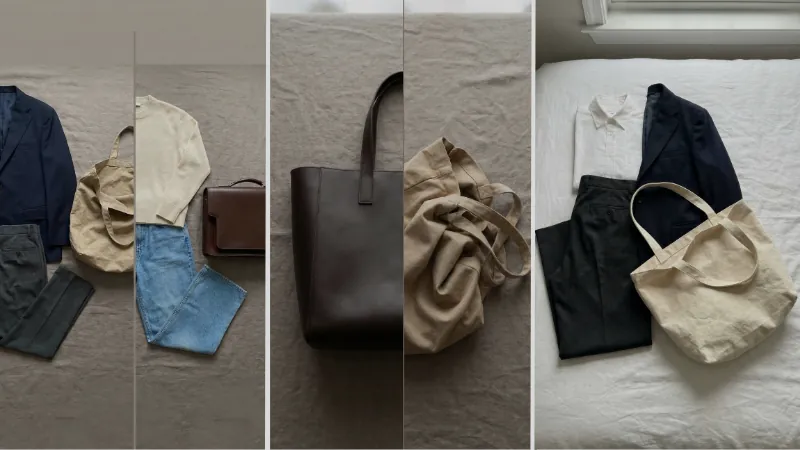
The Bag That Kills the Outfit: How a Single Wrong Accessory Resets Your Formality to Zero

Most believe a single “good” bag elevates every look. This fails when your outfit’s formality shifts. The real problem is a silent mismatch. Your bag sends a conflicting signal through its structure, material, and scale. It resets your entire polished look to zero. This advice, however, hits a wall in environments with a strictly uniform dress code. Think medical scrubs or hospitality attire. This framework is for professional environments with a spectrum, from business casual to formal. It is useless where personal accessory choice is irrelevant or where formality signaling simply doesn’t exist. For a foundational look at the rules, consider this your guide to a solid starting point: Business Dress Code for Women.
Quick Answer
- Diagnose bag-outfit mismatches by laying them flat and photographing them together.
- Implement a two-bag system: a structured tote for transport and a smaller bag for meetings.
- Your bag’s formality is a combination of its structure (high/low) and material (polished/textured).
- A dark, structured leather tote is the most versatile anchor for a professional wardrobe.
- Never choose a bag for capacity alone—a floppy structure communicates visual chaos.
- The one modification to make a casual tote slightly more formal? Add a base shaper.
If you only do one thing: Lay your most common work outfit flat next to your everyday bag and photograph it to see the formality mismatch.
The Problem: When Your Bag and Outfit Stop Speaking
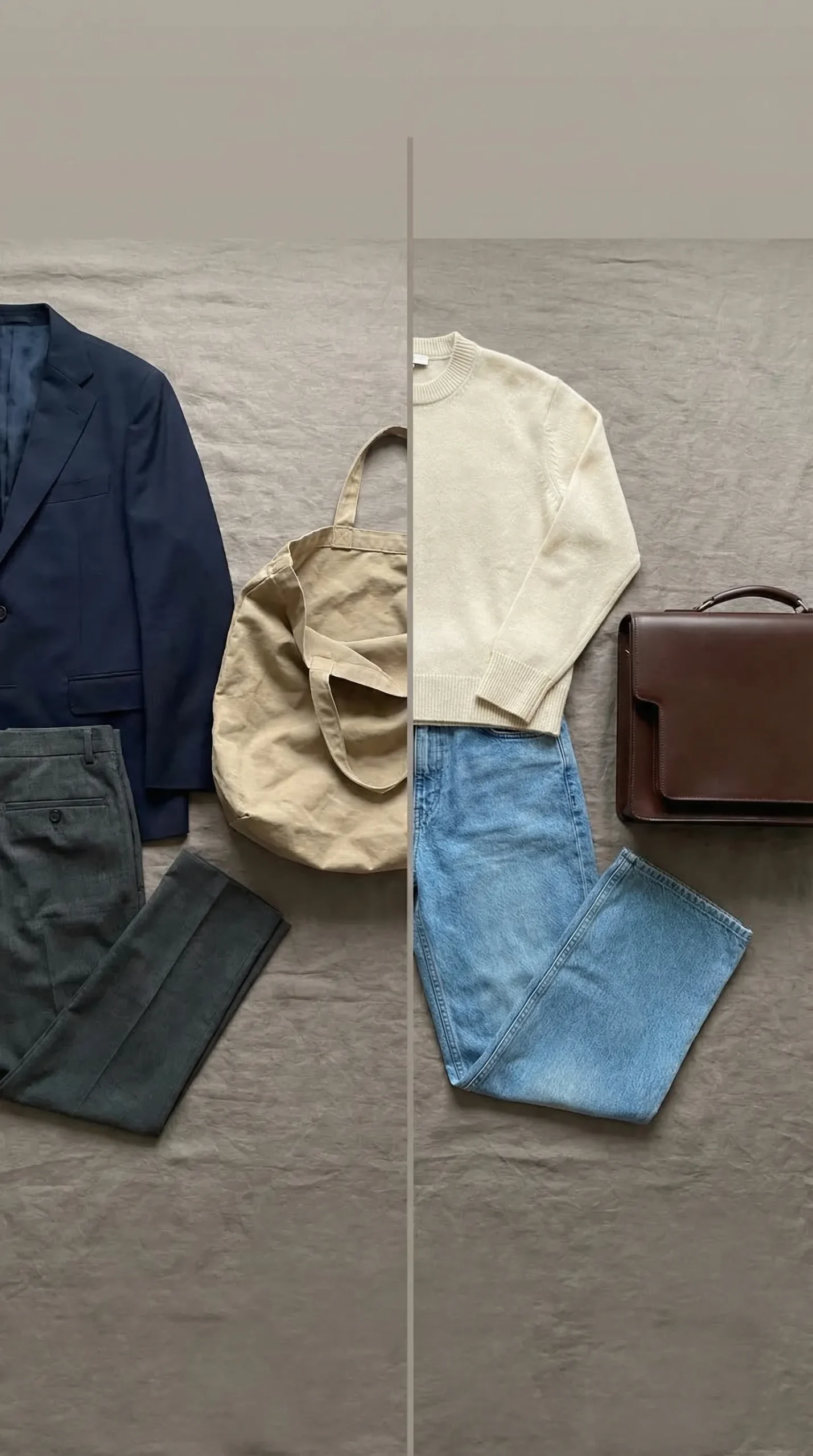
It’s not a style error. It’s a formality disconnect. You feel it in the elevator. You wore a pressed trouser, a blazer, proper shoes. Then you heave a giant, slouchy canvas tote onto your shoulder. The outfit says “presentation ready.” The bag says “farmer’s market run.” They are having two entirely different conversations.
The reverse is just as jarring. Imagine a relaxed Friday: a soft knit top, tailored jeans, clean sneakers. You feel modern and comfortable. Then you pick up a rigid, boxy leather satchel. Suddenly, you look like you’re cosplaying a banker on your day off.
The bag is too formal, too stiff. It weighs the whole look down. This mismatch is the core problem. Your outfit operates on one register, your bag on another. The visual result is incoherence. For a clear picture of a high-formality look that would be undone by the wrong bag, see these examples of classy business outfits.
Why “Invest in a Good Bag” is Incomplete Advice
We are told to buy one great bag. This is supposed to solve everything. It does not. This advice only works if all your outfits live in the same formality tier. For most office women, they absolutely do not. Your week spans client meetings, casual Fridays, and everything in between.
One bag cannot cover that range without creating a mismatch somewhere. A bag communicates through three specific signals. Structure. Material. Scale. You must score all three. A bag can “pass” on one signal but fail on the other two.
For instance, a beautiful, polished leather pouch might have a formal material. But if it’s tiny, slouchy, and covered in tassels (low structure, small scale), it’s casual. It will clash with a suit. The standard advice ignores this scoring system. It assumes a high price tag or a famous logo neutralizes everything else. It does not.
The single-bag strategy fails because workwear formality is not static. A survey of professional women shows over 60% regularly cycle through three distinct dress codes in a typical week. Your bag must be as dynamic as your schedule, or it will silently contradict your intent.
The Framework: Scoring Your Bag’s Formality
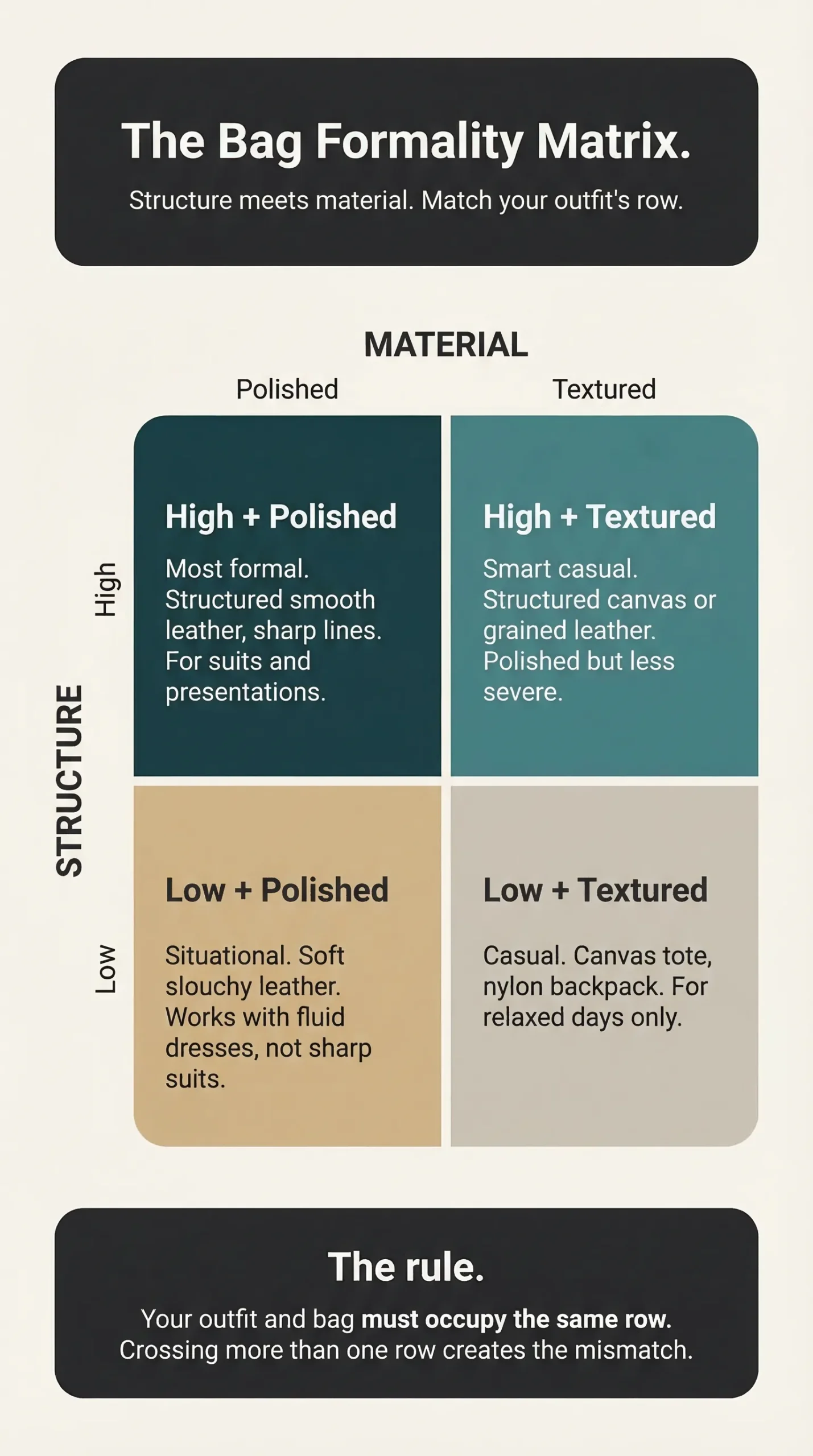
Forget “formal” or “casual” as vague ideas. Diagnose your bag by plotting it on a simple matrix. The two axes are Structure (High vs. Low) and Material (Polished vs. Textured). Where they intersect gives you its true formality register.
High Structure + Polished Material is your most formal quadrant. Think a structured smooth leather bag with sharp lines. This is for suits and important presentations.
High Structure + Textured Material is smart casual. A structured canvas tote or a grained leather satchel fits here. It’s polished but less severe.
Low Structure + Polished Material is tricky. A soft, slouchy leather bag falls here. It can work with fluid dresses or soft tailoring, but it’s not for sharp suits.
Low Structure + Textured Material is casual/functional. Your slouchy canvas tote, your nylon backpack. This is for relaxed days.
The rule is simple: your outfit and bag should occupy the same row on this matrix. Crossing more than one row creates the visual mismatch. To correctly identify your outfit’s tier first, which is essential for this step, our guide on corporate outfits for women provides clear formulas.
Formality is a combination, not a single trait. A bag’s formality score is derived 50% from its structural rigidity and 50% from its surface material. A slouchy suede bag (low, textured) cannot score above a 3/10, regardless of its cost, making it incompatible with a business formal look scoring 8/10.
The Execution Plan: From Diagnosis to Fix
Step 1: The Lay-Flat Diagnosis
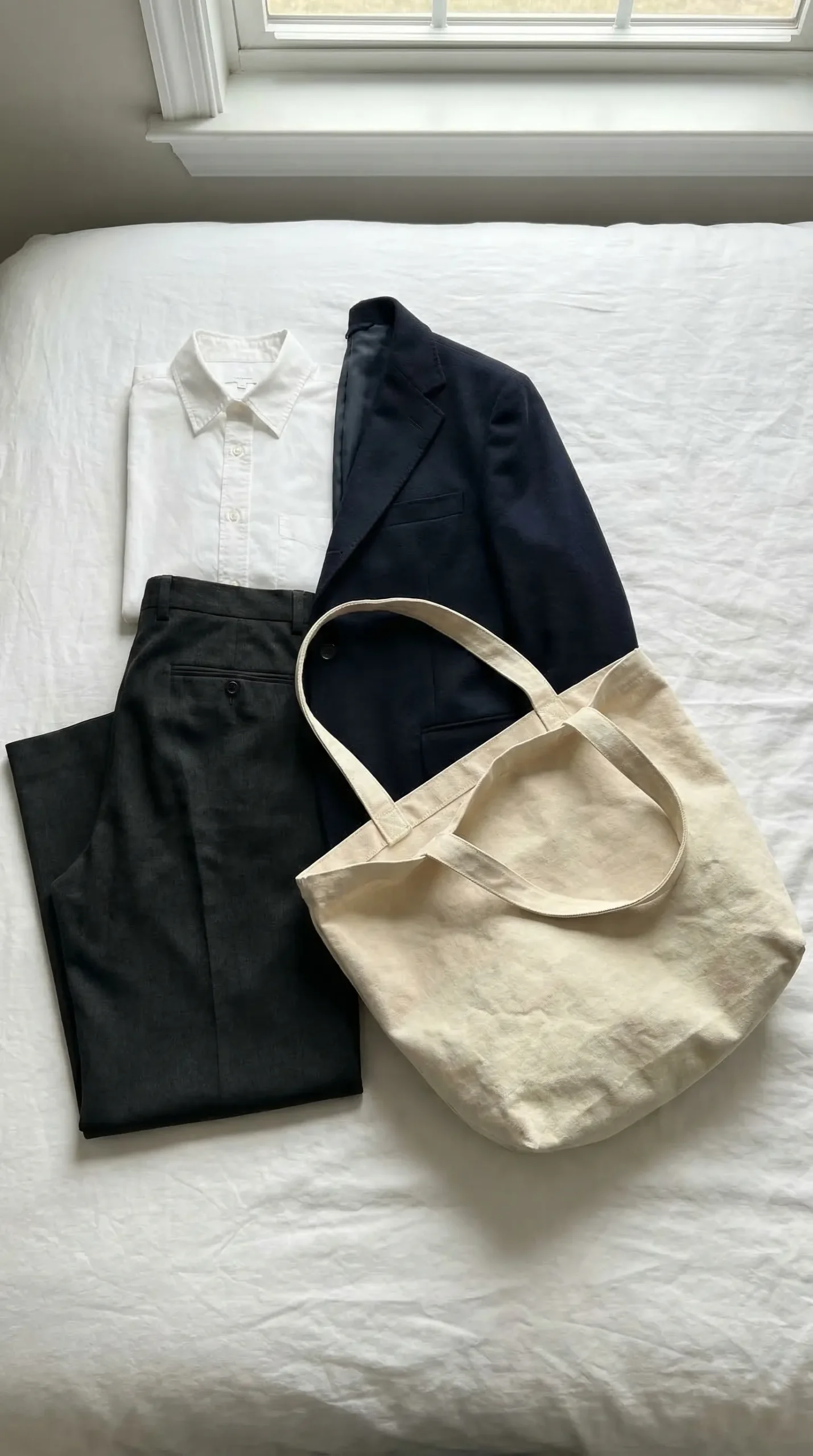
You don’t need a mirror. You need a photograph. Lay your most common work outfit flat on the bed. Next to it, place your most-used work bag. Take a picture. Look at the image. Does the bag look like it belongs with the clothes?
Or does it look like it wandered in from a different event? This sounds basic, but it works. The flat lay removes your personal attachment. You see the shapes, the textures, the volumes as pure visual information. The mismatch becomes obvious.
A tailored blazer is a sharp rectangle. A slouchy tote is a formless blob. They are visual enemies. Do this with three different outfit levels. The gap will reveal itself.
Step 2: The Functional Bag Fix
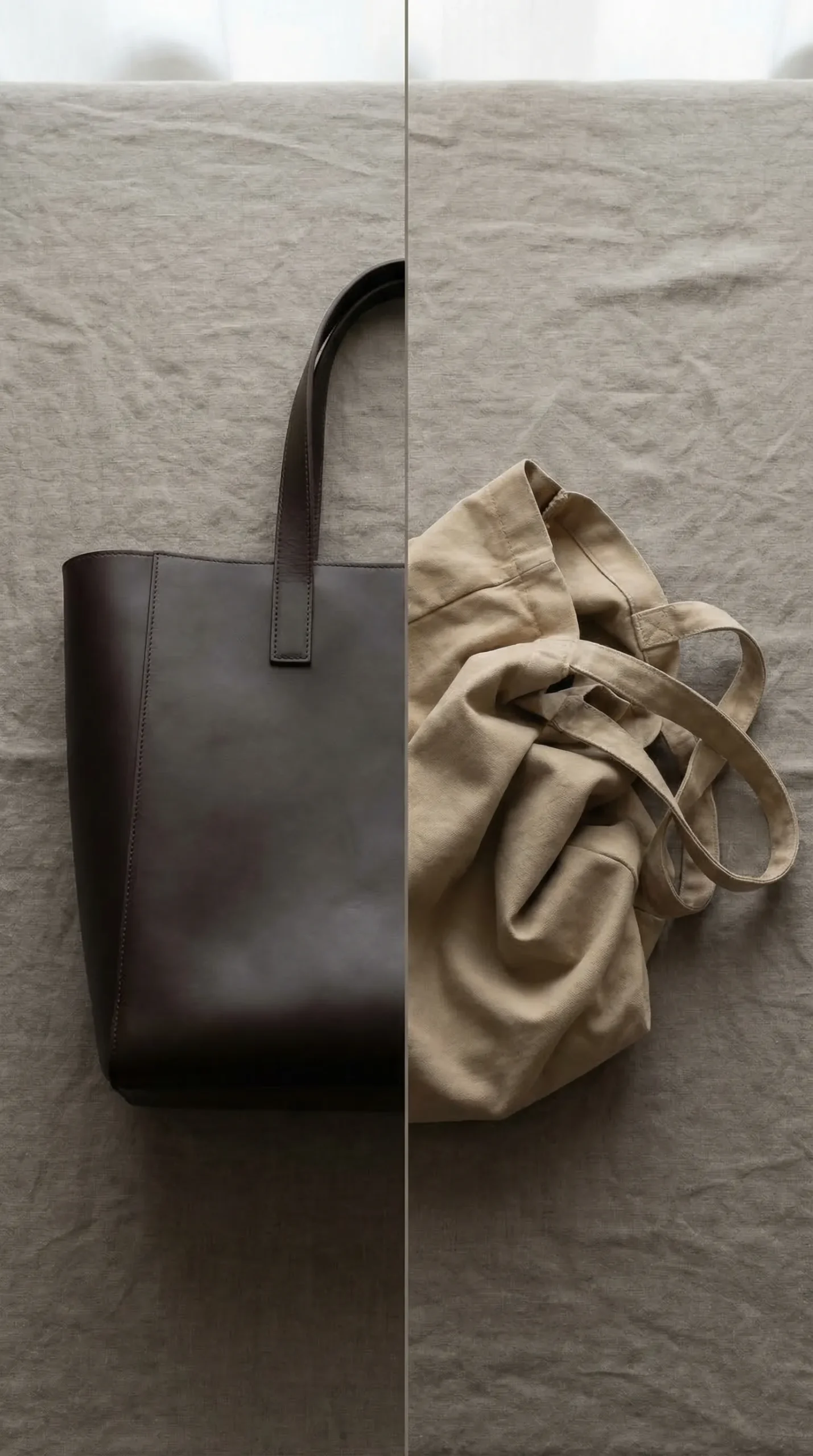
You need to carry things. I work in banking, I know. The solution is not to abandon capacity. It is to choose a high-capacity bag with formal traits. The key is a structured tote in a semi-polished material.
Structure means four rigid sides. It holds its shape empty or full. Materials like smooth-finish leather or coated canvas work. The structure of the bag, not just its size, is the minimum requirement.
A bag that collapses under its own contents, spilling its shape onto the floor, drops the register immediately. It communicates “overwhelmed.” A structured tote communicates “in control,” even when it holds your lunch, laptop, and gym shoes. This is the non-negotiable upgrade.
Step 3: Implementing the Two-Bag System
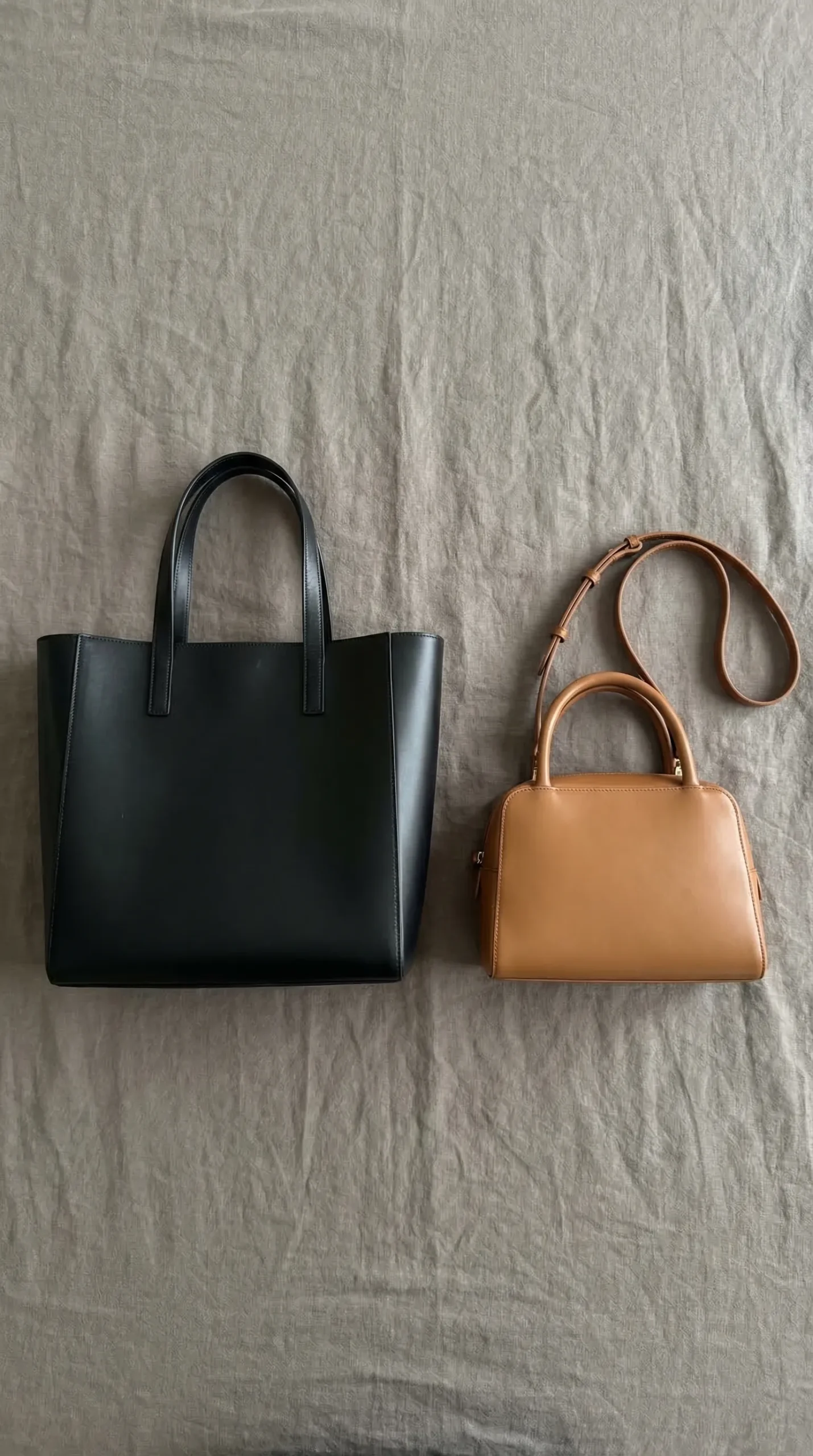
The most practical long-term strategy is a two-bag system. Not ten. Two. First, a large structured tote for high-volume days. Second, a smaller semi-structured shoulder bag for meeting-heavy days.
You swap them based on the day’s demands, not out of habit. The large tote stays under your desk. The smaller bag comes with you to the conference room. This is the ritual. The smaller bag should be able to hold a phone, wallet, keys, and one document folder.
It is your “display” bag. It matches the formality of your meeting outfit. This system acknowledges reality. You are one person with two primary professional modes: transport and presentation.
Anchor 01: The Structured Leather Tote in a Dark Neutral
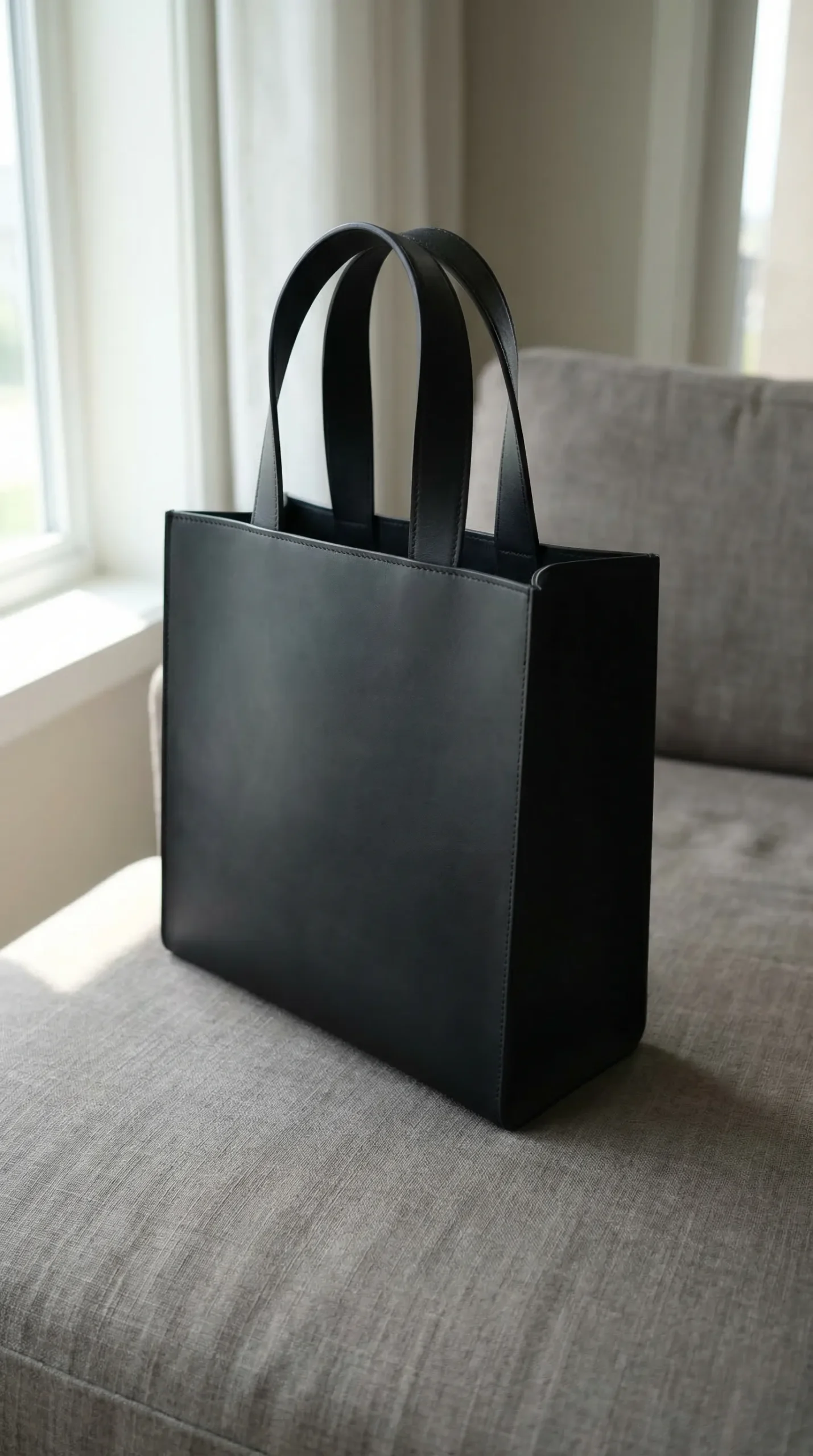
This is your workhorse. Its rigid structure signals intent. It is a piece of office equipment. The dark neutral—black, dark tan, burgundy—is not just safe. It maximizes versatility across formality registers.
A black structured tote can align with a formal suit or a smart-casual trouser-and-blouse combo. A beige one cannot. The color is a backdrop. It lets the structure do the talking. When this bag is full, it still looks like a considered choice.
It does not become a chaotic sack. This is why you invest here first. You are buying cohesion. The average professional woman in the US spends nearly $1,800 annually on work clothing, but often neglects this foundational accessory that ties it all together.
A dark, structured tote acts as a formality anchor because its high-structure silhouette reads as intentional in any professional context. Research indicates that non-verbal cues like structured accessories increase perceptions of competence and organization by up to 40% in initial professional interactions.
Anchor 02: The Top-Handle Shoulder Bag at a Medium Scale
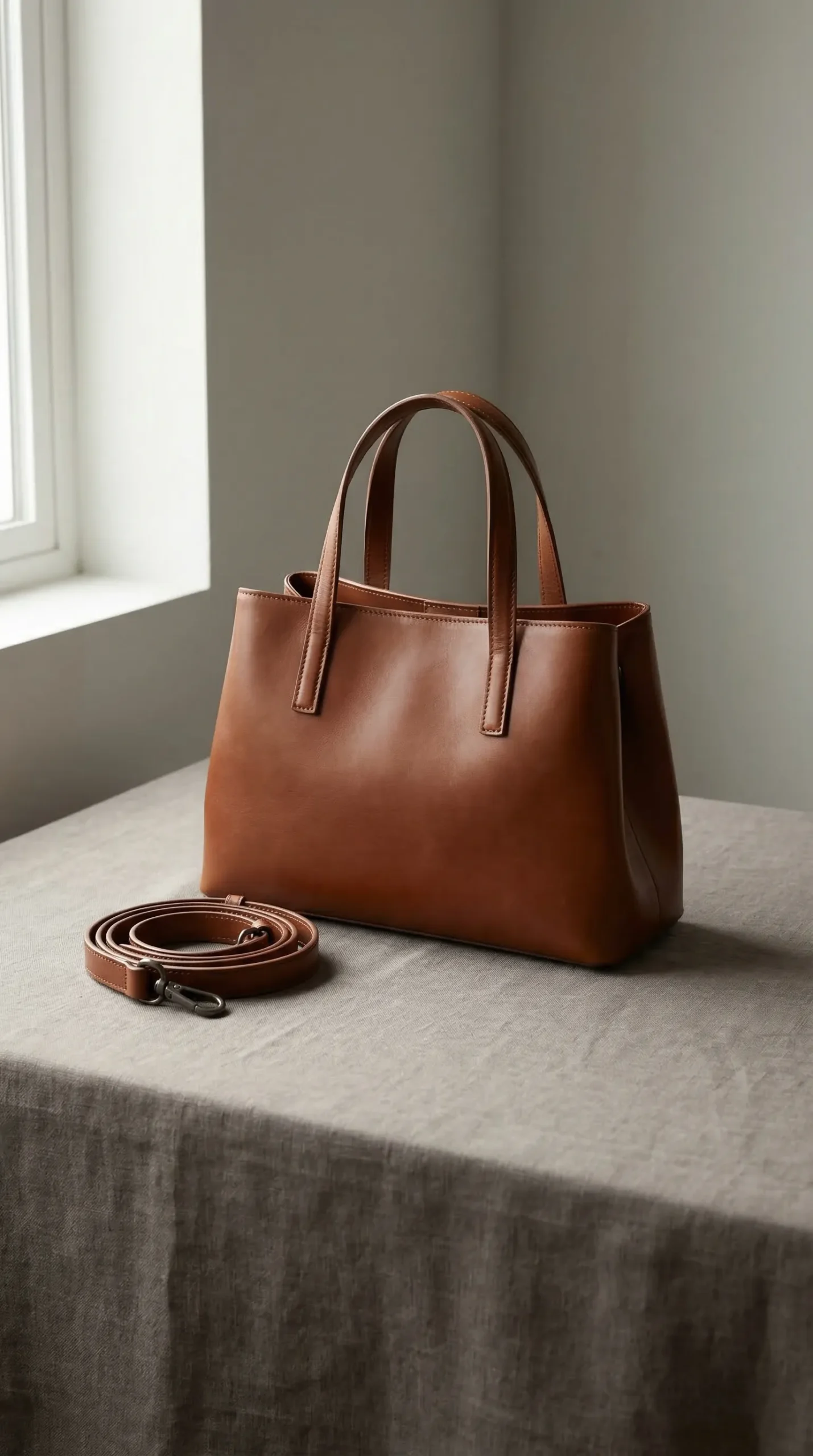
This is your meeting bag. A top handle codes as professional. It is carried, not slung. The medium scale is critical: large enough for essentials, small enough to avoid bulk. It signals “meeting-ready,” not “overnight trip.” Look for one with a detachable strap. This gives you flexibility.
The material should be polished or semi-polished leather. The structure should be semi-rigid—it has a shape but isn’t a hard box. This places it firmly in the high-structure row of the matrix. Its job is to complement your most formal daily outfits without the bulk of the tote. It is the finishing piece that confirms your attention to detail.
Common Mistakes
Mistake: Choosing a bag for capacity alone, ignoring how its floppy structure communicates visual chaos.
Fix: Prioritize a tote with built-in structural support or reinforced bases, even for large sizes. The sides should stand up on their own.
Mistake: Assuming a “neutral color” bag is automatically versatile across formality levels.
Fix: A neutral must be paired with the correct structure and material. A beige slouchy canvas tote is a neutral, but it is not formal.
Mistake: Using your large, functional day-to-day bag to carry into client meetings or presentations.
Fix: Stow the large tote under your desk. Carry only essentials in a smaller, more structured bag to the meeting. It takes ten seconds and changes the entire signal.
Mistake: Matching your bag only to your shoes or jewelry, instead of to the overall formality register of the outfit’s silhouette and fabric.
Fix: Assess your head-to-toe outfit’s formality tier first. Is it tailored and sharp? Soft and fluid? Then select a bag from the corresponding matrix quadrant.
Closing Recommendation: Checklist
A checklist lets you audit your current tools and plan strategic purchases. It turns the framework into action.
- Diagnose: Have I done the lay-flat test with my two most common work outfits?
- Gap: Does my current daily bag match my outfit’s formality row, or does it cross two?
- Anchor 1: Do I own a structured tote in a dark neutral? Does it hold its shape?
- Anchor 2: Do I own a medium-scale, semi-structured bag for meetings?
- System: Do I have a clear swap ritual (tote under desk, meeting bag in hand)?
- Material Check: Are my work bag materials polished or semi-polished (smooth leather, coated canvas)?
- Scale Check: Is my meeting bag scale appropriate (fits essentials, not a laptop)?
FAQ
How do I apply this framework if my workplace is genuinely casual (e.g., jeans and sweaters), but I still want to look polished?
Stay in the “High Structure + Textured” or “Low Structure + Polished” quadrants. A structured canvas bag or a soft leather tote can add polish without looking stiff. The key is avoiding the lowest “Low + Textured” quadrant (floppy nylon, overly distressed canvas) if you want to signal intention.
Can a very expensive, beautifully made bag from a low-structure, textured category (like a slouchy suede bag) ever work in a smart casual setting?
Yes, but only if the rest of your outfit is deliberately in that same relaxed-but-luxurious register. Think a cashmere sweater and wide-leg wool trousers. The expense shows in the material, not the formality. It’s a specific, coherent look, not a default professional one.
What is the one modification I can make to my existing oversized casual tote to make it *slightly* more formal?
Add a base shaper. You can buy lightweight, insertable panels online. They slip into the bottom of the bag and create instant structure. It’s a stopgap, not a solution, but it helps transition a floppy bag toward the “structured” row.
How do I balance the need to carry a laptop and files with the desire to use a smaller, more formal bag?
You don’t. The laptop belongs in your structured tote. Use the smaller bag as your “conference room kit.” Transfer your wallet, phone, notebook, and pen from the tote to the smaller bag for the meeting. The laptop stays behind.
Does the formality of my bag need to match my outerwear (coat/blazer) or the outfit underneath?
Match it to the outfit you will be wearing when the coat comes off. In the office, you are seen without your outerwear. Your bag should be in dialogue with your core outfit, not your winter parka.
Where do backpacks fit into this formality matrix, and can they ever be “meeting-ready”?
Most backpacks are Low Structure + Textured (nylon, slouchy leather). Some minimalist, structured leather backpacks can achieve High Structure + Polished. These can work in tech or creative environments. For a traditional client meeting, even a formal backpack is a risk—it still codes as student or commuter first. A top-handle bag is a safer signal.