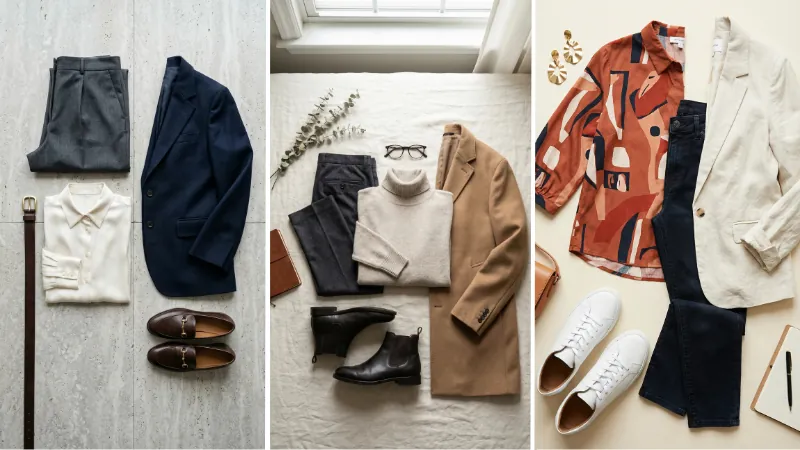
Business Casual for Women: Strict Rules for the Gray Area

The phrase “business casual” operates as a wildly irresponsible corporate directive. Watched entire departments misinterpret the guidelines and default to limp cardigans over unstructured chinos. Total collapse of visual authority. Spent a decade pulling junior staff aside to correct this exact wardrobe malfunction.
Decoding this middle ground requires ruthless garment curation, not elevated weekend wear. Built this single, authoritative reference to anchor your closet and eliminate morning decision fatigue entirely. Mapped out the non-negotiable wardrobe essentials and rigid styling rules. Calibrated the entire framework so you can instantly adapt the formulas for your specific industry, shifting seasons, age bracket, and distinct body type. Stop guessing at 7 AM. This is the exact blueprint for getting it right.
What Is Business Casual for Women?
You’ve read three company dress code policies, asked a coworker, and you’re still standing in front of your closet at 7am wondering if a knit blouse counts. It might. It also might not. That’s the problem.
Business casual for women is the dress code that sits between a full suit and jeans. Polished, but not suited. Professional, but not stiff. It’s the category where tailored trousers meet a silk blouse, where a blazer can replace a jacket, and where you’re expected to look like you made decisions about your appearance without looking like you’re trying too hard.
On the dress code spectrum, it occupies a specific lane. Smart casual is below it — that’s the territory of clean sneakers and casual blazers. Business formal is above it — full suits, structured separates, nothing wrinkled. Business casual sits in between. Closer to formal than most people assume.
The ambiguity isn’t accidental. The same phrase means something genuinely different depending on where you work. In a bank or a law firm, business casual usually still means structured trousers and a blouse with a collar. In a marketing agency or a tech company, it might mean dark jeans and a neat knit. The phrase hasn’t standardized because the environments it describes haven’t.
My take: the term “business casual” has been stretched so far in both directions that it’s almost useless without context. What your specific office means by it matters more than any general definition.
Modern female business attire in a business casual context generally follows one rule: you should be able to walk into a client meeting without having to apologize for what you’re wearing. That’s the floor. Everything above that floor is negotiable.
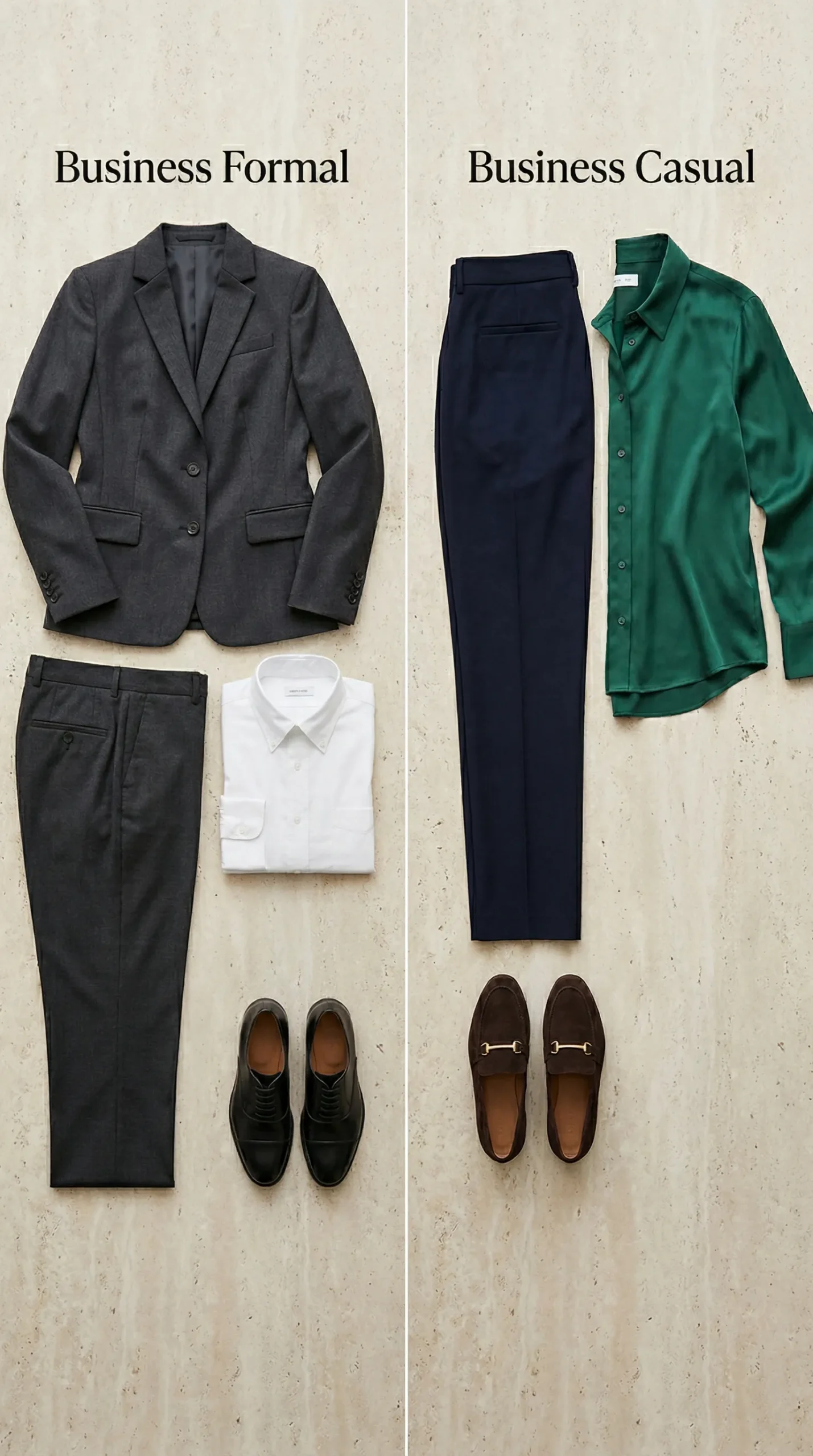
| Category | What It Looks Like | Typical Settings | What Doesn’t Belong |
|---|---|---|---|
| Business Formal | Tailored suit or structured dress, coordinated separates, closed-toe heels or polished flats | Court, board presentations, formal client meetings, finance and law | Knits, open-toe shoes, unstructured fabrics, visible casualness of any kind |
| Business Casual | Tailored trousers or a midi skirt, blouse or structured knit top, blazer optional but welcomed | Corporate offices, client-facing roles, banking, consulting, healthcare administration | Jeans (usually), athleisure, graphic tees, anything overly casual or visibly wrinkled |
| Smart Casual | Dark jeans or chinos, neat knit or blouse, clean leather or suede shoes, unfussy layers | Creative industries, start-ups, tech companies, casual Fridays in most offices | Ripped denim, athletic shoes, anything with visible logos, clothing that reads as weekend |
The gap between business casual and smart casual is smaller than people think. One structured piece — a blazer, a tailored trouser, a leather belt — is usually what moves an outfit from one column to the other.
Casual business for women isn’t a single wardrobe. It’s a range with a floor and a ceiling. Knowing which end of that range your office expects is the only definition that actually matters.
The Business Casual Wardrobe Essentials
You stand in front of a full rail of clothes and feel nothing useful. The blazer feels stiff. The blouse feels fussy. The dress you bought for that one conference is too much. Everything else is too little. You’re not underdressed and you’re not overdressed. You’re just wrong.
That’s what happens when you shop by occasion instead of by system.
The fix is capsule logic. A core set of interchangeable pieces that covers roughly 80% of your work situations without requiring a daily decision. Not a uniform. A vocabulary. Twelve to fifteen pieces that speak to each other.
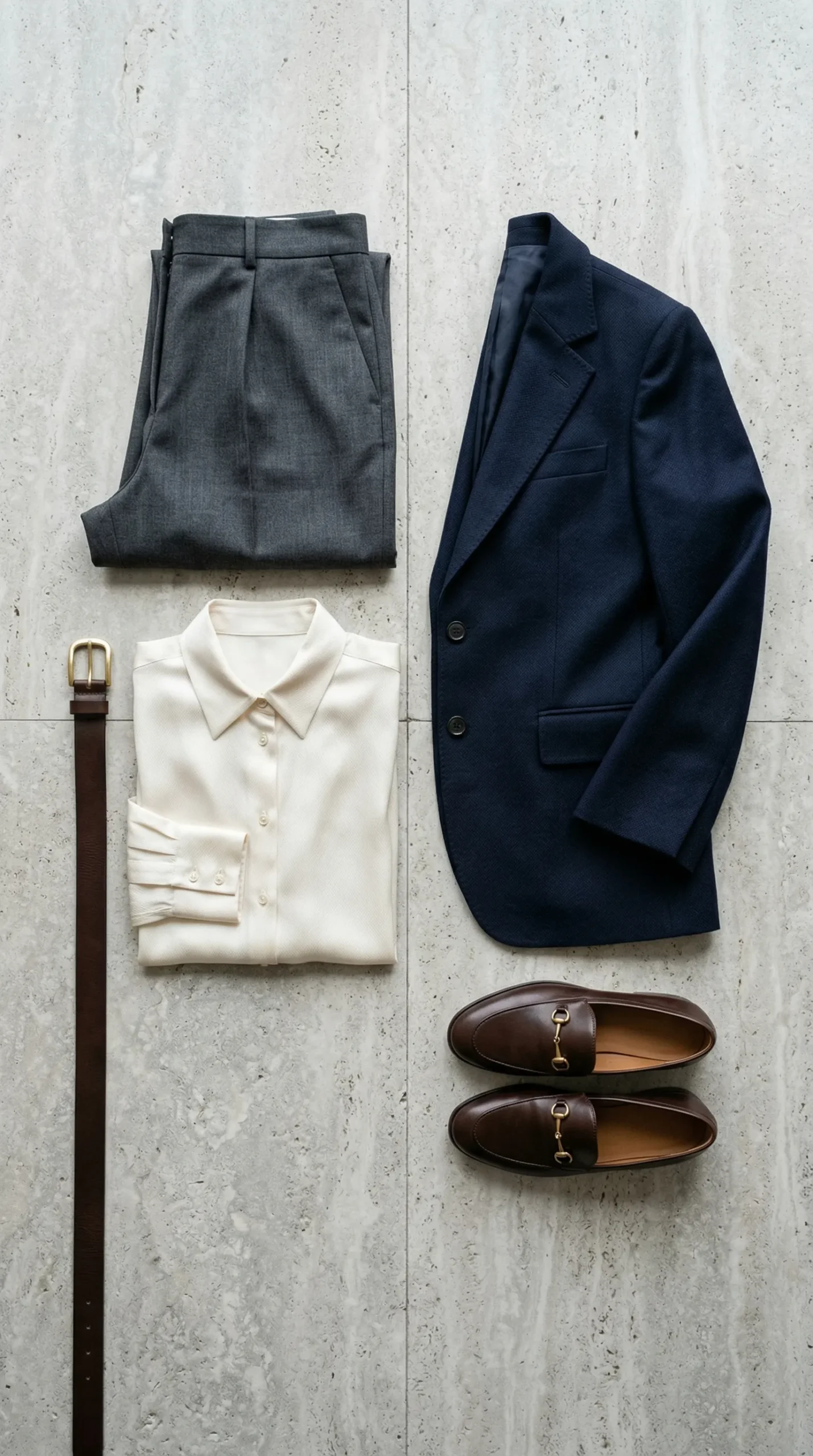
| Category | Core Pieces | What to Avoid | Works For |
|---|---|---|---|
| Tops | Matte silk blouse, button-down, fine knit, turtleneck | High-sheen satin, sheer fabric without a layer, athletic tanks | All office environments |
| Bottoms | Tailored trousers, midi skirt, pencil skirt, dark-wash jeans | Distressed denim, mini skirts, anything with elasticated casual waistbands | Most offices; jeans conditional |
| Dresses | Sheath, shirt dress, midi wrap | Mini hemlines, bodycon silhouettes, anything overtly formal | All office environments at or below the knee |
| Blazers and Jackets | Tailored blazer, structured cardigan, trench coat, longline jacket | Oversized bombers, hoodies, anything with casual hardware | Elevates any combination instantly |
| Shoes | Loafers, ballet flats, ankle boots, block heels | Athletic trainers, open-toe sandals in formal settings, flip-flops | Clean minimalist sneakers conditional on office type |
Tops
The four categories that work consistently as business casual clothing for women: silk blouses, crisp button-downs, refined knits, and turtlenecks. That’s the list. Everything else is situational at best.
Sleeveless is a context question, not a blanket ban. A sleeveless blouse with a clean neckline and structured fabric is fine in most offices. A sleeveless athletic tank — even a neat one — is not. The difference isn’t about showing arms. It’s about what the garment signals.
- Sleeveless blouse with tailored trousers: reads as intentional.
- Sleeveless athletic tank with anything: reads as gym-adjacent. Leave it for the weekend.
- Sheer blouse without a layer underneath: not business casual. Not in any office.
The work blouse versus going-out blouse distinction comes down to two things: fabric finish and cut. Matte silk or a silk-look fabric with a controlled drape belongs at your desk. High-sheen satin with a plunging neckline belongs somewhere else.
The physics of it: matte fabrics absorb light and stay quieter under fluorescent office lighting. High-sheen fabrics reflect it. In a conference room, that’s the difference between polished and conspicuous.
Blunt truth: a fine knit is only business casual if it fits properly. Oversized knits read as casual no matter how expensive they are. And a sheer blouse without something underneath isn’t a business casual piece — it’s a problem you haven’t solved yet.
Bottoms
Tailored trousers first. Always. They’re the most reliable bottom you can own for the office, and a good pair in charcoal, black, or camel works in almost every room. After that: midi skirts and pencil skirts. Both are solid.
The jeans question comes up constantly. Yes, business casual for women with jeans is possible. But the conditions are specific and non-negotiable.
- Dark wash, no distressing, no whiskering: these are the starting requirements, not the whole answer.
- Dark jeans + blazer + loafers: that reads as business casual.
- Medium-wash jeans + graphic tee: that does not, regardless of how neat it looks on you at home.
The elevated styling requirement matters here. Dark denim only works in business casual when everything around it is doing extra work. The shoe, the top, the jacket. All of it has to read as deliberate.
This won’t work if: your office is corporate financial, legal, or client-facing in a conservative industry. In those environments, jeans stay home. Full stop. No amount of styling fixes that.
My take: khakis get underused. A well-cut khaki trouser in a warm beige or stone is easier to style than dark denim and looks more intentionally put-together in most offices.
Dresses
Three silhouettes reliably work as a business casual dress for women: the sheath, the shirt dress, and the midi wrap. They have different personalities, but they share the same structural logic. Defined shape, appropriate length, nothing that demands attention for the wrong reason.
Hem length has a clear rule of thumb. At or below the knee is the safe zone for most offices. Not because of modesty — because of optics. A knee-length or midi dress reads as composed in a professional setting. A mini hemline reads as casual or evening, depending on the fabric.
- Sheath dress at the knee: reads as polished, requires almost no styling effort.
- Midi wrap in a matte print: more relaxed, still professional.
- Shirt dress, belted or unbelted: the most versatile of the three, works across office types.
What pushes a dress out of range: mini hemlines, bodycon fits that track every movement, and anything on the overtly formal end — heavy embellishment, full ball gown structure. Those are easy calls.
Trade-off: wrap dresses are forgiving and easy to wear. But a cheap fabric will gap at the chest and pull across the hips by midday. The silhouette only works if the fabric has enough weight to hold its shape.
Blazers and Jackets
If you own one high-leverage business casual piece, it’s the blazer. Not because it’s traditional. Because it does more structural work than anything else in the category. It signals effort. It reads as composed. And it upgrades almost everything underneath it.
The third item principle in one sentence: jeans and a blouse feels casual; add a blazer, and the same combination reads as business casual. That one addition is doing real work.
But a blazer isn’t the only option. Polished alternatives that carry similar weight:
- Structured cardigan: works for lower-formality offices, softer feel, less authoritative than a blazer but still intentional.
- Tailored longline jacket: more relaxed silhouette, good for creative environments.
- Trench coat: less relevant inside, but layered over a dress or trousers it reads as pulled-together on the way in and out of the office.
Why a blazer specifically needs shoulder structure: it’s not aesthetic, it’s architecture. A blazer with soft, collapsed shoulders reads as oversized and casual. One with defined shoulders creates a vertical line that makes the entire silhouette look more deliberate. That’s the reason a well-fitted blazer changes the register of an outfit where a cardigan sometimes doesn’t.
My take: one blazer in a neutral — charcoal, black, or camel — does more consistent work than three blazers in statement colours. Buy the neutral first. Buy the rest if you need them.
Shoes
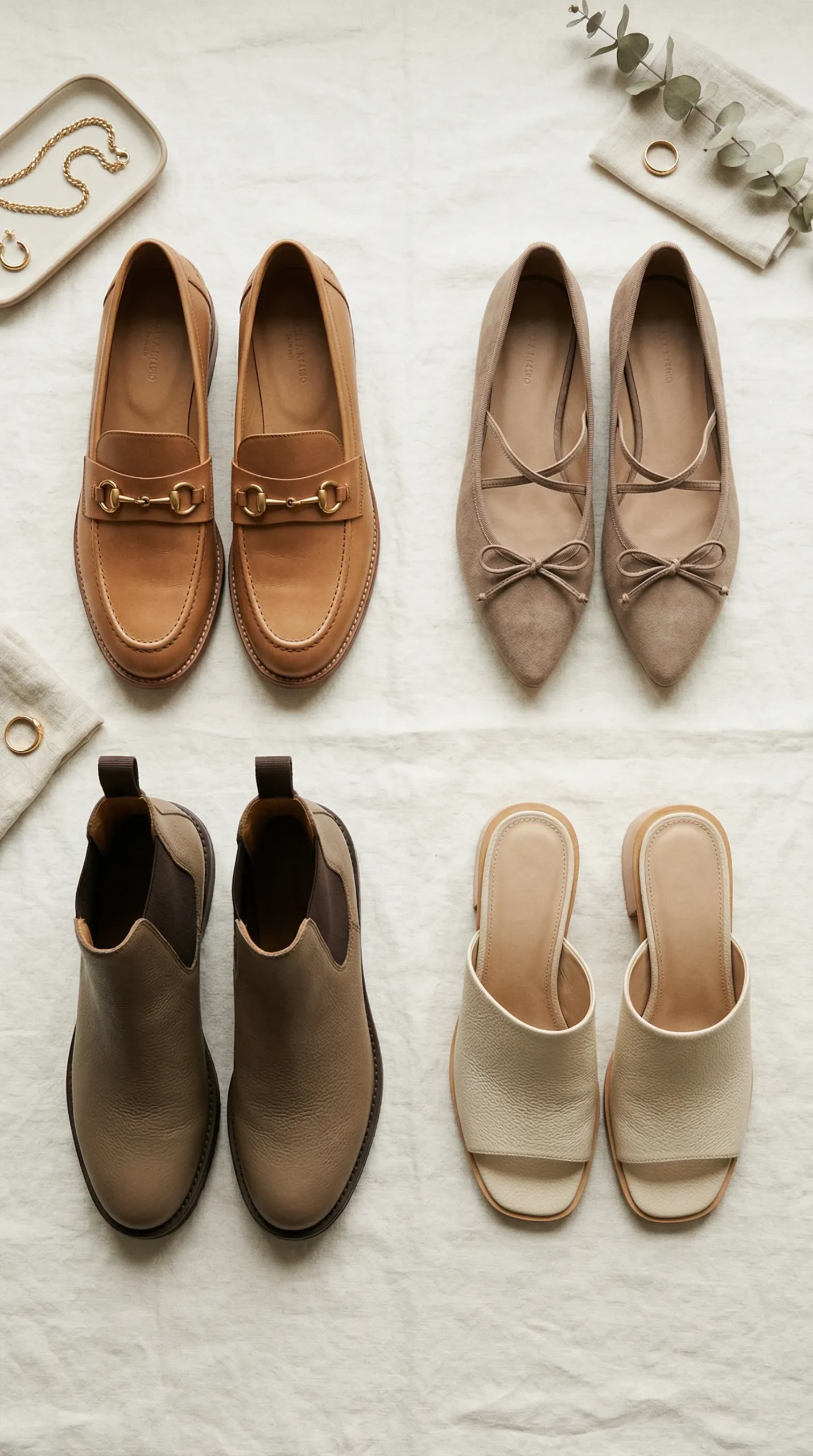
The reliable list for shoes for business casual women is short: loafers, ballet flats, ankle boots, block heels. Those four cover most situations. Clean minimalist sneakers are conditional — more on that in a moment.
The contrast is not subtle. A sleek loafer in leather or a leather-look finish is business casual in nearly every office. A chunky athletic trainer is not, regardless of how clean or expensive it is. The silhouette gives it away before anyone looks at the brand.
- Loafer (leather, suede, or polished finish): the single most versatile shoe in this category.
- Ballet flat: works well, but thin-soled versions can look slightly underdressed in formal environments.
- Ankle boot (clean toe, modest heel or flat): good through autumn and winter, pairs well with trousers and midi skirts.
- Block heel: comfortable for long days, stable enough to actually walk in, reads as professional without effort.
Sneakers have one condition for business casual for women shoes: the office has to be genuinely modern or creative in its culture. A minimalist white leather sneaker with tailored trousers can work in a tech company or design studio. It does not work in a client-facing meeting, a legal environment, or anywhere the dress code has a conservative baseline.
This won’t work if: your office is client-facing or formally structured. Open-toe sandals and athletic trainers are high-risk there regardless of how carefully you’ve styled everything else. The shoe is the detail that signals whether the rest of the outfit was intentional or accidental.
Trade-off: ballet flats are comfortable and easy. But without any heel, they shorten the visual line of the leg. If you’re pairing them with wide-leg trousers, the silhouette can look cut off at the ankle. A small heel — even 2cm — fixes this without requiring you to suffer through a full stiletto.
The Styling Principles That Make It Work
The pieces are individually fine. The trousers are good. The top is fine. The shoes are appropriate. And yet.
The outfit looks like it was assembled in the dark. Nothing quite lands. That is not a wardrobe problem. That is a principles problem.
Modern female business attire is not about owning the right things. It is about understanding why certain combinations work and others don’t, at a level that lets you get dressed in ten minutes without second-guessing yourself.
There are four principles. Fit. Layering. The third item rule. Color and pattern intentionality. They are not complicated. But most women apply maybe one of them consistently, and wonder why the closet full of good pieces still produces mediocre outfits.
Fit Is Not Negotiable
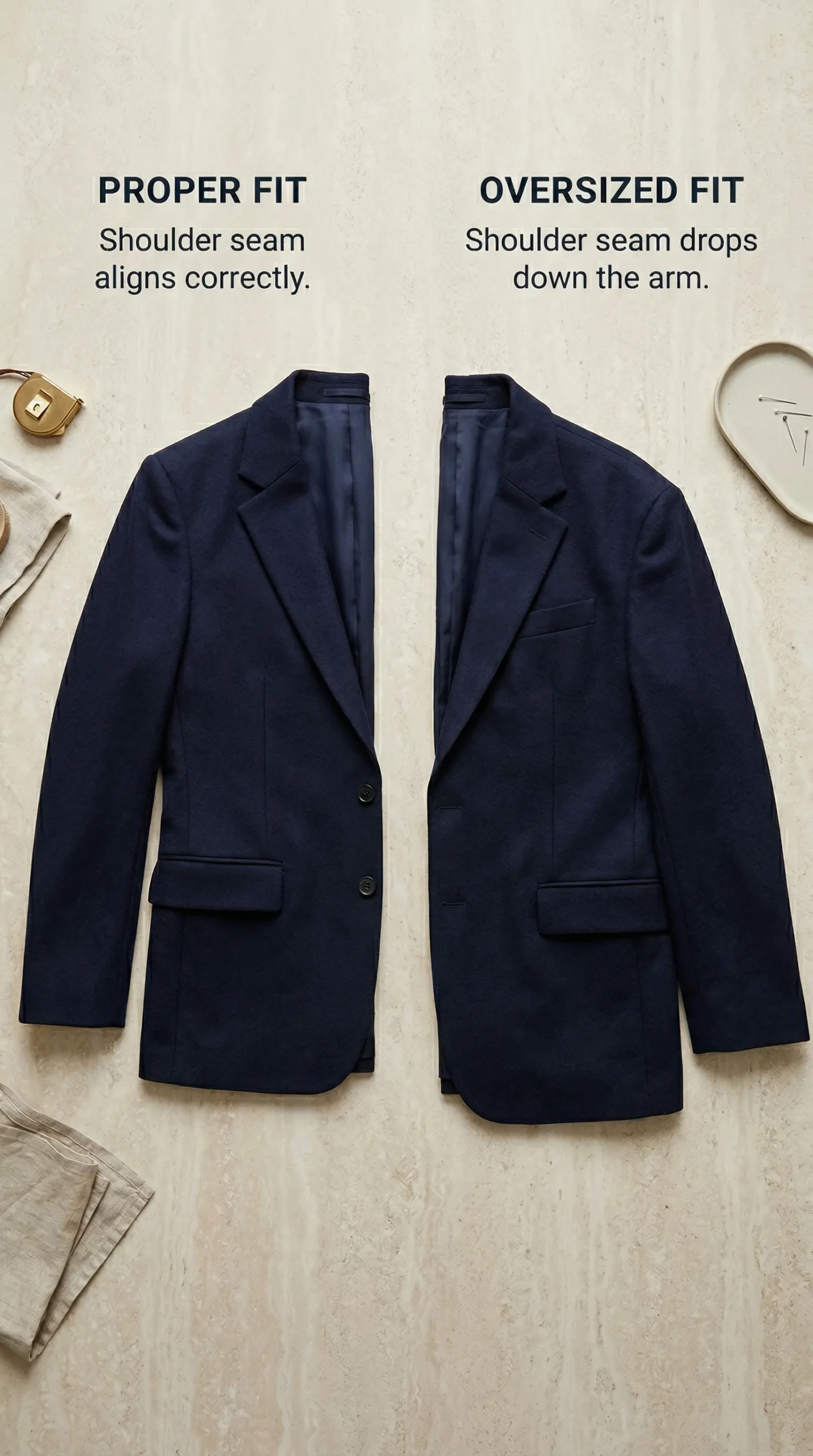
A boxy blazer will undo a polished outfit faster than the wrong shoe ever could. That is not intuitive, but it is true.
The shoe is a detail. The blazer is the architecture. When the shoulder seam sits two inches off where your shoulder actually ends, the whole silhouette reads unfinished — regardless of what else is happening.
Fit does not mean tight. It means the garment was cut for a body shaped like yours, or has been altered to behave as if it were. Those are the only two options that work in a professional setting.
The physics of it: fabric that fits correctly drapes with intention. Fabric that doesn’t fit pulls, bunches, or floats away from the body in ways that read as careless. Fluorescent office lighting makes this worse. It exposes every tension line in a too-small waistband and every billow in a too-loose shoulder.
Blunt truth: Most women are wearing blazers one size too large because they were told to “size up for comfort.” Comfort is not the same as fit. A size up in a structured blazer is not a styling choice. It is a mistake.
Trade-off: Getting things tailored costs money and takes time. But one well-fitted blazer at €30 in alterations outperforms a €200 blazer that fits badly. That math is inconvenient and also correct.
Layering: The Logic Behind It
Layering in a business casual context is not about warmth. It is about structure and visual hierarchy.
A shell top under a blazer creates a complete outfit. That same shell top alone, tucked into trousers, is underwhelming. The blazer is not decorative. It is doing structural work — giving the eye a clear outer boundary for the silhouette.
The rule for layering is simple: the outermost layer should be the most structured. Not the most colorful, not the most expensive. The most structured. That layer sets the tone for everything underneath it.
The Third Item Rule
A two-piece combination — trousers and a blouse, say — looks like you got dressed. A third item makes it look like you made a decision.
The third item is anything that adds intentionality to an otherwise functional outfit. A structured tote carried consistently (not a gym bag, not a canvas shopper). A silk scarf worn as a neck tie or left slightly loose over a blazer lapel. A belt with visible hardware. A watch with presence. A statement earring, if the rest is quiet.
What qualifies: the item must be intentional and visible. It cannot be something you threw on by accident. It does not have to be expensive. It has to look considered.
Why it works: two pieces read as getting dressed to the minimum required level. Three pieces read as someone who knows what she is doing. The third item is the signal. That is all it is.
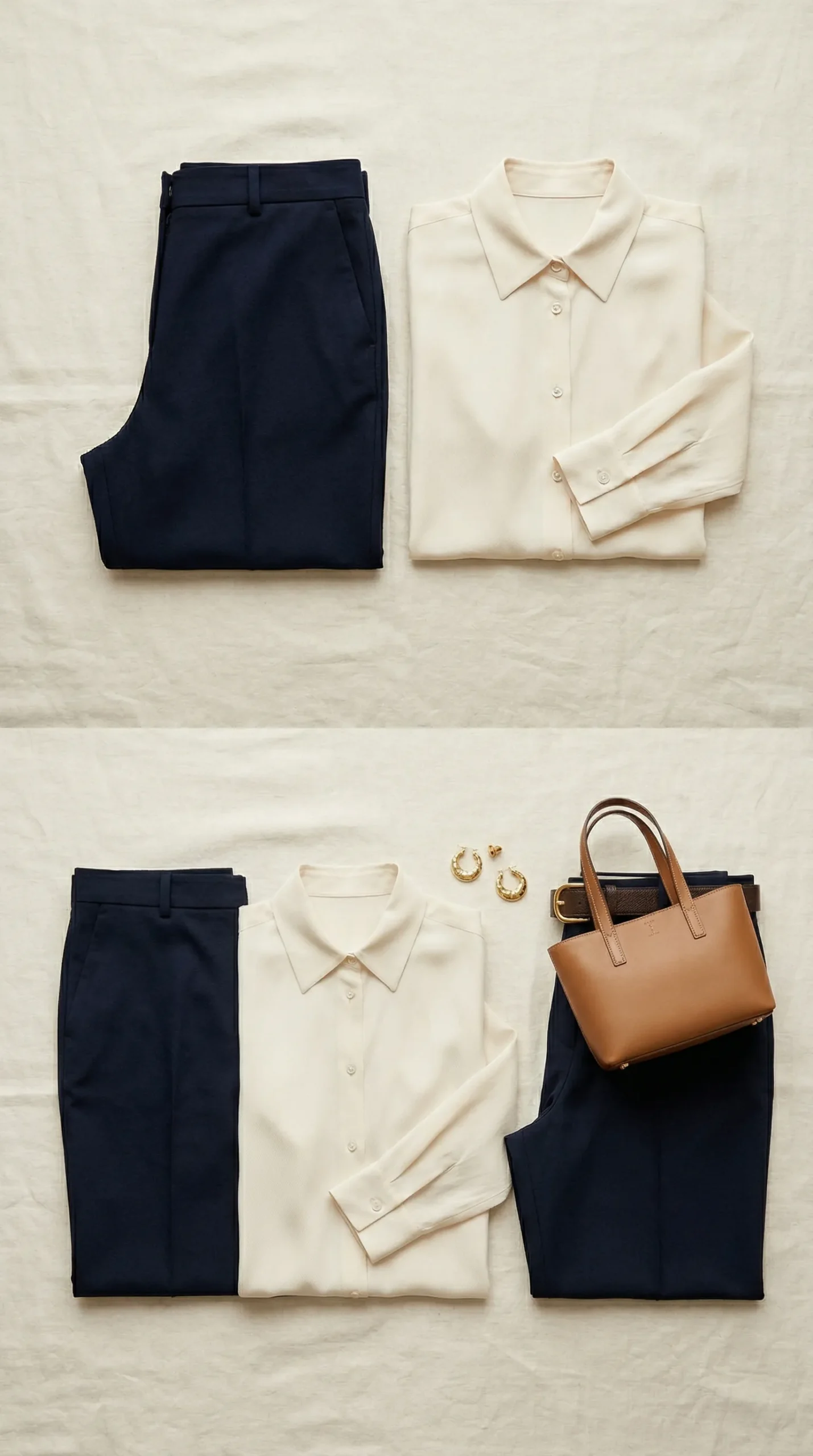
My take: a structured bag does this job better than almost anything else, because you carry it every day and it is always visible — you don’t have to think about it again once you’ve chosen it.
Color and Pattern: Give It a Logic
Navy trousers, a white blouse, one printed scarf: that works. Navy trousers, a patterned blouse, a printed blazer, and a textured bag: that is four competing things and none of them wins.
The logic behind a safe neutral base is not timidity. It is contrast management. When the base is quiet — navy, grey, camel, black, white — a single print or color has room to read clearly. When everything is competing, the eye doesn’t know where to go, and the overall impression is noise.
The practical framework: start with two neutrals, then introduce one point of color or pattern. That one point can be significant — a bold print blouse, a rust blazer, a patterned trouser — as long as everything else steps back.
Trade-off: an all-neutral palette is easier to manage and harder to get wrong, but over time it can read as either polished or invisible depending on how much structure you have. Neutral without fit is just beige. The fit still has to be there.
What Is the 3-3-3 Rule for Clothes?
The 3-3-3 rule is a capsule-style formula: choose 3 shoes, 3 bottoms, and 3 tops that all work together, creating up to 27 different outfit combinations from 9 pieces.
In theory, it is a useful exercise for building a functional wardrobe with minimal decision fatigue. In practice, the numbers are somewhat arbitrary. The underlying principle is what matters: a small set of genuinely interchangeable pieces that each earn their place.
For business casual specifically, the 3-3-3 rule applies reasonably well to a core rotation — a few well-fitting trousers, a few structured tops, a blazer or two that works across multiple combinations. Where it breaks down is footwear, because the business casual context demands more contextual range than three shoes can reliably cover across all seasons and settings.
What Not to Wear for Business Casual
The top offenders are consistent and most of them boil down to the same problem: they signal that you weren’t thinking about where you were going when you got dressed.
- Distressed denim: rips, heavy fading, and visible wear all read as weekend, regardless of what you pair them with.
- Crop tops: any top that exposes the midriff is not business casual. There is no blazer workaround that reliably fixes this in a professional context.
- Sheer fabric without a layer beneath it: visible undergarments or visible skin through fabric reads as an oversight, not a styling choice.
- Athletic wear: leggings worn as trousers, joggers, athletic shoes (the ones you actually run in) — these stay home. No exceptions for “elevated athleisure” in a client-facing environment.
- Overly casual footwear: flip flops, worn-down sneakers, and pool slides are not business casual. A clean minimal sneaker can work in some offices. Know yours before assuming.
Below is the reference version of business casual dos and don’ts for modern female business attire — the categories that come up most often and where most outfits go wrong.
| Category | Do | Don’t |
|---|---|---|
| Trousers | Tailored trousers in wool blend, ponte, or structured fabric; correct hem length | Distressed denim, joggers, leggings worn as trousers |
| Tops | Structured blouses, fitted knits, shell tops with clean necklines | Crop tops, sheer fabric without a layer beneath, graphic slogan tees |
| Outerwear / Layers | Well-fitted blazer with shoulder seams sitting correctly; cardigan in fine knit | Oversized hoodies, fleece, puffer vests worn as a primary layer |
| Footwear | Block heels, loafers, clean low heels, minimal leather or leather-look flats | Athletic trainers (worn for sport), flip flops, pool slides, heavily worn shoes |
| Color / Pattern | Two neutrals plus one point of color or pattern; prints that read clearly at a distance | Three competing patterns; very small busy prints that blur under office lighting |
| Fit | Shoulder seams on the shoulder; trouser hem at the correct break; waistbands that sit without pulling | Blazers sized up “for comfort,” too-long trousers bunching at the ankle, waistbands that gap at the back |
| Accessories | One structured bag carried consistently; minimal visible jewellery; a belt with presence if the outfit needs an anchor | Canvas totes as your primary work bag, excessive visible hardware, jewellery that makes noise when you move |
The business casual for women dos and don’ts listed above are not arbitrary. Each one maps back to the same question: does this read as intentional, or does it read as careless?
Careless is not a moral failing. It is just information your outfit is communicating before you open your mouth. The four principles exist so that your clothes are not saying something you didn’t agree to.
Outfit Ideas for Every Work Situation
You’re standing at the mirror at 7am. The pieces are right. You know they’re right. But you’re genuinely unsure whether today’s client meeting calls for something different from yesterday’s internal stand-up — and if so, how different, exactly.
This isn’t about buying new things. It’s about understanding how the same pieces shift in meaning depending on how you combine them and what context you’re walking into.
Client Meetings and External-Facing Days
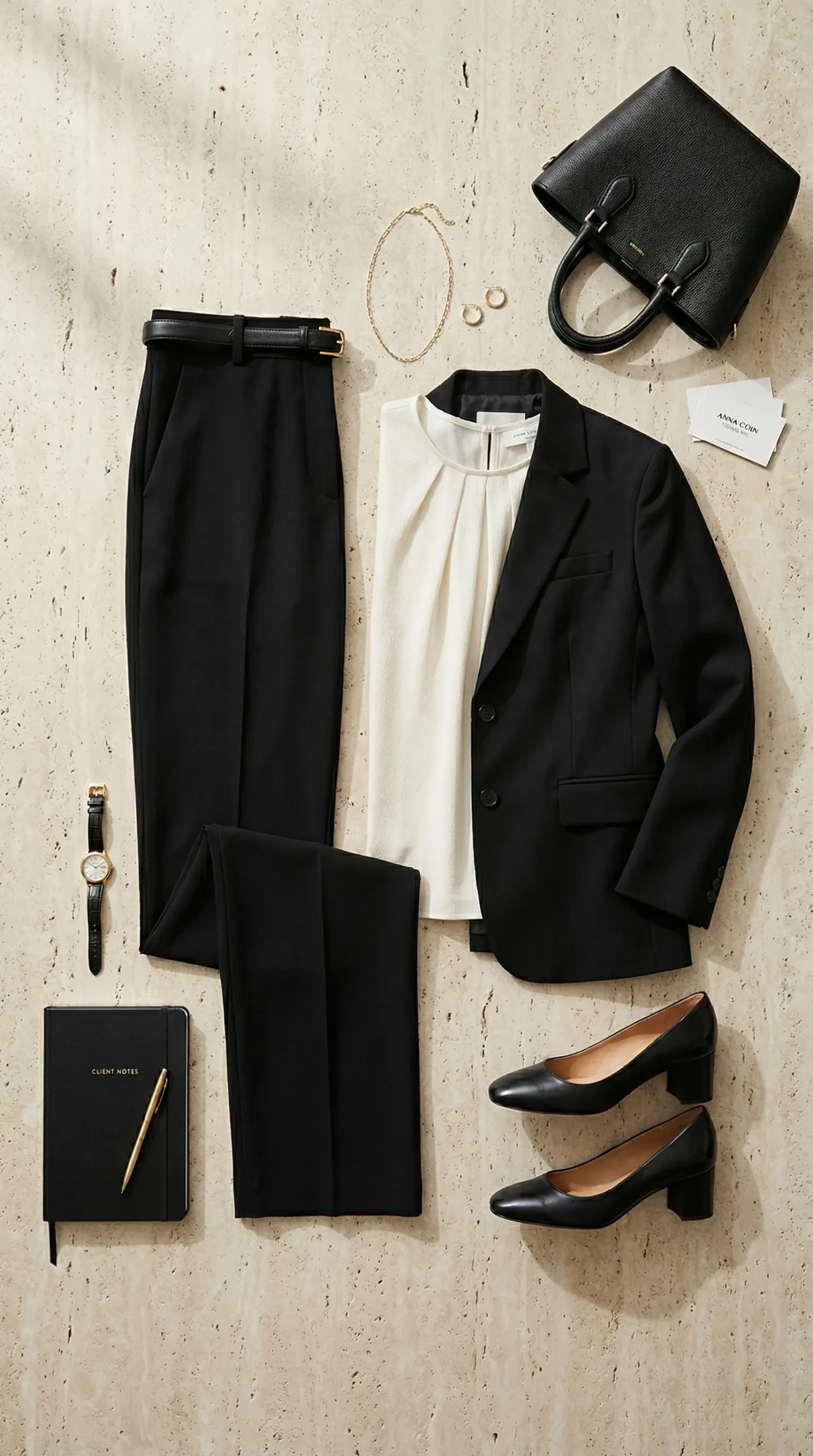
The blazer stops being optional. That’s the shift. On an internal day, it’s a layer. On a client day, it’s a signal — one that says you take the room seriously.
Shoes and bag carry more weight here than most people realize. Not because of brand or price. Because polish at the extremities reads as intentional. Scuffed flats and a canvas tote undercut an otherwise sharp outfit in a way that’s hard to explain but easy to feel.
The formula direction for external days: structured top, tailored bottom, closed-toe shoe with some heel or structure. That’s it. You don’t need more. You need those three things to work together without visual noise.
My take: If you’re unsure whether an outfit is client-appropriate, ask whether you’d feel slightly underdressed shaking someone’s hand for the first time. If yes, add a layer or swap the shoe.
Internal Office Days
One notch down. That’s the principle. Still professional. Still put-together. But the fabric can breathe a little more and the layers can be fewer.
A refined knit instead of a pressed blouse. Loafers instead of heels. Trousers that are tailored but not severe. The outfit says “I work here and I know what I’m doing” without saying “I dressed for someone else’s approval today.”
The risk with internal days is sliding too far. Comfortable becomes sloppy faster than you think, especially under fluorescent office lighting, which is unkind to anything that reads as wrinkled or shapeless.
Blunt truth: If you wouldn’t want your most senior colleague to see you in it unexpectedly, it’s probably one notch too far down.
Remote Work and Video Calls
The camera frame is roughly here to your collarbone. Which means your bottom half is invisible. And yes, people absolutely do wear pyjama trousers on calls. I’m not judging that.
But there’s a real argument for dressing fully anyway. Not for your camera. For your brain. Getting dressed signals to your nervous system that work has started. It’s a small ritual with a disproportionate effect on focus.
For what’s actually on camera: subtle pattern and color read better than flat solids or high contrast. All-white tends to blow out. All-black can flatten your face depending on your skin tone and lighting. A medium-toned top with some texture — a fine stripe, a soft print, a ribbed knit — holds on screen better than most people expect.
- Avoid anything with very fine stripes or tight checks — they create a strobing effect on video
- A collar or neckline with some structure frames your face more than a wide, drooping one
- Jewelry that catches light is fine; jewelry that clanks against a microphone is not
Trade-off: Dressing fully for a remote day when no one will see below your shoulders feels pointless until the day you have to answer the door or take an unexpected in-person meeting. Then it doesn’t feel pointless at all.
Networking Events and After-Work Socials
You don’t need to go home and change. Usually. What you need is a small, deliberate shift that moves the same outfit out of “office” and into “I chose to be here.”
Swap the ballet flat for something with a heel or an ankle strap. Add one earring that’s slightly more visible than what you’d wear to a 9am meeting. Take the blazer off and carry it, or swap it for something with a different texture. These are tiny moves. They register.
But this won’t work in every context. If the event is cocktail-adjacent, or if the invitation says anything like “smart attire” or “dressy casual,” a blazer-and-trouser combination doesn’t read as dressed up enough. That’s the honest limit of daytime-to-evening transitions. Know when you’ve hit it.
My take: One good pair of heels that you can actually stand in for two hours is worth more for these situations than five pairs that look better but require you to sit down by 8pm.
Job Interviews
The specific anxiety here is this: the company says “business casual” but you’ve never been inside the building. You have no visual reference. And you do not want to be the person who got the room wrong before saying a word.
Default one level up from the stated dress code. Always. Until you have more information, that’s the decision rule. If they said business casual, you arrive in business professional. If they said smart casual, you arrive in business casual. You can dress down once you’re in the room and reading the culture. You cannot dress up.
Industry context matters here more than most people account for. For business casual for women interview situations, a creative startup reads differently than a law firm or a financial institution. In a more creative environment, you have more flexibility with color and silhouette. In a conservative sector, a tailored trouser and a structured blazer is the lowest-risk possible outfit — and low risk is exactly what you want when you don’t know the room.
Business casual for women examples in interview contexts tend to skew formal precisely because the stakes are higher. That’s appropriate. Err on the side of formal.
One more thing. Nothing new on interview day. Not the shoes, not the blazer, not the bag. Wear what you’ve worn before, what you know fits, what you know is comfortable. Confidence comes from not thinking about your clothes. New things require thinking about your clothes. That’s the wrong use of your mental energy when you need to be in the conversation.
Blunt truth: The outfit that makes you feel most like a competent version of yourself will outperform the outfit you bought specifically for the interview. Every time.
Dressing for Your Industry
Your friend at a law firm and your friend at a design agency both call it “business casual.” They show up to work looking like they’re from different planets.
Same label. Completely different rooms. That’s the problem with “business casual” as a concept — it isn’t a fixed standard. It’s a floor and a ceiling, and both of those move depending on where you work.
The pieces themselves — what belongs in your wardrobe, what fabrics hold up — that’s covered in The Business Casual Wardrobe Essentials. This section is about something else. It’s about reading the room before you even get dressed.
Blunt truth: Business casual for women isn’t one dress code. It’s five different ones sharing a name.
Corporate and Finance Environments
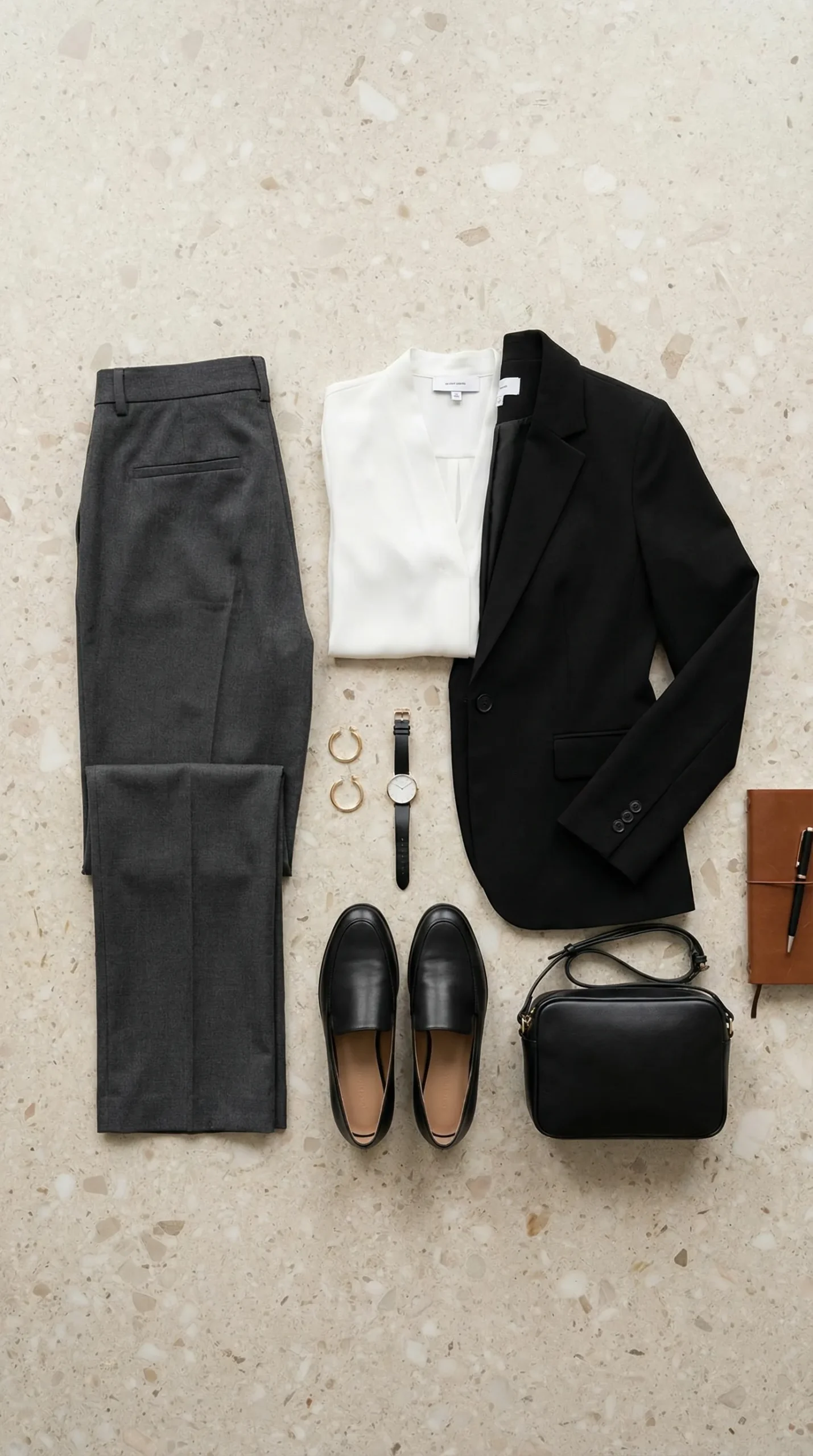
Here, “business casual” leans hard toward the formal end. Not quite a suit. But close. Closer than most people expect.
Think of it as business dress with one concession. The jacket comes off. That’s roughly where the relaxation ends.
- Denim is off the table. Even dark, structured denim. In most of these offices, it signals you didn’t try.
- Open-toe shoes tend to stay out, even in summer. Some offices have softened on this. Most haven’t.
- Visible logos read as too casual. A quiet brand mark is fine. A large chest logo is not.
- Sheer fabrics, bold prints, or anything with significant stretch — use these with caution. The floor is high here.
Modern business attire for women in these environments rewards restraint. Neutral colors. Clean silhouettes. Fabric with some structure to it.
The irony is that “casual Friday” in a finance office still looks like a formal Tuesday in a tech office. Keep that in mind before you dress down.
My take: If you’re new to a corporate or finance environment, spend the first two weeks watching what the women above you are wearing. Then match that, not what your peers are wearing.
Creative, Tech, and Startup Offices
The ceiling is higher here. More color. More texture. More room to express something that is actually yours.
But “more room” is not the same as “no rules.” Business casual for women in creative and tech spaces still requires fit and intentionality. The difference is that you have more options available to meet that bar.
| What Opens Up | What Still Keeps It Professional |
|---|---|
| Bold colors and prints | Fit that looks deliberate, not accidental |
| Interesting textures (linen, boucle, ribbed knit) | Items that are clean, pressed, and not visibly worn |
| Sneakers, depending on the office | Sneakers that are clean and structured, not athletic |
| Dark denim in a tailored cut | Paired with something elevated on top |
| Statement accessories | One statement at a time — not three competing ones |
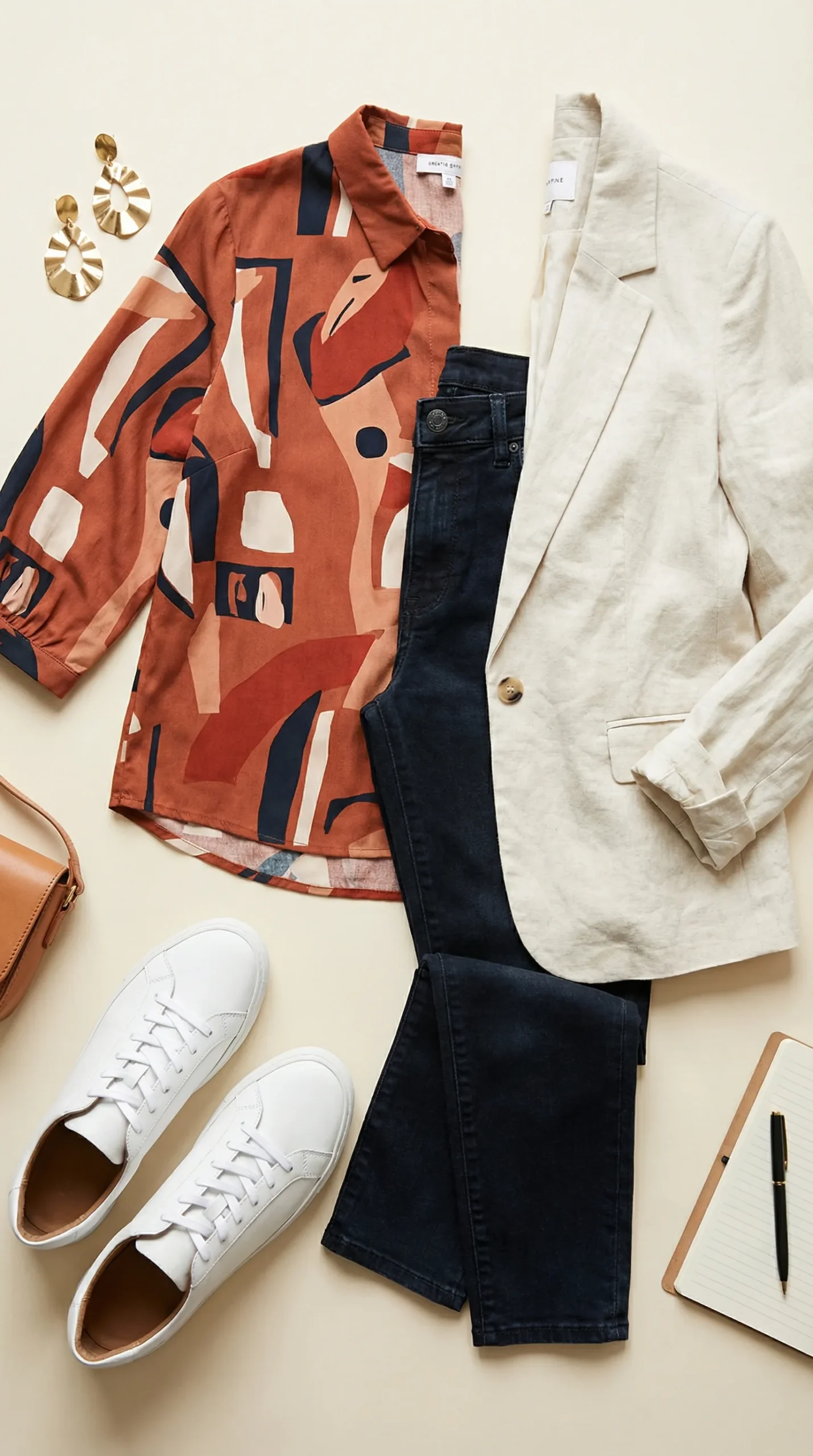
The thing that separates “polished” from “I grabbed this on the way out” is whether the outfit looks like a decision was made. It doesn’t need to be expensive. It needs to look chosen.
Trade-off: The flexibility in these environments can actually make getting dressed harder. More options means more chances to misjudge the room. When in doubt, wear the slightly more formal version of what you were considering.
Traditional or Client-Facing Industries (Healthcare, Education, Legal)
These environments have a split personality. Internal days can be relaxed. Then a client shows up, or you’re covering a deposition, or parents are in for a meeting. The register snaps back, fast.
You don’t always get advance notice. That’s the part people underestimate.
The practical rule is simple. One reliable blazer and one pair of polished closed-toe shoes should always be accessible at work. Not in the back of your car. Not at home. At your desk, or in a locker, or draped over a chair.
- The blazer doesn’t need to be dramatic. A well-cut navy or charcoal blazer can make almost any outfit client-ready in two minutes.
- Closed-toe shoes don’t need to be heels. A clean leather flat or low block heel reads as professional in nearly every context.
- In healthcare and education especially, fabric durability matters. You need pieces that hold up through a long shift or a day on your feet — not just look good at 8am.
This is also where the question of personal style expression and professional standards intersects most visibly. Business casual black women navigating these environments often face an additional layer of scrutiny — the same outfit read differently depending on who’s evaluating it. That’s a real dynamic, not a perceived one. Dressing with intentionality in these spaces isn’t about erasing your style. It’s about making it harder for anyone to use what you’re wearing as a footnote.
My take: In client-facing roles, your outfit is part of the signal you’re sending before you say a word. It doesn’t need to be formal. It needs to be unimpeachable.
Seasonal Business Casual
Your summer wardrobe is too lightweight for the office AC. Your winter coat swamps everything polished underneath it, and by the time you’ve peeled it off in the lobby, you’ve already undone whatever you were going for.
Neither is a wardrobe problem. Both are a fabric-and-layering problem. Fix that, and you don’t need a seasonal rebuild every six months.
The goal is a small set of strategic swaps — not a new closet. Fabrics that regulate temperature. Pieces that bridge what’s outside with what a conference room requires.
| Season | Recommended Fabrics | Key Pieces to Lean On | What to Shelve |
|---|---|---|---|
| Summer | Lightweight cotton, linen blends, viscose | Structured cotton blazer, sleeveless shell with cardigan, midi skirt | Heavy knits, thick wool trousers, opaque tights |
| Transitional (Spring/Fall) | Light wool blends, ponte, medium-weight cotton | Linen blazer over a medium knit, ankle trouser, leather loafer | Full winter coat inside the office, sandals below 15°C |
| Winter | Merino wool, wool-blend trousers, cashmere, tweed | Wool trousers, fitted turtleneck, tailored coat, sleek ankle boot | Fleece-lined leggings, puffer vests worn as tops, chunky knits as outerwear |
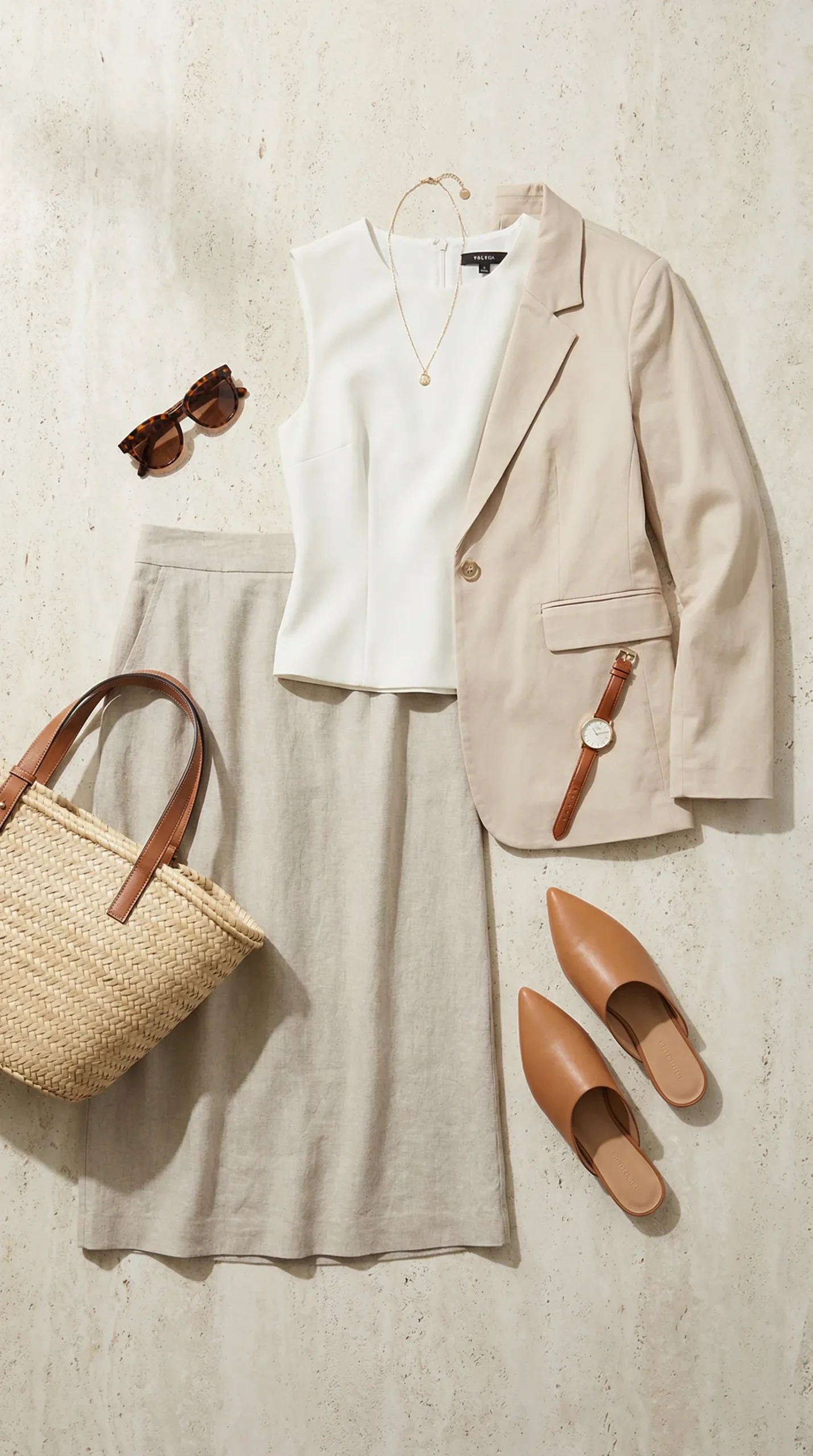
Transitional months are where most people stall. It’s 12°C in the morning and 19°C by lunch. Neither season’s wardrobe applies cleanly.
The fix is layering across fabric weights, not across seasons. A linen blazer over a medium-weight knit reads as deliberate. It moves well. And it comes off easily if the room gets warm without unraveling the whole outfit underneath.
Summer Business Casual
The linen problem is real. Linen breathes better than almost any office-appropriate fabric, and it looks clean and intentional at 8am. By 10am, if you’ve done anything other than sit perfectly still, it has creased in ways that a cotton-polyester blend simply wouldn’t.
That’s not a reason to avoid linen. It’s a reason to choose linen blends (usually 55% linen, 45% cotton or viscose) over 100% linen. The blend gives you most of the breathability with significantly better wrinkle resistance. The trade-off is that it doesn’t look quite as crisp or feel quite as cool as the pure version. That’s the honest version of it.
Blunt truth: pure linen is a fabric for people who don’t move much or don’t care. Most of us are neither.
Sleeveless tops in summer are fine for business casual clothing for women — with one condition. The shoulder line needs to be clean. Spaghetti straps are not the issue most people think they are; a wide, structured strap reads completely differently to a thin one. What actually makes a sleeveless top office-appropriate is what’s around it.
- A light cardigan (not a hoodie, not a pashmina thrown over the shoulders) makes a sleeveless shell fully office-ready in about ten seconds
- Bare legs work in summer if the hemline is at or below the knee — mid-thigh is a different conversation depending on the room
- Open-toe shoes in a professional silhouette (a heeled mule, a pointed flat) sit in business casual; flip-flops with a wedge do not, regardless of price
Then there’s the air-conditioning trap. You dress for 32°C outside. The office is 19°C. You spend six hours hunched over trying not to look cold.
The fix for business casual for women in summer is simple: always have a structured layer on your chair or in your bag. A cotton or linen blazer. A fitted cardigan with some body to it. Not an oversized hoodie pulled from a gym bag. The layer needs to hold a shape. Shapeless fabric on top of a polished outfit collapses the whole thing.
Winter Business Casual
The layering stack in winter has a logic to it, and it works best when you build it from the inside out. Base layer first. Thin, temperature-regulating, fitted. Merino wool is the answer here — it regulates body temperature better than synthetic base layers because the fiber structure traps air and releases moisture. It also doesn’t pill the way cheap cotton does after a month of wear.
Mid-layer second. This is where the outfit actually lives. Wool-blend trousers, a fitted turtleneck or a structured blouse — whatever combination reads as intentional for modern female business attire in your specific office context. Third, outerwear. And this is where most people undermine the whole stack.
A tailored wool coat keeps the silhouette intact from street to lobby. It takes exactly as long to put on as a puffer jacket. The difference is what it communicates before you’ve said a word in the morning meeting.
My take: your coat is the first and last thing people see. Spending more on it than on any other single item makes more logical sense than most wardrobe decisions, and I will not move on that position.
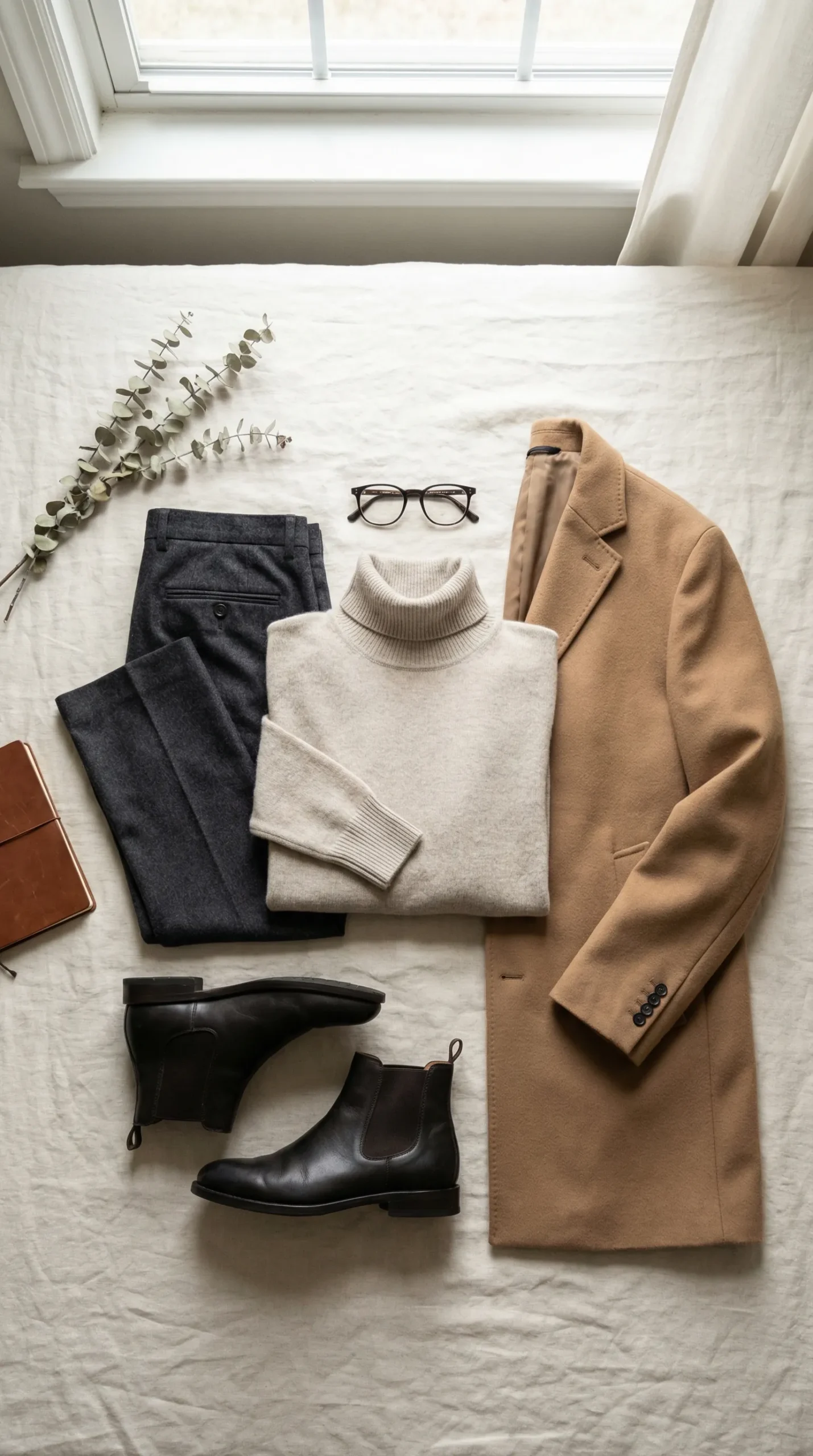
Boot season is its own decision tree. The silhouette of the boot changes the whole read of an outfit.
- Sleek ankle boot with a low block heel or small pointed toe: sits cleanly in business casual, works under straight-leg or wide-leg trousers equally well
- Chelsea boot in leather or quality suede: also works, especially in darker tones
- Knee-high flat riding boot: reads as weekend or equestrian, not office — the shaft adds too much volume and the flat heel pushes it casual regardless of what’s above it
- Chunky-soled combat boot: depends entirely on the office, but if you have to think about whether it works, it probably doesn’t
On fabric for business casual for women in winter: wool trousers add warmth without adding bulk because the weave structure itself insulates without requiring extra layers underneath. Fleece-lined leggings do the same job thermally, but the surface reads as activewear regardless of styling. The look doesn’t hold up in most office contexts, and trying to make it work takes more effort than it’s worth.
Cashmere is worth it if you can afford the maintenance. It pills. It needs proper storage. A wool-cashmere blend (usually 70/30) gives you most of the softness with better durability and a lower dry-cleaning bill.
Business Casual by Age and Body Type
Every guide shows the same tailored blazer on the same frame. And you’re standing there wondering when they plan to include anyone else.
This is not a reinvention. The core principles covered in the wardrobe essentials chapter don’t change. What changes is how you weight them — which proportions to prioritize, which trade-offs are worth making, what your closet actually needs to do for you at this particular point in your life.
Adaptation. Not overhaul.
Business Casual in Your 20s
The entry-level closet problem is not style. It’s money and information at the same time. You don’t yet know what your company actually means by “business casual.” You don’t have much to spend. And you’re probably still wearing things that worked fine on a university campus but read visibly wrong under office lighting.
Campus habits die hard. That’s the honest version of it.
The over-correction is just as common. Some women in their first professional role go the other direction entirely and arrive in full suiting that makes them look like they’re interviewing at a law firm when the actual dress code is startup-adjacent. Both are correctable. But the fix isn’t more clothes. It’s fewer, better-chosen ones.
My take: for business casual young women navigating their first professional wardrobe, three pieces will do more work than ten average ones — and that is where I would put the money first.
- One well-cut blazer in a neutral. Charcoal, camel, or a dark navy that reads blue and not purple in fluorescent light. This is your override piece. It makes almost any outfit below it look intentional.
- One tailored trouser. Not skinny. Not wide-leg if you’re still figuring out proportions. A straight or slightly tapered cut in a mid-weight fabric gives you a clean line without requiring you to think too hard about what goes with it.
- One neutral shoe with a low, stable heel or a structured flat. Not a fashion shoe. A functional one. You will walk more than you expect.
Everything else is optional until you understand what your specific office actually requires.
Business casual for women in their 20s is fundamentally a budget-allocation problem. Spend on the pieces that go over and under everything else. Hold off on the trendy items until you know whether you’ll still want them in eighteen months.
Trade-off: buying only neutrals early on is safe and practical, but it can feel boring. That’s accurate. The boredom is temporary. The ill-fitting statement piece you bought in week two is not.

Business Casual in Your 40s
By this point, you know what you like. Or you should. If you don’t, that’s the first thing to sort out — not by buying more, but by being honest about what you actually reach for versus what just hangs there.
The shift in your 40s is not about age. It’s about fit precision mattering more than it did before. Business casual for women in their 40s is less about trend participation and more about proportion control.
Here is what that means in practice: a relaxed trouser silhouette works well at this stage, but only if something above the waist provides structure. The two elements have to counterbalance. A wide-leg pant paired with a slouchy top reads shapeless. That same wide-leg pant paired with a fitted knit or a structured blazer reads intentional.
The physics of it: volume at the bottom requires definition at the top, and vice versa. One relaxed element per outfit. Not two.
My take: the brief in your 40s is to refine what’s already working, not start over — and any guide that tells you to overhaul your wardrobe at this stage is selling you something.
Fabric quality becomes more noticeable here, too. Not because cheaper fabrics are morally wrong, but because they tend to lose structure faster. A trouser in a wool blend or a ponte with real weight to it will hold its shape through an eight-hour day. A polyester that’s too light will not.
Trade-off: well-structured pieces in quality fabrics cost more and often require dry cleaning. That is a real inconvenience. It is also, for most women at this stage, worth it.
Business Casual Over 50 and 60
The principles for your 50s and your 60s converge more than they diverge. So this is one guide, not two.
Fabric quality is the primary lever here. Not trend. Not volume. Quality. An investment piece in a well-constructed fabric — a merino cardigan, a wool-blend trouser, a structured blazer with proper shoulder seaming — will do more for your overall appearance than any number of cheaper items stacked on top of each other.
Business casual for women over 50 and women over 60 rewards restraint. Fewer pieces. Better ones.
On silhouette: structured pieces that skim the body. That’s the frame. A tailored wide-leg trouser works well. An oversized boxy shirt does not. The difference is intention. One has shape built into the construction. The other relies on the body inside it to provide the shape, and that’s a job a shirt cannot do.
- Tailored wide-leg trouser: clean, elongating, holds its structure through the day. ✓
- Oversized boxy shirt worn as a top: requires precise styling to read polished; reads shapeless on most frames. ✗
- Structured blazer with a defined shoulder: provides the silhouette architecture that everything else rests on. ✓
- Unstructured drapey jacket in a slippery fabric: can work, but the margin for error is narrow. ✗
On color and print: wear them. Intentionally. The issue is never color itself — it’s color without anchor. A bold print paired with a neutral trouser and a clean shoe reads confident. The same print with a patterned scarf and a busy bag reads like too many things competing at once.
One statement per outfit. Not three.
My take: the fear of color that some women develop by their 50s is mostly inherited from bad advice — and it has produced a lot of unnecessary grey wardrobes.
Blunt truth: business casual for women over 40 broadly, and this applies equally at 50 and 60, is about knowing your own proportions well enough to dress them correctly without having to think about it every morning. That knowledge comes from paying attention. Not from buying more clothes.
Plus-Size Business Casual
The most persistent myth in plus-size dressing is that comfort and polish are in tension. They are not. The actual tension is between fit and non-fit.
Structured tailoring flatters more than oversized “comfortable” pieces. Every time. An oversized piece does not hide the body; it hides the waist, adds visual bulk, and removes the clean lines that make an outfit read professional. A well-fitted piece in a structured fabric does the opposite.
Blunt truth: a beautiful piece in the wrong size reads sloppy regardless of style, fabric, or price point. Fit is not optional. It is the entire thing.
The proportion logic for plus-size business casual is about creating a long, clean vertical line. Monochromatic column dressing does this effectively — same tone top to bottom, or closely matched — because the eye reads the full height rather than stopping at a contrast point mid-body.
What breaks that line: a cropped jacket that bisects the torso at the widest point. It creates a horizontal interruption exactly where you don’t want one. A longer jacket — one that hits at the hip or just below — keeps the vertical intact.

- Monochromatic column in a structured fabric: elongates, creates a clean professional line. ✓
- Cropped jacket over a contrasting top: bisects the torso, interrupts the vertical line. ✗
- Tailored straight-leg trouser with a tucked knit: defines the waist without restricting it. ✓
- Floaty, unstructured separates in soft fabric: comfortable, but tends to read shapeless under office lighting. ✗
Tailored options exist across price points. You do not need a specialist retailer or a large budget to find a well-fitted blazer or a structured trouser. You need to be willing to have things altered.
Hemming, taking in a waist, adjusting a sleeve length — these are small interventions that cost less than most people expect and make a significant difference in how a garment reads on the body. Business casual for women plus size works when the fit is correct. That’s the whole framework, and it applies regardless of the price tag on the label.
FAQ — Business Casual for Women
What is business casual for women?
It’s the dress code that lives between a suit and jeans — polished enough for a client to take you seriously, relaxed enough that you’re not overdressed for a Tuesday. For the full breakdown, see What Is Business Casual for Women? above.
Can a woman wear jeans for business casual?
Yes. But not all jeans, and not in all offices. The criteria matter more than the fabric. Head to The Business Casual Wardrobe Essentials > Bottoms for exactly which cuts and washes make the cut.
What is the 3-3-3 rule for clothes?
Three colors. Three pieces. One cohesive outfit. It’s a framework for getting dressed without second-guessing yourself at 7am. See The Styling Principles That Make It Work for how to apply it in practice.
What should you not wear for business casual?
The three consistent offenders: visible athleisure, anything sheer without a layer underneath, and shoes that belong at a weekend barbecue. The full list is in The Styling Principles That Make It Work.