Always Looking Sloppy on the Trail? 16 Backpacking Outfits That Don’t

Backpacking gear that falls apart after one trip is just money down the drain. There is something about the right backpacking outfits that makes every adventure feel so much more manageable and comfortable. Good pieces that actually work in different weather and hold up to real use are surprisingly hard to track down.
Been going through everything out there to find backpacking outfits that can handle mountains, cities, and everything in between. I’ve linked the most ridiculously good Backpacking Outfits I’m totally fixated on this week, and I know for a fact you’ll want every single one.
The Art of the “Trail Capsule”: Choosing Versatile Pieces
When I first started backpacking, I made the classic mistake of overpacking “just in case” items that never left my bag. Now, I swear by a trail capsule wardrobe. The secret to great backpacking outfits isn’t having a different look for every day; it’s about choosing high-quality basics that play well together. You want pieces that transition seamlessly from a sweaty uphill climb to a chilly evening by the campfire. Think of your clothing as a system rather than individual outfits.
I always prioritize fabrics that can handle a bit of “trail funk.” Merino wool is my absolute best friend because it doesn’t hold onto odors and regulates temperature like a dream. If you’re heading to humid spots like Southeast Asia, you’ll want to swap the heavy knits for ultra-breathable, quick-dry synthetics. Whatever your destination, the goal is to feel like yourself even when you haven’t seen a mirror in three days.
Essential Layers for Every Climate and Terrain
Whether you’re navigating the cobblestones of Europe or the rugged peaks of the Sierras, layering is your best defense against unpredictable weather. I like to break my packing list down into three main categories to ensure I’m never caught off guard. This method keeps your pack light while maximizing your style options.
- The Base Layer: Moisture-wicking tees or tanks that feel soft against the skin.
- The Mid-Layer: This is where the style happens! Think cozy fleeces, lightweight down vests, or a classic flannel.
- The Outer Shell: A reliable windbreaker or rain jacket—bonus points if it’s in a color that pops against the green trees.
- Sleep Clothes: Never underestimate the power of “clean” clothes. I always pack a dedicated set of lightweight leggings and a soft tee just for sleeping to keep my sleeping bag fresh.
Don’t forget that your accessories are the finishing touches that actually serve a purpose. A wide-brimmed hat or a colorful bandana can hide a bad hair day while protecting you from the sun. When you choose items that serve a dual purpose, you save space without sacrificing that put-together feeling we all love.
Backpacking Outfits That Are Cute, Comfy & Trail-Ready
Technical Jacket with Relaxed Trousers
This look plays with proportions by pairing a structured technical jacket with breezy, relaxed trousers. The oversized sleeves give you plenty of room to move, which is a lifesaver when you’re navigating steep switchbacks. It’s a great choice for a windy afternoon at a high-altitude lookout point.
Lightweight Jacket with Relaxed Trousers
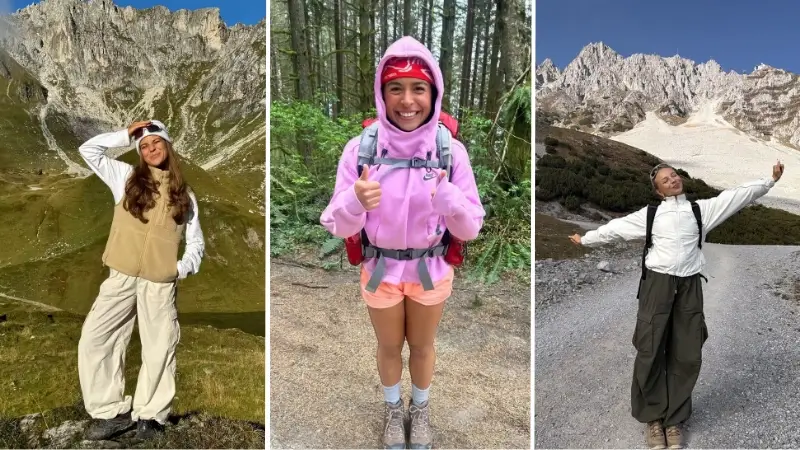
A soft beige jacket is a fantastic neutral that brightens up your photos without being too flashy. Pairing it with dark trousers keeps the outfit grounded and practical for sitting on logs or rocks during a lunch break. This is a go-to ensemble for a casual day hike in the early autumn.
Lightweight Jacket with Cycling Shorts
When the sun comes out but the breeze is still sharp, cycling shorts paired with a light jacket are the way to go. Adding a bright red beanie gives you a fun pop of personality and keeps your ears warm in the wind. It’s a sporty, high-energy look for those fast-paced summer summit pushes.
Fleece Vest with Layered Activewear
Layering a vest over a hoodie is the ultimate hack for core warmth without the bulk of extra sleeves. The mix of gray and brown tones feels very organic and looks beautiful against a riverbank backdrop. This would be your most comfortable outfit for setting up camp as the sun starts to dip.
Layered Fleece and Utility Pants
Utility pants are a must-have for their durability, and they look surprisingly chic when paired with a soft, snug fleece. The contrast between the rugged bottoms and the cozy top makes you look ready for anything the trail throws your way. You’ll love how this feels for a morning walk through a field of wildflowers.
Lightweight Jacket with Cycling Shorts
A jacket with a subtle sheen adds a little bit of modern flair to your outdoor wardrobe. Pairing it with simple black shorts keeps the focus on the silhouette and ensures you stay cool during a steep climb. This is a great choice for a brisk morning walk with your favorite trail dog.
Fleece Jacket with Leggings and Boots
Leggings are a backpacking staple for a reason—they offer total freedom of movement and pair perfectly with chunky boots. Throwing on a plush fleece jacket adds that necessary layer of warmth for higher elevations. You will look effortlessly put-together while hauling your pack toward the next campsite.
Layered Hoodie with Bright Shorts
Who says you have to stick to neutrals in the woods? A pink hoodie and orange shorts are a fun, high-visibility way to show off your style on the trail. This vibrant combo is perfect for a summer adventure when you want your backpacking outfits to match your upbeat mood.
Long–Sleeve Top with Athletic Shorts
Knee-high socks are a clever way to protect your legs from brush while adding a cool, retro vibe to your look. The bright blue shorts provide a great contrast to a simple long-sleeve top, keeping the outfit balanced. You’ll feel ready to conquer any ridge line in this energetic and practical set.
Layered Black Top with Loose Trousers
Loose brown trousers are incredibly breathable, making them a smart choice for long days spent on rocky terrain. Pairing them with a sleek black top keeps the look sophisticated and streamlined. This outfit is a winner for those who prefer a more understated, “pro-hiker” aesthetic during their travels.
Oversized Sweatshirt with Fitted Leggings
There is nothing better than an oversized sweatshirt for those chilly mountain mornings when you aren’t quite ready to leave your sleeping bag. The taupe leggings keep the look modern and offer a nice break from basic black. You’ll feel cozy and cute while sipping coffee at your sunrise viewpoint.
Layered Look with Colorful Pants
Patchwork or colorful pants are such a fun way to bring some personality into the deep woods. Balancing them with a simple black hoodie ensures the outfit doesn’t feel too busy for the trail. This look is perfect for the hiker who wants to stand out in the best way possible.
Lightweight Jacket with Cargo Pants
A crisp white jacket paired with olive cargo pants is a classic outdoor combination that never fails. The wide-leg cut of the pants gives you all the room you need for big steps over fallen logs. It’s a clean, functional look that works just as well for a post-hike meal in a mountain town.
Fleece Vest with Relaxed Trousers
Mixing different shades of tan and cream creates a very high-end, “quiet luxury” vibe even when you’re miles from civilization. The fleece vest adds just enough warmth for a breezy afternoon without making you overheat. You will look incredibly polished in this during a weekend getaway to the mountains.
Frequently Asked Questions
How many sets of backpacking outfits should I pack for a multi-day trip?
The golden rule for backpacking is “one to wear and one to spare.” You generally only need your active hiking outfit and a clean, dry set of base layers to sleep in at night. If you’re out for more than four days, you might add a fresh pair of socks and underwear, but resist the urge to pack a unique look for every day to keep your pack weight manageable.
Can I wear cotton leggings or t-shirts while backpacking?
It’s best to avoid cotton entirely because it absorbs moisture and takes forever to dry, which can lead to chills or painful chafing. Instead, look for synthetic blends like polyester and nylon, or natural performance fibers like merino wool. These fabrics “wick” sweat away from your skin, keeping you much more comfortable and smelling fresher during long miles on the trail.
How do I keep my backpacking outfits from smelling after a few days?
Merino wool is your absolute best friend here because it is naturally antimicrobial and resists odors way better than synthetic gym clothes. If you’re wearing synthetics, look for pieces treated with silver ion technology designed to fight bacteria. Pro tip: give your clothes a good shake and hang them outside your tent or on a branch overnight to air them out before putting them back on in the morning.
Should I choose shorts or long pants for my hiking outfit?
This really depends on the terrain and the “vibe” of your destination. Shorts are great for airflow in high heat, but long pants or leggings provide essential protection against ticks, overgrown brush, and harsh sun exposure. If you can’t decide, convertible zip-off pants or lightweight joggers are a fantastic middle ground that offer total versatility for changing trail conditions.