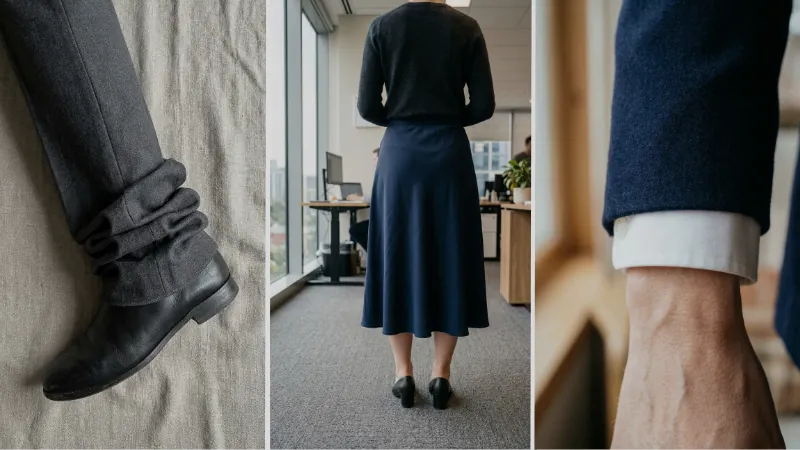
The Length That Breaks Everything: How One Wrong Hem Ruins a Proportioned Outfit

Most women know a tailored fit is ideal. We tolerate chronically wrong hems anyway. Trousers that bunch, skirts that shorten the leg, jacket sleeves that swallow the wrist. The standard advice is to “just get it tailored.” That advice fails because it lacks the crucial specifics. The real problem isn’t a lack of tailoring. It’s a lack of knowing the exact, centimeter-precise landing point dictated by your shoes and your body, not a tape measure. This framework will give you that precision.
Quick Answer
- Tailor trousers only with the specific shoe you’ll wear to set the correct break.
- End jacket sleeves at your wrist bone, showing 1–1.5 cm of shirt cuff.
- Place skirt hems above or below your calf’s widest point to lengthen legs.
- Use the pin-and-photograph method to find your most flattering skirt length without bias.
- Apply the 30% cost rule to decide if a garment is actually worth altering.
If you only do one thing: Audit your trouser hems while wearing the shoes you most often pair them with.
The Chronic, Quiet Problem of the Wrong Hem
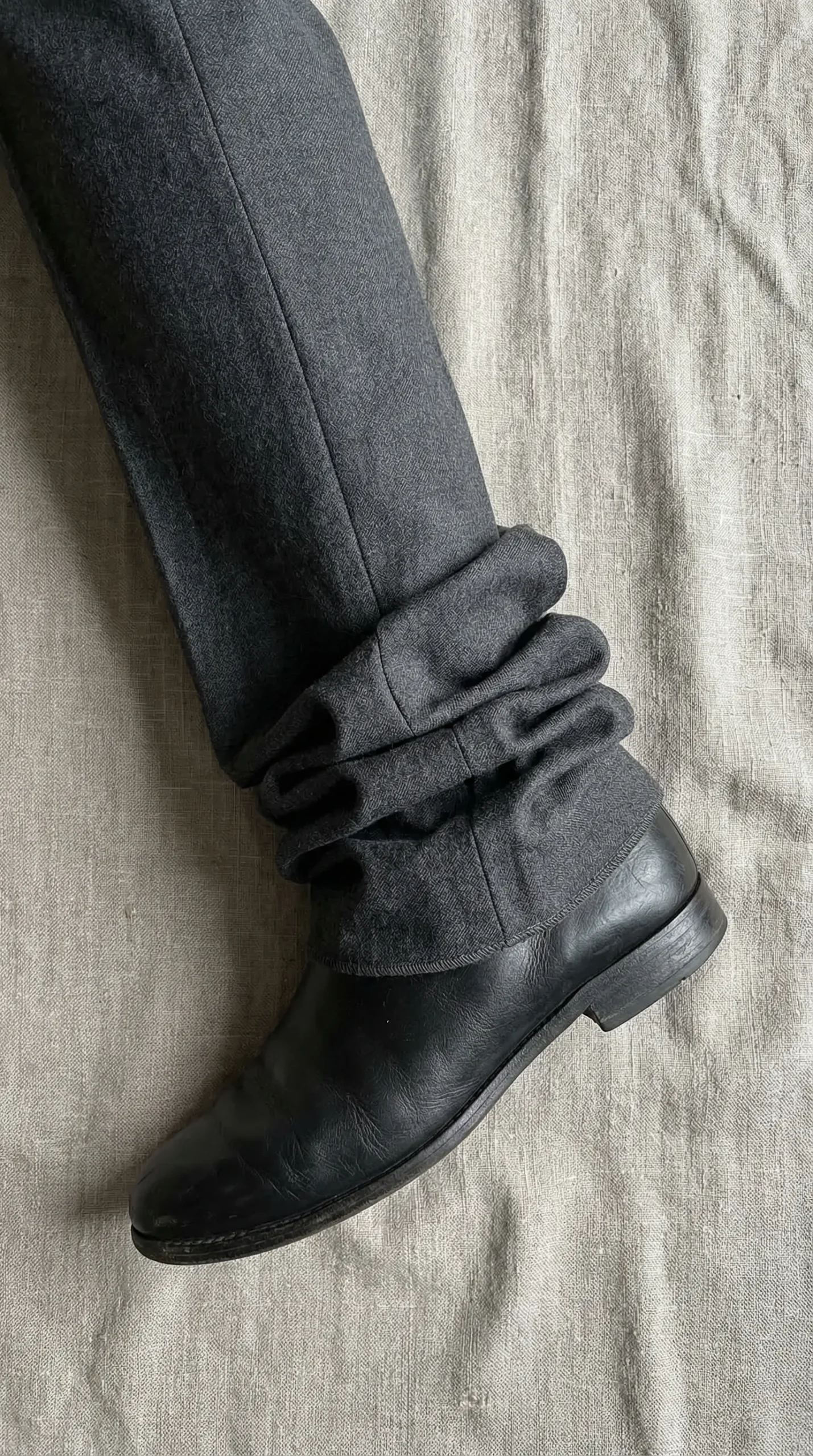
A wrong hem doesn’t scream. It whispers a constant, subtle message of being almost right. It’s the tolerated annoyance you stop seeing, but everyone else absorbs subconsciously.
Take your work trousers. The ideal is a single, clean fold where the fabric meets your shoe—what tailors call a “half-break.” The chronic problem is a sloppy puddle of fabric bunching around your ankle. It looks unkempt.
It causes the hem to fray prematurely. That bunching also visually cuts your leg, making you look shorter.
With skirts, the issue is about proportion. A hem that lands directly on the widest part of your calf muscle is a common offender. It broadens that area instantly, making the leg seem stouter.
For jackets, a sleeve that falls past the wrist bone is the culprit. It doesn’t look intentional. It looks like you borrowed someone else’s blazer. The fabric folds back on itself, creating a wrinkled cuff that ruins the line of your arm.
These aren’t unfixable mysteries. They are simple measurement errors we’ve learned to live with. The consequence is a wardrobe that feels 80% there.
A sloppy trouser break isn’t just aesthetic; it’s structural. Constant friction from excess fabric on the heel is the primary cause of hem wear and tear. Fixing the length isn’t vanity—it’s maintenance that extends the garment’s life and improves its line in one move.
Why “Just Get It Tailored” Is Useless Advice
This phrase is the well-meaning equivalent of telling someone to “be happier.” It’s technically correct but functionally empty. It leads to inaction, because you can’t execute it without the missing piece: the target.
Imagine bringing a pair of trousers to a tailor. You say, “Can you shorten these a bit?” The tailor will ask, “How much?” If you don’t know the exact answer—in relation to your specific shoe—you are just guessing.
Tailoring without a target is a waste of money. You also can’t judge if a garment is worth altering if you don’t know what “correct” looks like on you.
My job in banking is built on giving clear, executable instructions. You don’t tell a team to “increase efficiency.” You provide the metrics and the process.
Generic advice fails under scrutiny. Research indicates that people are far more likely to follow through on a complex task when it is broken into specific, measurable actions, rather than presented as a vague imperative.
The Framework: Hem Length is Dictated by Shoe and Bone, Not Tape
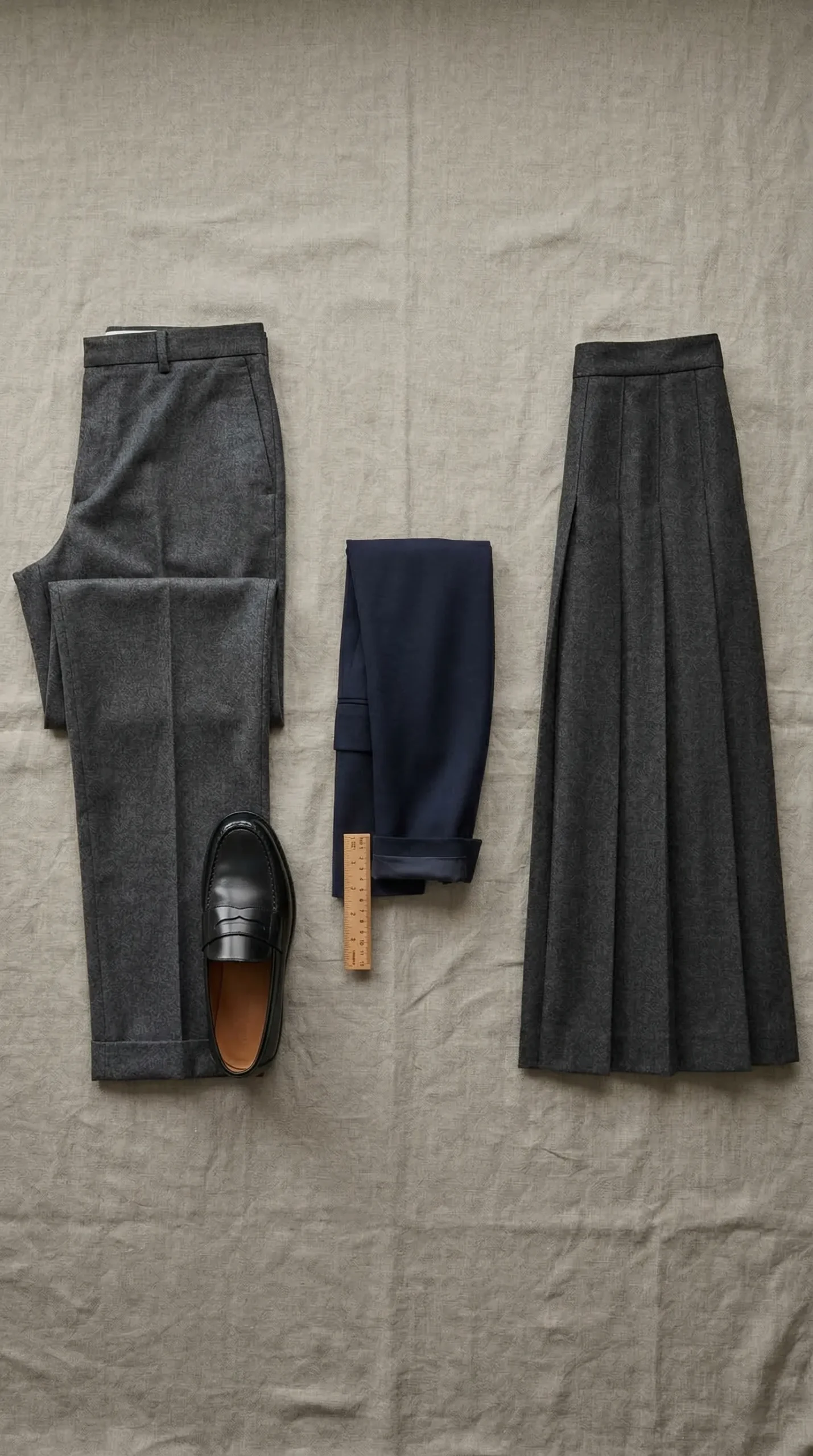
Forget measuring in a vacuum. The perfect hem point is found through relationship, not isolation. The target is determined by the interaction between the garment’s edge and fixed points on your body and your shoes.
Your body provides the anchor points. For sleeves, it’s the prominent wrist bone. For skirts, it’s the shape of your calf musculature.
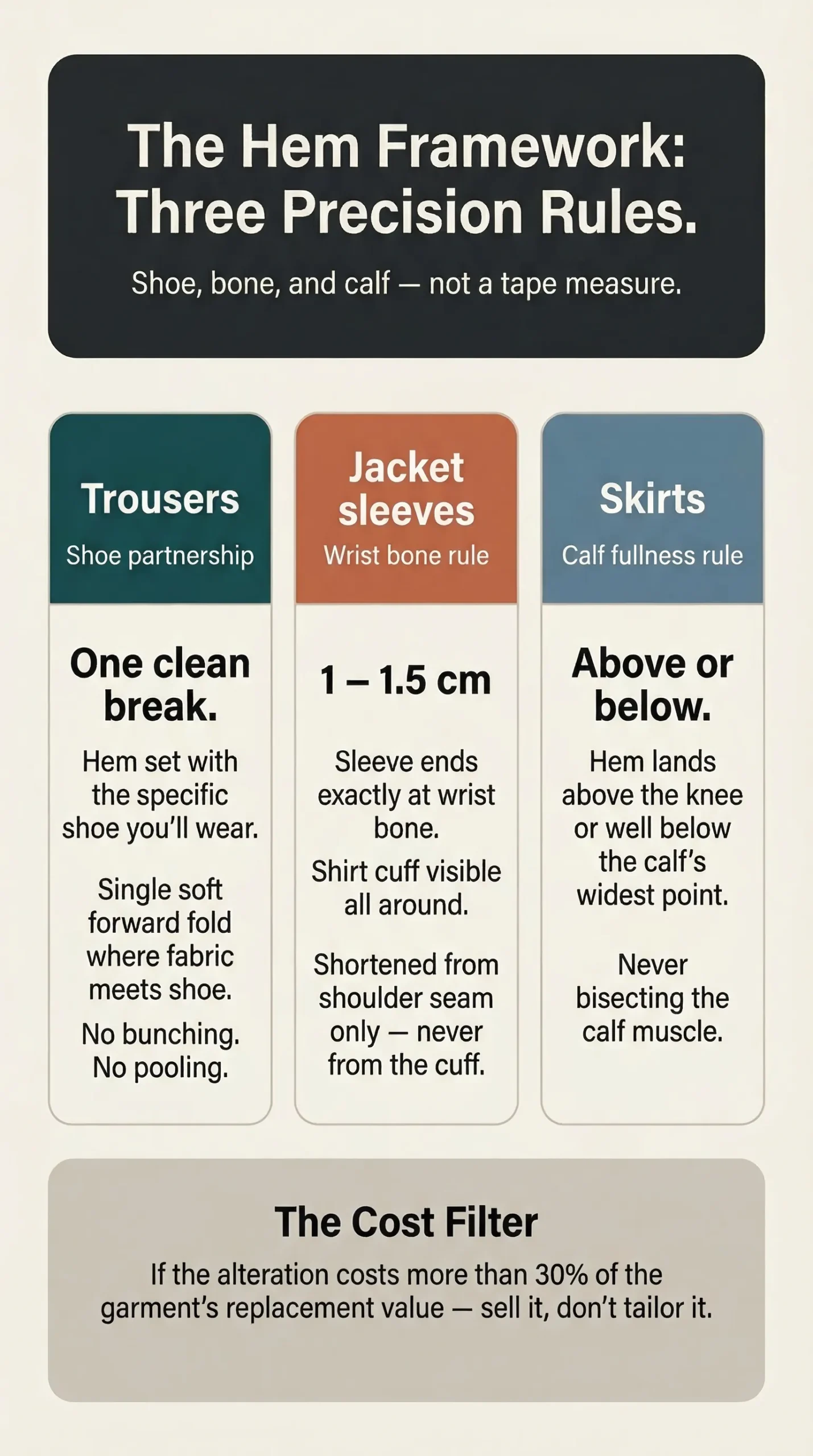
Your shoes provide the variable. A trouser hem for flats is different from one for heels. The rule is simple: the higher the heel, the shorter the trouser needs to be to maintain the same clean break.
This means you must decide on the primary shoe partnership for each bottom. You cannot have one perfect trouser length for both a flat loafer and a 3-inch pump.
The skirt rule is visual: the hem must avoid bisecting the widest part of any muscle group. Usually, this means either just above the knee, or well below the calf’s bulge.
The jacket rule is fixed: the sleeve should end exactly at the wrist bone, allowing 1–1.5 cm of a shirt cuff to peek out.
Proportion is a science of visual interruption. A hemline that cuts across the body at its widest point will always widen it further. The goal is to let the eye travel smoothly, which is achieved by placing hems at the natural narrowing points before joints or muscle peaks.
The Execution Plan: How to Diagnose and Fix Your Hemlines
This is the audit. You need your most-worn office shoes, a full-length mirror, and some patience. We’ll go category by category. The goal is not to tailor everything today. It’s to diagnose what you own.
Step 1: Auditing Your Trouser Hem and Shoe Partnership
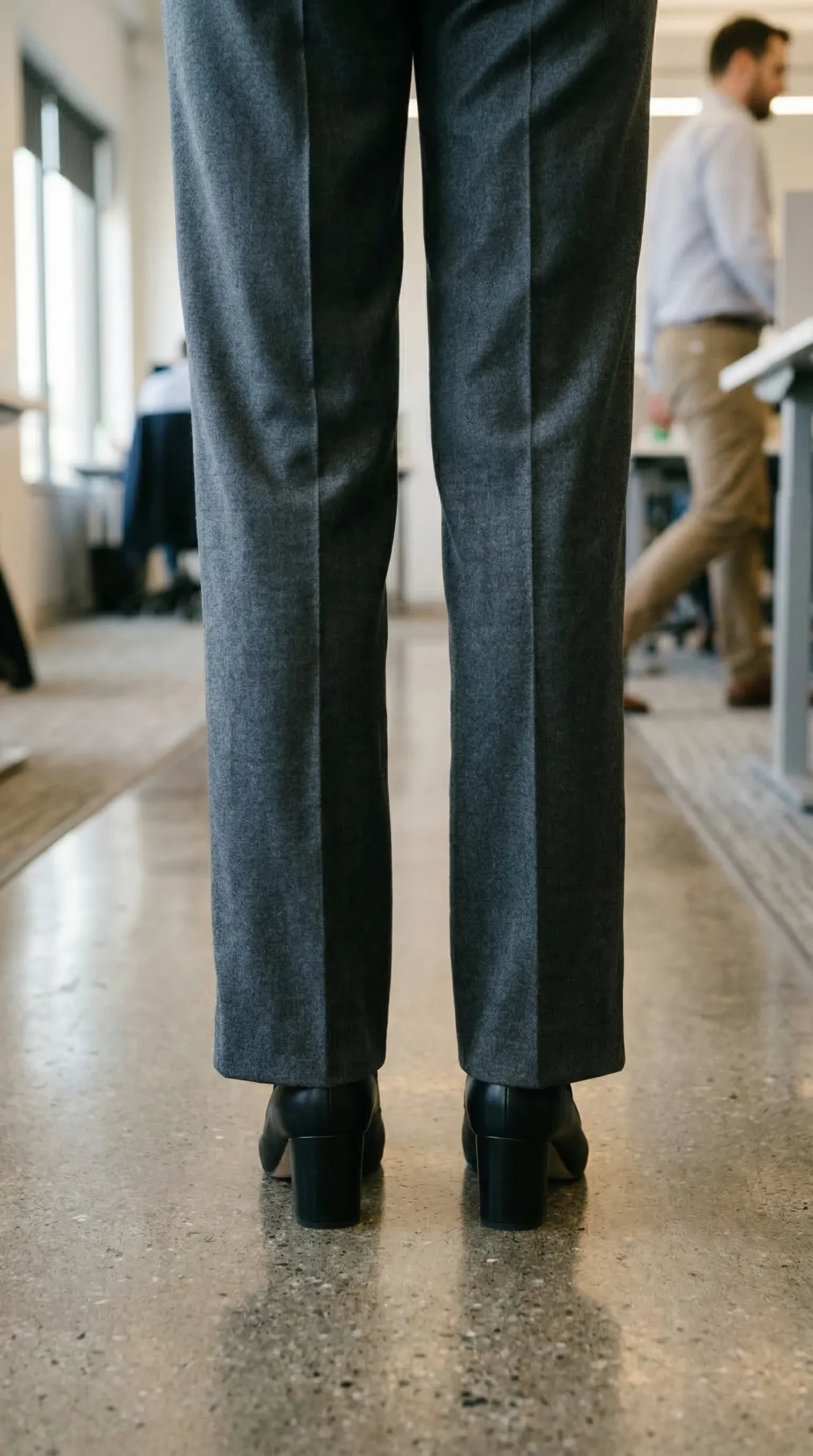
Put on the trousers. Put on the shoes you wear with them 80% of the time. Stand normally. Look down. What you want to see is a single, soft forward fold where the fabric meets the shoe vamp.
This is the “break.” What you likely see is multiple folds, or fabric resting on the heel of your shoe. That’s too long. Now walk. Does the back of the trouser catch on your heel? That’s a definitive fail.
For a clear analysis of what a good office trouser cut and hem should achieve, see our review of the COS Wide-Leg Tailored Twill Trousers. Note the clean line from hip to hem. Your trousers should aim for that clarity.
Step 2: Finding Your Skirt’s Leg-Lengthening Sweet Spot
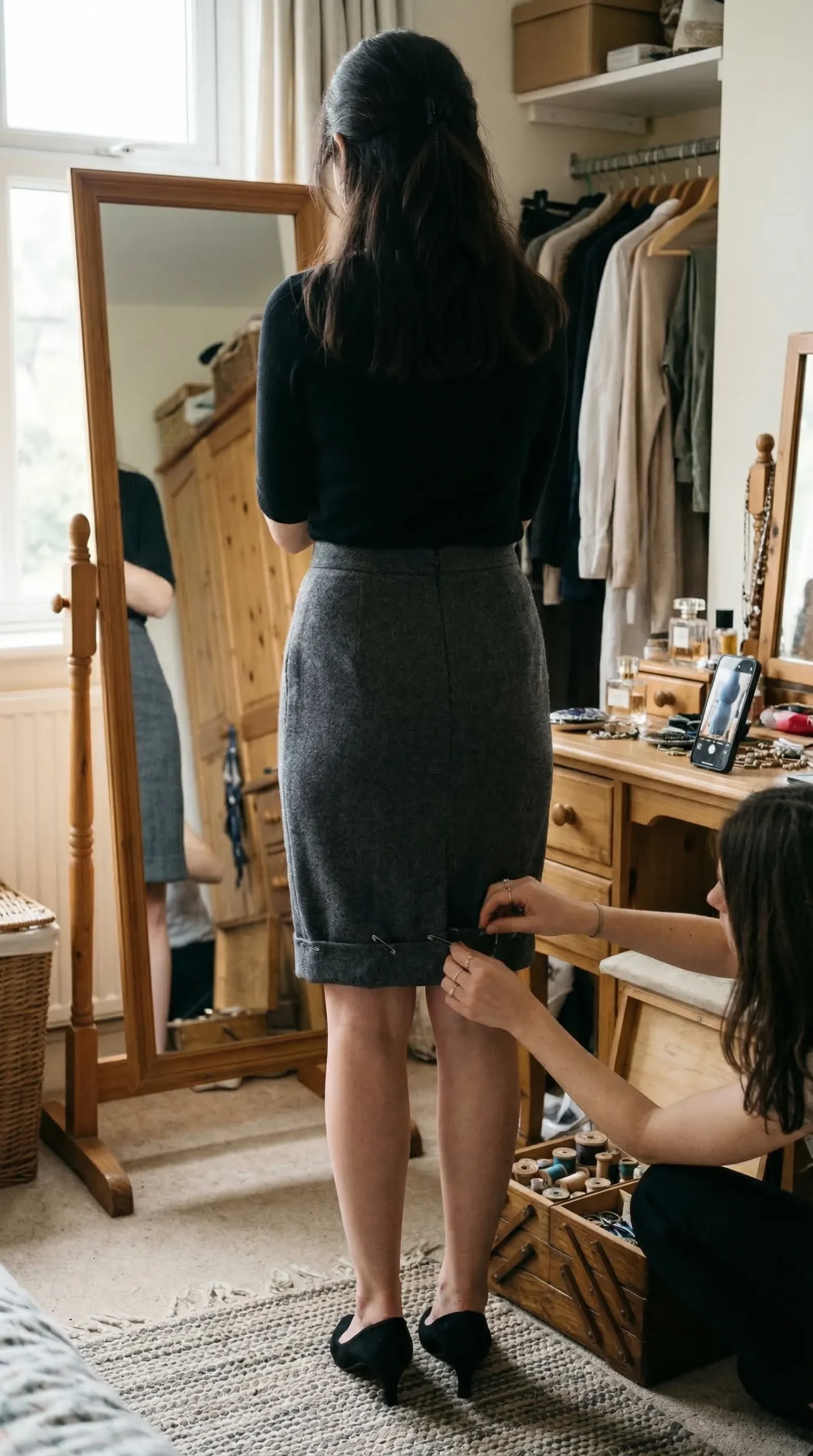
This requires a pin-and-photograph method. It seems fussy, but it works. Put on a skirt that’s roughly the right length. Have a friend use safety pins to temporarily hike the hem to three different spots.
Take a full-length photo at each pin point. Do not look in the mirror—look at the photos later. The photo will show you, dispassionately, which length makes your leg line look longest and most tapered.
The winner is almost never the one that hits the middle of your calf. Your eye is drawn to that horizontal line, which stops the vertical flow.
Step 3: Measuring Your Jacket Sleeve Against Your Shirt Cuff
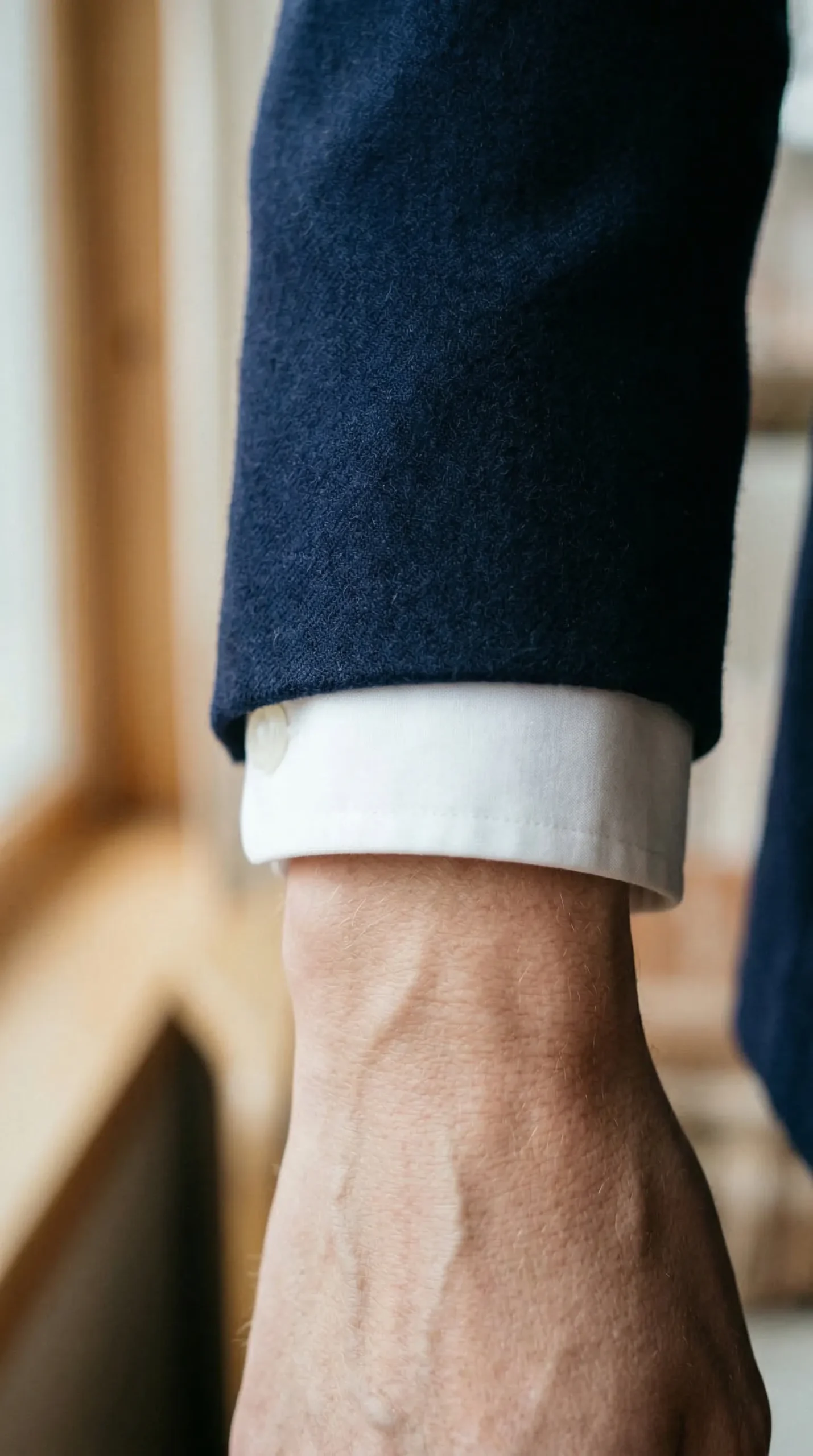
Wear a jacket over a shirt with standard cuffs. Not a blouse, a shirt. Stand with your arms relaxed at your sides. The jacket sleeve should end exactly at your wrist bone.
You should see a consistent 1–1.5 cm of shirt cuff peeking out all around your wrist. If the jacket covers the entire cuff, it’s too long. If you see more than 2 cm of cuff, it’s probably too short.
When tailoring is needed, the alteration must be done from the shoulder/sleeve seam, not the cuff. Shortening from the cuff ruins the button placement and balance. A well-constructed blazer, like the Arket Hopsack Wool Blazer, is designed with this in mind.
The Cost-Benefit Filter: What is Actually Worth Tailoring
This is the pragmatic Frankfurt banker math. You have the diagnosis. Now apply the filter. First, know local alteration costs. A simple trouser hem: €15-€25. Jacket sleeves: €40-€70. A lined skirt hem: €30-€50.
Now, weigh that against the garment’s value, quality, and how often you wear it. Rule: If the alteration costs more than 30% of the garment’s current replacement value, and the garment isn’t exceptional, do not alter it.
This is especially true for cheap, trendy pieces. A €50 skirt needing a €35 hem is a bad investment. For your core, high-quality workhorses, tailoring is the final, necessary step to make them perfect.
This principle is central to building a lasting professional uniform, which we explore in depth in our guide to business professional outfits.
Anchor 01: The Cropped Straight Trouser – Sidestepping the Problem
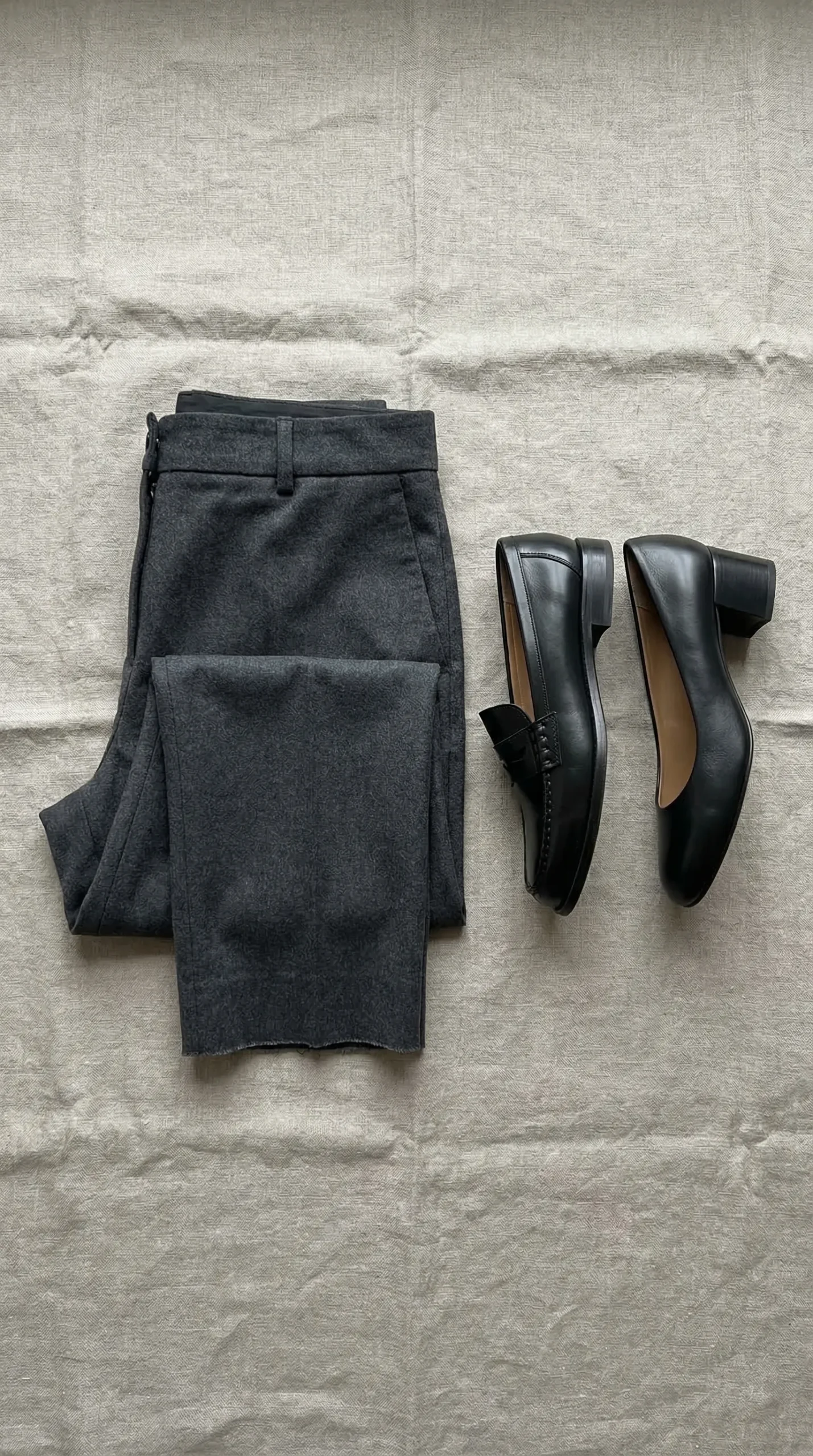
This cut is your strategic bypass. A straight-leg trouser cropped to hit cleanly at the ankle bone eliminates the break dilemma entirely. Its length is fixed.
The visual proportion works because it shows a sliver of skin and your shoe fully. With flats, the ankle exposure is greater, creating a lighter look. With a heel, the line elongates seamlessly from hem to toe.
The hem no longer interacts with the shoe top, so you don’t have to calculate for heel height. You just need to ensure the cropped length is correct for your ankle—not too high, not too low. It’s a modern, clean solution.
Anchor 02: The Flattering Midi Skirt – Landing Below the Calf Fullness

The ideal midi skirt is a length cheat code. It automatically lands below the widest part of your calf, at the narrowing point between the calf muscle and the ankle. This is usually about 10 cm above your ankle bone.
This length creates a continuous, tapering line from the knee down. It’s universally leg-lengthening because it doesn’t create a horizontal block. The eye follows the narrowing shape all the way down.
When shopping, this is the length to look for. It sidesteps the entire “where does it hit my calf?” problem by targeting the one spot that is almost always flattering.
Common Mistakes
Mistake: Tailoring trousers without bringing the shoes you’ll wear with them.
Fix: The tailor must see the shoe’s heel height to set the correct break. No exceptions.
Mistake: Choosing a skirt length from a model photo without checking where it hits on your own calf.
Fix: The only correct length is the one that avoids the widest part of your calf. Use the pin method.
Mistake: Letting a tailor shorten jacket sleeves from the cuff.
Fix: Always insist the shortening is done from the shoulder/sleeve seam. This preserves the cuff’s original proportions and button placement.
Mistake: Spending €40 to hem a €30 skirt.
Fix: If the hem is fundamentally wrong on a very cheap item, return it or donate it. The cost to fix it exceeds its value.
Your Hem Audit Checklist
Execute this. It transforms the framework into action.
- For Trousers: Wear each pair with its primary shoe. Note if the break is clean or bunched. Mark “keep as is,” “needs hem,” or “sell.”
- For Skirts: Use the pin method on one key skirt to find your sweet-spot length. Measure other skirts against this ideal.
- For Jackets: Wear each with a dress shirt. Check if 1–1.5 cm of cuff is visible. Mark the sleeve seam if too long.
- Apply Cost Filter: For any “needs hem” item, get a tailoring quote. If cost > 30% of item’s value, move it to the “sell” pile.
FAQ
How do I handle trousers I wear with both flats and heels?
You must choose a primary partnership. Tailor them for the shoe you wear most often, accepting a slightly deeper break with flats or a slightly shorter look with heels. Perfect for both is impossible.
What if I have a skirt with a lining?
This complicates and increases the cost. The lining must be shortened separately, usually by less than the main skirt, so it doesn’t peek out. A tailor will charge more for this two-layer work. Factor that into your cost-benefit decision.
Is the 1cm of shirt cuff rule absolute? What if I rarely wear shirts?
It’s the standard for a reason. If you only wear blouses or knits under jackets, the rule still applies—the jacket sleeve should end at your wrist bone. The absence of a cuff just makes the precision slightly less critical.
How can I accurately communicate what I want to a tailor?
Use your body and shoes as the guide. Don’t say “shorten a bit.” Say, “I need the sleeve to end here, at my wrist bone,” pointing. Or, “I need these trousers to have a single, clean break when I wear this shoe.” Bring the shoe.
For a maxi skirt or dress, where is the critical hem point?
It’s about clearance and drape. The hem should just graze the top of your shoe in front, with perhaps a slight slope down toward the back. The key is that it should never pool on the floor, which is both messy and a tripping hazard.