Stylish 5+ Fall Jackets That Upgrade Your Wardrobe

You have a closet full of fall jackets, and still nothing to wear when the temperature drops. The problem isn’t you — it’s that most jackets are designed for a body that doesn’t exist, a climate that’s always perfect, and a budget that ignores real life. You need transitional outerwear that actually fits your shoulders, keeps you warm without sweating, and doesn’t look like a shapeless tent. The right fall jacket is the one you reach for without thinking. That’s what this guide is about.
Start by pairing one of these jackets with fall outfit ideas that actually hold up all day. And if you want a silhouette that never feels outdated, a classic trench coat outfit can shift the whole season.
10 Fall Jackets That Earn Their Hanger Space
These aren’t the jackets that look perfect on a whim and fall apart in a week. Each one here solves a specific gap — whether you need a layer that actually moves with you or a polished piece that doesn’t scream try-hard. I’ve grouped them by the real-world scenarios they serve.
Utility Jackets That Get the Job Done
When the forecast is unpredictable and you need something with pockets, rugged doesn’t have to mean shapeless.
Rugged Tan Meets Crisp White

A tan waxed cotton field jacket with an oversized silhouette gets a sharp counterpoint from high-waisted white trousers. The black turtleneck underneath bridges the rugged and the refined, while a dark brown leather belt ties the palette together. Gold hoop earrings and black rectangular sunglasses add polish without stealing focus. Waxed cotton isn’t waterproof, but it sheds light rain — don’t treat it like a slicker; re-wax it once a season to keep the protection alive. The brown suede crossbody bag and low-key jewelry make this a smart-casual look that works anywhere from a farmers’ market to a work lunch. This is the kind of outfit that feels like you’ve actually thought about your clothes, not just copied a mannequin.
Golden Accents on Suede

The suede field jacket reads as a relaxed overshirt, softened further by a light blue button-down beneath. Distressed straight-leg jeans ground the look in reality, while brushed gold hardware — a GG belt buckle, Chanel medallion charm, and drop earrings — gives it a deliberate, polished edge. The amber-tinted oversized sunglasses and a black leather shoulder bag with chain strap finish the vintage-modern blend. Suede doesn’t forgive water, so spray it with a protectorant before you even think about a damp day. This suede jacket puts the fabric’s softness to work without veering into cowboy costume. The key is in the restrained palette: brown, blue, and black in textural contrast, not a print in sight.
Leather That Refuses to Shout
Leather jackets can feel like a costume if you’re not careful. These versions do the opposite: they slip into your actual life without the biker-bar baggage.
A Leather Bomber Without the Flashbacks

Chocolate brown leather bomber, white tank, and dark grey high-waisted jeans — this is a study in tonal brown layering that does not scream for attention. The oversized bomber’s volume is balanced by the straight leg of the jeans, while a brown baseball cap and oversize square sunglasses push it toward modern street style. Gold hoop earrings, a link watch, and a suede tote add just enough warmth. If the bomber swallows you, push the sleeves up once — the exposed forearm keeps the boxy shape from looking sloppy. This leather jacket outfit works precisely because it doesn’t try to dress up the leather. It’s confident, not loud. The dark grey denim is the stealth MVP — black would have been too heavy, white too stark.
Shearling-Lined, Not Shapeless

by @emma.brwn
A cropped, boxy shearling-lined leather aviator jacket in dark chocolate brown and tan does what puffer jackets can’t: it gives you a waist. The shearling collar and lining peek out, adding texture and real warmth. Since it’s cropped, it pairs naturally with any high-rise bottom — here it’s styled with gleaming gold rings and a Gucci Horsebit shoulder bag for a polished, off-duty look. Shearling is warm but not windproof; a thin neck gaiter underneath stops drafts better than turning up the collar. This piece would slot right into your cold weather outfits when you need to feel pulled together without a bulky top layer. The rich brown tones and gold hardware keep it feeling intentional, not thrown on.
A Burgundy Bomber That Means Business

by @ktlaime
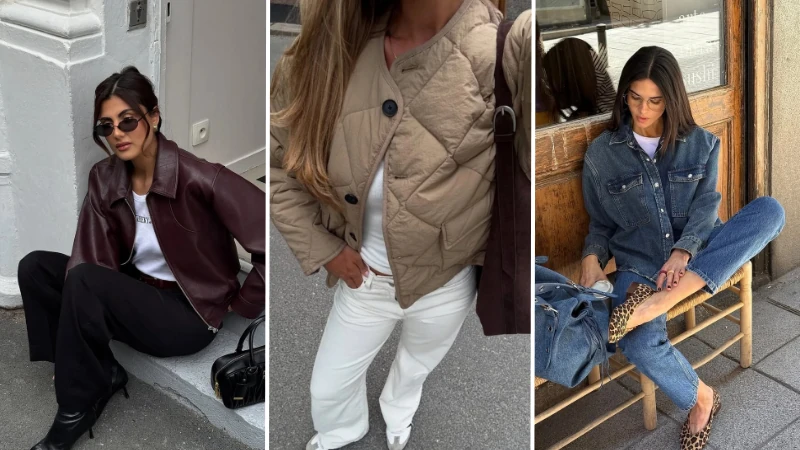
Burgundy leather offers all the edge of black without the cliché, and this oversized bomber anchors a surprisingly refined formula: a white graphic t-shirt, black wide-leg trousers, and pointed-toe ankle boots. The brown belt ties back to the jacket’s warmth, while gold hoops and a quilted handbag add a high-shine finish. Graphic tees under leather work best when the print isn’t competing — a small, centered logo or faded graphic reads intentional; a busy slogan fights the jacket. This leather jacket outfit swaps rebellious for controlled. The wide-leg trousers give the whole thing a current, comfortable stride, and the dark oval sunglasses top it off without dragging it into costume territory.
Casual Layers That Won’t Quit
These are the jackets you forget you’re wearing, until someone asks where you got them. Lightweight but intentional.
Double Denim Done Right

An oversized denim shirt jacket in medium indigo and matching straight-leg jeans could go wrong in a heartbeat, but the white crew neck t-shirt breaks the blue wall, and leopard-print pointed-toe flats inject the unexpected. Gold-rimmed glasses and stacked rings add a thoughtful, bookish touch, while the oversized denim hobo bag reinforces the theme without looking too matchy. When wearing head-to-toe denim, keep the washes different by at least one shade — exact match reads as a suit; slight contrast reads as styled. This is one of those fall outfit ideas that rewards you for using what’s already in your closet, but with a twist. The leopard print pulls the eye downward and makes the whole thing feel like a deliberate choice, not a laundry day default.
Quilted for Warmth, Not for Bulk

by @ginatricot
A tan quilted jacket with a boxy, cropped cut layers over an all-white base of tank and straight-leg jeans. The brown suede shoulder bag and simple sneakers keep the focus on the texture play: matte quilting, soft suede, crisp denim. Quilted jackets with horizontal stitch lines add visual width; if you want a lengthening effect, choose vertical or diamond quilting instead. This is one of those fall outfit ideas that works on a chilly Saturday morning or a casual coffee run, no overthinking required. The white jeans push it into fresh territory, while the suede bag ties the tan jacket to the earth-toned family. Wear it when you need a light layer that doesn’t feel like a sleeping bag.
Polished Jackets, No Starch Required
For days when a hoodie won’t cut it and a full wool coat is overkill, these jackets fill the gap.
A Cropped Trench, A Long Denim Skirt

by @by.brigitte
Cropped beige trench jacket and a dark denim maxi skirt — an outfit built on the tension between polish and ease. The structured collar and epaulettes read as classic, while the floor-length skirt pulls the silhouette completely into the current decade. Dark oval sunglasses and a Louis Vuitton cylinder bag add a city finish. When you crop a trench, make sure the sleeve ends at your wrist bone, not above it, or the whole thing looks shrunk, not tailored. A cropped trench like this makes the case for a short trench coat outfit as a jacket, not just a rain shield. The dark blue denim skirt keeps it from feeling precious; it’s a look you could walk in for hours.
An Oversized Herringbone That Works

A brown herringbone wool blazer cut oversize, yet the shoulder seam lands exactly where it should — a detail that keeps you from looking like you borrowed it. Underneath, a cream button-down and wide-leg brown trousers create a pleasing monochrome base. A black leather belt adds a subtle break, and the brown leather shoulder bag and black oval sunglasses finish the city-smart aesthetic. If the blazer’s shoulder seam hangs past your natural shoulder point, walk away — no amount of “size down” fixes a cut that’s wrong for your frame. This look belongs in the fall work outfits category that don’t scream corporate. It’s soft, quiet, and put together without trying too hard. Wide-leg trousers and flat shoes would take you through a full day without a hitch.
A Tweed Jacket That Skips the Tea Room

Beige tweed with gold buttons sounds like it belongs at a garden party, but this cropped jacket is paired with black wide-leg jeans and brown suede platform clogs — a mix that pulls it firmly into the present. A white ribbed tank underneath keeps the neckline clean, while a brown leather shoulder bag and black rectangular sunglasses add functional polish. The hair claw clip is the final signal: this look isn’t trying to impress. Tweed jackets with gold hardware read expensive, but if the fabric feels spongy or thin, it’ll lose its shape within a season — check for a substantial hand weight before buying. This outfit could easily join a rotation of fall work outfits for women who need polish without a blazer’s starchiness. The jeans keep the vibe relaxed, the clogs add height without pain.
The Real Reason Your Jacket Always Looks “Off”
The Shoulder-Seam Myth: Standard sizing betrays women with narrow or broad shoulders because it averages a number that doesn’t exist. If the seam hangs past your actual shoulder, you’ll look sloppy; if it pulls inward, the jacket strains across your back. That half-inch changes everything.
Petite Scaling: Shortening sleeves isn’t enough—lapels and pockets need to be scaled down or they eat your frame. A pocket that hits mid-hip on a petite woman visually chops her body in half, much like a too-long coat does, which is why a shorter cut trench often works better.
The Tall-Girl Sleeve Trick: Sleeves that ride up when you move aren’t just too short—the armhole was cut for a shorter torso. This forces fabric upward, leaving your wrists exposed. Look for jackets with deeper armhole curves or those labeled “long” to stop the perpetual three-quarter-sleeve effect.
Why ‘Size Up’ Fails: The conventional advice says “just size up” when you’re between sizes. That misses how a jacket’s shoulder seam placement defines the entire fit—extra fabric there makes you look like you’re borrowing someone else’s clothes.
Smart Tailoring: Three alterations cost less than a new jacket: narrowing sleeves, shortening the body, and reshaping shoulder pads. A tailor can make an off-the-rack piece look bespoke for under $50. Focus on the areas that affect how the jacket sits on your body, not structural changes that run up the bill.
How to Actually Stay Warm Without Sweating Through October
The Insulation Lie: Down isn’t universally warmer—a well-designed synthetic fill like Primaloft outperforms wet down every time. Puffiness is a marketing trick, not a heat indicator. Check fill weight in grams; anything under 80g/m² won’t hold up in real cold.
Breathability Myths: Most “breathable” labels on Fall Jackets only mean the fabric isn’t fully plastic. For actual temperature modulation, look for Schoeller or Polartec NeoShell technologies—they let moisture escape while blocking wind, so you don’t overheat indoors.
The Windshield Factor: In gusty cities, a dense weave like a tight nylon or waxed cotton blocks more cold than any amount of fill. A windproof outer layer turns a light jacket into a serious cold-weather piece, especially with a black turtleneck as a thin merino base layer instead of bulky sweaters.
The Layering Mistake: Wearing a thick sweater under a snug jacket compresses the insulation in both layers, killing the air pockets that trap heat. Go with a thin merino base and let the jacket do the real insulating—you’ll stay warmer and avoid that stuffed-sausage feeling.
Read Warmth Ratings: If a Fall Jacket doesn’t list its fill weight or a temperature rating, the brand is avoiding the question. For real chill, aim for at least 100g/m². For damp climates, prioritize synthetic insulation over down, which loses loft when wet and leaves you cold.
The Fall Jackets Trap You’ve Been Fed Since College
The One-Jacket Fantasy: Most fashion articles promise a single “perfect” Fall Jacket for everything. I’d argue that chasing that unicorn fuels the overbuying shame spiral, because no one jacket can handle a windy commute and a casual dinner equally well.
Holding Onto Mistakes: Women cling to shrunken blazers and pilled cardigans because replacing them feels like admitting they wasted money. But a jacket that doesn’t fit is already wasted—donating it frees you to find something that works, without the guilt.
The Two-Jacket Capsule: For 80% of fall, you need two pieces: a weather-resistant daily driver and one “personality” jacket. The daily handles rain and wind; the wildcard—like a suede moto—makes repeat outfits feel intentional, not boring.
Re-Wearing Isn’t Failure: Social media convinces you that wearing the same jacket twice is a style crime. In reality, it’s a sign you’ve found something good—a piece that fits and functions. That’s a win, not a lack of imagination.
Break the Money-Shame: Hiding purchases or lying about how many jackets you own comes from impulse buys. Set a timeline: wait two weeks between deciding and purchasing. You’ll often realize you don’t need it, and you’ll stop the spiral of secret shopping bags.
What the Size Chart Never Tells You About Shopping Online
Ignore ‘Fits True to Size’: Those words are marketing fluff. Before clicking buy, check the garment’s actual shoulder width and sleeve length—two numbers brands bury in secondary tabs. If they’re not listed, assume the fit is a gamble.
The Armhole Secret: A half-inch difference in armhole height changes whether you can lift your coffee cup without the whole jacket riding up. Too high, and you’ll feel pinched; too low, and fabric yanks toward your neck. This spec is rarely listed, so seek out customer reviews that mention range of motion.
Model Stats Are Useless: Knowing the model wears a size small tells you nothing unless you know her shoulder width and torso length. Research model details on the brand’s site, or cross-check with reviews from buyers who share their measurements.
Final Sale Traps: “Final sale” on Fall Jackets often hides inconsistent factory batches—same labeled size, different actual fit. Check return policies carefully; some brands offer exchanges only, and you’ll be stuck with a jacket that pulls across the back.
Build Your Fit Profile: Measure your shoulder width, sleeve length, and torso length once. Write it down and compare to garment specs every time you shop online. This beats guessing, ends the cycle of returns, and saves the headache of repacking shipments.
How To Make Last Year’s Fall Jackets Feel Brand New
Fabric Shaver: Run a fabric shaver over any pilled wool, cashmere, or blended jacket before you even think about buying a replacement.
The pills are what make a jacket look tired — remove them and the surface instantly reads three seasons younger. Always shave in one direction following the fabric’s grain. Going against it can rough up the yarns and create a fuzz that pills twice as fast next month.
One-Hour Refresh: Spot-clean the collar and cuffs with a damp cloth and a dot of mild soap, then steam the whole jacket inside and out.
Turn the jacket inside out first and spritz the lining with a 1:3 white vinegar solution before steaming — it neutralizes trapped skin oils that regular washing leaves behind. The steam relaxes the fabric’s memory so it drapes cleanly again, no ironing board needed.
Button Swap: Replace the stock buttons with a $6 set of resin or horn-look buttons from a craft store.
Choose buttons with a slight dome shape rather than completely flat discs — that curve catches light and reads as custom-made even on a department-store jacket. On a trench or twill blazer, the hardware swap fools the eye faster than any new trend can.
Collar & Cuff Hack: Snap a detachable faux-fur collar or ribbed knit cuffs inside a basic jacket to change its whole silhouette.
Sew small, invisible snap buttons into the inside of the sleeve hem so the cuffs stay put when you push up your sleeves. The layered look costs under $20 and turns a plain jacket into a piece that looks deliberately current, not leftover.
Storage Reset: Before packing jackets away, slip unscented dryer sheets into the pockets and swap all hangers to padded or cedar ones.
Unscented sheets absorb moisture without leaving a perfume that turns stale over summer. Cedar hangers or rings keep moths away and prevent that damp-closet smell that takes three washes to remove come October.
FAQ
Are puffer jackets really flattering on curvy bodies?
Yes, when you pick vertical baffle lines instead of horizontal — they pull the eye up and down, not across. A matte finish with a slight shape at the waist (no belt) creates definition without bulk. Steer clear of high-shine fabrics, which reflect light and can double the volume you see.
Can I wear a white Fall Jacket without looking like a stain magnet?
Choose a performance twill or treated canvas, not raw cotton — it repels light spills and wipes clean with a damp cloth. Keep a portable stain pen in the pocket, and let dark-toned pieces do the heavy lifting underneath so the white reads as crisp and deliberate, not delicate. Need proof it works? See how a single white piece anchors an entire white jacket outfit without looking precious.
How do I know if a Fall Jacket is warm enough for a Northeast winter?
Ignore the word “insulated” and look for three things: a wind-blocking membrane, sealed seams, and a fill weight listed in grams. Anything under 80g/m² of insulation won’t hold up in real cold. If a brand won’t list those specs, it’s choosing marketing over honesty.
Is it okay to wear the same Fall Jacket every day?
Absolutely — and it’s smarter than rotating through lower-quality pieces that break down faster. Air the jacket out overnight, spot-clean the collar weekly, and switch up your scarf or neckline underneath so the same shell tells a different story each day.
What if I’m between sizes and online shopping?
Order the size that fits your largest measurement — usually your shoulders or hips — and budget a $20–$30 tailor trip. A jacket that pulls across the back will never look expensive. One that’s slightly loose but well-proportioned looks custom-made once it’s nipped in.
Will a faux leather Fall Jacket make me look cheap?
Not if you avoid the two dead giveaways: an overly shiny plastic finish and that stiff, squeaky movement. Search for “matte polyurethane” or “faux leather with a soft hand” — they mimic the slight give of real hide. Keep the cut classic (a moto or blazer) and skip loud hardware, and the rest of your outfit won’t read the difference.
How do I stop my Fall Jackets from smelling like damp wool?
Air them outside — not just in the closet — for a solid hour after every wear, and store them with cedar rings instead of mothballs. If a musty smell has already set in, spritz with a 1:1 vodka-water solution and let it dry completely. The vodka kills the bacteria causing the odor and evaporates without leaving any scent.